Discounted Products
-
 Leo Creation 144 TC Cotton Double Jaipuri Prints Flat Bedsheet(Pack of 1, Blue, Gree, Red, Grey, Light Grey)
Original price was: ₹2,999.00.₹329.00Current price is: ₹329.00.
Leo Creation 144 TC Cotton Double Jaipuri Prints Flat Bedsheet(Pack of 1, Blue, Gree, Red, Grey, Light Grey)
Original price was: ₹2,999.00.₹329.00Current price is: ₹329.00.
-
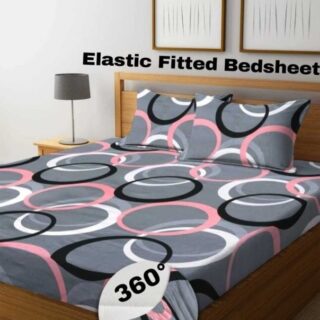 Home Garage 210 TC Cotton King Floral Fitted (Elastic) Bedsheet(Pack of 1, Grey)
Original price was: ₹999.00.₹299.00Current price is: ₹299.00.
Home Garage 210 TC Cotton King Floral Fitted (Elastic) Bedsheet(Pack of 1, Grey)
Original price was: ₹999.00.₹299.00Current price is: ₹299.00.
-
 Goodrik 140 TC Cotton Double 3D Printed Flat Bedsheet(Pack of 1, Brown)
Original price was: ₹499.00.₹229.00Current price is: ₹229.00.
Goodrik 140 TC Cotton Double 3D Printed Flat Bedsheet(Pack of 1, Brown)
Original price was: ₹499.00.₹229.00Current price is: ₹229.00.
-
 GLOBALSHOP 350 TC Microfiber Double Floral Flat Bedsheet(Pack of 1, Multicolor)
Original price was: ₹1,250.00.₹263.00Current price is: ₹263.00.
GLOBALSHOP 350 TC Microfiber Double Floral Flat Bedsheet(Pack of 1, Multicolor)
Original price was: ₹1,250.00.₹263.00Current price is: ₹263.00.
-
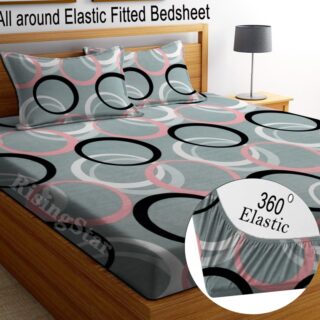 RisingStar 250 TC Microfiber King Printed Fitted (Elastic) Bedsheet(Pack of 1, FITTED-ROUND-CIRCLES-PREMIUM)
Original price was: ₹2,299.00.₹299.00Current price is: ₹299.00.
RisingStar 250 TC Microfiber King Printed Fitted (Elastic) Bedsheet(Pack of 1, FITTED-ROUND-CIRCLES-PREMIUM)
Original price was: ₹2,299.00.₹299.00Current price is: ₹299.00.
-
 Home Garage 210 TC Cotton King Floral Fitted (Elastic) Bedsheet(Pack of 1, Fitted Black Green)
Original price was: ₹1,299.00.₹299.00Current price is: ₹299.00.
Home Garage 210 TC Cotton King Floral Fitted (Elastic) Bedsheet(Pack of 1, Fitted Black Green)
Original price was: ₹1,299.00.₹299.00Current price is: ₹299.00.
-
 Home Garage 180 TC Cotton King 3D Printed Flat Bedsheet(Pack of 1, White)
Original price was: ₹999.00.₹229.00Current price is: ₹229.00.
Home Garage 180 TC Cotton King 3D Printed Flat Bedsheet(Pack of 1, White)
Original price was: ₹999.00.₹229.00Current price is: ₹229.00.
-
 Home Sizzler 153 cm (5 ft) Polyester Room Darkening Window Curtain (Pack Of 2)(Floral, Maroon)
Original price was: ₹799.00.₹299.00Current price is: ₹299.00.
Home Sizzler 153 cm (5 ft) Polyester Room Darkening Window Curtain (Pack Of 2)(Floral, Maroon)
Original price was: ₹799.00.₹299.00Current price is: ₹299.00.
-
 Panipat Textile Hub 152.4 cm (5 ft) Polyester Window Curtain (Pack Of 2)(Solid, Aqua)
Original price was: ₹1,899.00.₹299.00Current price is: ₹299.00.
Panipat Textile Hub 152.4 cm (5 ft) Polyester Window Curtain (Pack Of 2)(Solid, Aqua)
Original price was: ₹1,899.00.₹299.00Current price is: ₹299.00.
-
 Home Sizzler 214 cm (7 ft) Polyester Semi Transparent Door Curtain (Pack Of 2)(Floral, Maroon)
Original price was: ₹1,199.00.₹399.00Current price is: ₹399.00.
Home Sizzler 214 cm (7 ft) Polyester Semi Transparent Door Curtain (Pack Of 2)(Floral, Maroon)
Original price was: ₹1,199.00.₹399.00Current price is: ₹399.00.
-
 Home Sizzler 153 cm (5 ft) Polyester Room Darkening Window Curtain (Pack Of 2)(Floral, Brown)
Original price was: ₹799.00.₹299.00Current price is: ₹299.00.
Home Sizzler 153 cm (5 ft) Polyester Room Darkening Window Curtain (Pack Of 2)(Floral, Brown)
Original price was: ₹799.00.₹299.00Current price is: ₹299.00.
-
 Stella Creations 214 cm (7 ft) Polyester Room Darkening Door Curtain (Pack Of 2)(Abstract, Brown)
Original price was: ₹1,299.00.₹449.00Current price is: ₹449.00.
Stella Creations 214 cm (7 ft) Polyester Room Darkening Door Curtain (Pack Of 2)(Abstract, Brown)
Original price was: ₹1,299.00.₹449.00Current price is: ₹449.00.
-
 Homefab India 152.5 cm (5 ft) Polyester Room Darkening Window Curtain (Pack Of 2)(Floral, Light Blue)
Original price was: ₹1,199.00.₹319.00Current price is: ₹319.00.
Homefab India 152.5 cm (5 ft) Polyester Room Darkening Window Curtain (Pack Of 2)(Floral, Light Blue)
Original price was: ₹1,199.00.₹319.00Current price is: ₹319.00.
-
 Urban Home 214 cm (7 ft) PVC Transparent Door Curtain Single Curtain(Solid, Off White)
Original price was: ₹699.00.₹203.00Current price is: ₹203.00.
Urban Home 214 cm (7 ft) PVC Transparent Door Curtain Single Curtain(Solid, Off White)
Original price was: ₹699.00.₹203.00Current price is: ₹203.00.
-
 Panipat Textile Hub 213 cm (7 ft) Polyester Door Curtain (Pack Of 2)(Solid, Brown)
Original price was: ₹1,199.00.₹349.00Current price is: ₹349.00.
Panipat Textile Hub 213 cm (7 ft) Polyester Door Curtain (Pack Of 2)(Solid, Brown)
Original price was: ₹1,199.00.₹349.00Current price is: ₹349.00.
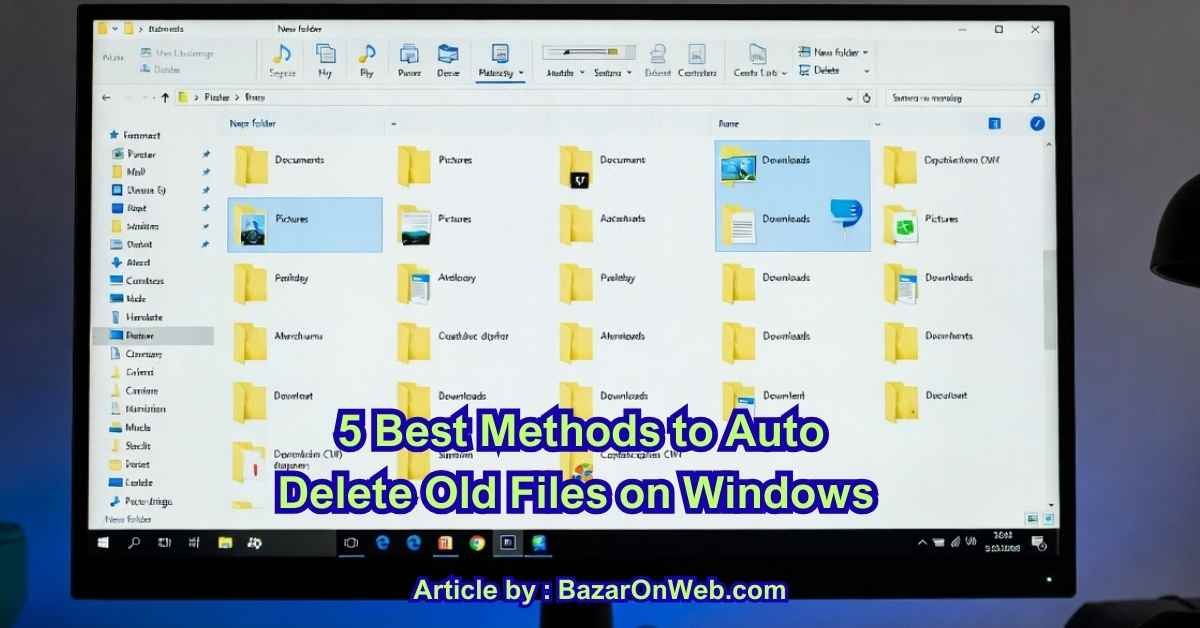
Introduction: Why Auto-Deleting Old Files on Windows Is No Longer Optional
Modern Windows systems are more powerful than ever, yet storage management remains one of the most overlooked aspects of long-term system performance. Over time, even high-capacity drives become cluttered with temporary files, outdated downloads, log files, cached data, and unused backups. Individually, these files seem harmless. Collectively, they degrade performance, reduce available storage, and increase system instability.
What makes the issue worse is that most users don’t actively manage old files. Manual cleanup is inconsistent, time-consuming, and easy to forget. As a result, systems gradually accumulate digital waste—until the day Windows displays a low-disk-space warning, applications slow down, or updates fail to install.
This is where automatic file deletion becomes essential.
Auto-deleting old files isn’t about aggressively wiping data. It’s about maintaining balance—keeping your system clean without risking important information. When configured correctly, automated cleanup improves performance, extends SSD lifespan, reduces errors, and eliminates the mental overhead of remembering to clean your system manually.
Windows offers multiple ways to achieve this, ranging from simple built-in tools to advanced scripting and enterprise-grade automation. However, not all methods are equal. Some prioritize safety over control, while others provide precision at the cost of complexity. Choosing the wrong approach can lead to accidental data loss or inefficient cleanup that barely frees any space.
Another important factor is user profile. A home laptop, a corporate workstation, a developer machine, and a shared family PC all have different cleanup requirements. A solution that works perfectly for one scenario may be risky or ineffective in another.
This guide exists to eliminate confusion.
Rather than pushing a single “best” solution, it compares five proven methods for automatically deleting old files on Windows. Each method serves a distinct purpose, from beginner-friendly automation to enterprise-level control. You’ll learn not just how each method works, but when it should be used—and when it should be avoided.
By the end of this guide, you’ll have a clear understanding of how to design a cleanup strategy that matches your technical skill level, system usage, and risk tolerance—without relying on guesswork.
Method 1: Use Windows Storage Sense to Automatically Delete Old Files
Windows Storage Sense is the most reliable and built-in method to automatically delete old files without installing any third-party software. It is designed to run quietly in the background, freeing up disk space by removing unnecessary and outdated files based on rules you define. For most users, this is the safest and easiest long-term solution.
What Is Storage Sense and Why It Works Well
Storage Sense is a native Windows feature available in Windows 10 and Windows 11. It automatically manages disk space by deleting:
-
Temporary system files
-
Old files in the Recycle Bin
-
Files in the Downloads folder that haven’t been opened for a set time
-
Temporary app and update files
Because it’s built directly into Windows, Storage Sense works smoothly with system permissions, avoids accidental deletion of critical files, and requires minimal maintenance once configured.
How to Enable Storage Sense
-
Open Settings
-
Go to System
-
Click Storage
-
Toggle Storage Sense to On
Once enabled, Windows is ready to start managing old files automatically—but the real power lies in customization.

Configure Storage Sense for Auto-Deleting Old Files
Click Storage Sense to open advanced settings. Here you can define exactly how and when files are deleted.
1. Set How Often Storage Sense Runs
You can choose:
-
Every day
-
Every week
-
Every month
-
Only when disk space is low
For most users, weekly or monthly works best to avoid aggressive deletions.
2. Automatically Delete Temporary Files
Enable the option:
-
Delete temporary files that my apps aren’t using
This removes cached data, log files, and leftover installation files that accumulate over time and are safe to delete.
3. Auto-Delete Old Files from Recycle Bin
This is one of the most useful features.
Options include:
-
Never
-
After 1 day
-
After 14 days
-
After 30 days
-
After 60 days
If you frequently forget to empty your Recycle Bin, setting it to 30 days is a balanced choice—files stay recoverable for a month before automatic deletion.
4. Automatically Delete Old Files from Downloads Folder
This is where Storage Sense becomes especially powerful.
You can configure Windows to delete files in your Downloads folder if they haven’t been opened for:
-
1 day
-
14 days
-
30 days
-
60 days
-
Never
This is ideal for clearing:
-
Old installers
-
Duplicate downloads
-
Temporary PDFs or ZIP files
⚠️ Important:
If you store important files in Downloads, choose 60 days or disable this option.
Use “Run Storage Sense Now” for Immediate Cleanup
At the bottom of the Storage Sense settings page, click Run Storage Sense now.
This:
-
Immediately deletes eligible old files
-
Frees up disk space instantly
-
Helps verify that your settings work as expected
Running it once manually is recommended after setup.
What Storage Sense Does Not Delete (Important)
Storage Sense is conservative by design. It will not:
-
Delete files from Documents, Pictures, Videos, or Desktop
-
Remove system-critical files
-
Delete files you’ve recently accessed
-
Remove user-created folders
This makes it safer than scripts or batch deletion methods.
Advanced Tip: Combine Storage Sense with Disk Cleanup
While Storage Sense runs automatically, you can pair it with Disk Cleanup for deeper control:
-
Search Disk Cleanup
-
Select system drive (usually C:)
-
Click Clean up system files
-
Select old Windows update files, logs, and temp files
This combination ensures both routine cleanup and occasional deep cleaning.
Ideal Use Cases for Storage Sense
Storage Sense is best suited for:
-
Office and work laptops
-
Shared family computers
-
SSD-based systems with limited storage
-
Users who want automation without risk
-
Professionals who don’t want scripts or third-party tools
Common Issues and Fixes
Issue: Storage Sense doesn’t delete anything
-
Ensure it’s turned ON
-
Check that folders meet the “age” criteria
-
Run it manually once
Issue: Downloads files disappearing unexpectedly
-
Increase the retention period
-
Disable Downloads cleanup if needed
Issue: Cleanup doesn’t free much space
-
Use Disk Cleanup alongside
-
Check for large media files stored elsewhere
Why Storage Sense Is the Best First Method
Storage Sense stands out because:
-
No installation required
-
Safe and reversible behavior
-
Fully automated
-
Low system impact
-
Microsoft-supported
For most users, this method alone is enough to keep Windows clean and free from clutter without manual intervention.
Method 2: Auto Delete Old Files Using Task Scheduler + PowerShell
If you want full control over which files get deleted, when they’re deleted, and from which folders, using PowerShell with Task Scheduler is one of the most powerful and flexible methods available on Windows. This approach is ideal for advanced users, IT professionals, and anyone managing large volumes of files over time.
Why Use PowerShell with Task Scheduler
Unlike Storage Sense, PowerShell allows you to:
- Target specific folders
- Define file age in days
- Filter by file type
- Exclude important files or folders
- Run cleanup automatically on a schedule
Once configured, this method runs silently in the background without user intervention.
Step 1: Identify the Folder You Want to Clean
First, decide which folder contains old files you want to delete. Common examples include:
- Downloads folder
- Temp folders
- Log directories
- Backup folders
- Project output folders
Example path:
C:\Users\YourUsername\Downloads
Step 2: Create a PowerShell Cleanup Script
- Open Notepad
- Paste the following PowerShell script:
$FolderPath = "C:\Users\YourUsername\Downloads"
$DaysOld = 30

Get-ChildItem -Path $FolderPath -File -Recurse |
Where-Object {
    $_.LastWriteTime -lt (Get-Date).AddDays(-$DaysOld)
} |
Remove-Item -Force
This script:
- Scans the folder recursively
- Finds files older than 30 days
- Deletes them automatically
Step 3: Customize the Script Safely
You can modify the script based on your needs.
Change File Age
$DaysOld = 60
Target Specific File Types
Get-ChildItem -Path $FolderPath -Include *.tmp, *.log -Recurse
Exclude Important Files
Where-Object {
    $_.Extension -ne ".docx"
}
Test Before Deleting (Recommended)
Replace Remove-Item with:
Select-Object FullName
This lets you preview which files would be deleted.
Step 4: Save the Script
- Click File → Save As
- Name the file:
AutoDeleteOldFiles.ps1
- Save it to a secure location, such as:
C:\Scripts\
Step 5: Allow PowerShell Scripts to Run
By default, Windows restricts PowerShell scripts.
- Open PowerShell as Administrator
- Run:
Set-ExecutionPolicy RemoteSigned
- Press Y to confirm
This allows locally created scripts to run safely.
Step 6: Open Task Scheduler
- Press Windows + R
- Type:
taskschd.msc
- Press Enter
Task Scheduler lets Windows run your script automatically.
Step 7: Create a New Scheduled Task
- Click Create Basic Task
- Name it:
Auto Delete Old Files
- Add a description for clarity
Step 8: Set the Trigger (When It Runs)
Choose how often the cleanup should happen:
- Daily (recommended for temp folders)
- Weekly (ideal for Downloads)
- Monthly (safe for archives)
Set a time when the system is usually ON.
Step 9: Configure the Action
- Choose Start a Program
- Program/script:
powershell.exe
- Add arguments:
-ExecutionPolicy Bypass -File "C:\Scripts\AutoDeleteOldFiles.ps1"
- Start in:
C:\Scripts
Step 10: Finalize Task Settings
Before finishing:
- Check Run whether user is logged on or not
- Enable Run with highest privileges
- Disable Stop the task if it runs longer than
This ensures the script runs reliably.
Step 11: Test the Task Manually
- Right-click the task
- Select Run
- Check the target folder
If configured correctly, old files should be removed automatically.
Advanced Enhancements (Optional)
Log Deleted Files
Add logging to the script:
$LogFile = "C:\Scripts\cleanup-log.txt"
Remove-Item -Force -Verbose 4>> $LogFile
Delete Empty Folders
Get-ChildItem $FolderPath -Recurse -Directory |
Where-Object { $_.GetFiles().Count -eq 0 } |
Remove-Item
Exclude Specific Subfolders
Where-Object {
    $_.FullName -notlike "*\Important\*"
}
Common Issues and Fixes
Script doesn’t run
- Check Execution Policy
- Confirm file paths
- Run PowerShell as admin
Files not deleting
- Verify file age logic
- Ensure files aren’t in use
- Remove read-only attributes if needed
Task runs but does nothing
- Check Task Scheduler history
- Add logging to debug
When This Method Is Best
This method is ideal if you:
- Want precise control
- Manage large directories
- Need automated cleanup for work systems
- Prefer built-in Windows tools
- Avoid third-party software
Safety Best Practices
- Always test scripts before enabling deletion
- Never target system folders (Windows, Program Files)
- Keep backups for critical data
- Start with longer retention periods
Method 3: Auto Delete Old Files Using Windows Disk Cleanup + Cleanup Policies
This method uses Windows Disk Cleanup together with built-in cleanup policies to remove old, unnecessary files automatically. It’s ideal for users who want system-level cleanup without scripts, PowerShell, or third-party tools. While it offers less control than scripting, it is extremely stable and safe.
What Disk Cleanup Does Automatically
Disk Cleanup focuses on removing files that Windows no longer needs, including:
- Temporary system files
- Old Windows Update files
- Error reports and log files
- Thumbnails and cache files
- Previous Windows installation files
These files can accumulate over months and consume significant disk space.
Step 1: Open Disk Cleanup
- Press Windows + S
- Search for Disk Cleanup
- Select the system drive (usually C:)
- Click OK
Disk Cleanup will scan your system for removable files.
Step 2: Enable System File Cleanup
- Click Clean up system files
- Select drive C: again
- Wait for the scan to complete
This unlocks deeper cleanup options not visible in standard mode.
Step 3: Select Old and Unnecessary Files
Safely select:
- Windows Update Cleanup
- Delivery Optimization Files
- Temporary files
- System error memory dump files
- System error minidump files
- Thumbnails
⚠️ Avoid selecting:
- Downloads
- Previous Windows installations (only select if you’re sure)
Click OK → Delete Files.
Step 4: Automate Disk Cleanup Using Task Scheduler
Disk Cleanup can be automated using Windows maintenance tasks.
- Press Windows + R
- Type:
taskschd.msc
- Navigate to:
Task Scheduler Library → Microsoft → Windows → DiskCleanup
Windows already runs cleanup tasks periodically, but you can enhance them.
Step 5: Create a Custom Cleanup Profile
- Open Command Prompt as Administrator
- Run:
cleanmgr /sageset:1
A settings window appears—select the cleanup options you want.
- Click OK
This creates a saved cleanup profile.
Step 6: Schedule the Cleanup Profile
- Open Task Scheduler
- Click Create Basic Task
- Name it:
Automated Disk Cleanup
- Set trigger (weekly or monthly)
- Action → Start a program
- Program/script:
cleanmgr.exe
- Add arguments:
/sagerun:1
This runs cleanup automatically using your saved rules.
Step 7: Verify Automation
Run the task manually once to confirm it works:
- Right-click task → Run
- Check available disk space afterward
What This Method Automatically Deletes
✔ Old system files
✔ Update leftovers
✔ Cached files
✔ Error reports
✔ Thumbnails
❌ Personal documents
❌ User-created folders
❌ Downloads (unless manually selected)
Advantages of This Method
- No scripting required
- Built into Windows
- Very low risk
- Ideal for beginners and office systems
- Works well on older hardware
Limitations You Should Know
- Cannot target specific folders
- Cannot delete files based on age (days)
- Not suitable for project or work directories
- Focused on system cleanup only
Best Use Cases
This method is best for:
- Office PCs
- Shared family computers
- Older Windows systems
- Users with low technical experience
- Systems needing regular maintenance
Combine with Other Methods for Best Results
For maximum efficiency:
- Use Method 1 (Storage Sense) for user files
- Use Method 3 (Disk Cleanup) for system files
- Use Method 2 (PowerShell) for advanced control
This layered approach keeps Windows clean without risk.
Method 4: Auto Delete Old Files Using Batch Scripts (CMD-Based Automation)
Batch scripts are a lightweight and effective way to automatically delete old files on Windows using built-in Command Prompt (CMD) commands. This method is ideal for users who want simple automation without PowerShell, minimal system overhead, and full transparency over what gets deleted.
Why Use Batch Scripts for File Deletion
Batch scripts:
- Require no additional software
- Work on all Windows editions
- Are easy to audit and edit
- Run extremely fast
- Integrate seamlessly with Task Scheduler
They are especially useful for cleaning folders like Downloads, Temp directories, backup folders, or log locations.
Step 1: Identify the Target Folder and File Age
Decide:
- Folder path (example: Downloads)
- File age (example: older than 30 days)
Example folder:
C:\Users\YourUsername\Downloads
Step 2: Create the Batch Script
- Open Notepad
- Paste the following code:
@echo off
set folder=C:\Users\YourUsername\Downloads
set days=30

forfiles /p "%folder%" /s /m *.* /d -%days% /c "cmd /c del @path /f /q"
This script:
- Scans the folder recursively
- Finds files older than 30 days
- Deletes them silently
Step 3: Test Before Deleting (Highly Recommended)
To preview files instead of deleting them, replace del with echo:
forfiles /p "%folder%" /s /m *.* /d -%days% /c "cmd /c echo @path"
This ensures you verify exactly what will be removed.
Step 4: Customize the Script
Change retention period
set days=60
Delete only specific file types
/m *.tmp
Exclude specific folders
Batch scripts don’t natively support exclusions, but you can limit scope by pointing to specific subfolders instead of parent directories.
Step 5: Save the Script
- Click File → Save As
- Name it:
AutoDeleteOldFiles.bat
- Save to:
C:\Scripts\
Step 6: Schedule the Batch Script
- Open Task Scheduler
- Click Create Basic Task
- Name it:
Auto Delete Old Files (Batch) - Set trigger (weekly or monthly)
- Action → Start a program
- Program/script:
C:\Scripts\AutoDeleteOldFiles.bat
- Enable Run with highest privileges
Advantages of Batch Script Method
✔ Very fast execution
✔ Minimal system resources
✔ No execution policy issues
✔ Easy to deploy across systems
Limitations
❌ Limited logic compared to PowerShell
❌ No native logging unless added manually
❌ Less flexible for complex rules
Best Use Cases
- Simple folder cleanup
- Legacy systems
- Lightweight automation
- Non-admin environments
Method 5: Auto Delete Old Files Using Third-Party Automation Tools
Third-party cleanup tools provide a user-friendly, feature-rich alternative for automatically deleting old files. These tools are ideal for users who prefer graphical interfaces, advanced scheduling, and safety controls without writing scripts.
Why Use Third-Party Tools
Third-party tools offer:
- Visual rule creation
- Preview before deletion
- File age and size filters
- Logging and reporting
- Advanced exclusions
- Email alerts (in some tools)
They are especially helpful for non-technical users and business environments.
Popular and Trusted Tools
1. CCleaner (Professional Version)
CCleaner allows scheduled cleanup of:
- Temporary files
- Browser cache
- System junk
- Custom folders
You can define rules based on file age and type.
Pros
- Easy setup
- Reliable automation
- Widely trusted
Cons
- Advanced scheduling requires paid version
2. Wise Disk Cleaner
Wise Disk Cleaner supports:
- Automatic disk cleanup
- Custom cleanup rules
- Scheduled scans
It is lightweight and beginner-friendly.
3. BleachBit
BleachBit is an open-source alternative offering:
- File deletion rules
- Free automation
- Advanced cleanup options
⚠️ Best for advanced users due to aggressive defaults.
4. TreeSize Professional
TreeSize focuses on:
- Storage analysis
- Rule-based cleanup
- Enterprise-grade reporting
Ideal for IT administrators managing large systems.
How to Set Up Auto Deletion (General Workflow)
- Install the tool
- Define cleanup rules:
- File age (e.g., older than 30 days)
- File type (logs, temp, cache)
- Target folders
- Enable preview mode
- Schedule cleanup (weekly/monthly)
- Enable logs or reports
Safety Features to Look For
✔ Preview before deletion
✔ Exclusion lists
✔ Recycle Bin support
✔ Restore or undo options
✔ Activity logs
Always enable preview mode during initial setup.
Advantages of Third-Party Tools
✔ No scripting knowledge needed
✔ Visual confirmation
✔ Advanced rule logic
✔ Enterprise-friendly options
Risks and Precautions
⚠️ Avoid unknown or cracked tools
⚠️ Do not allow system file deletion
⚠️ Review permissions carefully
⚠️ Keep backups enabled
Use only reputable software from official sources.
Best Use Cases
- Non-technical users
- Business environments
- Large storage systems
- Multi-folder cleanup rules
- Users who want visual control
Choosing the Right Method Overall
- Batch scripts → lightweight, fast, simple
- Third-party tools → powerful, visual, beginner-friendly
Using the right method depends on how much control, safety, and automation you need.
Comparison Table: Best Methods to Auto Delete Old Files on Windows
| Method | Skill Level Required | Automation Level | Custom Folder Control | File Age Control | Risk Level | Best For |
|---|---|---|---|---|---|---|
| Method 1: Storage Sense | Beginner | Fully Automatic | Limited | Yes | Very Low | Everyday users, laptops, office PCs |
| Method 2: PowerShell + Task Scheduler | Advanced | Fully Automatic | Full Control | Yes (Precise) | Medium (if misconfigured) | IT pros, power users, servers |
| Method 3: Disk Cleanup + Policies | Beginner–Intermediate | Semi-Automatic | No | No | Very Low | System cleanup, older PCs |
| Method 4: Batch Scripts (CMD) | Intermediate | Fully Automatic | Moderate | Yes | Medium | Lightweight automation, legacy systems |
| Method 5: Third-Party Tools | Beginner | Fully Automatic | High (GUI-based) | Yes | Medium–High | Non-technical users, businesses |
Conclusion: Choosing the Right Auto-Delete Strategy for Long-Term Windows Health
Automatically deleting old files on Windows is not about being aggressive—it’s about being intentional. The real goal isn’t just freeing disk space, but maintaining a system that remains responsive, stable, and predictable over time. When cleanup is automated correctly, it becomes invisible, reliable, and safe.
One of the most important insights from comparing these five methods is that there is no universal best solution. Each method reflects a different philosophy of system maintenance.
Built-in tools like Storage Sense and Disk Cleanup prioritize safety. They are designed to protect users from accidental data loss, even if that means leaving some clutter behind. For most everyday users, this trade-off is ideal. These methods work quietly, require minimal configuration, and are officially supported by Microsoft—making them the best starting point for long-term maintenance.
On the other end of the spectrum, PowerShell scripts and batch automation offer unmatched control. These methods are powerful because they do exactly what you tell them to do—nothing more, nothing less. That precision makes them invaluable in professional environments, IT administration, and high-volume systems. However, power always comes with responsibility. Poorly written scripts can delete critical data just as efficiently as junk files. This is why testing, logging, and conservative retention rules are non-negotiable.
Third-party tools sit in the middle. They trade scripting complexity for visual clarity. For users who want automation but prefer confirmation, previews, and graphical rule-building, reputable third-party software can be an excellent choice. That said, these tools must be selected carefully. Trust, update frequency, and transparency matter more than flashy features.
A key lesson across all methods is that layered cleanup works best. Many advanced users combine approaches—for example:
-
Storage Sense for routine user cleanup
-
Disk Cleanup for system files
-
Scripts or tools for specific work folders
This layered strategy ensures no single method becomes overly aggressive or overly passive.
It’s also important to remember that cleanup rules should evolve. What feels safe today may be too aggressive tomorrow as your usage changes. Reviewing automation rules once or twice a year is a best practice, not an afterthought.
Ultimately, automated file deletion is a form of digital hygiene. When done correctly, it protects performance, reduces frustration, and keeps your Windows system operating as intended—quietly, efficiently, and without constant intervention.
The best system is not the one that deletes the most files, but the one that never forces you to think about storage at all.

- 7 Best Methods to Fix “Undoing Changes Made to Your PC” Error (Complete Guide)

- How to Turn On Spam Blocker on Android: Stop Unwanted Calls and Messages Easily

- Can’t View Comments on YouTube Shorts? 6 Ways to Fix It (Complete Guide)

- How to Block Users From Installing Programs in Windows 11 Complete Step-by-Step Guide for Better Security

- How to Fix Chrome Automatically Deleting Downloaded Files (Complete Step-by-Step Guide)

Products
-
![Apple Watch Ultra 3 [GPS + Cellular 49mm] Running & Multisport Smartwatch w/Rugged Titanium Case w/Black Titanium Milanese Loop - M. Satellite Communications, Advanced Health & Fitness Tracking](https://bazaronweb.com/retailstores/wp-content/uploads/2025/09/apple-watch-320x320.jpg) Apple Watch Ultra 3 [GPS + Cellular 49mm] Running & Multisport Smartwatch w/Rugged Titanium Case w/Black Titanium Milanese Loop - M. Satellite Communications, Advanced Health & Fitness Tracking
Apple Watch Ultra 3 [GPS + Cellular 49mm] Running & Multisport Smartwatch w/Rugged Titanium Case w/Black Titanium Milanese Loop - M. Satellite Communications, Advanced Health & Fitness Tracking
-
 Apple iPad mini (A17 Pro): Apple Intelligence, 8.3-inch Liquid Retina Display, 256GB, Wi-Fi 6E, 12MP Front/12MP Back Camera, Touch ID, All-Day Battery Life — Purple
-
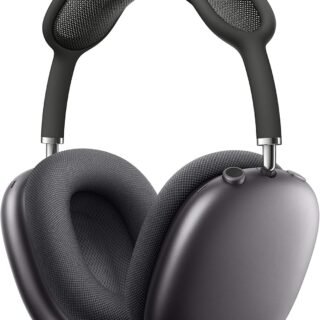 Apple AirPods Max Wireless Over-Ear Headphones, Active Noise Cancelling, Transparency Mode, Personalized Spatial Audio, Dolby Atmos, Bluetooth Headphones for iPhone – Space Gray
-
 Apple AirPods Pro 2 Wireless Earbuds, Active Noise Cancellation, Hearing Aid Feature, Bluetooth Headphones, Transparency, Personalized Spatial Audio, High-Fidelity Sound, H2 Chip, USB-C Charging
-
Leo Creation 144 TC Cotton Double Jaipuri Prints Flat Bedsheet(Pack of 1, Blue, Gree, Red, Grey, Light Grey)
Original price was: ₹2,999.00.₹329.00Current price is: ₹329.00.
Leave a Reply