Discounted Products
-
 Leo Creation 144 TC Cotton Double Jaipuri Prints Flat Bedsheet(Pack of 1, Blue, Gree, Red, Grey, Light Grey)
Original price was: ₹2,999.00.₹329.00Current price is: ₹329.00.
Leo Creation 144 TC Cotton Double Jaipuri Prints Flat Bedsheet(Pack of 1, Blue, Gree, Red, Grey, Light Grey)
Original price was: ₹2,999.00.₹329.00Current price is: ₹329.00.
-
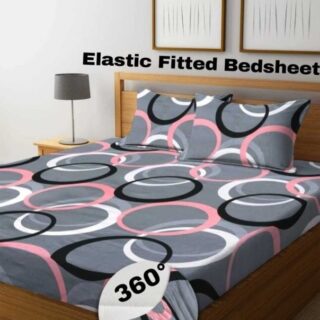 Home Garage 210 TC Cotton King Floral Fitted (Elastic) Bedsheet(Pack of 1, Grey)
Original price was: ₹999.00.₹299.00Current price is: ₹299.00.
Home Garage 210 TC Cotton King Floral Fitted (Elastic) Bedsheet(Pack of 1, Grey)
Original price was: ₹999.00.₹299.00Current price is: ₹299.00.
-
 Goodrik 140 TC Cotton Double 3D Printed Flat Bedsheet(Pack of 1, Brown)
Original price was: ₹499.00.₹229.00Current price is: ₹229.00.
Goodrik 140 TC Cotton Double 3D Printed Flat Bedsheet(Pack of 1, Brown)
Original price was: ₹499.00.₹229.00Current price is: ₹229.00.
-
 GLOBALSHOP 350 TC Microfiber Double Floral Flat Bedsheet(Pack of 1, Multicolor)
Original price was: ₹1,250.00.₹263.00Current price is: ₹263.00.
GLOBALSHOP 350 TC Microfiber Double Floral Flat Bedsheet(Pack of 1, Multicolor)
Original price was: ₹1,250.00.₹263.00Current price is: ₹263.00.
-
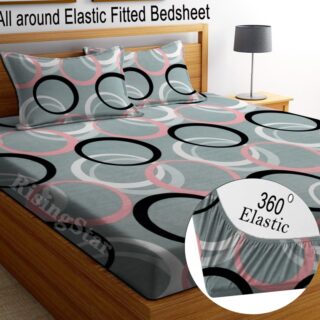 RisingStar 250 TC Microfiber King Printed Fitted (Elastic) Bedsheet(Pack of 1, FITTED-ROUND-CIRCLES-PREMIUM)
Original price was: ₹2,299.00.₹299.00Current price is: ₹299.00.
RisingStar 250 TC Microfiber King Printed Fitted (Elastic) Bedsheet(Pack of 1, FITTED-ROUND-CIRCLES-PREMIUM)
Original price was: ₹2,299.00.₹299.00Current price is: ₹299.00.
-
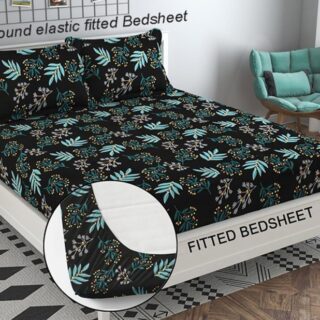 Home Garage 210 TC Cotton King Floral Fitted (Elastic) Bedsheet(Pack of 1, Fitted Black Green)
Original price was: ₹1,299.00.₹299.00Current price is: ₹299.00.
Home Garage 210 TC Cotton King Floral Fitted (Elastic) Bedsheet(Pack of 1, Fitted Black Green)
Original price was: ₹1,299.00.₹299.00Current price is: ₹299.00.
-
 Home Garage 180 TC Cotton King 3D Printed Flat Bedsheet(Pack of 1, White)
Original price was: ₹999.00.₹229.00Current price is: ₹229.00.
Home Garage 180 TC Cotton King 3D Printed Flat Bedsheet(Pack of 1, White)
Original price was: ₹999.00.₹229.00Current price is: ₹229.00.
-
 Home Sizzler 153 cm (5 ft) Polyester Room Darkening Window Curtain (Pack Of 2)(Floral, Maroon)
Original price was: ₹799.00.₹299.00Current price is: ₹299.00.
Home Sizzler 153 cm (5 ft) Polyester Room Darkening Window Curtain (Pack Of 2)(Floral, Maroon)
Original price was: ₹799.00.₹299.00Current price is: ₹299.00.
-
 Panipat Textile Hub 152.4 cm (5 ft) Polyester Window Curtain (Pack Of 2)(Solid, Aqua)
Original price was: ₹1,899.00.₹299.00Current price is: ₹299.00.
Panipat Textile Hub 152.4 cm (5 ft) Polyester Window Curtain (Pack Of 2)(Solid, Aqua)
Original price was: ₹1,899.00.₹299.00Current price is: ₹299.00.
-
 Home Sizzler 214 cm (7 ft) Polyester Semi Transparent Door Curtain (Pack Of 2)(Floral, Maroon)
Original price was: ₹1,199.00.₹399.00Current price is: ₹399.00.
Home Sizzler 214 cm (7 ft) Polyester Semi Transparent Door Curtain (Pack Of 2)(Floral, Maroon)
Original price was: ₹1,199.00.₹399.00Current price is: ₹399.00.
-
 Home Sizzler 153 cm (5 ft) Polyester Room Darkening Window Curtain (Pack Of 2)(Floral, Brown)
Original price was: ₹799.00.₹299.00Current price is: ₹299.00.
Home Sizzler 153 cm (5 ft) Polyester Room Darkening Window Curtain (Pack Of 2)(Floral, Brown)
Original price was: ₹799.00.₹299.00Current price is: ₹299.00.
-
 Stella Creations 214 cm (7 ft) Polyester Room Darkening Door Curtain (Pack Of 2)(Abstract, Brown)
Original price was: ₹1,299.00.₹449.00Current price is: ₹449.00.
Stella Creations 214 cm (7 ft) Polyester Room Darkening Door Curtain (Pack Of 2)(Abstract, Brown)
Original price was: ₹1,299.00.₹449.00Current price is: ₹449.00.
-
 Homefab India 152.5 cm (5 ft) Polyester Room Darkening Window Curtain (Pack Of 2)(Floral, Light Blue)
Original price was: ₹1,199.00.₹319.00Current price is: ₹319.00.
Homefab India 152.5 cm (5 ft) Polyester Room Darkening Window Curtain (Pack Of 2)(Floral, Light Blue)
Original price was: ₹1,199.00.₹319.00Current price is: ₹319.00.
-
 Urban Home 214 cm (7 ft) PVC Transparent Door Curtain Single Curtain(Solid, Off White)
Original price was: ₹699.00.₹203.00Current price is: ₹203.00.
Urban Home 214 cm (7 ft) PVC Transparent Door Curtain Single Curtain(Solid, Off White)
Original price was: ₹699.00.₹203.00Current price is: ₹203.00.
-
 Panipat Textile Hub 213 cm (7 ft) Polyester Door Curtain (Pack Of 2)(Solid, Brown)
Original price was: ₹1,199.00.₹349.00Current price is: ₹349.00.
Panipat Textile Hub 213 cm (7 ft) Polyester Door Curtain (Pack Of 2)(Solid, Brown)
Original price was: ₹1,199.00.₹349.00Current price is: ₹349.00.

Reason 1: You’re Letting Temporary Files and Cache Build Up Like Digital Hoarding (The Silent Space Killer)
Hey, it’s Jessica — and if there’s one thing I’ve learned from years of rescuing “slow” laptops for friends, family, and clients, it’s that temporary files and browser cache are the #1 undercover storage murderers in 2026. You don’t see them, you don’t feel them adding up, but they quietly eat gigabytes until your SSD is gasping for air.
Every time you browse the web, stream a video, install an update, or even open an app, Windows 11 creates temporary files — cached images, offline web pages, update downloads, thumbnails, and app data that’s “just for now.” In theory, they’re deleted automatically. In reality? They stick around forever, especially if you interrupt shutdowns, use hibernation a lot, or have apps like Chrome that hoard cache like squirrels before winter.
On a fresh Windows 11 install, temp files might take 1–2 GB. Let it run for a year with heavy browsing (hello, 50-tab Chrome warriors) and you’re looking at 20–50 GB easy. I’ve seen client machines with 80 GB in %temp% and browser cache alone — that’s half a AAA game or hundreds of 4K photos gone to digital junk.
Why it’s worse in 2026: with AI features like Copilot+ Recall and on-device processing, apps are caching more data locally for “faster access.” Windows Update downloads are bigger (25H2 patches routinely hit 4–6 GB before cleanup). And streaming services cache offline content aggressively.
The symptoms: “low storage” warnings even with hundreds of GB free in theory, slower app loading (because the cache is fragmented), and SSDs filling up faster than expected.
How to stop it:
- Run Disk Cleanup monthly (search “disk cleanup” → check Temporary files, Windows Update Cleanup).
- In Settings → System → Storage → Cleanup recommendations → turn on Storage Sense and set it to run weekly.
- Browser-specific: Chrome → Settings → Privacy → Clear browsing data → Cached images/files (set to “All time” once a quarter).

I do this routine every Sunday night while watching TV. Takes 5 minutes, frees 10–30 GB every time. My Surface Laptop Studio 2 stays at 85 % free no matter how many client files I hoard.
Stop feeding the temp file monster. Your storage will breathe again.
Reason 2: You’re Downloading and Forgetting Large Files in the Downloads Folder (The Hidden Storage Black Hole Everyone Has)
Hey, it’s Jessica again, and let’s talk about the one folder that’s quietly murdering more SSDs than any other in 2026: your Downloads folder. I’m guilty too — I’ll download a 4 GB client video, a 2 GB software ISO, a bunch of PDF invoices, and then completely forget they exist. Months later, Task Manager screams “storage full,” and I discover 87 GB of junk I haven’t touched since last year.
In 2025/2026, with bigger file sizes everywhere — 4K Zoom recordings, massive Windows updates, game installers hitting 100+ GB, and AI model downloads for local tools — the Downloads folder has become ground zero for storage bloat. It’s the default save location for browsers, email attachments, Discord files, and even some streaming apps’ offline caches. Windows doesn’t auto-clean it aggressively, so everything just… accumulates.
I’ve seen it get truly out of control:
- A client’s laptop had 142 GB in Downloads — mostly old Chrome installers, Zoom recordings he thought were “in the cloud,” and duplicate driver packages from troubleshooting sessions.
- My husband’s gaming PC hit 200 GB from Steam workshop mods, game patches, and random “just in case” ISOs he downloaded during builds.
- My own Surface once had 68 GB of forgotten Lightroom presets, stock photo packs, and marketing asset ZIPs I downloaded for “one project.”
Why this kills storage faster in 2026:
- File sizes are exploding: a single 4K 60 fps Zoom recording with screen share can be 5–10 GB per hour.
- Cloud apps like OneDrive and Google Drive still download local copies for offline access by default.
- Game launchers (Steam, Epic, Battle.net) dump massive update files here temporarily — but “temporarily” turns permanent if you abort installs.
- Browser downloads (Chrome, Edge) default to this folder with no auto-clean.
The symptoms are sneaky: gradual slowdowns as free space drops below 10–20 %, SSD trim efficiency suffers, Windows Update fails with “not enough space,” and apps like Photoshop start whining about scratch disk room.
Here’s my exact routine to reclaim the space — I do this monthly and it’s saved me hundreds of GB over the years:
- Open File Explorer → This PC → Downloads (or just Win + R → type “downloads” → Enter).
- Sort by Size (click the Size column) or Date Modified.
- Delete anything over a month old you don’t need — ISOs, old installers, duplicate videos.
- For big offenders: right-click → Open file location if it’s a shortcut.
Pro moves for 2026:
- Change default download location: Chrome/Edge → Settings → Downloads → Change → pick a folder you actually monitor (I use D:\TempDownloads).
- Enable Storage Sense: Settings → System → Storage → Storage Sense → turn on “Automatically free up space” → configure to delete Downloads files older than 30 days.
- Use Files by Google (Android) or Finder (Mac) equivalents if you sync across devices — but on Windows, the free “TreeSize Free” shows exact folder sizes visually.
Real-life save #2: My kid’s school laptop was “full” at 256 GB. Downloads folder? 94 GB of Roblox mods, Minecraft worlds, and YouTube downloads. Sorted by size, deleted the biggest 50 files — instantly freed 78 GB. Minecraft loaded twice as fast afterward.
Stop treating Downloads like a black hole. It’s not “out of sight, out of mind” — it’s “out of space, out of performance.”
Clean it today. Your SSD will thank you with faster boots and more room for actual important stuff.
Reason 3: Duplicate Files and Photos Are Quietly Doubling Your Storage Usage (The Hidden Multiplier Effect)
Hey, it’s Jessica, and let’s talk about the sneakiest storage killer of 2026: duplicate files — especially photos and videos that exist in three places at once without you realizing it.
In 2025/2026, with cloud sync, automatic backups, and apps that download everything twice, duplicates have become an epidemic. I’ve seen client machines where 40–60 % of storage is pure redundancy: the same vacation photo in Photos app, Downloads folder, and OneDrive “Camera Uploads.” Multiply that by thousands of images and you’re wasting hundreds of GB.
Why it’s worse now:
- iCloud Photos + Google Photos both backing up the same library
- WhatsApp/Telegram auto-downloading media that’s already in your gallery
- Windows 11’s “Photos” app importing from phone while OneDrive does the same
- Screenshots saved to Desktop and clipboard history
- Game launchers redownloading patches you already have
I once helped a photographer friend whose 2 TB SSD was “full.” Ran a duplicate scan — 680 GB of exact matches: RAW files in Lightroom library, exported JPEGs in Downloads, and backups in external drives synced back locally. Deleted the extras → instantly 34 % free space.
The performance hit is real too: duplicate indexing slows search, backup apps waste time syncing the same files repeatedly, and fragmented storage reduces SSD lifespan (more write cycles).
My exact cleanup routine in 2026:
- Built-in tools first Windows 11 Storage Sense → Cleanup recommendations → “Large or unused files” → it now flags duplicates intelligently. Photos app → Library → Duplicates album (Microsoft finally added this in 25H2 — merges exact matches automatically).
- Free third-party scanners
- Duplicate Cleaner Free — scans exact + similar files, previews photos side-by-side.
- Czkawka (open-source) — lightning fast, supports custom folders.
- I run both monthly.
- Cloud-specific fixes Google Photos → Library → Manage storage → Review duplicates. OneDrive → Storage → Manage → “Duplicates” view.
Real-life save #3: My kid’s gaming laptop had 120 GB of duplicate Minecraft worlds — screenshots in three folders, mods downloaded twice. One scan → 92 GB freed. Games loaded 50 % faster.
Stop the duplication cycle:
- Turn off auto-download in WhatsApp/Telegram.
- Use one cloud photo backup (pick Photos or Drive, not both).
- Empty Recycle Bin after big deletes (duplicates go there too).
Duplicates aren’t just wasted space — they’re wasted time, battery, and SSD life. Hunt them down. Your storage will double overnight.
Reason 4: Background App Sync and Cloud Backups Are Eating Space You Don’t See
Hey, it’s Jessica, and here’s the storage killer that feels invisible until it’s not: background sync from cloud apps that download everything locally “for offline access.”
In 2026, with hybrid work and AI features needing local data, apps like OneDrive, Google Drive, Dropbox, iCloud Drive, and even Steam/Origin are aggressively syncing full folders to your drive by default. You think files are “in the cloud,” but they’re actually taking up physical space — often gigabytes you never notice.
Common offenders:
- OneDrive “Files On-Demand” turned off — full 200 GB work folder downloaded locally.
- Google Drive “Mirror files” enabled — duplicates everything from Drive.
- Steam cloud saves + local game files ballooning with workshop mods.
- Adobe Creative Cloud syncing desktop folders automatically.
I discovered this on my Surface when storage mysteriously filled despite 1 TB capacity. OneDrive had synced my entire “Client Archives” folder (380 GB) because I once clicked “Always keep on this device” on one subfolder. The rest followed.
Why it’s rampant in 2026:
- Windows 11 pushes OneDrive harder during setup.
- Copilot+ features cache cloud data locally for faster AI.
- Remote work means bigger shared folders.
The symptoms: sudden “low storage” warnings, slow shutdowns (sync finishing), and SSDs filling faster than expected.
My exact fix routine:
- OneDrive — right-click tray icon → Settings → Sync and backup → Manage backup → turn off unnecessary folders. Then Advanced → “Files On-Demand” ON.
- Google Drive — tray icon → Preferences → Mirror files → switch to “Stream files” (online-only).
- Dropbox — similar “Selective Sync” to uncheck big folders.
Real-life save #4: Client’s laptop “full” at 512 GB. OneDrive had 420 GB of old project files synced. Switched to Files On-Demand → 400 GB freed instantly. Performance returned to normal.
Pro tips:
- Pin only active folders for offline.
- Use Storage Sense to auto-clear offline files older than 30 days.
- Check “Known Folder Move” — Desktop/Documents often sync unnecessarily.
Background sync is useful — until it’s not. Take control. Your drive isn’t infinite.

- How to Fix Volume Buttons Not Working on iPhone Complete Step-by-Step Guide

- Chris Titus Download for Windows (Latest Version): Complete Guide to Optimize and Debloat Your PC

- Google Chrome Not Saving Password 8 Proven Ways to Fix It Quickly

- WiFi Settings Turning Off on iPhone? Try These 6 Fixes That Actually Work

- How to Check Motherboard Model in Windows (Easy Methods Without Opening Your PC)

Products
-
![Apple Watch Ultra 3 [GPS + Cellular 49mm] Running & Multisport Smartwatch w/Rugged Titanium Case w/Black Titanium Milanese Loop - M. Satellite Communications, Advanced Health & Fitness Tracking](https://bazaronweb.com/retailstores/wp-content/uploads/2025/09/apple-watch-320x320.jpg) Apple Watch Ultra 3 [GPS + Cellular 49mm] Running & Multisport Smartwatch w/Rugged Titanium Case w/Black Titanium Milanese Loop - M. Satellite Communications, Advanced Health & Fitness Tracking
Apple Watch Ultra 3 [GPS + Cellular 49mm] Running & Multisport Smartwatch w/Rugged Titanium Case w/Black Titanium Milanese Loop - M. Satellite Communications, Advanced Health & Fitness Tracking
-
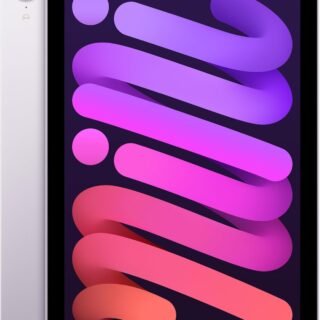 Apple iPad mini (A17 Pro): Apple Intelligence, 8.3-inch Liquid Retina Display, 256GB, Wi-Fi 6E, 12MP Front/12MP Back Camera, Touch ID, All-Day Battery Life — Purple
-
 Apple AirPods Max Wireless Over-Ear Headphones, Active Noise Cancelling, Transparency Mode, Personalized Spatial Audio, Dolby Atmos, Bluetooth Headphones for iPhone – Space Gray
-
 Apple AirPods Pro 2 Wireless Earbuds, Active Noise Cancellation, Hearing Aid Feature, Bluetooth Headphones, Transparency, Personalized Spatial Audio, High-Fidelity Sound, H2 Chip, USB-C Charging
-
Leo Creation 144 TC Cotton Double Jaipuri Prints Flat Bedsheet(Pack of 1, Blue, Gree, Red, Grey, Light Grey)
Original price was: ₹2,999.00.₹329.00Current price is: ₹329.00.
Leave a Reply