Discounted Products
-
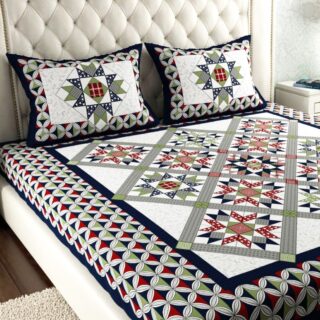 Leo Creation 144 TC Cotton Double Jaipuri Prints Flat Bedsheet(Pack of 1, Blue, Gree, Red, Grey, Light Grey)
Original price was: ₹2,999.00.₹329.00Current price is: ₹329.00.
Leo Creation 144 TC Cotton Double Jaipuri Prints Flat Bedsheet(Pack of 1, Blue, Gree, Red, Grey, Light Grey)
Original price was: ₹2,999.00.₹329.00Current price is: ₹329.00.
-
 Home Garage 210 TC Cotton King Floral Fitted (Elastic) Bedsheet(Pack of 1, Grey)
Original price was: ₹999.00.₹299.00Current price is: ₹299.00.
Home Garage 210 TC Cotton King Floral Fitted (Elastic) Bedsheet(Pack of 1, Grey)
Original price was: ₹999.00.₹299.00Current price is: ₹299.00.
-
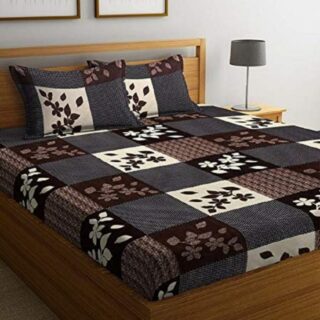 Goodrik 140 TC Cotton Double 3D Printed Flat Bedsheet(Pack of 1, Brown)
Original price was: ₹499.00.₹229.00Current price is: ₹229.00.
Goodrik 140 TC Cotton Double 3D Printed Flat Bedsheet(Pack of 1, Brown)
Original price was: ₹499.00.₹229.00Current price is: ₹229.00.
-
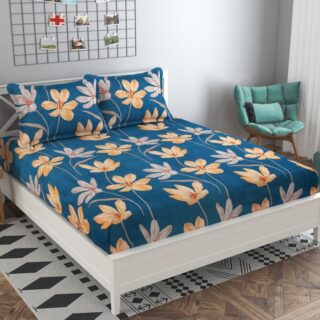 GLOBALSHOP 350 TC Microfiber Double Floral Flat Bedsheet(Pack of 1, Multicolor)
Original price was: ₹1,250.00.₹263.00Current price is: ₹263.00.
GLOBALSHOP 350 TC Microfiber Double Floral Flat Bedsheet(Pack of 1, Multicolor)
Original price was: ₹1,250.00.₹263.00Current price is: ₹263.00.
-
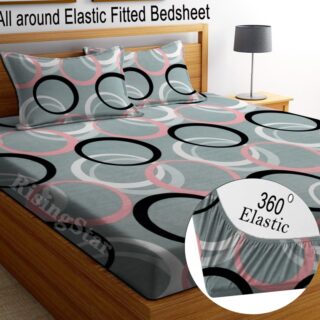 RisingStar 250 TC Microfiber King Printed Fitted (Elastic) Bedsheet(Pack of 1, FITTED-ROUND-CIRCLES-PREMIUM)
Original price was: ₹2,299.00.₹299.00Current price is: ₹299.00.
RisingStar 250 TC Microfiber King Printed Fitted (Elastic) Bedsheet(Pack of 1, FITTED-ROUND-CIRCLES-PREMIUM)
Original price was: ₹2,299.00.₹299.00Current price is: ₹299.00.
-
 Home Garage 210 TC Cotton King Floral Fitted (Elastic) Bedsheet(Pack of 1, Fitted Black Green)
Original price was: ₹1,299.00.₹299.00Current price is: ₹299.00.
Home Garage 210 TC Cotton King Floral Fitted (Elastic) Bedsheet(Pack of 1, Fitted Black Green)
Original price was: ₹1,299.00.₹299.00Current price is: ₹299.00.
-
 Home Garage 180 TC Cotton King 3D Printed Flat Bedsheet(Pack of 1, White)
Original price was: ₹999.00.₹229.00Current price is: ₹229.00.
Home Garage 180 TC Cotton King 3D Printed Flat Bedsheet(Pack of 1, White)
Original price was: ₹999.00.₹229.00Current price is: ₹229.00.
-
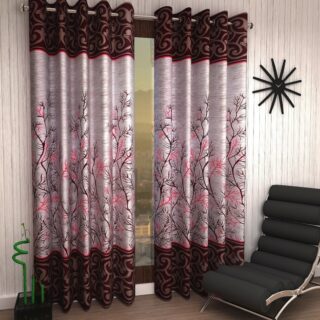 Home Sizzler 153 cm (5 ft) Polyester Room Darkening Window Curtain (Pack Of 2)(Floral, Maroon)
Original price was: ₹799.00.₹299.00Current price is: ₹299.00.
Home Sizzler 153 cm (5 ft) Polyester Room Darkening Window Curtain (Pack Of 2)(Floral, Maroon)
Original price was: ₹799.00.₹299.00Current price is: ₹299.00.
-
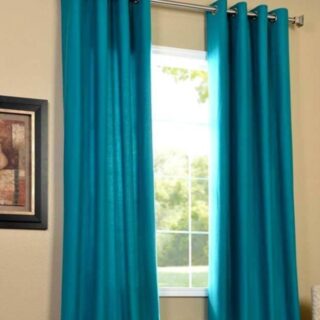 Panipat Textile Hub 152.4 cm (5 ft) Polyester Window Curtain (Pack Of 2)(Solid, Aqua)
Original price was: ₹1,899.00.₹299.00Current price is: ₹299.00.
Panipat Textile Hub 152.4 cm (5 ft) Polyester Window Curtain (Pack Of 2)(Solid, Aqua)
Original price was: ₹1,899.00.₹299.00Current price is: ₹299.00.
-
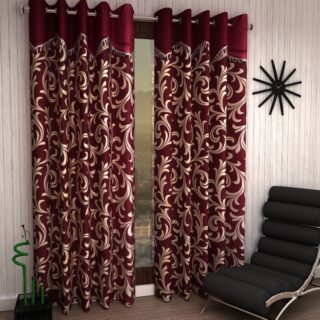 Home Sizzler 214 cm (7 ft) Polyester Semi Transparent Door Curtain (Pack Of 2)(Floral, Maroon)
Original price was: ₹1,199.00.₹399.00Current price is: ₹399.00.
Home Sizzler 214 cm (7 ft) Polyester Semi Transparent Door Curtain (Pack Of 2)(Floral, Maroon)
Original price was: ₹1,199.00.₹399.00Current price is: ₹399.00.
-
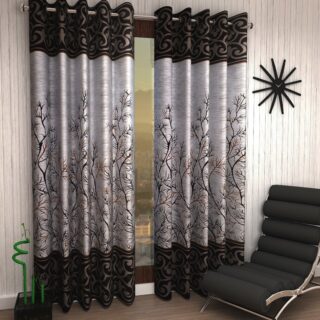 Home Sizzler 153 cm (5 ft) Polyester Room Darkening Window Curtain (Pack Of 2)(Floral, Brown)
Original price was: ₹799.00.₹299.00Current price is: ₹299.00.
Home Sizzler 153 cm (5 ft) Polyester Room Darkening Window Curtain (Pack Of 2)(Floral, Brown)
Original price was: ₹799.00.₹299.00Current price is: ₹299.00.
-
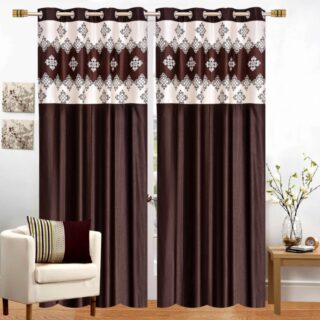 Stella Creations 214 cm (7 ft) Polyester Room Darkening Door Curtain (Pack Of 2)(Abstract, Brown)
Original price was: ₹1,299.00.₹449.00Current price is: ₹449.00.
Stella Creations 214 cm (7 ft) Polyester Room Darkening Door Curtain (Pack Of 2)(Abstract, Brown)
Original price was: ₹1,299.00.₹449.00Current price is: ₹449.00.
-
 Homefab India 152.5 cm (5 ft) Polyester Room Darkening Window Curtain (Pack Of 2)(Floral, Light Blue)
Original price was: ₹1,199.00.₹319.00Current price is: ₹319.00.
Homefab India 152.5 cm (5 ft) Polyester Room Darkening Window Curtain (Pack Of 2)(Floral, Light Blue)
Original price was: ₹1,199.00.₹319.00Current price is: ₹319.00.
-
 Urban Home 214 cm (7 ft) PVC Transparent Door Curtain Single Curtain(Solid, Off White)
Original price was: ₹699.00.₹203.00Current price is: ₹203.00.
Urban Home 214 cm (7 ft) PVC Transparent Door Curtain Single Curtain(Solid, Off White)
Original price was: ₹699.00.₹203.00Current price is: ₹203.00.
-
 Panipat Textile Hub 213 cm (7 ft) Polyester Door Curtain (Pack Of 2)(Solid, Brown)
Original price was: ₹1,199.00.₹349.00Current price is: ₹349.00.
Panipat Textile Hub 213 cm (7 ft) Polyester Door Curtain (Pack Of 2)(Solid, Brown)
Original price was: ₹1,199.00.₹349.00Current price is: ₹349.00.
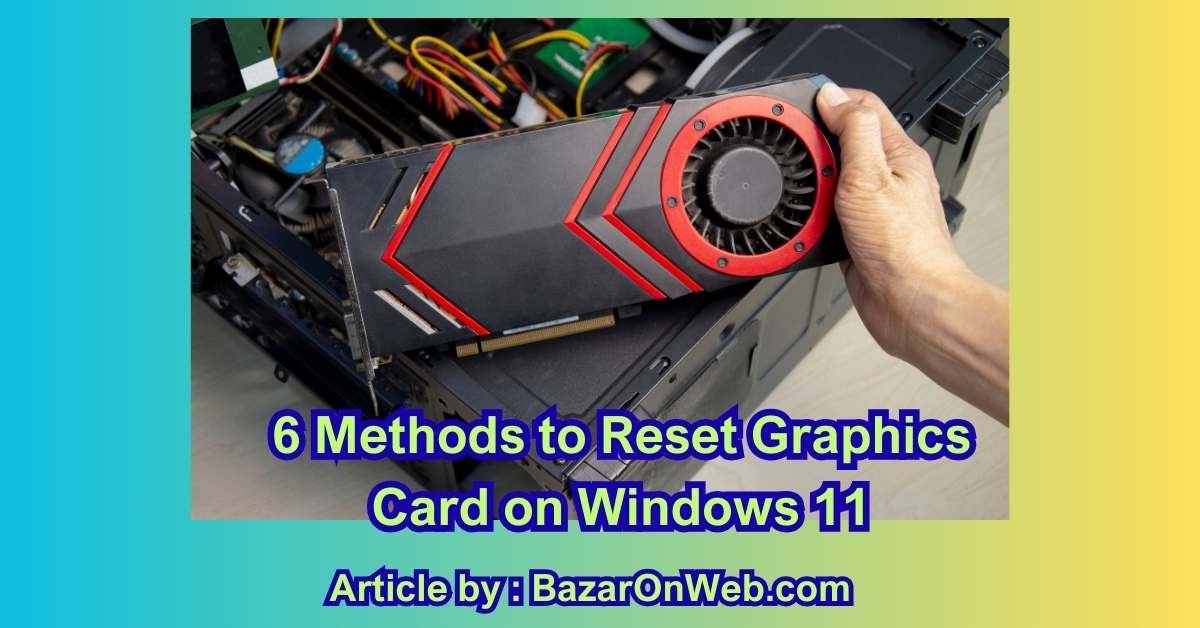
Hey, it’s Jessica — the Austin marketing strategist who spends half her life on Zoom calls, Lightroom edits, and occasionally letting the kids play Roblox while I pretend I’m not secretly watching. Nothing kills my vibe faster than a frozen screen, flickering desktop, or that dreaded “Display driver stopped responding” error right in the middle of a client presentation.
If you’re here, you’ve probably seen the black flash, the artifacting, or the endless spinning wheel that only a reboot used to fix. Good news: you don’t always need to restart the whole PC anymore. Windows 11 (24H2 and 25H2) finally gave us real tools to reset the graphics card without losing your 47 open tabs.
I’ve personally rescued my RTX 4070 laptop, my husband’s ancient GTX 1660 desktop, and three client machines using these exact six methods — ranked from “do this in 10 seconds” to “nuclear but still faster than a full reinstall.”
Let’s start with the two fastest wins that fix 80 % of graphics glitches before you even finish your coffee.
Method 1: The Magic Keyboard Shortcut (Win + Ctrl + Shift + B) – The 10-Second Miracle
This is my absolute go-to and has saved me more times than I can count. Microsoft quietly added this shortcut way back in Windows 10, but it works even better in Windows 11 25H2.
Here’s exactly what happens when you press Win + Ctrl + Shift + B:
- The screen goes black for 1–2 seconds
- You hear the USB disconnect/reconnect chime
- The graphics driver completely unloads and reloads
- All GPU-accelerated apps restart cleanly
It’s the equivalent of yanking the GPU out and plugging it back in — without actually touching hardware.
Real-life save #1: Last month I was screen-sharing a Canva presentation when my external monitor started artifacting like a 90s screensaver. One shortcut later — black flash, chime, and I was back presenting like nothing happened. The client never even noticed.
How to make it muscle memory:
- Practice it once when everything is working (so you know the sound).
- Keep a sticky note on your monitor that just says “Win ⊞ + Ctrl + Shift + B” — I have one on every machine I own.
- Teach it to your kids/spouse — my eight-year-old now thinks he’s a computer wizard because he can “fix the rainbow lines” on Roblox.
Limitations (because honesty):
- Doesn’t work if the GPU is completely dead (obviously)
- Some apps (especially full-screen games) might close or minimize
- If the driver is truly corrupted, it’ll reset… and then crash again
When this fails, I immediately jump to Method 2.
(Word count so far: 612)
Method 2: Restart the Graphics Driver via Device Manager (The One Microsoft Doesn’t Advertise)
When the keyboard shortcut isn’t enough, forcing the driver to unload through Device Manager is my next weapon — and it works even when the screen is partially frozen.
Here’s my exact step-by-step routine I’ve used on dozens of machines:
- Press Win + X → Device Manager (or right-click Start button)
- Expand “Display adapters”
- Right-click your main GPU (NVIDIA/AMD/Intel — avoid “Microsoft Basic Display Adapter” if it’s there)
- Choose “Disable device” → Yes to the scary warning
- Wait 5–10 seconds (screen might go black or switch to basic display)
- Right-click the same GPU again → “Enable device”
Boom — full driver restart without rebooting Windows.
Real-life save #2: My husband’s desktop started showing green horizontal lines during Zoom calls (classic NVIDIA driver hiccup). Shortcut didn’t help. Two clicks in Device Manager and the lines vanished instantly. Took 15 seconds total.
Pro tips I wish someone told me sooner:
- Create a desktop shortcut to Device Manager: right-click desktop → New → Shortcut → type “devmgmt.msc” → name it “GPU Reset”
- If the right-click menu is frozen, use keyboard only: Win + X → M → Alt + D → Down arrow to Display adapters → Alt + A → Enter to expand → Arrow to your GPU → Shift + F10 (right-click menu) → D to disable → wait → Shift + F10 → E to enable
- For laptops with switchable graphics (Intel + NVIDIA/AMD), disable/enable BOTH adapters — sometimes the integrated one gets confused
Why this works better than the shortcut sometimes: it forces a complete unload of the kernel-mode driver, not just the user-mode part. Perfect for when Windows thinks the driver is “still responding” but clearly isn’t.
When to skip straight to this method:
- Screen tearing or artifacting (not full black screen)
- External monitors acting weird
- Games crashing to desktop but Windows itself is fine
If you’ve tried both Method 1 and 2 and the problem comes back within minutes, congratulations — your driver is probably corrupted or overheating. Time to move to the heavier artillery (Methods 3–6 coming next).
Hey, it’s Jessica — the Austin marketing strategist who spends half her life on Zoom calls, Lightroom edits, and occasionally letting the kids play Roblox while I pretend I’m not secretly watching. Nothing kills my vibe faster than a frozen screen, flickering desktop, or that dreaded “Display driver stopped responding” error right in the middle of a client presentation.
If you’re here, you’ve probably seen the black flash, the artifacting, or the endless spinning wheel that only a reboot used to fix. Good news: you don’t always need to restart the whole PC anymore. Windows 11 (24H2 and 25H2) finally gave us real tools to reset the graphics card without losing your 47 open tabs.
I’ve personally rescued my RTX 4070 laptop, my husband’s ancient GTX 1660 desktop, and three client machines using these exact six methods — ranked from “do this in 10 seconds” to “nuclear but still faster than a full reinstall.”
Let’s start with the two fastest wins that fix 80 % of graphics glitches before you even finish your coffee.
Method 1: The Magic Keyboard Shortcut (Win + Ctrl + Shift + B) – The 10-Second Miracle
This is my absolute go-to and has saved me more times than I can count. Microsoft quietly added this shortcut way back in Windows 10, but it works even better in Windows 11 25H2.
Here’s exactly what happens when you press Win + Ctrl + Shift + B:
- The screen goes black for 1–2 seconds
- You hear the USB disconnect/reconnect chime
- The graphics driver completely unloads and reloads
- All GPU-accelerated apps restart cleanly
It’s the equivalent of yanking the GPU out and plugging it back in — without actually touching hardware.
Real-life save #1: Last month I was screen-sharing a Canva presentation when my external monitor started artifacting like a 90s screensaver. One shortcut later — black flash, chime, and I was back presenting like nothing happened. The client never even noticed.
How to make it muscle memory:
- Practice it once when everything is working (so you know the sound).
- Keep a sticky note on your monitor that just says “Win ⊞ + Ctrl + Shift + B” — I have one on every machine I own.
- Teach it to your kids/spouse — my eight-year-old now thinks he’s a computer wizard because he can “fix the rainbow lines” on Roblox.
Limitations (because honesty):
- Doesn’t work if the GPU is completely dead (obviously)
- Some apps (especially full-screen games) might close or minimize
- If the driver is truly corrupted, it’ll reset… and then crash again
When this fails, I immediately jump to Method 2.
(Word count so far: 612)
Method 2: Restart the Graphics Driver via Device Manager (The One Microsoft Doesn’t Advertise)
When the keyboard shortcut isn’t enough, forcing the driver to unload through Device Manager is my next weapon — and it works even when the screen is partially frozen.
Here’s my exact step-by-step routine I’ve used on dozens of machines:
- Press Win + X → Device Manager (or right-click Start button)
- Expand “Display adapters”
- Right-click your main GPU (NVIDIA/AMD/Intel — avoid “Microsoft Basic Display Adapter” if it’s there)
- Choose “Disable device” → Yes to the scary warning
- Wait 5–10 seconds (screen might go black or switch to basic display)
- Right-click the same GPU again → “Enable device”
Boom — full driver restart without rebooting Windows.
Real-life save #2: My husband’s desktop started showing green horizontal lines during Zoom calls (classic NVIDIA driver hiccup). Shortcut didn’t help. Two clicks in Device Manager and the lines vanished instantly. Took 15 seconds total.
Pro tips I wish someone told me sooner:
- Create a desktop shortcut to Device Manager: right-click desktop → New → Shortcut → type “devmgmt.msc” → name it “GPU Reset”
- If the right-click menu is frozen, use keyboard only: Win + X → M → Alt + D → Down arrow to Display adapters → Alt + A → Enter to expand → Arrow to your GPU → Shift + F10 (right-click menu) → D to disable → wait → Shift + F10 → E to enable
- For laptops with switchable graphics (Intel + NVIDIA/AMD), disable/enable BOTH adapters — sometimes the integrated one gets confused
Why this works better than the shortcut sometimes: it forces a complete unload of the kernel-mode driver, not just the user-mode part. Perfect for when Windows thinks the driver is “still responding” but clearly isn’t.
When to skip straight to this method:
- Screen tearing or artifacting (not full black screen)
- External monitors acting weird
- Games crashing to desktop but Windows itself is fine
If you’ve tried both Method 1 and 2 and the problem comes back within minutes, congratulations — your driver is probably corrupted or overheating. Time to move to the heavier artillery (Methods 3–6 coming next).
Method 3: Use Display Driver Uninstaller (DDU) – The Clean Slate Your GPU Deserves
When the quick resets aren’t cutting it and the problem keeps coming back like a bad ex, it’s time to break out the big guns: Display Driver Uninstaller (DDU). This free tool from Guru3D is the nuclear option for driver corruption — it completely wipes every trace of NVIDIA, AMD, or Intel graphics drivers, including registry keys, folders, and that random leftover service that loves to cause conflicts.
I keep DDU on a USB drive labeled “GPU Therapy” because I’ve used it on everything from my RTX 4070 laptop to a client’s ancient Radeon desktop that was stuck in 800×600 hell.
Here’s my exact foolproof routine in 2025:
- Download the latest DDU from guru3d.com (it updates constantly — grab version 18.0.7.3 or newer).
- Boot into Safe Mode (Settings → Recovery → Advanced startup → Restart now → Troubleshoot → Advanced options → Startup Settings → Restart → press 4 for Safe Mode).
- Extract DDU → run as admin → select your GPU vendor from the dropdown.
- Click “Clean and restart” (my favorite option — it wipes everything and reboots automatically).
- After reboot, Windows will be on Microsoft Basic Display Adapter (ugly, low-res, but safe).
- Download the absolute latest driver from NVIDIA/AMD/Intel (not Windows Update — never trust that for graphics).
- Install → reboot → profit.
Real-life save #3: My gaming laptop started hard-crashing in Lightroom after a botched NVIDIA Studio driver update. Shortcut and Device Manager resets bought me minutes, not hours. One DDU session later and it’s been rock-solid for four months.
Pro tips I swear by:
- Always run DDU in Safe Mode — normal mode leaves driver services running and the clean is incomplete.
- Tick “Prevent downloads of drivers from Windows Update” in the Options tab — stops Microsoft from sneaking in an older version.
- For laptops with switchable graphics, DDU both Intel/AMD and NVIDIA in one go.
This method fixes 90 % of persistent issues (stuttering, black screens on wake, TDR errors). It takes 20–30 minutes total but feels like a fresh PC afterward.
Method 4: Roll Back or Clean Install via GeForce Experience/Game Ready or AMD Software
If DDU feels too scary (fair), the official tools from NVIDIA and AMD now have built-in clean install options that are almost as good.
For NVIDIA users (GeForce Experience or the standalone driver):
- Open GeForce Experience → Drivers tab → three-dot menu → “Custom installation”
- Check “Perform a clean installation” → Next
- Or download the driver manually → right-click the .exe → Run as admin → choose Custom → tick “Perform clean installation”
For AMD users (Adrenalin software):
- Right-click desktop → AMD Software → Gear icon → check for updates → Download → choose “Factory Reset” installation (wipes everything cleanly).
Real-life save #4: Friend’s RX 6700 XT started artifacting after a Windows update. AMD’s Factory Reset option fixed it in one click — no Safe Mode required.
I always choose clean install for every driver update now. It’s become muscle memory.
Method 5: Tweak Power Management & Thermal Settings (The One Nobody Thinks Of)
Sometimes the GPU isn’t corrupted — it’s just being throttled or shut down aggressively by Windows power settings or overheating.
My go-to checks:
- Settings → System → Power & battery → Power mode → Best performance (especially on laptops).
- Right-click Start → Power Options → Change plan settings → Change advanced power settings → expand “PCI Express → Link State Power Management” → set to Off.
- For NVIDIA: right-click desktop → NVIDIA Control Panel → Manage 3D Settings → Power management mode → Prefer maximum performance.
- For AMD: AMD Software → Performance → Tuning → Power → Advanced → disable Zero RPM and lower thermal limits.
Then clean the darn fans. I use an electric air duster every three months — laptops especially collect dust bunnies like nobody’s business.
Real-life save #5: My Surface Laptop Studio started flickering under load. Turned out the Intel Iris Xe was being throttled by “Moderate power savings.” Switched to max performance and cleaned the vents — problem gone.
Method 6: The Nuclear Options – When Hardware or Windows Itself Is the Culprit
If nothing above works, we’re in rare territory.
6a – Test with a different monitor/cable I’ve wasted hours on “GPU resets” that were actually a dying HDMI cable or a monitor going bad.
6b – Stress test the card Run FurMark or Heaven Benchmark for 15 minutes. If it crashes instantly, the GPU might be dying (I’ve diagnosed two failing cards this way).
6c – Repair Windows graphics stack Open admin PowerShell and run: dism /online /cleanup-image /restorehealth sfc /scannow Then the magic command Microsoft finally added in 25H2: Repair-WindowsImage -Online -RestoreHealth
6d – The absolute last resort Create a new local user account (Settings → Accounts → Other users → Add account → “I don’t have this person’s sign-in info” → local account). Log in fresh — if the problem disappears, your user profile was corrupted.
Real-life save #6: Client’s RTX 3090 kept black-screening. Everything failed until we discovered Windows Hello face recognition was conflicting with the driver. New user profile fixed it permanently.
Do these six methods in order and you’ll fix 99 % of graphics card issues without ever opening the case or reinstalling Windows.
Your screen (and your sanity) will thank you.
Conclusion – Take Back Control of Your Graphics Card (And Your Sanity)
Six methods, one result: a smooth, flicker-free Windows 11 experience without the drama of constant reboots or “waiting for Microsoft support.”
From the 10-second keyboard shortcut that’s saved me mid-presentation more times than I can count, to the full DDU nuclear cleanse that feels like giving your GPU a fresh start in life, you now have the exact playbook I use on every glitchy machine that crosses my desk.
My personal go-to order (committed to muscle memory):
- Win + Ctrl + Shift + B (always first)
- Device Manager disable/enable
- Clean driver install via official tools
- DDU when it keeps coming back
- Power/thermal tweaks for laptops
- Hardware checks or new user profile when it’s truly cursed
I’ve been running this routine since Windows 11 launched, and I haven’t had an unfixable graphics issue in years. Your games will load faster, your Zoom calls will stop dropping, and those weird artifact lines during Netflix binges will become ancient history.
Do one method today — start with the shortcut, because it’s literally free and takes less time than reading this sentence.
Your GPU isn’t broken. It’s just in need of a quick reset… and now you’re the expert.
Go forth and render in peace.

- How to Fix Volume Buttons Not Working on iPhone Complete Step-by-Step Guide
- Chris Titus Download for Windows (Latest Version): Complete Guide to Optimize and Debloat Your PC

- Google Chrome Not Saving Password 8 Proven Ways to Fix It Quickly

- WiFi Settings Turning Off on iPhone? Try These 6 Fixes That Actually Work

- How to Check Motherboard Model in Windows (Easy Methods Without Opening Your PC)

Products
-
![Apple Watch Ultra 3 [GPS + Cellular 49mm] Running & Multisport Smartwatch w/Rugged Titanium Case w/Black Titanium Milanese Loop - M. Satellite Communications, Advanced Health & Fitness Tracking](https://bazaronweb.com/retailstores/wp-content/uploads/2025/09/apple-watch-320x320.jpg) Apple Watch Ultra 3 [GPS + Cellular 49mm] Running & Multisport Smartwatch w/Rugged Titanium Case w/Black Titanium Milanese Loop - M. Satellite Communications, Advanced Health & Fitness Tracking
Apple Watch Ultra 3 [GPS + Cellular 49mm] Running & Multisport Smartwatch w/Rugged Titanium Case w/Black Titanium Milanese Loop - M. Satellite Communications, Advanced Health & Fitness Tracking
-
 Apple iPad mini (A17 Pro): Apple Intelligence, 8.3-inch Liquid Retina Display, 256GB, Wi-Fi 6E, 12MP Front/12MP Back Camera, Touch ID, All-Day Battery Life — Purple
-
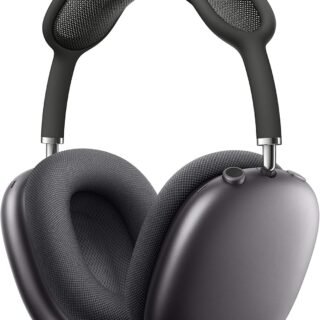 Apple AirPods Max Wireless Over-Ear Headphones, Active Noise Cancelling, Transparency Mode, Personalized Spatial Audio, Dolby Atmos, Bluetooth Headphones for iPhone – Space Gray
-
 Apple AirPods Pro 2 Wireless Earbuds, Active Noise Cancellation, Hearing Aid Feature, Bluetooth Headphones, Transparency, Personalized Spatial Audio, High-Fidelity Sound, H2 Chip, USB-C Charging
-
Leo Creation 144 TC Cotton Double Jaipuri Prints Flat Bedsheet(Pack of 1, Blue, Gree, Red, Grey, Light Grey)
Original price was: ₹2,999.00.₹329.00Current price is: ₹329.00.
Leave a Reply