Discounted Products
-
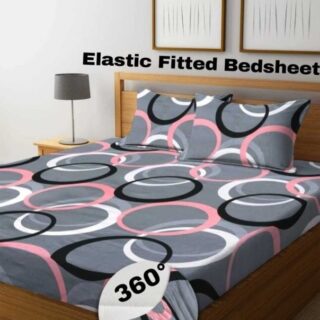 Home Garage 210 TC Cotton King Floral Fitted (Elastic) Bedsheet(Pack of 1, Grey)
Original price was: ₹999.00.₹299.00Current price is: ₹299.00.
Home Garage 210 TC Cotton King Floral Fitted (Elastic) Bedsheet(Pack of 1, Grey)
Original price was: ₹999.00.₹299.00Current price is: ₹299.00.
-
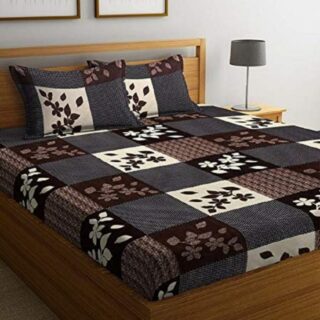 Goodrik 140 TC Cotton Double 3D Printed Flat Bedsheet(Pack of 1, Brown)
Original price was: ₹499.00.₹229.00Current price is: ₹229.00.
Goodrik 140 TC Cotton Double 3D Printed Flat Bedsheet(Pack of 1, Brown)
Original price was: ₹499.00.₹229.00Current price is: ₹229.00.
-
 GLOBALSHOP 350 TC Microfiber Double Floral Flat Bedsheet(Pack of 1, Multicolor)
Original price was: ₹1,250.00.₹263.00Current price is: ₹263.00.
GLOBALSHOP 350 TC Microfiber Double Floral Flat Bedsheet(Pack of 1, Multicolor)
Original price was: ₹1,250.00.₹263.00Current price is: ₹263.00.
-
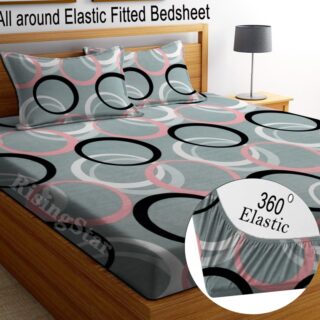 RisingStar 250 TC Microfiber King Printed Fitted (Elastic) Bedsheet(Pack of 1, FITTED-ROUND-CIRCLES-PREMIUM)
Original price was: ₹2,299.00.₹299.00Current price is: ₹299.00.
RisingStar 250 TC Microfiber King Printed Fitted (Elastic) Bedsheet(Pack of 1, FITTED-ROUND-CIRCLES-PREMIUM)
Original price was: ₹2,299.00.₹299.00Current price is: ₹299.00.
-
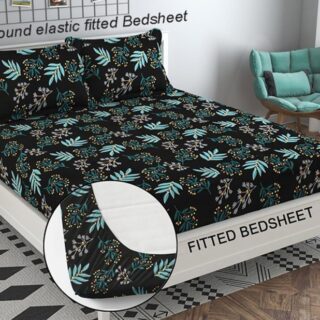 Home Garage 210 TC Cotton King Floral Fitted (Elastic) Bedsheet(Pack of 1, Fitted Black Green)
Original price was: ₹1,299.00.₹299.00Current price is: ₹299.00.
Home Garage 210 TC Cotton King Floral Fitted (Elastic) Bedsheet(Pack of 1, Fitted Black Green)
Original price was: ₹1,299.00.₹299.00Current price is: ₹299.00.
-
 Home Garage 180 TC Cotton King 3D Printed Flat Bedsheet(Pack of 1, White)
Original price was: ₹999.00.₹229.00Current price is: ₹229.00.
Home Garage 180 TC Cotton King 3D Printed Flat Bedsheet(Pack of 1, White)
Original price was: ₹999.00.₹229.00Current price is: ₹229.00.
-
 Panipat Textile Hub 152.4 cm (5 ft) Polyester Window Curtain (Pack Of 2)(Solid, Aqua)
Original price was: ₹1,899.00.₹299.00Current price is: ₹299.00.
Panipat Textile Hub 152.4 cm (5 ft) Polyester Window Curtain (Pack Of 2)(Solid, Aqua)
Original price was: ₹1,899.00.₹299.00Current price is: ₹299.00.
-
 Home Sizzler 214 cm (7 ft) Polyester Semi Transparent Door Curtain (Pack Of 2)(Floral, Maroon)
Original price was: ₹1,199.00.₹399.00Current price is: ₹399.00.
Home Sizzler 214 cm (7 ft) Polyester Semi Transparent Door Curtain (Pack Of 2)(Floral, Maroon)
Original price was: ₹1,199.00.₹399.00Current price is: ₹399.00.
-
 Home Sizzler 153 cm (5 ft) Polyester Room Darkening Window Curtain (Pack Of 2)(Floral, Brown)
Original price was: ₹799.00.₹299.00Current price is: ₹299.00.
Home Sizzler 153 cm (5 ft) Polyester Room Darkening Window Curtain (Pack Of 2)(Floral, Brown)
Original price was: ₹799.00.₹299.00Current price is: ₹299.00.
-
 Stella Creations 214 cm (7 ft) Polyester Room Darkening Door Curtain (Pack Of 2)(Abstract, Brown)
Original price was: ₹1,299.00.₹449.00Current price is: ₹449.00.
Stella Creations 214 cm (7 ft) Polyester Room Darkening Door Curtain (Pack Of 2)(Abstract, Brown)
Original price was: ₹1,299.00.₹449.00Current price is: ₹449.00.
-
 Homefab India 152.5 cm (5 ft) Polyester Room Darkening Window Curtain (Pack Of 2)(Floral, Light Blue)
Original price was: ₹1,199.00.₹319.00Current price is: ₹319.00.
Homefab India 152.5 cm (5 ft) Polyester Room Darkening Window Curtain (Pack Of 2)(Floral, Light Blue)
Original price was: ₹1,199.00.₹319.00Current price is: ₹319.00.
-
 Urban Home 214 cm (7 ft) PVC Transparent Door Curtain Single Curtain(Solid, Off White)
Original price was: ₹699.00.₹203.00Current price is: ₹203.00.
Urban Home 214 cm (7 ft) PVC Transparent Door Curtain Single Curtain(Solid, Off White)
Original price was: ₹699.00.₹203.00Current price is: ₹203.00.
-
 Panipat Textile Hub 213 cm (7 ft) Polyester Door Curtain (Pack Of 2)(Solid, Brown)
Original price was: ₹1,199.00.₹349.00Current price is: ₹349.00.
Panipat Textile Hub 213 cm (7 ft) Polyester Door Curtain (Pack Of 2)(Solid, Brown)
Original price was: ₹1,199.00.₹349.00Current price is: ₹349.00.
-
 Home Sizzler 214 cm (7 ft) Polyester Semi Transparent Door Curtain (Pack Of 2)(Floral, Brown)
Original price was: ₹999.00.₹349.00Current price is: ₹349.00.
Home Sizzler 214 cm (7 ft) Polyester Semi Transparent Door Curtain (Pack Of 2)(Floral, Brown)
Original price was: ₹999.00.₹349.00Current price is: ₹349.00.
-
 Panipat Textile Hub 213 cm (7 ft) Polyester Semi Transparent Door Curtain (Pack Of 2)(Floral, Brown)
Original price was: ₹899.00.₹299.00Current price is: ₹299.00.
Panipat Textile Hub 213 cm (7 ft) Polyester Semi Transparent Door Curtain (Pack Of 2)(Floral, Brown)
Original price was: ₹899.00.₹299.00Current price is: ₹299.00.
Hey friends, I’m Jessica, and if you ever find yourself editing photos on your iPhone or iPad—adjusting lighting, removing blemishes, or changing backgrounds—this new Apple research is going to fascinate you. Recently, Apple published a paper called Pico‑Banana‑400K showing that it’s training AI models to edit images in a way that mimics how we humans do it.
In this article, we’ll walk through what the dataset is, why it matters for Apple’s AI ambitions, how it could change your photo-editing experience, and what it suggests about the future of Apple Intelligence.
What is Pico-Banana-400K?
In short: it’s a massive dataset built by Apple, designed for training text-guided image editing models. Here are the key details:
- It contains roughly 400,000 edit pairs—an original image plus the edited version, guided by a natural-language instruction. (Apple Machine Learning Research)
- The source images come from the open-image collection (real photographs) and the edits cover a wide variety of tasks: changing color, style transfer, object removal, scene composition, human-centric edits, layout/perspective changes, text and symbol edits. (GitHub)
- The dataset isn’t purely synthetic. Apple emphasizes using real images and human-style edits, rather than simply generated data or filters.
- It is broken down into subsets: single‐turn edits, multi‐turn sequences, and preference data for alignment research.
What this means is that Apple is not just thinking about “AI that edits an image” but “AI that edits an image upon precise instruction, iteratively, just like a human photo editor might.”
Why This Matters for Apple Intelligence
Now, you may wonder: “So Apple made a dataset—big deal. Why does it matter for me?” Great question. Here’s why this is a big step:
1. Move From Auto-Filters to Instruction-Based Edits
In the current iPhone world, you have tools like “auto-enhance,” “magic wand remove,” “portrait blur,” etc. But what if you could say: “Make this person’s shirt teal, lighten the sky, remove the power lines, and give the image a golden hour glow”—and it just does it perfectly?
Pico-Banana is built precisely for that capability: natural-language instructions guiding edits. That’s a paradigm shift.
2. Human-Style Editing Means Better Quality
Apple notes that editing changes aren’t just aesthetic—they require preserving realism, context, lighting, shadows, human appearances, etc. The dataset covers “human-centric” edits (18 % of the dataset) and other complex tasks. (GitHub)
So you’re less likely to see weird artifacts when you say “make her smile” or “change the building color to sandstone.”
3. Implications for Apple’s Ecosystem
When combined with Apple Intelligence—its broader AI initiative integrating image, text, voice, and device context—this means more advanced editing tools across iPhone, iPad, and Mac.
Imagine editing a photo on your iPhone with a single voice instruction, syncing it to your Mac automatically. Or being able to generate multiple style variations of a shot you just took.
In short, it signals that Apple is layering AI deeply into the photo-editing experience.
How This Could Change Your Workflow
Here are some practical scenarios where you, as a photo-lover, creator, or everyday user, could benefit:
• “Enhance This Photo Like I Was There at Sunset”
Instead of fiddling with sliders, you tell Apple Intelligence exactly how you want the image to appear.
The dataset’s “style & domain” edits (≈ 10 %) target exactly this kind of transformation. (GitHub)
• Removing Unwanted Objects More Seamlessly
Say you took a great shot but there’s a trash can or power line in the background. Current tools work, but sometimes leave artifacts. With human-like editing trained via Pico-Banana, the removal could be cleaner, preserve lighting, perspective, and natural shadows. The dataset covers “object-level” edits (~35 % of the examples). (GitHub)
• Multi-Step Editing: Conversational Style
Want to say: “Okay, now brighten the building, then change it to glass reflection, then add a lens flare”? The multi-turn subset (~72K examples) specifically aims at supporting iteration.
• Better Color & Lighting Adjustments
Some edits focus purely on pixel/photometric changes (≈ 5 %). That means you might get smarter automatic recorrecting of exposure, white balance, skin tones, etc. (GitHub)
• Customization Without Being a Pro
If you’re not a professional photographer but you like your shots to look great, this means less technical fiddling—and more “just tell it what you want.” As someone who uses lifestyle & marketing apps, this is a major ease-of-use gain.
Where Apple Stands vs. Competitors
Apple isn’t alone in AI image editing—companies like Google and Adobe are advancing fast. But here’s how Apple’s approach (as seen via Pico-Banana) stands out:
- Apple focuses on “real photos + human edits,” not synthetic only. That means higher realism in typical user contexts.
- The dataset is open for research (though non-commercial) which suggests Apple is investing seriously into foundational AI work.
- When combined with Apple Intelligence and the broader ecosystem (iPhone, iPad, Mac, Apple Vision Pro, etc.), results could be more tightly integrated.
However, some experts point out that certain tasks—like precise object relocation or text replacement—are still “brittle.” The dataset itself highlights limitations.
So while Apple’s groundwork is impressive, the full consumer experience may still need polish.
What to Watch For: Real-World Rollout & Privacy Considerations
📅 Rollout Timeline
Apple tends to introduce major features with iOS updates (e.g., iOS 26, 27). With Pico-Banana presenting now (late 2025), we should expect consumer-facing editing features in 2026 or early 2027.
Keep an eye out during updates—for hints like “Voice editing of images,” “Improved Clean Up tool,” or “Styles in Photos.”
👤 Privacy & Data Handling
Apple emphasizes privacy. Given the dataset uses publicly licensed images (Open Images) and the dataset has a non-commercial research license, that shows a cautious approach. (Apple Machine Learning Research)
However, when editing becomes instruction-based and possibly cloud-driven, you’ll want to verify how your data is used, stored, and processed. Guardian controls will matter.
🎨 Interface & UX
The experience needs to feel seamless. Imagine tapping an image in Photos, tapping “Edit with Siri,” speaking your instruction, and seeing real changes in seconds—that’s the target. But Apple needs to ensure speed, accuracy, and interpretive reliability.
My Personal Take & How I’ll Use It
As someone who manages a lot of photo content—for family, for marketing campaigns, and for lifestyle blogs—I’m excited by this work. Here’s how I plan to use it:
- Instead of spending 5-10 minutes adjusting exposure, I’ll say something like “Make this brighten like early morning sun, soften the background, and remove that trash can.”
- For family photos, quick cleanups become feasible (e.g., remove photobomb, adjust final light).
- For blog visuals, I can iterate styles faster—change mood, color theme, layout—all via voice instruction.
That said, I’ll also keep realistic expectations:
- I’ll still verify edits for authenticity and realism.
- I’ll keep local backups and check how much processing happens on device vs cloud.
- I’ll wait to test the actual tool when it arrives and compare it to current manual workflows.
Final Thoughts
Apple’s release of Pico-Banana-400K is more than a research footnote—it signals a serious direction for Apple Intelligence and how we’ll edit photos in the near future. By using a dataset built around human-style editing—and by training models to respond to natural-language instructions—Apple is setting the scene for photo editing that doesn’t require pro skills or long manual fiddling.
If you’re ready to upgrade your photo game and want tools that respond to you (not just tools you respond to), keep an eye on the next major Apple update. The era of “tell Siri what you want your photos to look like and see it happen” may be closer than you think.
Until next time—have fun photographing, editing, and shaping your visual story.
— Jessica

- How to Remove a Bluetooth Device That Won’t Remove in Windows 11

- Perplexity and NVIDIA launch local AI tools protecting user data privacy.

- Top 5 Chrome Browser VPN Extensions and How to Add Them on Your PC

- How to Delete Locked Files in Windows Using Command Prompt

- How to Connect an External SSD with MacBook, Step by Step Guide

Products
-
![Apple Watch Ultra 3 [GPS + Cellular 49mm] Running & Multisport Smartwatch w/Rugged Titanium Case w/Black Titanium Milanese Loop - M. Satellite Communications, Advanced Health & Fitness Tracking](https://bazaronweb.com/retailstores/wp-content/uploads/2025/09/apple-watch-320x320.jpg) Apple Watch Ultra 3 [GPS + Cellular 49mm] Running & Multisport Smartwatch w/Rugged Titanium Case w/Black Titanium Milanese Loop - M. Satellite Communications, Advanced Health & Fitness Tracking
Apple Watch Ultra 3 [GPS + Cellular 49mm] Running & Multisport Smartwatch w/Rugged Titanium Case w/Black Titanium Milanese Loop - M. Satellite Communications, Advanced Health & Fitness Tracking
-
 Apple iPad mini (A17 Pro): Apple Intelligence, 8.3-inch Liquid Retina Display, 256GB, Wi-Fi 6E, 12MP Front/12MP Back Camera, Touch ID, All-Day Battery Life — Purple
-
 Apple AirPods Max Wireless Over-Ear Headphones, Active Noise Cancelling, Transparency Mode, Personalized Spatial Audio, Dolby Atmos, Bluetooth Headphones for iPhone – Space Gray
-
 Apple AirPods Pro 2 Wireless Earbuds, Active Noise Cancellation, Hearing Aid Feature, Bluetooth Headphones, Transparency, Personalized Spatial Audio, High-Fidelity Sound, H2 Chip, USB-C Charging
-
Home Garage 210 TC Cotton King Floral Fitted (Elastic) Bedsheet(Pack of 1, Grey)
Original price was: ₹999.00.₹299.00Current price is: ₹299.00.
Leave a Reply