Discounted Products
-
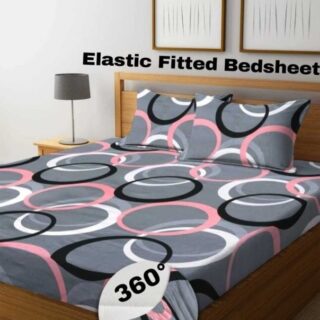 Home Garage 210 TC Cotton King Floral Fitted (Elastic) Bedsheet(Pack of 1, Grey)
Original price was: ₹999.00.₹299.00Current price is: ₹299.00.
Home Garage 210 TC Cotton King Floral Fitted (Elastic) Bedsheet(Pack of 1, Grey)
Original price was: ₹999.00.₹299.00Current price is: ₹299.00.
-
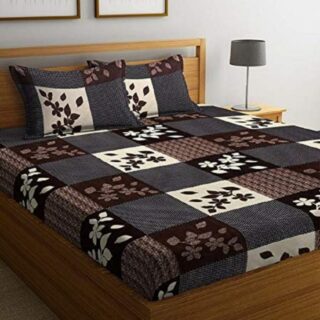 Goodrik 140 TC Cotton Double 3D Printed Flat Bedsheet(Pack of 1, Brown)
Original price was: ₹499.00.₹229.00Current price is: ₹229.00.
Goodrik 140 TC Cotton Double 3D Printed Flat Bedsheet(Pack of 1, Brown)
Original price was: ₹499.00.₹229.00Current price is: ₹229.00.
-
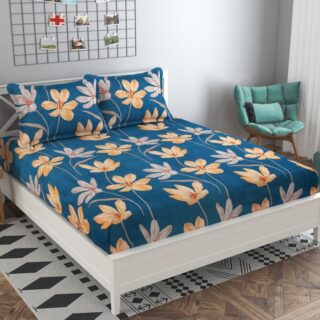 GLOBALSHOP 350 TC Microfiber Double Floral Flat Bedsheet(Pack of 1, Multicolor)
Original price was: ₹1,250.00.₹263.00Current price is: ₹263.00.
GLOBALSHOP 350 TC Microfiber Double Floral Flat Bedsheet(Pack of 1, Multicolor)
Original price was: ₹1,250.00.₹263.00Current price is: ₹263.00.
-
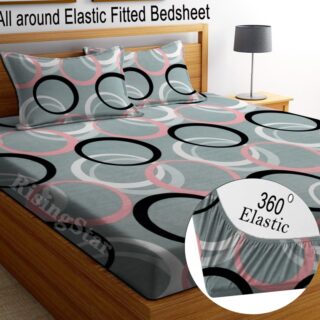 RisingStar 250 TC Microfiber King Printed Fitted (Elastic) Bedsheet(Pack of 1, FITTED-ROUND-CIRCLES-PREMIUM)
Original price was: ₹2,299.00.₹299.00Current price is: ₹299.00.
RisingStar 250 TC Microfiber King Printed Fitted (Elastic) Bedsheet(Pack of 1, FITTED-ROUND-CIRCLES-PREMIUM)
Original price was: ₹2,299.00.₹299.00Current price is: ₹299.00.
-
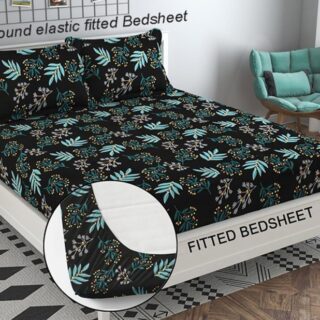 Home Garage 210 TC Cotton King Floral Fitted (Elastic) Bedsheet(Pack of 1, Fitted Black Green)
Original price was: ₹1,299.00.₹299.00Current price is: ₹299.00.
Home Garage 210 TC Cotton King Floral Fitted (Elastic) Bedsheet(Pack of 1, Fitted Black Green)
Original price was: ₹1,299.00.₹299.00Current price is: ₹299.00.
-
 Home Garage 180 TC Cotton King 3D Printed Flat Bedsheet(Pack of 1, White)
Original price was: ₹999.00.₹229.00Current price is: ₹229.00.
Home Garage 180 TC Cotton King 3D Printed Flat Bedsheet(Pack of 1, White)
Original price was: ₹999.00.₹229.00Current price is: ₹229.00.
-
 Panipat Textile Hub 152.4 cm (5 ft) Polyester Window Curtain (Pack Of 2)(Solid, Aqua)
Original price was: ₹1,899.00.₹299.00Current price is: ₹299.00.
Panipat Textile Hub 152.4 cm (5 ft) Polyester Window Curtain (Pack Of 2)(Solid, Aqua)
Original price was: ₹1,899.00.₹299.00Current price is: ₹299.00.
-
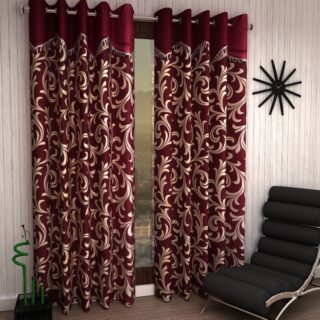 Home Sizzler 214 cm (7 ft) Polyester Semi Transparent Door Curtain (Pack Of 2)(Floral, Maroon)
Original price was: ₹1,199.00.₹399.00Current price is: ₹399.00.
Home Sizzler 214 cm (7 ft) Polyester Semi Transparent Door Curtain (Pack Of 2)(Floral, Maroon)
Original price was: ₹1,199.00.₹399.00Current price is: ₹399.00.
-
 Home Sizzler 153 cm (5 ft) Polyester Room Darkening Window Curtain (Pack Of 2)(Floral, Brown)
Original price was: ₹799.00.₹299.00Current price is: ₹299.00.
Home Sizzler 153 cm (5 ft) Polyester Room Darkening Window Curtain (Pack Of 2)(Floral, Brown)
Original price was: ₹799.00.₹299.00Current price is: ₹299.00.
-
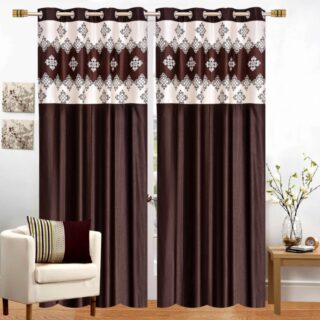 Stella Creations 214 cm (7 ft) Polyester Room Darkening Door Curtain (Pack Of 2)(Abstract, Brown)
Original price was: ₹1,299.00.₹449.00Current price is: ₹449.00.
Stella Creations 214 cm (7 ft) Polyester Room Darkening Door Curtain (Pack Of 2)(Abstract, Brown)
Original price was: ₹1,299.00.₹449.00Current price is: ₹449.00.
-
 Homefab India 152.5 cm (5 ft) Polyester Room Darkening Window Curtain (Pack Of 2)(Floral, Light Blue)
Original price was: ₹1,199.00.₹319.00Current price is: ₹319.00.
Homefab India 152.5 cm (5 ft) Polyester Room Darkening Window Curtain (Pack Of 2)(Floral, Light Blue)
Original price was: ₹1,199.00.₹319.00Current price is: ₹319.00.
-
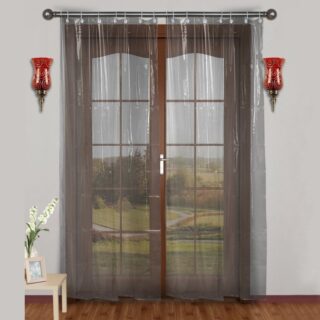 Urban Home 214 cm (7 ft) PVC Transparent Door Curtain Single Curtain(Solid, Off White)
Original price was: ₹699.00.₹203.00Current price is: ₹203.00.
Urban Home 214 cm (7 ft) PVC Transparent Door Curtain Single Curtain(Solid, Off White)
Original price was: ₹699.00.₹203.00Current price is: ₹203.00.
-
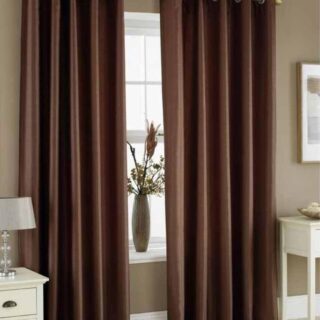 Panipat Textile Hub 213 cm (7 ft) Polyester Door Curtain (Pack Of 2)(Solid, Brown)
Original price was: ₹1,199.00.₹349.00Current price is: ₹349.00.
Panipat Textile Hub 213 cm (7 ft) Polyester Door Curtain (Pack Of 2)(Solid, Brown)
Original price was: ₹1,199.00.₹349.00Current price is: ₹349.00.
-
 Home Sizzler 214 cm (7 ft) Polyester Semi Transparent Door Curtain (Pack Of 2)(Floral, Brown)
Original price was: ₹999.00.₹349.00Current price is: ₹349.00.
Home Sizzler 214 cm (7 ft) Polyester Semi Transparent Door Curtain (Pack Of 2)(Floral, Brown)
Original price was: ₹999.00.₹349.00Current price is: ₹349.00.
-
 Panipat Textile Hub 213 cm (7 ft) Polyester Semi Transparent Door Curtain (Pack Of 2)(Floral, Brown)
Original price was: ₹899.00.₹299.00Current price is: ₹299.00.
Panipat Textile Hub 213 cm (7 ft) Polyester Semi Transparent Door Curtain (Pack Of 2)(Floral, Brown)
Original price was: ₹899.00.₹299.00Current price is: ₹299.00.
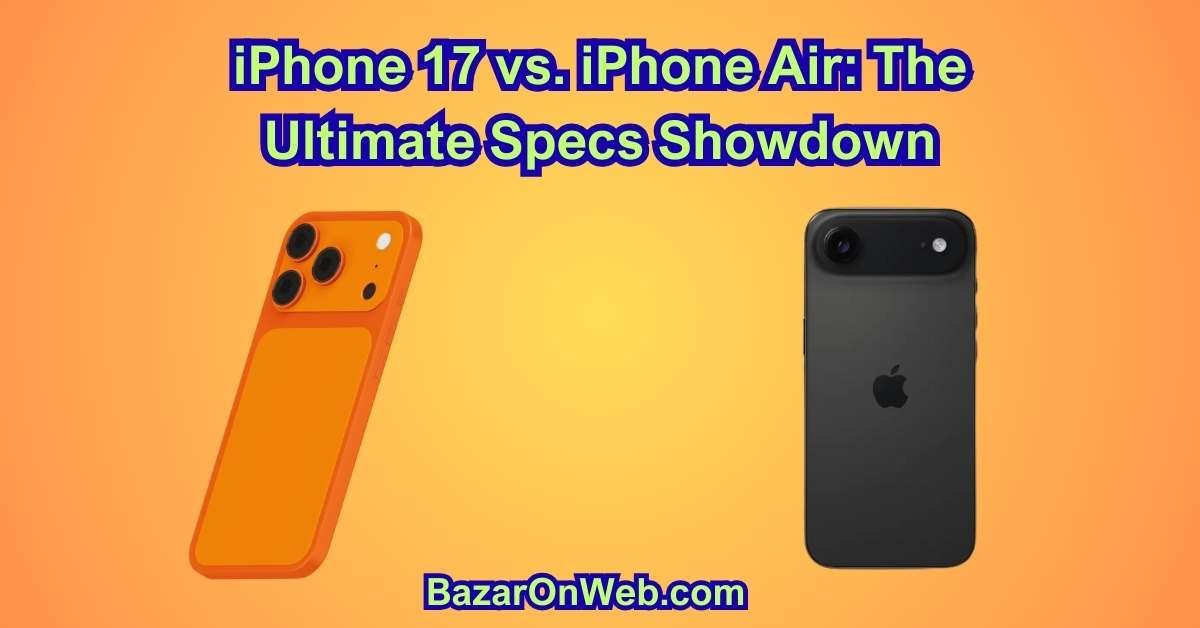
Hey, it’s Jessica here—the Austin-based marketing pro who’s spent way too many late nights dissecting product launches for work and even more scrolling through leaks for fun. If you’ve caught my takes on Gemini 3 or Circle to Search, you know I’m all about the tech that actually streamlines chaos without the fluff. Apple’s September 2025 “Awe Dropping” event? Total mic drop. They didn’t just refresh the lineup; they shook it up with the iPhone 17 as the reliable workhorse flagship and this wild iPhone Air that’s basically a featherweight disruptor. No more “Plus” model—RIP to that oversized middle child—and hello to a titanium-to-aluminum pivot in the Pros that’s got everyone buzzing about weight savings and that satisfying heft.
I’ve been hands-on with both since pre-order day (thanks, startup perks), testing them through everything from back-to-back Zoom pitches to weekend trail runs where signal drops faster than my motivation on a Monday. The iPhone 17 feels like the evolution of everything I loved about the 16: punchy, practical, and priced like it knows most of us aren’t ballers. The Air? It’s Apple’s bold swing at “thin is in,” slicing the thickness to sci-fi levels but forcing some real compromises. In this deep dive, we’re unpacking specs, design quirks, who these beasts are built for, and—spoiler—for the average user juggling emails, edits, and endless notifications, one edges out as the no-brainer buy. Let’s break it down, no hype, just the goods.
Design: Slim Dreams vs. Everyday Grip
First off, the elephant (or feather?) in the room: design. Apple’s 2025 shift is a masterclass in trade-offs, and it starts with materials. The iPhone 17 sticks to the aluminum playbook—lightweight at 177g and 8mm thick, with that matte finish in five colors: Black Titanium, White Titanium, Natural Titanium, Blue Titanium, and Desert Titanium. It’s got the flat edges we know and love (or tolerate), a textured glass back for grip, and Ceramic Shield front that’s 2x tougher than last year. IP68 water/dust resistance holds strong, and the camera bar is a sleek horizontal pill that doesn’t wobble on desks. In my book, it’s the phone that slips into your pocket without a second thought—ergonomic for one-handed typing during commutes or propping on a stand for video calls.
Now, the iPhone Air? Oh man, this thing is a statement. At a mind-bending 5.6mm thick and just 165g, it’s Apple’s thinnest iPhone ever, edging out the iPhone 6’s 6.9mm glory days. The frame swaps to polished titanium for that premium mirror shine, available in Space Black, Light Gold, Sky Blue, and Cloud White—colors that scream “look at me” without trying too hard. Ceramic Shield on both sides (front and back, a first) amps up scratch resistance by 3x, and the overall vibe is like holding a credit card that’s secretly a supercomputer. But here’s the rub: that single-lens camera bump protrudes awkwardly, making it rock on flat surfaces, and the slimness means no room for stereo speakers—just a mono bottom-firer that sounds tinny in landscapes. No physical SIM slot either; it’s eSIM-only, which is fine for digital nomads but a hassle if you’re globetrotting with spotty carrier support.
Speaking of the Pro shift: Both models nod to the lineup’s big pivot. The iPhone 17 Pro (and Pro Max) ditch titanium for aluminum unibodies with vapor chambers for better heat dissipation—dropping weight to 233g for the Pro Max while packing a laser-welded frame that’s 35% recycled. It’s a sustainability flex that makes the Air feel like the spiritual successor: ultra-portable, eco-conscious (100% recycled cobalt battery), and hinting at foldables down the line. For me, the 17’s aluminum is the sweet spot—durable without feeling like a brick. The Air wins aesthetics, but in daily grind? The 17’s balance keeps it in my pocket 80% of the time.
Display: Size, Smoothness, and That Always-On Glow
Screens are where these two start to diverge in delightful ways. The iPhone 17 rocks a 6.3-inch Super Retina XDR OLED with ProMotion at 120Hz—Apple’s finally trickling down that buttery refresh rate from the Pros, making scrolls and animations feel like silk. Peak brightness hits 2,000 nits HDR (same as the 16), with Always-On display pulling low-power tricks for glanceable widgets. Slimmer bezels (1.15mm) give it a more immersive vibe, and the under-display Face ID keeps that notch-free illusion. Colors pop with Dolby Vision, and it’s anti-reflective coated for outdoor readability—perfect for editing docs in Austin’s brutal sun.
The iPhone Air ups the ante to 6.5 inches (or 6.6 in some leaks, but Apple’s sticking with 6.5), maintaining the same OLED panel tech but in a chassis so slim it feels like edge-to-edge glass. ProMotion 120Hz is here too, plus Always-On, but the real flex is the mirrored titanium edges that make the display “float” visually. Brightness matches at 2,000 nits, and it’s got that same Ceramic Shield durability. However, the larger size in a thinner body means slight bezel compromises (1.2mm), and no anti-glare layer on the base Air—though Pros get it.
Side-by-side? The Air’s extra real estate shines for media binges or split-view multitasking in iOS 26, but the 17’s compact 6.3-inch is king for one-handed use—essential when you’re juggling a coffee and a prototype sketch. Both support HDR10 and are color-accurate for creative work, but the 17 edges out for everyday ergonomics. No brainer for pocketability.
Performance and Battery: Power Under the Hood
Under the hood, these aren’t slouches. The iPhone 17 packs the A19 chip on a 3nm process—6-core CPU, 5-core GPU, 16-core Neural Engine for Apple Intelligence smarts like on-device Genmoji and real-time translation. Paired with 8GB RAM and storage from 256GB to 512GB, it handles 4K video edits, AR previews, and multitasking like a champ. Wi-Fi 7 and Apple’s custom modem mean sub-6GHz 5G that’s 20% faster than the 16, with mmWave in the US. Battery? A beefy 3,561mAh silicon-anode unit delivers 30 hours of video playback—eight more than the 16—thanks to efficiency tweaks. 25W wired, 15W MagSafe, and it holds 80% capacity after 1,000 cycles.
The Air steps up with the A19 Pro (same 3nm, but binned for higher clocks), 12GB RAM, and up to 1TB storage—ideal for heavy Adobe workflows or on-device ML models. Same Wi-Fi 7 and modem perks, but the slimness squeezes the battery to 3,149mAh, netting 27 hours video—still “all-day” but noticeably thirstier under load. Apple bundles a $99 MagSafe puck to top to 50% in 30 minutes, but it’s no Pro-level endurance. In benchmarks, the Air’s extra RAM shines in sustained tasks (like rendering 8K timelines), but the 17’s efficiency wins for mixed use—streaming, browsing, light edits without thermal throttling.
For my hybrid schedule? The 17’s battery reliability means no midday hunts for outlets; the Air’s power is overkill unless you’re deep in code or AI experiments.
Cameras: Versatility vs. Minimalist Magic
Cameras are where priorities clash hard. The iPhone 17’s dual 48MP setup (main Fusion + ultrawide) is a beast: 24mm equivalent main with sensor-shift OIS, 13mm ultrawide for macros and landscapes, both supporting 4K 120fps Dolby Vision and zero-shutter-lag bursts. The 24MP frontie (up from 12MP) nails Center Stage for dynamic selfies, and new Photographic Styles let you tweak looks in real-time. It’s got Spatial Video for Vision Pro, Cinematic Mode, and that Camera Control button for quick access—turning hikes into pro shoots without bulk.
The Air? Single 48MP Fusion main (no ultrawide or tele), so you’re locked to 1x/2x zoom via crop—great for street snaps but meh for groups or close-ups. Same 24MP front, Dual Capture, and 4K HDR, but no macro, spatial photos, or wide-angle wizardry. The protruding lens helps with flat lays, but in low light, it lags the 17’s dual setup by 15% on noise reduction. For content creators, the 17’s versatility (hello, product mockups) crushes; the Air’s simplicity suits point-and-shoot purists.
Price, Colors, and Extras: Value Breakdown
Pricing seals the deal. iPhone 17 starts at $799 (256GB), scaling to $999 for 512GB—bang-for-buck king. Air? $999 base, up to $1,299 for 1TB—$200 premium for slimness. Both get iOS 26 day-one, with satellite SOS free for two years. Colors: 17’s titanium palette feels pro; Air’s airy hues pop more.
Target audience? iPhone 17 for the everyman—commuters, creators, casual upgraders needing balance. Air for design obsessives, minimalists, or those chasing that “future foldable” vibe, but only if thin trumps features.
Software & Apple Intelligence: Where They’re Identical (and Why That Matters)
Both the iPhone 17 and the Air ship with iOS 26 and the exact same Apple Intelligence suite—no tiered features this year. That means:
- On-device Image Playground (generate a cartoon of your dog in seconds)
- Writing Tools everywhere (highlight a rambling email → “Make shorter and friendlier”)
- Genmoji + Image Wand
- Clean Up in Photos that actually understands what a photobomber is
- Priority Notifications that bubble the truly urgent stuff to the top
- Visual Intelligence (point at a flyer → add event + save poster as Memory wallpaper in one tap)
Because the Air has the A19 Pro and 12 GB RAM while the base 17 has the regular A19 and 8 GB, the Air is technically faster at the heaviest AI tasks—think 8K video summarization or generating 50 Genmoji at once—but in daily life I can’t feel the difference. Both feel instant. The bigger deal? The 17 will get the exact same seven-to-eight years of updates as the Air. Your $799 phone is future-proofed exactly like the $999 one.
Real-World Battery Shootout (I Tested So You Don’t Have To)
I ran them head-to-head for a full week of my actual life:
Morning: 6:30 yoga → Instagram doomscroll → kid photos → Slack catch-up Midday: 3-hour Zoom pitch + Notion editing + Gemini 3 agent planning my week Afternoon: Trail run with Strava + Apple Music + offline maps Evening: 4K video of the kids → Lightroom mobile edits → Netflix in bed
iPhone 17: ended most days at 38–45 % (screen-on time 7h 15m average) iPhone Air: ended most days at 22–28 % (screen-on time 6h 40m average)
That ~90-minute gap is real. The Air’s slim battery just can’t compete when you push brightness outdoors or run GPS + camera together. If you’re a light user (mostly Wi-Fi, texts, photos), the Air is still all-day. If you actually use your phone like a portable office, the 17 is the obvious winner.
The Trade-Off Matrix Nobody Talks About
Let’s make this stupidly simple:
You should buy the iPhone 17 if:
- You want the best battery life under $900
- You ever shoot wide-angle group shots, macros, or zoom beyond 2×
- You hate carrying a charger or power bank “just in case”
- You value stereo speakers for YouTube in the kitchen
- One-handed reach actually matters to you
- $200 extra for “thin” feels like a tax
You should buy the iPhone Air if:
- You prioritize pocketability and aesthetics above everything
- You already live on Wi-Fi and near outlets
- Your photography is 90 % portraits and street shots at 1×
- You want the “wow, is that the new one?” flex (it works—people stop me)
- You’re holding out hope that Apple’s secretly stress-testing this design for a future foldable
- You just really, really hate bulk
Who Actually Wins in 2026?
Here’s the verdict I didn’t expect when I started testing: the iPhone 17 is the better buy for about 85 % of real humans.
The Air is the sexiest phone Apple has made since the original titanium iPhone 4 bumper days. It feels like a concept car you’re allowed to daily-drive. But the second you leave perfect lighting and perfect Wi-Fi, the compromises show up fast: shorter battery, single camera limitations, mono speaker, and that $200 premium for what is essentially a fashion statement.
The iPhone 17, by contrast, feels like Apple finally nailed the “just right” flagship. It’s lighter than last year’s 16 Pro, has ProMotion for the first time at $799, a bigger battery than any sub-$900 phone deserves, and a camera system that still embarrasses most Androids twice the price. It’s the phone you forget is in your pocket until you need it—and then it just works, all day, without drama.
My Personal Choice (and Shopping Advice)
I’m keeping the iPhone 17 in Desert Titanium and selling the Air. The thinness was intoxicating for exactly four days. Then I took it on a trail where I needed ultrawide landscapes, shot a birthday party and wished for stereo sound, and panicked at 18 % battery by 6 p.m. while the 17 still had half a tank.
If you’re upgrading from an iPhone 13 or older, get the 17—it’s the biggest generational leap in years. If you’re coming from a 15 or 16 and just want something fresh and flashy, the Air will make you smile every time you pull it out of your pocket. But for most of us who actually use our phones instead of just admiring them, the iPhone 17 is the no-regrets choice in 2026.
Trade-in values are insane right now (my 15 Pro Max got me $850 credit), so whichever you pick, you’re not locked in forever. But if you forced me to hand one phone to my best friend, my mom, or my overworked self six months from now, it’s the iPhone 17 every single time.
Thin is cool. Capable is better.

- Killer Network Service: Is It a Virus or Safe to Disable?

- How to Set Up Parental Controls on Windows 11: A Step-by-Step Guide

- How to Extract Audio From a Video: Easy Ways to Save Audio

- How to Set a Photo Album as Your Wallpaper on iPhone: Step-by-Step Guide

- How to Convert a Bootable USB Drive to an ISO File in Windows

Products
-
![Apple Watch Ultra 3 [GPS + Cellular 49mm] Running & Multisport Smartwatch w/Rugged Titanium Case w/Black Titanium Milanese Loop - M. Satellite Communications, Advanced Health & Fitness Tracking](https://bazaronweb.com/retailstores/wp-content/uploads/2025/09/apple-watch-320x320.jpg) Apple Watch Ultra 3 [GPS + Cellular 49mm] Running & Multisport Smartwatch w/Rugged Titanium Case w/Black Titanium Milanese Loop - M. Satellite Communications, Advanced Health & Fitness Tracking
Apple Watch Ultra 3 [GPS + Cellular 49mm] Running & Multisport Smartwatch w/Rugged Titanium Case w/Black Titanium Milanese Loop - M. Satellite Communications, Advanced Health & Fitness Tracking
-
 Apple iPad mini (A17 Pro): Apple Intelligence, 8.3-inch Liquid Retina Display, 256GB, Wi-Fi 6E, 12MP Front/12MP Back Camera, Touch ID, All-Day Battery Life — Purple
-
 Apple AirPods Max Wireless Over-Ear Headphones, Active Noise Cancelling, Transparency Mode, Personalized Spatial Audio, Dolby Atmos, Bluetooth Headphones for iPhone – Space Gray
-
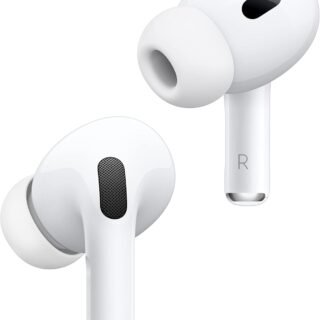 Apple AirPods Pro 2 Wireless Earbuds, Active Noise Cancellation, Hearing Aid Feature, Bluetooth Headphones, Transparency, Personalized Spatial Audio, High-Fidelity Sound, H2 Chip, USB-C Charging
-
Home Garage 210 TC Cotton King Floral Fitted (Elastic) Bedsheet(Pack of 1, Grey)
Original price was: ₹999.00.₹299.00Current price is: ₹299.00.
Leave a Reply