Discounted Products
-
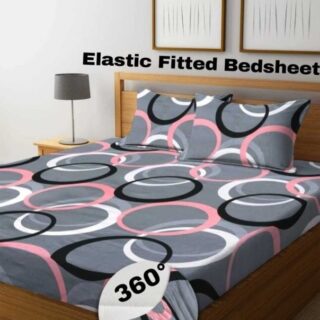 Home Garage 210 TC Cotton King Floral Fitted (Elastic) Bedsheet(Pack of 1, Grey)
Original price was: ₹999.00.₹299.00Current price is: ₹299.00.
Home Garage 210 TC Cotton King Floral Fitted (Elastic) Bedsheet(Pack of 1, Grey)
Original price was: ₹999.00.₹299.00Current price is: ₹299.00.
-
 Goodrik 140 TC Cotton Double 3D Printed Flat Bedsheet(Pack of 1, Brown)
Original price was: ₹499.00.₹229.00Current price is: ₹229.00.
Goodrik 140 TC Cotton Double 3D Printed Flat Bedsheet(Pack of 1, Brown)
Original price was: ₹499.00.₹229.00Current price is: ₹229.00.
-
 GLOBALSHOP 350 TC Microfiber Double Floral Flat Bedsheet(Pack of 1, Multicolor)
Original price was: ₹1,250.00.₹263.00Current price is: ₹263.00.
GLOBALSHOP 350 TC Microfiber Double Floral Flat Bedsheet(Pack of 1, Multicolor)
Original price was: ₹1,250.00.₹263.00Current price is: ₹263.00.
-
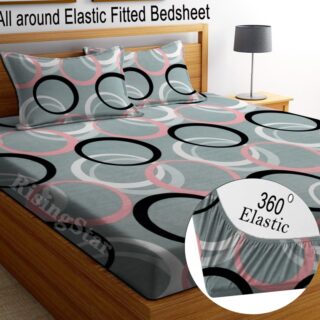 RisingStar 250 TC Microfiber King Printed Fitted (Elastic) Bedsheet(Pack of 1, FITTED-ROUND-CIRCLES-PREMIUM)
Original price was: ₹2,299.00.₹299.00Current price is: ₹299.00.
RisingStar 250 TC Microfiber King Printed Fitted (Elastic) Bedsheet(Pack of 1, FITTED-ROUND-CIRCLES-PREMIUM)
Original price was: ₹2,299.00.₹299.00Current price is: ₹299.00.
-
 Home Garage 210 TC Cotton King Floral Fitted (Elastic) Bedsheet(Pack of 1, Fitted Black Green)
Original price was: ₹1,299.00.₹299.00Current price is: ₹299.00.
Home Garage 210 TC Cotton King Floral Fitted (Elastic) Bedsheet(Pack of 1, Fitted Black Green)
Original price was: ₹1,299.00.₹299.00Current price is: ₹299.00.
-
 Home Garage 180 TC Cotton King 3D Printed Flat Bedsheet(Pack of 1, White)
Original price was: ₹999.00.₹229.00Current price is: ₹229.00.
Home Garage 180 TC Cotton King 3D Printed Flat Bedsheet(Pack of 1, White)
Original price was: ₹999.00.₹229.00Current price is: ₹229.00.
-
 Panipat Textile Hub 152.4 cm (5 ft) Polyester Window Curtain (Pack Of 2)(Solid, Aqua)
Original price was: ₹1,899.00.₹299.00Current price is: ₹299.00.
Panipat Textile Hub 152.4 cm (5 ft) Polyester Window Curtain (Pack Of 2)(Solid, Aqua)
Original price was: ₹1,899.00.₹299.00Current price is: ₹299.00.
-
 Home Sizzler 214 cm (7 ft) Polyester Semi Transparent Door Curtain (Pack Of 2)(Floral, Maroon)
Original price was: ₹1,199.00.₹399.00Current price is: ₹399.00.
Home Sizzler 214 cm (7 ft) Polyester Semi Transparent Door Curtain (Pack Of 2)(Floral, Maroon)
Original price was: ₹1,199.00.₹399.00Current price is: ₹399.00.
-
 Home Sizzler 153 cm (5 ft) Polyester Room Darkening Window Curtain (Pack Of 2)(Floral, Brown)
Original price was: ₹799.00.₹299.00Current price is: ₹299.00.
Home Sizzler 153 cm (5 ft) Polyester Room Darkening Window Curtain (Pack Of 2)(Floral, Brown)
Original price was: ₹799.00.₹299.00Current price is: ₹299.00.
-
 Stella Creations 214 cm (7 ft) Polyester Room Darkening Door Curtain (Pack Of 2)(Abstract, Brown)
Original price was: ₹1,299.00.₹449.00Current price is: ₹449.00.
Stella Creations 214 cm (7 ft) Polyester Room Darkening Door Curtain (Pack Of 2)(Abstract, Brown)
Original price was: ₹1,299.00.₹449.00Current price is: ₹449.00.
-
 Homefab India 152.5 cm (5 ft) Polyester Room Darkening Window Curtain (Pack Of 2)(Floral, Light Blue)
Original price was: ₹1,199.00.₹319.00Current price is: ₹319.00.
Homefab India 152.5 cm (5 ft) Polyester Room Darkening Window Curtain (Pack Of 2)(Floral, Light Blue)
Original price was: ₹1,199.00.₹319.00Current price is: ₹319.00.
-
 Urban Home 214 cm (7 ft) PVC Transparent Door Curtain Single Curtain(Solid, Off White)
Original price was: ₹699.00.₹203.00Current price is: ₹203.00.
Urban Home 214 cm (7 ft) PVC Transparent Door Curtain Single Curtain(Solid, Off White)
Original price was: ₹699.00.₹203.00Current price is: ₹203.00.
-
 Panipat Textile Hub 213 cm (7 ft) Polyester Door Curtain (Pack Of 2)(Solid, Brown)
Original price was: ₹1,199.00.₹349.00Current price is: ₹349.00.
Panipat Textile Hub 213 cm (7 ft) Polyester Door Curtain (Pack Of 2)(Solid, Brown)
Original price was: ₹1,199.00.₹349.00Current price is: ₹349.00.
-
 Home Sizzler 214 cm (7 ft) Polyester Semi Transparent Door Curtain (Pack Of 2)(Floral, Brown)
Original price was: ₹999.00.₹349.00Current price is: ₹349.00.
Home Sizzler 214 cm (7 ft) Polyester Semi Transparent Door Curtain (Pack Of 2)(Floral, Brown)
Original price was: ₹999.00.₹349.00Current price is: ₹349.00.
-
 Panipat Textile Hub 213 cm (7 ft) Polyester Semi Transparent Door Curtain (Pack Of 2)(Floral, Brown)
Original price was: ₹899.00.₹299.00Current price is: ₹299.00.
Panipat Textile Hub 213 cm (7 ft) Polyester Semi Transparent Door Curtain (Pack Of 2)(Floral, Brown)
Original price was: ₹899.00.₹299.00Current price is: ₹299.00.
Introduction
Finding location history on an iPhone is something many users don’t think about until they actually need it. Whether it’s to remember where you parked your car, confirm a past visit, retrace travel routes, or simply understand how much your phone tracks you, location history becomes surprisingly important in everyday life. As iPhone users, we often assume that all our activity is neatly stored somewhere, but Apple takes a very different approach when it comes to location data. Instead of presenting an obvious timeline, iOS quietly distributes location information across system settings, apps, and permissions, making it easy to miss unless you know exactly where to look.
I’ve personally found that most confusion comes from expectations. People expect iPhones to work like other platforms that show a detailed, scrollable map of everywhere you’ve been. Apple, however, prioritizes privacy first, which means location tracking is intentionally limited, encrypted, and stored locally on your device. This can feel frustrating at first, but it also gives users far more control over their data than they realize. Once you understand how Apple stores location patterns, which apps keep their own records, and how permissions influence tracking, the process becomes much clearer and far less intimidating.
This guide is designed to help you fully understand how location history works on iPhone, where it’s stored, and how you can access or manage it responsibly. Instead of focusing on just one feature, it explores all practical methods—built-in system tools, app-based tracking, and permission settings—so you can decide what level of tracking works best for you. If you’ve ever wondered how much your iPhone really knows about where you’ve been, you’re about to get clear, practical answers.
A Complete Step-by-Step Guide for Tracking Your Past Locations
Finding location history on an iPhone can feel confusing at first, especially if you’re expecting a simple timeline that shows everywhere you’ve been. Apple designs iOS with privacy as a priority, so location tracking is intentionally subtle and scattered across different system areas instead of being presented as a single map or list. The most important place to start is a feature called Significant Locations, which quietly records places you frequently visit so your iPhone can improve services like Maps navigation, traffic predictions, calendar suggestions, and Siri recommendations. To access it, open the Settings app, go to Privacy & Security, tap Location Services, scroll down to System Services, and then select Significant Locations. You’ll be prompted to authenticate using Face ID, Touch ID, or your passcode, which highlights how sensitive this information is. Inside, you’ll see a list of cities or regions you’ve visited. When you tap a city, you can view individual locations, visit dates, approximate arrival and departure times, and how often you’ve been there. This data isn’t perfectly precise, but it’s accurate enough to recognize routines like commuting to work, visiting a gym, or spending time at a specific neighborhood. What’s important to understand is that this information is stored locally on your device and is end-to-end encrypted, meaning Apple itself cannot access it. Because of this, the data isn’t kept forever—older entries may be automatically removed over time. You also have the option to clear your location history entirely or turn off Significant Locations if you prefer not to store this data. Beyond this built-in feature, Apple Maps also keeps limited location-related activity. While it doesn’t show a full history of where you’ve been, it does store recent searches, navigation routes, and frequently visited places. Reviewing your recent destinations and directions can often help you reconstruct past movement, especially if you regularly use Maps for driving or walking directions. Another powerful but often overlooked source of location history is the Photos app. Any photo taken with location services enabled includes location metadata. When you open Photos and switch to the map view, you can see images pinned to the exact places where they were captured. This makes Photos one of the most accurate ways to identify where you were on specific days, particularly during vacations, events, or social outings. If you scroll through your photo library by date and location, it can feel like a visual timeline of your life. Together, these Apple-provided tools don’t offer a perfect location log, but when used collectively, they give a surprisingly detailed picture of your past movements while still respecting user privacy.
If you want deeper, more detailed, or long-term location history on your iPhone, third-party services often provide what Apple intentionally limits. One of the most widely used options is Google Maps, which includes a feature called Timeline. If you’ve ever used Google Maps while signed into your Google account—and allowed location access—it may already be tracking your movements automatically. To check this, open Google Maps, tap your profile photo, and select “Your Timeline.” Here, you’ll find a day-by-day breakdown of places you’ve visited, routes taken, time spent at each location, and sometimes even how you traveled, such as walking, driving, or public transport. Compared to Apple’s Significant Locations, Google’s Timeline is far more detailed and can store years of data if location history hasn’t been disabled. This can be extremely helpful for people who want to review travel history, verify visits, track routines, or even recall specific dates and locations for work or personal reasons. However, this level of detail comes with privacy considerations. Unlike Apple’s on-device encryption, Google stores this data in your account, so it’s important to review your privacy settings and decide how much tracking you’re comfortable with. In addition to Google Maps, many everyday apps collect location data in the background. Fitness and health apps log running routes and workout locations. Ride-sharing apps store pickup and drop-off points. Food delivery apps record delivery addresses and order locations. Social media apps may tag locations in posts or stories. All of this data contributes to a broader, indirect location history. To understand which apps have access, go to Location Services in Settings and review permissions for each app. Apps set to “Always” can track location in the background, while “While Using” limits tracking to active usage. Managing these permissions is essential for balancing functionality and privacy. For families, Apple’s Find My and Family Sharing features allow real-time location tracking, though they don’t provide detailed historical timelines. Screen Time can also show usage patterns tied to location-based activity, but again, it’s not designed as a full history tool. Some advanced users attempt to extract location data from backups, but Apple does not provide an official or user-friendly way to view raw system logs. The most practical approach is combining sources: use Significant Locations for recurring patterns, Photos for visual confirmation, Maps for navigation memory, and Google Timeline for detailed records. Once you understand where to look and how these tools interact, finding your location history on an iPhone becomes far less frustrating and far more useful—giving you control without sacrificing privacy.
Conclusion
Understanding how to find location history on an iPhone ultimately comes down to understanding Apple’s philosophy around privacy and user control. Unlike platforms that prioritize convenience through detailed timelines, Apple spreads location data across multiple features and apps, making it less visible but more secure. This approach can feel confusing, especially for users actively searching for past locations, but it also ensures that sensitive movement data isn’t easily exposed or misused. Once you know where to look, the iPhone actually offers more insight than most people expect.
The key is knowing that there is no single “location history” screen on iOS. Instead, meaningful data is built from patterns rather than constant tracking. Features like Significant Locations provide insight into frequently visited places, while apps such as Maps and Photos help reconstruct movement through navigation records and visual location metadata. When combined thoughtfully, these tools allow users to piece together a reliable picture of where they’ve been without sacrificing privacy.
For users who want deeper historical tracking, third-party apps fill the gaps left by Apple’s privacy-first design. Services like Google Maps offer highly detailed timelines that can span years, which can be useful for travel records, work verification, or personal reference. However, these benefits come with trade-offs, particularly around data storage and account-based tracking. Knowing how to balance convenience with privacy is essential when deciding which tools to rely on.
Another critical takeaway is the importance of managing location permissions. Many apps collect location data quietly in the background, and over time, this can build a broader history than users realize. Regularly reviewing app permissions ensures that only necessary apps have access and that tracking aligns with your comfort level. Clearing stored data, adjusting access levels, or disabling tracking altogether are simple steps that put control back in your hands.
Ultimately, finding location history on an iPhone isn’t about uncovering hidden data—it’s about learning how Apple structures information responsibly. When you understand the system, location history becomes a helpful resource rather than a privacy concern. With the right combination of built-in tools, trusted apps, and smart permission management, you can confidently track, review, or limit your location data in a way that works best for your lifestyle.
Disclaimer
This article is for informational purposes only. Location tracking features, availability, and settings may vary depending on iOS version, device model, region, and app permissions. Users should always review privacy settings and terms of service before enabling location tracking features or third-party apps.

- How to Remotely Control Another Computer Using Windows Quick Assist

- 5 Must-Have Electronics Gadgets for a More Comfortable Living Room

- How to Create a Windows 11 System Backup on an External Hard Drive

- 10 Smart Home Ideas That Make Everyday Life Easier

- Gemini Live Avatar: How to Talk to Gemini Face-to-Face

Products
-
![Apple Watch Ultra 3 [GPS + Cellular 49mm] Running & Multisport Smartwatch w/Rugged Titanium Case w/Black Titanium Milanese Loop - M. Satellite Communications, Advanced Health & Fitness Tracking](https://bazaronweb.com/retailstores/wp-content/uploads/2025/09/apple-watch-320x320.jpg) Apple Watch Ultra 3 [GPS + Cellular 49mm] Running & Multisport Smartwatch w/Rugged Titanium Case w/Black Titanium Milanese Loop - M. Satellite Communications, Advanced Health & Fitness Tracking
Apple Watch Ultra 3 [GPS + Cellular 49mm] Running & Multisport Smartwatch w/Rugged Titanium Case w/Black Titanium Milanese Loop - M. Satellite Communications, Advanced Health & Fitness Tracking
-
 Apple iPad mini (A17 Pro): Apple Intelligence, 8.3-inch Liquid Retina Display, 256GB, Wi-Fi 6E, 12MP Front/12MP Back Camera, Touch ID, All-Day Battery Life — Purple
-
 Apple AirPods Max Wireless Over-Ear Headphones, Active Noise Cancelling, Transparency Mode, Personalized Spatial Audio, Dolby Atmos, Bluetooth Headphones for iPhone – Space Gray
-
 Apple AirPods Pro 2 Wireless Earbuds, Active Noise Cancellation, Hearing Aid Feature, Bluetooth Headphones, Transparency, Personalized Spatial Audio, High-Fidelity Sound, H2 Chip, USB-C Charging
-
Home Garage 210 TC Cotton King Floral Fitted (Elastic) Bedsheet(Pack of 1, Grey)
Original price was: ₹999.00.₹299.00Current price is: ₹299.00.
Leave a Reply