Discounted Products
-
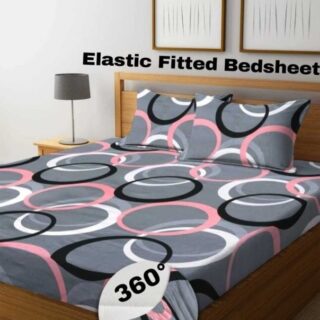 Home Garage 210 TC Cotton King Floral Fitted (Elastic) Bedsheet(Pack of 1, Grey)
Original price was: ₹999.00.₹299.00Current price is: ₹299.00.
Home Garage 210 TC Cotton King Floral Fitted (Elastic) Bedsheet(Pack of 1, Grey)
Original price was: ₹999.00.₹299.00Current price is: ₹299.00.
-
 Goodrik 140 TC Cotton Double 3D Printed Flat Bedsheet(Pack of 1, Brown)
Original price was: ₹499.00.₹229.00Current price is: ₹229.00.
Goodrik 140 TC Cotton Double 3D Printed Flat Bedsheet(Pack of 1, Brown)
Original price was: ₹499.00.₹229.00Current price is: ₹229.00.
-
 GLOBALSHOP 350 TC Microfiber Double Floral Flat Bedsheet(Pack of 1, Multicolor)
Original price was: ₹1,250.00.₹263.00Current price is: ₹263.00.
GLOBALSHOP 350 TC Microfiber Double Floral Flat Bedsheet(Pack of 1, Multicolor)
Original price was: ₹1,250.00.₹263.00Current price is: ₹263.00.
-
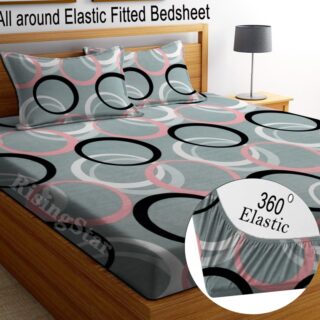 RisingStar 250 TC Microfiber King Printed Fitted (Elastic) Bedsheet(Pack of 1, FITTED-ROUND-CIRCLES-PREMIUM)
Original price was: ₹2,299.00.₹299.00Current price is: ₹299.00.
RisingStar 250 TC Microfiber King Printed Fitted (Elastic) Bedsheet(Pack of 1, FITTED-ROUND-CIRCLES-PREMIUM)
Original price was: ₹2,299.00.₹299.00Current price is: ₹299.00.
-
 Home Garage 210 TC Cotton King Floral Fitted (Elastic) Bedsheet(Pack of 1, Fitted Black Green)
Original price was: ₹1,299.00.₹299.00Current price is: ₹299.00.
Home Garage 210 TC Cotton King Floral Fitted (Elastic) Bedsheet(Pack of 1, Fitted Black Green)
Original price was: ₹1,299.00.₹299.00Current price is: ₹299.00.
-
 Home Garage 180 TC Cotton King 3D Printed Flat Bedsheet(Pack of 1, White)
Original price was: ₹999.00.₹229.00Current price is: ₹229.00.
Home Garage 180 TC Cotton King 3D Printed Flat Bedsheet(Pack of 1, White)
Original price was: ₹999.00.₹229.00Current price is: ₹229.00.
-
 Panipat Textile Hub 152.4 cm (5 ft) Polyester Window Curtain (Pack Of 2)(Solid, Aqua)
Original price was: ₹1,899.00.₹299.00Current price is: ₹299.00.
Panipat Textile Hub 152.4 cm (5 ft) Polyester Window Curtain (Pack Of 2)(Solid, Aqua)
Original price was: ₹1,899.00.₹299.00Current price is: ₹299.00.
-
 Home Sizzler 214 cm (7 ft) Polyester Semi Transparent Door Curtain (Pack Of 2)(Floral, Maroon)
Original price was: ₹1,199.00.₹399.00Current price is: ₹399.00.
Home Sizzler 214 cm (7 ft) Polyester Semi Transparent Door Curtain (Pack Of 2)(Floral, Maroon)
Original price was: ₹1,199.00.₹399.00Current price is: ₹399.00.
-
 Home Sizzler 153 cm (5 ft) Polyester Room Darkening Window Curtain (Pack Of 2)(Floral, Brown)
Original price was: ₹799.00.₹299.00Current price is: ₹299.00.
Home Sizzler 153 cm (5 ft) Polyester Room Darkening Window Curtain (Pack Of 2)(Floral, Brown)
Original price was: ₹799.00.₹299.00Current price is: ₹299.00.
-
 Stella Creations 214 cm (7 ft) Polyester Room Darkening Door Curtain (Pack Of 2)(Abstract, Brown)
Original price was: ₹1,299.00.₹449.00Current price is: ₹449.00.
Stella Creations 214 cm (7 ft) Polyester Room Darkening Door Curtain (Pack Of 2)(Abstract, Brown)
Original price was: ₹1,299.00.₹449.00Current price is: ₹449.00.
-
 Homefab India 152.5 cm (5 ft) Polyester Room Darkening Window Curtain (Pack Of 2)(Floral, Light Blue)
Original price was: ₹1,199.00.₹319.00Current price is: ₹319.00.
Homefab India 152.5 cm (5 ft) Polyester Room Darkening Window Curtain (Pack Of 2)(Floral, Light Blue)
Original price was: ₹1,199.00.₹319.00Current price is: ₹319.00.
-
 Urban Home 214 cm (7 ft) PVC Transparent Door Curtain Single Curtain(Solid, Off White)
Original price was: ₹699.00.₹203.00Current price is: ₹203.00.
Urban Home 214 cm (7 ft) PVC Transparent Door Curtain Single Curtain(Solid, Off White)
Original price was: ₹699.00.₹203.00Current price is: ₹203.00.
-
 Panipat Textile Hub 213 cm (7 ft) Polyester Door Curtain (Pack Of 2)(Solid, Brown)
Original price was: ₹1,199.00.₹349.00Current price is: ₹349.00.
Panipat Textile Hub 213 cm (7 ft) Polyester Door Curtain (Pack Of 2)(Solid, Brown)
Original price was: ₹1,199.00.₹349.00Current price is: ₹349.00.
-
 Home Sizzler 214 cm (7 ft) Polyester Semi Transparent Door Curtain (Pack Of 2)(Floral, Brown)
Original price was: ₹999.00.₹349.00Current price is: ₹349.00.
Home Sizzler 214 cm (7 ft) Polyester Semi Transparent Door Curtain (Pack Of 2)(Floral, Brown)
Original price was: ₹999.00.₹349.00Current price is: ₹349.00.
-
 Panipat Textile Hub 213 cm (7 ft) Polyester Semi Transparent Door Curtain (Pack Of 2)(Floral, Brown)
Original price was: ₹899.00.₹299.00Current price is: ₹299.00.
Panipat Textile Hub 213 cm (7 ft) Polyester Semi Transparent Door Curtain (Pack Of 2)(Floral, Brown)
Original price was: ₹899.00.₹299.00Current price is: ₹299.00.

Introduction (Hey, it’s Jessica 👋)
Hey, it’s Jessica. If you’ve ever tried using your iPhone in a moving car and suddenly felt dizzy, nauseous, or just off, you’re definitely not alone. For years, I thought motion sickness was something you just had to “deal with” if you looked at a screen while traveling. Turns out, Apple quietly added a feature that actually helps your brain handle motion better—and most people have no idea it even exists.
It’s called Vehicle Motion Cues, and if you commute, travel frequently, or even sit in the back seat scrolling through messages or maps, this feature can be a game-changer. I discovered it after one too many uncomfortable rides where replying to a message made me feel like I needed fresh air immediately. Once I turned it on, the difference was subtle but real.
In this guide, I’ll walk you through what Vehicle Motion Cues are, how they work, and exactly how to enable them on your iPhone. No tech jargon, no confusing explanations—just a clear, practical walkthrough so you can decide if it’s right for you.
Before we jump into the steps, let’s quickly understand why motion sickness happens in the first place.
Why Using Your iPhone in a Car Can Make You Feel Sick
Motion sickness happens when your brain receives conflicting signals. Your eyes are focused on a stable screen, but your inner ear senses movement—turns, stops, and acceleration. Your brain doesn’t love that mismatch, and it responds with nausea, dizziness, or headaches.
When you’re reading messages, watching videos, or browsing on your iPhone in a moving vehicle, this conflict becomes stronger. That’s why many people feel fine looking out the window but uncomfortable the moment they look down at their phone.
Vehicle Motion Cues are designed to reduce that sensory conflict instead of forcing you to stop using your device entirely.
What Are Vehicle Motion Cues on iPhone?
Vehicle Motion Cues are small, animated visual indicators that appear on your iPhone screen when you’re in a moving vehicle. These cues subtly move in sync with the car’s motion—forward, backward, left, and right—helping your eyes “understand” what your body is already feeling.
The key thing to know is this:
They’re intentionally minimal.
They don’t block content, interrupt apps, or demand your attention. Most people describe them as gentle dots or indicators near the edges of the screen that move just enough to keep your brain aligned with real-world motion.
Once enabled, your iPhone automatically detects when you’re in a vehicle and activates the cues only during movement.
Which iPhones Support Vehicle Motion Cues?
Vehicle Motion Cues are available on:
-
iPhones running the latest supported iOS version
-
Devices with motion sensors (most modern iPhones qualify)
If your iPhone supports recent accessibility features and motion detection, you’re good to go. There’s no special hardware required, and the feature doesn’t noticeably drain battery.
How to Enable Vehicle Motion Cues on iPhone (Step-by-Step)
Here’s exactly how to turn it on:
-
Open the Settings app on your iPhone
-
Scroll down and tap Accessibility
-
Select Motion
-
Find Vehicle Motion Cues
-
Toggle the switch ON
That’s it. There’s no additional setup, calibration, or confirmation required.
Once enabled, your iPhone will automatically show motion cues when it detects you’re traveling in a vehicle.
Should You Leave Vehicle Motion Cues On All the Time?
Yes—and this is important. You don’t need to manually turn it on or off before every trip.
When enabled:
-
The feature activates only when motion is detected
-
It stays inactive during normal use
-
It doesn’t affect screen interaction or app behavior
Think of it as a background helper rather than a visible mode you constantly manage.
When Vehicle Motion Cues Are Most Helpful
From personal experience (and a lot of trial and error), this feature helps the most when:
-
You’re a passenger, not the driver
-
You read messages or emails during travel
-
You use maps or browse social media in a moving car
-
You’re prone to mild or moderate motion sickness
It won’t magically eliminate severe motion sickness for everyone, but for many people—including me—it significantly reduces discomfort.
What Vehicle Motion Cues Don’t Do
Just to set expectations clearly:
-
They don’t stop motion sickness entirely for everyone
-
They don’t work when you’re stationary
-
They don’t interfere with apps or videos
-
They don’t add distracting animations
This is a subtle accessibility feature, not a flashy visual mode—and that’s exactly why it works.
Does Vehicle Motion Cues Work on Buses, Trains, and Public Transport?
This is one of the most common follow-up questions, and the answer is: yes, but with some nuance.
Vehicle Motion Cues rely on your iPhone’s motion sensors—accelerometer and gyroscope—to detect movement patterns that resemble vehicle travel. In cars, this detection is very accurate. On buses and trains, it still works, but the cues may appear slightly delayed or less consistent depending on how smooth the ride is.
In real-world use:
-
Cars & taxis: Most reliable and responsive
-
Buses: Works well, especially in stop-and-go traffic
-
Trains & metros: Works, but motion cues may feel subtler
-
Flights: Generally inactive once airborne
If you’re someone who feels sick scrolling on buses or trains, enabling Vehicle Motion Cues is still worth it. Even a small reduction in sensory mismatch can make a noticeable difference.
Can Vehicle Motion Cues Be Distracting?
This is a fair concern, especially if you’re sensitive to visual movement. The good news is that Apple designed this feature to be barely intrusive.
The cues:
-
Stay near the edges of the screen
-
Don’t overlap text or buttons
-
Don’t animate aggressively
-
Fade into the background quickly
Most people report that after a few minutes, they stop consciously noticing them—but their body still benefits. If you do find them distracting, you can always turn the feature off just as easily as you turned it on.
Battery Impact: Does This Drain Your iPhone?
Short answer: no, not in any meaningful way.
Vehicle Motion Cues use the same motion sensors your iPhone already relies on for:
-
Screen rotation
-
Fitness tracking
-
Step counting
-
Navigation
Because the feature only activates during detected motion and doesn’t run heavy graphics, the battery impact is negligible. In daily use, you’re far more likely to lose battery from screen brightness, mobile data, or background apps than from this feature.
Vehicle Motion Cues vs Other Motion Sickness Tips
Vehicle Motion Cues work best when paired with good habits. Think of it as part of a system, not a miracle switch.
Here are a few practical combinations that actually help:
-
Sit where motion is smoothest (front seat or over the wheels)
-
Lower screen brightness slightly
-
Avoid fast scrolling
-
Take short visual breaks
-
Use dark mode if it feels easier on your eyes
Vehicle Motion Cues reduce the conflict, but your habits still matter.
Who Should Definitely Enable Vehicle Motion Cues?
From experience and feedback, this feature is especially useful if:
-
You feel nauseous reading in cars
-
You commute daily and use your phone en route
-
You travel frequently by taxi or rideshare
-
You’re sensitive to motion but still need phone access
-
You use maps, messages, or work apps while moving
If motion sickness has ever made you put your phone down reluctantly, this feature was designed with you in mind.
Who Might Not Notice Much Difference?
To be honest, not everyone will feel a dramatic change.
You may notice minimal impact if:
-
You rarely get motion sickness
-
You already avoid using your phone in vehicles
-
You mostly listen to audio instead of reading
-
You’re driving (drivers shouldn’t use phones anyway)
And that’s okay. Accessibility features are about support where needed, not forcing a universal experience.
Troubleshooting: Vehicle Motion Cues Not Showing?
If you enabled the feature but don’t see anything, try this checklist:
-
Make sure you’re actually in a moving vehicle
-
Give it a minute—activation isn’t instant
-
Lock and unlock your screen once
-
Restart your iPhone if needed
-
Confirm the toggle is still ON under Accessibility → Motion
Remember, the cues are subtle by design. If you’re expecting obvious animations, you might miss them at first.
Privacy Concerns: Is My iPhone Tracking Me?
This comes up more than you’d expect.
Vehicle Motion Cues:
-
Do not use GPS location
-
Do not record travel history
-
Do not send data to Apple servers
-
Work entirely on-device
Motion detection happens locally and temporarily. Once motion stops, the feature stops. There’s no tracking or logging involved.
Final Thoughts
Vehicle Motion Cues are one of those quiet iPhone features that don’t get much attention—but once you know they exist, they make complete sense. Instead of forcing your body to adapt to screen use in motion, Apple chose to help your brain understand what’s happening.
It’s subtle, smart, and very “Apple.” You may not notice an instant dramatic effect, but over time, fewer headaches, less nausea, and more comfortable travel add up.
If you’ve ever thought, “I wish I could use my phone in the car without feeling sick,” this feature is absolutely worth enabling.
Conclusion
Enabling Vehicle Motion Cues on iPhone is a simple change that can significantly improve comfort for users prone to motion sickness. With no noticeable battery drain, no privacy trade-offs, and no learning curve, it’s one of the easiest accessibility features to try.
Whether you’re commuting, traveling, or just sitting in the back seat scrolling through messages, Vehicle Motion Cues help align what your eyes see with what your body feels. And sometimes, that small alignment makes all the difference.
Disclaimer
This article is for informational and educational purposes only. Feature availability and behavior may vary depending on iOS version, device model, and regional settings. Always ensure your iPhone is updated to the latest iOS version before enabling accessibility features.

- Killer Network Service: Is It a Virus or Safe to Disable?

- How to Set Up Parental Controls on Windows 11: A Step-by-Step Guide

- How to Extract Audio From a Video: Easy Ways to Save Audio

- How to Set a Photo Album as Your Wallpaper on iPhone: Step-by-Step Guide

- How to Convert a Bootable USB Drive to an ISO File in Windows

Products
-
![Apple Watch Ultra 3 [GPS + Cellular 49mm] Running & Multisport Smartwatch w/Rugged Titanium Case w/Black Titanium Milanese Loop - M. Satellite Communications, Advanced Health & Fitness Tracking](https://bazaronweb.com/retailstores/wp-content/uploads/2025/09/apple-watch-320x320.jpg) Apple Watch Ultra 3 [GPS + Cellular 49mm] Running & Multisport Smartwatch w/Rugged Titanium Case w/Black Titanium Milanese Loop - M. Satellite Communications, Advanced Health & Fitness Tracking
Apple Watch Ultra 3 [GPS + Cellular 49mm] Running & Multisport Smartwatch w/Rugged Titanium Case w/Black Titanium Milanese Loop - M. Satellite Communications, Advanced Health & Fitness Tracking
-
 Apple iPad mini (A17 Pro): Apple Intelligence, 8.3-inch Liquid Retina Display, 256GB, Wi-Fi 6E, 12MP Front/12MP Back Camera, Touch ID, All-Day Battery Life — Purple
-
 Apple AirPods Max Wireless Over-Ear Headphones, Active Noise Cancelling, Transparency Mode, Personalized Spatial Audio, Dolby Atmos, Bluetooth Headphones for iPhone – Space Gray
-
 Apple AirPods Pro 2 Wireless Earbuds, Active Noise Cancellation, Hearing Aid Feature, Bluetooth Headphones, Transparency, Personalized Spatial Audio, High-Fidelity Sound, H2 Chip, USB-C Charging
-
Home Garage 210 TC Cotton King Floral Fitted (Elastic) Bedsheet(Pack of 1, Grey)
Original price was: ₹999.00.₹299.00Current price is: ₹299.00.
Leave a Reply