Discounted Products
-
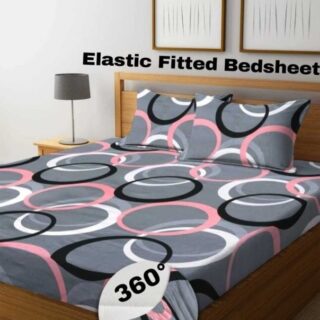 Home Garage 210 TC Cotton King Floral Fitted (Elastic) Bedsheet(Pack of 1, Grey)
Original price was: ₹999.00.₹299.00Current price is: ₹299.00.
Home Garage 210 TC Cotton King Floral Fitted (Elastic) Bedsheet(Pack of 1, Grey)
Original price was: ₹999.00.₹299.00Current price is: ₹299.00.
-
 Goodrik 140 TC Cotton Double 3D Printed Flat Bedsheet(Pack of 1, Brown)
Original price was: ₹499.00.₹229.00Current price is: ₹229.00.
Goodrik 140 TC Cotton Double 3D Printed Flat Bedsheet(Pack of 1, Brown)
Original price was: ₹499.00.₹229.00Current price is: ₹229.00.
-
 GLOBALSHOP 350 TC Microfiber Double Floral Flat Bedsheet(Pack of 1, Multicolor)
Original price was: ₹1,250.00.₹263.00Current price is: ₹263.00.
GLOBALSHOP 350 TC Microfiber Double Floral Flat Bedsheet(Pack of 1, Multicolor)
Original price was: ₹1,250.00.₹263.00Current price is: ₹263.00.
-
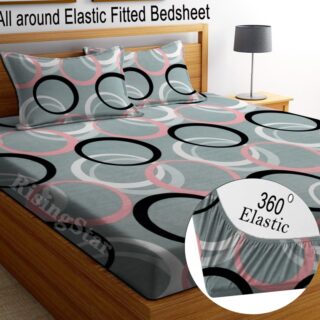 RisingStar 250 TC Microfiber King Printed Fitted (Elastic) Bedsheet(Pack of 1, FITTED-ROUND-CIRCLES-PREMIUM)
Original price was: ₹2,299.00.₹299.00Current price is: ₹299.00.
RisingStar 250 TC Microfiber King Printed Fitted (Elastic) Bedsheet(Pack of 1, FITTED-ROUND-CIRCLES-PREMIUM)
Original price was: ₹2,299.00.₹299.00Current price is: ₹299.00.
-
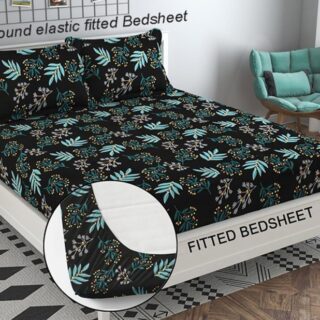 Home Garage 210 TC Cotton King Floral Fitted (Elastic) Bedsheet(Pack of 1, Fitted Black Green)
Original price was: ₹1,299.00.₹299.00Current price is: ₹299.00.
Home Garage 210 TC Cotton King Floral Fitted (Elastic) Bedsheet(Pack of 1, Fitted Black Green)
Original price was: ₹1,299.00.₹299.00Current price is: ₹299.00.
-
 Home Garage 180 TC Cotton King 3D Printed Flat Bedsheet(Pack of 1, White)
Original price was: ₹999.00.₹229.00Current price is: ₹229.00.
Home Garage 180 TC Cotton King 3D Printed Flat Bedsheet(Pack of 1, White)
Original price was: ₹999.00.₹229.00Current price is: ₹229.00.
-
 Panipat Textile Hub 152.4 cm (5 ft) Polyester Window Curtain (Pack Of 2)(Solid, Aqua)
Original price was: ₹1,899.00.₹299.00Current price is: ₹299.00.
Panipat Textile Hub 152.4 cm (5 ft) Polyester Window Curtain (Pack Of 2)(Solid, Aqua)
Original price was: ₹1,899.00.₹299.00Current price is: ₹299.00.
-
 Home Sizzler 214 cm (7 ft) Polyester Semi Transparent Door Curtain (Pack Of 2)(Floral, Maroon)
Original price was: ₹1,199.00.₹399.00Current price is: ₹399.00.
Home Sizzler 214 cm (7 ft) Polyester Semi Transparent Door Curtain (Pack Of 2)(Floral, Maroon)
Original price was: ₹1,199.00.₹399.00Current price is: ₹399.00.
-
 Home Sizzler 153 cm (5 ft) Polyester Room Darkening Window Curtain (Pack Of 2)(Floral, Brown)
Original price was: ₹799.00.₹299.00Current price is: ₹299.00.
Home Sizzler 153 cm (5 ft) Polyester Room Darkening Window Curtain (Pack Of 2)(Floral, Brown)
Original price was: ₹799.00.₹299.00Current price is: ₹299.00.
-
 Stella Creations 214 cm (7 ft) Polyester Room Darkening Door Curtain (Pack Of 2)(Abstract, Brown)
Original price was: ₹1,299.00.₹449.00Current price is: ₹449.00.
Stella Creations 214 cm (7 ft) Polyester Room Darkening Door Curtain (Pack Of 2)(Abstract, Brown)
Original price was: ₹1,299.00.₹449.00Current price is: ₹449.00.
-
 Homefab India 152.5 cm (5 ft) Polyester Room Darkening Window Curtain (Pack Of 2)(Floral, Light Blue)
Original price was: ₹1,199.00.₹319.00Current price is: ₹319.00.
Homefab India 152.5 cm (5 ft) Polyester Room Darkening Window Curtain (Pack Of 2)(Floral, Light Blue)
Original price was: ₹1,199.00.₹319.00Current price is: ₹319.00.
-
 Urban Home 214 cm (7 ft) PVC Transparent Door Curtain Single Curtain(Solid, Off White)
Original price was: ₹699.00.₹203.00Current price is: ₹203.00.
Urban Home 214 cm (7 ft) PVC Transparent Door Curtain Single Curtain(Solid, Off White)
Original price was: ₹699.00.₹203.00Current price is: ₹203.00.
-
 Panipat Textile Hub 213 cm (7 ft) Polyester Door Curtain (Pack Of 2)(Solid, Brown)
Original price was: ₹1,199.00.₹349.00Current price is: ₹349.00.
Panipat Textile Hub 213 cm (7 ft) Polyester Door Curtain (Pack Of 2)(Solid, Brown)
Original price was: ₹1,199.00.₹349.00Current price is: ₹349.00.
-
 Home Sizzler 214 cm (7 ft) Polyester Semi Transparent Door Curtain (Pack Of 2)(Floral, Brown)
Original price was: ₹999.00.₹349.00Current price is: ₹349.00.
Home Sizzler 214 cm (7 ft) Polyester Semi Transparent Door Curtain (Pack Of 2)(Floral, Brown)
Original price was: ₹999.00.₹349.00Current price is: ₹349.00.
-
 Panipat Textile Hub 213 cm (7 ft) Polyester Semi Transparent Door Curtain (Pack Of 2)(Floral, Brown)
Original price was: ₹899.00.₹299.00Current price is: ₹299.00.
Panipat Textile Hub 213 cm (7 ft) Polyester Semi Transparent Door Curtain (Pack Of 2)(Floral, Brown)
Original price was: ₹899.00.₹299.00Current price is: ₹299.00.

Hey, it’s Jessica. If your iPhone feels warm—or sometimes uncomfortably hot—during what seems like normal use, it can be unsettling. You’re not gaming for hours, you’re not charging it in the sun, and yet the back of the phone heats up while scrolling, watching videos, or even just sitting idle. I’ve experienced this myself, and the immediate reaction is usually worry: Is my battery damaged? Is something wrong with my phone? The reality is more nuanced. iPhone heating isn’t always a problem—it’s often a signal. The key is understanding what your iPhone is trying to tell you before assuming the worst.
Heat Is a Side Effect of Work, Not a Defect
The first thing to understand is that heat is a natural byproduct of processing power. Every task your iPhone performs—loading apps, syncing data, rendering graphics, analyzing photos—generates heat. Newer iPhones are incredibly powerful, and that power has to go somewhere. When the processor and graphics unit work harder, the phone warms up. This doesn’t automatically mean something is wrong. In many cases, it means your iPhone is actively doing more than you realize, even if the screen activity looks simple.
Background Activity Happens Even When You’re Not Watching
One of the most common reasons iPhones heat up during “normal” use is background activity. While you’re casually browsing or messaging, iOS may be syncing iCloud data, updating photos, indexing files, refreshing apps, or processing system intelligence. These tasks don’t announce themselves, but they still demand resources. When several background processes overlap, heat builds up faster. The phone isn’t overheating—it’s multitasking quietly.
Poor Network Conditions Increase Heat
Network quality plays a bigger role in heat than most people expect. When Wi-Fi or mobile data is unstable, your iPhone works harder to maintain connections. Apps retry downloads, refresh content repeatedly, and keep radios active longer than usual. This constant network struggle generates extra heat. That’s why iPhones often feel warmer in areas with weak signal, even during light use. The phone isn’t slow—it’s working overtime to stay connected.
Charging and Usage Together Multiply Heat
Using your iPhone while it’s charging is one of the fastest ways to raise temperature. Charging already generates heat. Adding screen activity, background syncing, or video playback on top of that compounds it. iOS manages this carefully, but physics still applies. Occasional warmth during charging is normal; consistent heat while charging and using the phone simultaneously is a sign to slow things down, not a sign of damage.
Apps Can Be Efficient—or Surprisingly Demanding
Not all apps use resources equally. Some social media, camera, navigation, and video apps place heavy demands on the processor and network even during short sessions. An app that looks visually simple may still be doing complex work in the background. When multiple demanding apps run close together, heat builds up quickly. This is why your phone might feel cool most of the day, then suddenly warm during a specific app session.
iOS Updates and System Tasks Raise Temperature Temporarily
After iOS updates, it’s common for iPhones to feel warmer than usual for a day or two. That’s because the system is reorganizing itself—reindexing photos, optimizing files, recalibrating features, and syncing data. These processes are temporary but resource-intensive. If you notice heat shortly after an update, it’s usually part of this adjustment period, not a permanent issue.
Low Storage Makes the System Work Harder
When storage space is tight, iOS has less room to manage temporary files efficiently. This forces the system to juggle data more aggressively, increasing processor usage and, yes, heat. Even if storage isn’t completely full, running close to the limit creates extra work behind the scenes. Heat, in this case, is a symptom of system strain rather than a hardware fault.
Environment Matters More Than We Think
Ambient temperature has a direct impact on how warm your iPhone feels. Using the phone in warm rooms, cars, or outdoors accelerates heat buildup. The device has less opportunity to dissipate heat into the environment. What feels like “sudden overheating” is often the combination of normal usage plus a warm surrounding environment.
Heat Is iOS Communicating Limits
Apple designs iPhones to protect themselves. When temperatures rise too much, iOS automatically limits performance, dims the screen, pauses charging, or displays temperature warnings. These aren’t failures—they’re safeguards. Heat, before it reaches those limits, is simply the system signaling that it’s under load. Learning to read that signal changes how you respond. Instead of panicking, you adjust behavior.
The Shift From Fear to Awareness
Once I stopped seeing heat as a danger sign and started seeing it as feedback, my relationship with my iPhone changed. Warmth during certain tasks became understandable, even predictable. The goal isn’t to keep your phone ice-cold at all times—it’s to recognize when heat is normal and when it’s persistent or excessive. That awareness is what separates healthy usage from unnecessary worry.
When Heat Becomes a Problem, Not Just a Signal
Occasional warmth is normal, but consistent or intense heat is different. When your iPhone stays hot even during light use, it’s usually a sign that something is stuck in a high-activity loop. This could be a misbehaving app, repeated background syncing, or a system task that hasn’t completed properly. Heat becomes a problem when it doesn’t cool down after you stop using the phone. At that point, the issue isn’t workload—it’s inefficiency.
Background App Refresh Can Quietly Drive Temperature Up
Background App Refresh sounds harmless, but when many apps are allowed to refresh constantly, the system never truly rests. Each refresh triggers network use, processing, and memory activity. Over time, this creates sustained heat instead of short bursts. Limiting background refresh to only essential apps reduces continuous system load and helps the phone cool naturally between tasks.
Location Services Are One of the Biggest Heat Contributors
Apps that access location frequently keep GPS, Wi-Fi, and Bluetooth radios active. Even when you’re stationary, the phone checks location signals repeatedly. Navigation, ride-sharing, fitness, and retail apps are common offenders. Switching most apps from “Always” to “While Using” significantly reduces heat buildup without breaking functionality. This single change often makes a noticeable difference.
Poor Signal Areas Make iPhones Work Overtime
When signal strength is weak, your iPhone increases power output to stay connected. Apps retry downloads, refresh data repeatedly, and keep radios active longer. This is why phones often heat up in elevators, basements, trains, or areas with patchy coverage. Airplane Mode or switching to a stable Wi-Fi connection in these situations gives the device immediate relief.
Charging Habits That Trap Heat
Heat during charging becomes an issue when charging conditions trap warmth instead of letting it dissipate. Thick cases, pillows, car dashboards, and enclosed spaces prevent proper cooling. Fast charging also generates more heat by design. Charging in a cool, open area and avoiding heavy usage while plugged in keeps temperature under control. The phone isn’t fragile—it just needs airflow.
Certain Apps Are Repeated Heat Triggers
Video apps, camera apps, social media platforms, and navigation tools consistently push the processor and network together. If you notice heat spikes only with specific apps, that’s valuable information. It doesn’t always mean the app is “bad,” but it may be inefficient or poorly optimized. Closing the app fully or limiting background access prevents repeat heating cycles.
After iOS Updates, Heat Is Often Temporary
Following major iOS updates, background tasks run quietly for hours or days. Photo indexing, file optimization, and system recalibration all increase processor activity. During this period, warmth is expected. The mistake many people make is reacting too early. Giving the phone time—plugged in, on Wi-Fi, and idle—allows these processes to finish and temperatures to normalize.
Low Storage Forces the System to Work Harder
When storage is nearly full, iOS has less room to manage temporary files efficiently. This increases processing overhead and heat. Even freeing a small amount of space can reduce system strain. Heat caused by low storage isn’t obvious, but once addressed, the phone often feels cooler and more responsive overall.
Why Restarting Actually Helps With Heat
Restarting clears active memory, stops stalled processes, and resets system state. If heat is caused by a background task stuck in a loop, a restart interrupts it. This is why phones often feel cooler afterward. Restarting isn’t a cure-all, but it’s an effective way to reset thermal behavior when heat feels abnormal.
Prevent Heat by Managing Behavior, Not Panicking
The most important shift is behavioral. Heat isn’t something to fear—it’s something to manage. Reducing background activity, improving network conditions, charging wisely, and keeping storage healthy prevents most overheating scenarios. Once these habits are in place, heat becomes predictable instead of alarming.
Conclusion
An iPhone getting warm doesn’t automatically mean damage or danger. In most cases, heat is simply feedback—a sign that the system is under load or working inefficiently. Real problems arise only when heat is constant, intense, and slow to dissipate. By understanding what causes heat and adjusting settings and habits accordingly, you protect both performance and battery health. Awareness, not anxiety, is the key to keeping your iPhone cool and reliable.
Disclaimer
This article is for informational purposes only. iPhone temperature behavior may vary based on model, iOS version, usage patterns, and environmental conditions. Always follow Apple’s official guidelines for safe device usage.

- What Are iPhone Background Sounds? Their Uses and How to Enable Them

- How to Run a Safety Check in Google Chrome and Protect Your Browser

- Samsung Phone’s Keyboard Not Working? Here’s How to Fix It

- How to Take Screenshot While in Gaming on My Windows 11 PC

- Microsoft Store Blocked on Windows 11 Error 0x800704EC, How to Fix It

Products
-
![Apple Watch Ultra 3 [GPS + Cellular 49mm] Running & Multisport Smartwatch w/Rugged Titanium Case w/Black Titanium Milanese Loop - M. Satellite Communications, Advanced Health & Fitness Tracking](https://bazaronweb.com/retailstores/wp-content/uploads/2025/09/apple-watch-320x320.jpg) Apple Watch Ultra 3 [GPS + Cellular 49mm] Running & Multisport Smartwatch w/Rugged Titanium Case w/Black Titanium Milanese Loop - M. Satellite Communications, Advanced Health & Fitness Tracking
Apple Watch Ultra 3 [GPS + Cellular 49mm] Running & Multisport Smartwatch w/Rugged Titanium Case w/Black Titanium Milanese Loop - M. Satellite Communications, Advanced Health & Fitness Tracking
-
 Apple iPad mini (A17 Pro): Apple Intelligence, 8.3-inch Liquid Retina Display, 256GB, Wi-Fi 6E, 12MP Front/12MP Back Camera, Touch ID, All-Day Battery Life — Purple
-
 Apple AirPods Max Wireless Over-Ear Headphones, Active Noise Cancelling, Transparency Mode, Personalized Spatial Audio, Dolby Atmos, Bluetooth Headphones for iPhone – Space Gray
-
 Apple AirPods Pro 2 Wireless Earbuds, Active Noise Cancellation, Hearing Aid Feature, Bluetooth Headphones, Transparency, Personalized Spatial Audio, High-Fidelity Sound, H2 Chip, USB-C Charging
-
Home Garage 210 TC Cotton King Floral Fitted (Elastic) Bedsheet(Pack of 1, Grey)
Original price was: ₹999.00.₹299.00Current price is: ₹299.00.
Leave a Reply