Discounted Products
-
 Leo Creation 144 TC Cotton Double Jaipuri Prints Flat Bedsheet(Pack of 1, Blue, Gree, Red, Grey, Light Grey)
Original price was: ₹2,999.00.₹329.00Current price is: ₹329.00.
Leo Creation 144 TC Cotton Double Jaipuri Prints Flat Bedsheet(Pack of 1, Blue, Gree, Red, Grey, Light Grey)
Original price was: ₹2,999.00.₹329.00Current price is: ₹329.00.
-
 Home Garage 210 TC Cotton King Floral Fitted (Elastic) Bedsheet(Pack of 1, Grey)
Original price was: ₹999.00.₹299.00Current price is: ₹299.00.
Home Garage 210 TC Cotton King Floral Fitted (Elastic) Bedsheet(Pack of 1, Grey)
Original price was: ₹999.00.₹299.00Current price is: ₹299.00.
-
 Goodrik 140 TC Cotton Double 3D Printed Flat Bedsheet(Pack of 1, Brown)
Original price was: ₹499.00.₹229.00Current price is: ₹229.00.
Goodrik 140 TC Cotton Double 3D Printed Flat Bedsheet(Pack of 1, Brown)
Original price was: ₹499.00.₹229.00Current price is: ₹229.00.
-
 GLOBALSHOP 350 TC Microfiber Double Floral Flat Bedsheet(Pack of 1, Multicolor)
Original price was: ₹1,250.00.₹263.00Current price is: ₹263.00.
GLOBALSHOP 350 TC Microfiber Double Floral Flat Bedsheet(Pack of 1, Multicolor)
Original price was: ₹1,250.00.₹263.00Current price is: ₹263.00.
-
 RisingStar 250 TC Microfiber King Printed Fitted (Elastic) Bedsheet(Pack of 1, FITTED-ROUND-CIRCLES-PREMIUM)
Original price was: ₹2,299.00.₹299.00Current price is: ₹299.00.
RisingStar 250 TC Microfiber King Printed Fitted (Elastic) Bedsheet(Pack of 1, FITTED-ROUND-CIRCLES-PREMIUM)
Original price was: ₹2,299.00.₹299.00Current price is: ₹299.00.
-
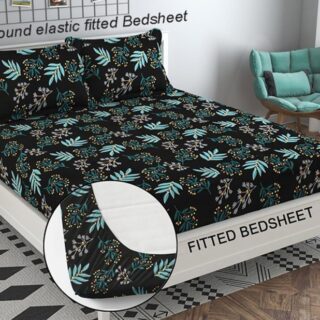 Home Garage 210 TC Cotton King Floral Fitted (Elastic) Bedsheet(Pack of 1, Fitted Black Green)
Original price was: ₹1,299.00.₹299.00Current price is: ₹299.00.
Home Garage 210 TC Cotton King Floral Fitted (Elastic) Bedsheet(Pack of 1, Fitted Black Green)
Original price was: ₹1,299.00.₹299.00Current price is: ₹299.00.
-
 Home Garage 180 TC Cotton King 3D Printed Flat Bedsheet(Pack of 1, White)
Original price was: ₹999.00.₹229.00Current price is: ₹229.00.
Home Garage 180 TC Cotton King 3D Printed Flat Bedsheet(Pack of 1, White)
Original price was: ₹999.00.₹229.00Current price is: ₹229.00.
-
 Home Sizzler 153 cm (5 ft) Polyester Room Darkening Window Curtain (Pack Of 2)(Floral, Maroon)
Original price was: ₹799.00.₹299.00Current price is: ₹299.00.
Home Sizzler 153 cm (5 ft) Polyester Room Darkening Window Curtain (Pack Of 2)(Floral, Maroon)
Original price was: ₹799.00.₹299.00Current price is: ₹299.00.
-
 Panipat Textile Hub 152.4 cm (5 ft) Polyester Window Curtain (Pack Of 2)(Solid, Aqua)
Original price was: ₹1,899.00.₹299.00Current price is: ₹299.00.
Panipat Textile Hub 152.4 cm (5 ft) Polyester Window Curtain (Pack Of 2)(Solid, Aqua)
Original price was: ₹1,899.00.₹299.00Current price is: ₹299.00.
-
 Home Sizzler 214 cm (7 ft) Polyester Semi Transparent Door Curtain (Pack Of 2)(Floral, Maroon)
Original price was: ₹1,199.00.₹399.00Current price is: ₹399.00.
Home Sizzler 214 cm (7 ft) Polyester Semi Transparent Door Curtain (Pack Of 2)(Floral, Maroon)
Original price was: ₹1,199.00.₹399.00Current price is: ₹399.00.
-
 Home Sizzler 153 cm (5 ft) Polyester Room Darkening Window Curtain (Pack Of 2)(Floral, Brown)
Original price was: ₹799.00.₹299.00Current price is: ₹299.00.
Home Sizzler 153 cm (5 ft) Polyester Room Darkening Window Curtain (Pack Of 2)(Floral, Brown)
Original price was: ₹799.00.₹299.00Current price is: ₹299.00.
-
 Stella Creations 214 cm (7 ft) Polyester Room Darkening Door Curtain (Pack Of 2)(Abstract, Brown)
Original price was: ₹1,299.00.₹449.00Current price is: ₹449.00.
Stella Creations 214 cm (7 ft) Polyester Room Darkening Door Curtain (Pack Of 2)(Abstract, Brown)
Original price was: ₹1,299.00.₹449.00Current price is: ₹449.00.
-
 Homefab India 152.5 cm (5 ft) Polyester Room Darkening Window Curtain (Pack Of 2)(Floral, Light Blue)
Original price was: ₹1,199.00.₹319.00Current price is: ₹319.00.
Homefab India 152.5 cm (5 ft) Polyester Room Darkening Window Curtain (Pack Of 2)(Floral, Light Blue)
Original price was: ₹1,199.00.₹319.00Current price is: ₹319.00.
-
 Urban Home 214 cm (7 ft) PVC Transparent Door Curtain Single Curtain(Solid, Off White)
Original price was: ₹699.00.₹203.00Current price is: ₹203.00.
Urban Home 214 cm (7 ft) PVC Transparent Door Curtain Single Curtain(Solid, Off White)
Original price was: ₹699.00.₹203.00Current price is: ₹203.00.
-
 Panipat Textile Hub 213 cm (7 ft) Polyester Door Curtain (Pack Of 2)(Solid, Brown)
Original price was: ₹1,199.00.₹349.00Current price is: ₹349.00.
Panipat Textile Hub 213 cm (7 ft) Polyester Door Curtain (Pack Of 2)(Solid, Brown)
Original price was: ₹1,199.00.₹349.00Current price is: ₹349.00.
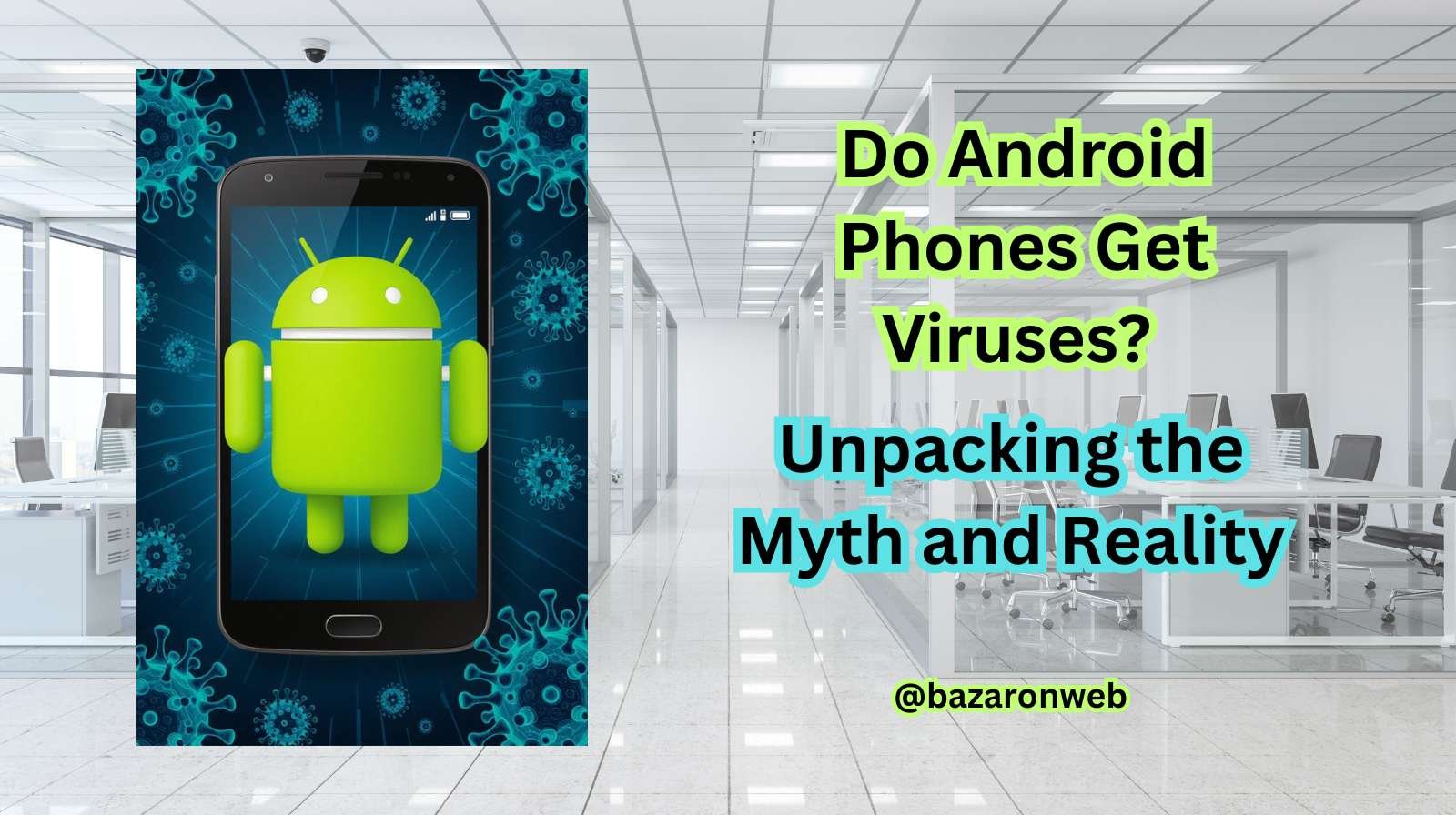
It’s a question that has likely crossed the mind of every smartphone user at some point: “Can my phone get a virus?” You’ve probably heard the age-old debate—iPhones are fortresses, Androids are vulnerable. As someone who helps friends and family untangle their tech troubles, I’ve seen the genuine concern behind this question. The fear of a compromised device holding your personal photos, banking information, and private messages is very real.
So, let’s cut through the noise and get a clear, straightforward answer.
The technical, short answer is: Yes, Android phones can get malware, but the classic “computer virus” you might imagine is incredibly rare.
The more practical, long answer is what really matters: understanding the actual risks, how your phone is protected by default, and the simple, smart habits that will keep you 99.9% safe. Let’s break it all down.
“Virus” vs. “Malware”: Why the Word Matters
First, we need to clarify our terms, because using the right language helps us understand the real threat.
-
A Virus is a specific type of malicious software that attaches itself to a clean file and spreads, replicating itself across a system. This is common on traditional Windows PCs but is far less common in the mobile world.
-
Malware (a portmanteau of “malicious software”) is the broader, more accurate umbrella term. This includes all sorts of digital nasties: spyware that tracks your keystrokes, trojans that disguise themselves as legitimate apps, ransomware that locks your device, and yes, viruses.
When people ask, “Can my Android get a virus?” they are almost always asking, “Can my Android get infected with malware?” And to that, the answer is a definitive yes. However, it’s not a foregone conclusion. Your phone isn’t just sitting there, defenseless. It has a powerful, multi-layered security system built right in.
Your Android’s Built-In Bodyguards
Think of your Android phone’s security not as a single lock, but as a series of gates and guards. Google has designed the Android operating system with several fundamental protections that make it very hard for malware to cause widespread havoc.
-
App Sandboxing: This is the cornerstone of Android security. Every app you install, whether from the Play Store or elsewhere, runs in its own isolated “sandbox.” It can’t interact with other apps or access your data without your explicit permission. It’s like giving each app its own private, walled garden. A malicious app might mess up its own garden, but it can’t trample your rose bushes or get into your shed (your banking app, for example).
-
Google Play Protect: This is Google’s always-on, built-in malware scanner. It automatically scans the apps on your phone for malicious behavior. It also scans every single app in the Play Store before you even download it, and it will warn you if you try to install an app it deems harmful. It runs quietly in the background, and you can check its status by opening the Play Store, tapping your profile icon, and going to “Play Protect.”
-
Strict Permission System: Remember when you installed that weather app and it asked for permission to access your location, your contacts, and your microphone? That’s your phone’s security system in action. You have the ultimate control to grant or deny these permissions. A flashlight app has no legitimate need to access your contacts, and you can—and should—say no.
So, How Do Phones Actually Get Infected?
Given all these protections, how does any malware ever get through? The infection almost never happens on its own; it requires a user to inadvertently open a gate. The primary routes are:
1. Sideloading: The Biggest Risk Factor
This is, by far, the most common way Android devices get malware. “Sideloading” is the process of installing an application (an APK file) from a source outside of the official Google Play Store.
-
Why do people sideload? Sometimes it’s to get an app that isn’t available in their region on the Play Store. Often, it’s to get a “cracked” or pirated version of a paid app, a modified game with cheats, or a free version of a streaming service. Cybercriminals know this and deliberately package malware inside these tempting, “too-good-to-be-true” apps.
-
The Danger: When you sideload an app, you bypass Google Play Protect’s initial scan. You are also typically required to go into your settings and grant permission to “Install from Unknown Sources,” which is a major security warning in itself.
2. Phishing Attacks and Shady Links
Your phone itself might be secure, but you can still be tricked. Malware often arrives via a phishing link in a text message, email, or even a social media post. The message might pretend to be from your bank, a delivery service, or offer a free gift card. Clicking the link might:
-
Take you to a fake website designed to steal your login credentials.
-
Prompt you to download a malicious file masquerading as a document or app update.
3. Malicious Ads (Malvertising)
While less common, it’s possible to encounter a malicious ad on an otherwise legitimate website. These ads can sometimes redirect you to a page that triggers an automatic download or tricks you into installing a fake “security scanner” or “video player” that is actually malware.
Your Action Plan: 5 Simple Habits for a Secure Android
You don’t need to be a cybersecurity expert to stay safe. You just need to adopt a few cautious habits.
1. Stick to the Google Play Store (Mostly).
This is your number one rule. The Play Store is not perfectly sterile—a very small number of malicious apps can slip through—but it is by far the safest place to download apps. Google’s automated and human review processes catch the vast majority of threats before they ever reach you.
2. Be a Permission Skeptic.
Every time an app asks for a permission, pause and ask, “Why does it need this?” A note-taking app needs access to your storage, but not your location. A social media app might need your camera, but not your call log. If the request seems suspicious, deny it. You can always go to Settings > Apps > [App Name] > Permissions to review and change them later.
3. Keep Your Software Updated.
This is so simple but so critical. When you get a notification for a system update (Android version) or a security patch, install it as soon as you conveniently can. These updates often contain patches for vulnerabilities that hackers could exploit. The same goes for updating your apps from the Play Store.
4. Think Before You Click.
Be deeply suspicious of unsolicited links and text messages. If a message from an unknown number says “Click to claim your prize!” or a text pretending to be a carrier says your bill is overdue, don’t tap the link. If you’re unsure about a message from a known contact (like your bank), open your banking app directly or call their official number instead of clicking.
5. Seriously, Don’t Sideload.
Just don’t. The risk is not worth the reward of a free app or a game hack. The convenience of the Play Store and the sheer volume of apps available there means there’s almost never a good reason to venture into the wild west of third-party app stores and download sites.
Do You Need an Antivirus App?
This is a common follow-up question. For the vast majority of users, the answer is no. Google Play Protect, combined with the safe habits listed above, provides robust protection. Many of the “antivirus” apps on the Play Store are redundant at best, and some are even malicious themselves, filled with intrusive ads or selling your data.
Their additional features, like app locking or Wi-Fi scanning, are often already built into modern Android phones or can be found in more reputable, standalone apps. You are better off relying on Android’s native security than cluttering your phone with a third-party antivirus.
The Bottom Line: Knowledge is Your Best Antivirus
So, do Android phones get viruses? They can get malware, but it’s almost always a result of bypassing the phone’s built-in safeguards. The narrative that Android is an insecure wild west is outdated and overblown.
Your Android phone comes with powerful, modern security features enabled by default. By making a conscious choice to stay within the walled garden of the Play Store, by being thoughtful about app permissions, and by maintaining a healthy skepticism toward unsolicited links, you can use your Android device with complete confidence. The power to stay safe is, quite literally, in your hands.

- How to Fix Chrome Automatically Deleting Downloaded Files (Complete Step-by-Step Guide)

- How to View Apps That Windows Security Identifies as PUA (Step-by-Step Guide)

- How to Add Custom DNS Server on iPhone to Fix DNS Errors and Improve Internet Speed

- AI Automation in 2026: How It’s Transforming Jobs, Businesses, and Everyday Life

- How to Check Startup and Shutdown History in Windows for Better Troubleshooting

Products
-
![Apple Watch Ultra 3 [GPS + Cellular 49mm] Running & Multisport Smartwatch w/Rugged Titanium Case w/Black Titanium Milanese Loop - M. Satellite Communications, Advanced Health & Fitness Tracking](https://bazaronweb.com/retailstores/wp-content/uploads/2025/09/apple-watch-320x320.jpg) Apple Watch Ultra 3 [GPS + Cellular 49mm] Running & Multisport Smartwatch w/Rugged Titanium Case w/Black Titanium Milanese Loop - M. Satellite Communications, Advanced Health & Fitness Tracking
Apple Watch Ultra 3 [GPS + Cellular 49mm] Running & Multisport Smartwatch w/Rugged Titanium Case w/Black Titanium Milanese Loop - M. Satellite Communications, Advanced Health & Fitness Tracking
-
 Apple iPad mini (A17 Pro): Apple Intelligence, 8.3-inch Liquid Retina Display, 256GB, Wi-Fi 6E, 12MP Front/12MP Back Camera, Touch ID, All-Day Battery Life — Purple
-
 Apple AirPods Max Wireless Over-Ear Headphones, Active Noise Cancelling, Transparency Mode, Personalized Spatial Audio, Dolby Atmos, Bluetooth Headphones for iPhone – Space Gray
-
 Apple AirPods Pro 2 Wireless Earbuds, Active Noise Cancellation, Hearing Aid Feature, Bluetooth Headphones, Transparency, Personalized Spatial Audio, High-Fidelity Sound, H2 Chip, USB-C Charging
-
Leo Creation 144 TC Cotton Double Jaipuri Prints Flat Bedsheet(Pack of 1, Blue, Gree, Red, Grey, Light Grey)
Original price was: ₹2,999.00.₹329.00Current price is: ₹329.00.
Leave a Reply