Discounted Products
-
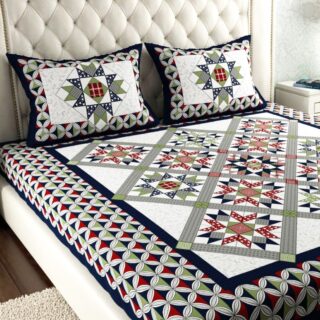 Leo Creation 144 TC Cotton Double Jaipuri Prints Flat Bedsheet(Pack of 1, Blue, Gree, Red, Grey, Light Grey)
Original price was: ₹2,999.00.₹329.00Current price is: ₹329.00.
Leo Creation 144 TC Cotton Double Jaipuri Prints Flat Bedsheet(Pack of 1, Blue, Gree, Red, Grey, Light Grey)
Original price was: ₹2,999.00.₹329.00Current price is: ₹329.00.
-
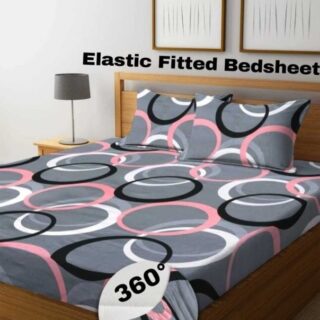 Home Garage 210 TC Cotton King Floral Fitted (Elastic) Bedsheet(Pack of 1, Grey)
Original price was: ₹999.00.₹299.00Current price is: ₹299.00.
Home Garage 210 TC Cotton King Floral Fitted (Elastic) Bedsheet(Pack of 1, Grey)
Original price was: ₹999.00.₹299.00Current price is: ₹299.00.
-
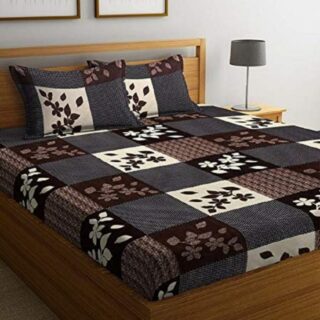 Goodrik 140 TC Cotton Double 3D Printed Flat Bedsheet(Pack of 1, Brown)
Original price was: ₹499.00.₹229.00Current price is: ₹229.00.
Goodrik 140 TC Cotton Double 3D Printed Flat Bedsheet(Pack of 1, Brown)
Original price was: ₹499.00.₹229.00Current price is: ₹229.00.
-
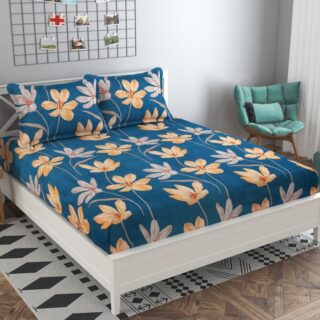 GLOBALSHOP 350 TC Microfiber Double Floral Flat Bedsheet(Pack of 1, Multicolor)
Original price was: ₹1,250.00.₹263.00Current price is: ₹263.00.
GLOBALSHOP 350 TC Microfiber Double Floral Flat Bedsheet(Pack of 1, Multicolor)
Original price was: ₹1,250.00.₹263.00Current price is: ₹263.00.
-
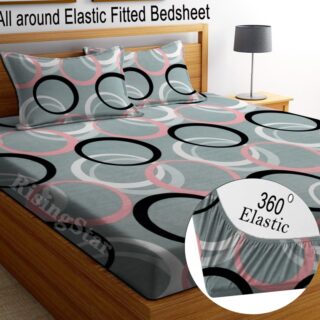 RisingStar 250 TC Microfiber King Printed Fitted (Elastic) Bedsheet(Pack of 1, FITTED-ROUND-CIRCLES-PREMIUM)
Original price was: ₹2,299.00.₹299.00Current price is: ₹299.00.
RisingStar 250 TC Microfiber King Printed Fitted (Elastic) Bedsheet(Pack of 1, FITTED-ROUND-CIRCLES-PREMIUM)
Original price was: ₹2,299.00.₹299.00Current price is: ₹299.00.
-
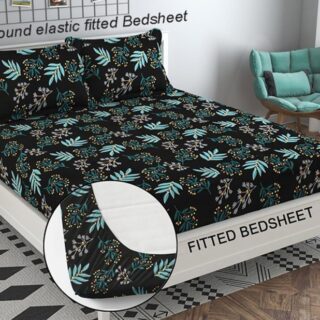 Home Garage 210 TC Cotton King Floral Fitted (Elastic) Bedsheet(Pack of 1, Fitted Black Green)
Original price was: ₹1,299.00.₹299.00Current price is: ₹299.00.
Home Garage 210 TC Cotton King Floral Fitted (Elastic) Bedsheet(Pack of 1, Fitted Black Green)
Original price was: ₹1,299.00.₹299.00Current price is: ₹299.00.
-
 Home Garage 180 TC Cotton King 3D Printed Flat Bedsheet(Pack of 1, White)
Original price was: ₹999.00.₹229.00Current price is: ₹229.00.
Home Garage 180 TC Cotton King 3D Printed Flat Bedsheet(Pack of 1, White)
Original price was: ₹999.00.₹229.00Current price is: ₹229.00.
-
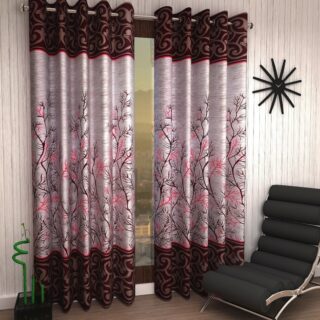 Home Sizzler 153 cm (5 ft) Polyester Room Darkening Window Curtain (Pack Of 2)(Floral, Maroon)
Original price was: ₹799.00.₹299.00Current price is: ₹299.00.
Home Sizzler 153 cm (5 ft) Polyester Room Darkening Window Curtain (Pack Of 2)(Floral, Maroon)
Original price was: ₹799.00.₹299.00Current price is: ₹299.00.
-
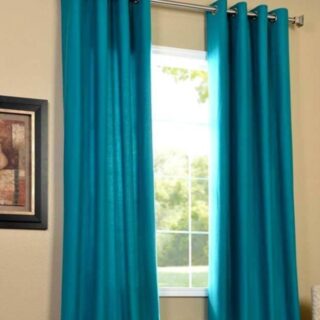 Panipat Textile Hub 152.4 cm (5 ft) Polyester Window Curtain (Pack Of 2)(Solid, Aqua)
Original price was: ₹1,899.00.₹299.00Current price is: ₹299.00.
Panipat Textile Hub 152.4 cm (5 ft) Polyester Window Curtain (Pack Of 2)(Solid, Aqua)
Original price was: ₹1,899.00.₹299.00Current price is: ₹299.00.
-
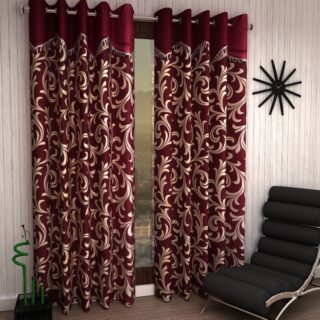 Home Sizzler 214 cm (7 ft) Polyester Semi Transparent Door Curtain (Pack Of 2)(Floral, Maroon)
Original price was: ₹1,199.00.₹399.00Current price is: ₹399.00.
Home Sizzler 214 cm (7 ft) Polyester Semi Transparent Door Curtain (Pack Of 2)(Floral, Maroon)
Original price was: ₹1,199.00.₹399.00Current price is: ₹399.00.
-
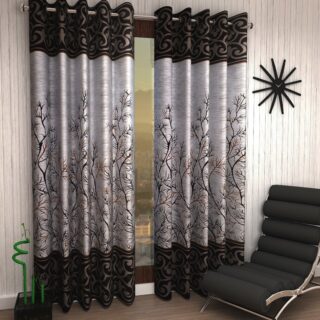 Home Sizzler 153 cm (5 ft) Polyester Room Darkening Window Curtain (Pack Of 2)(Floral, Brown)
Original price was: ₹799.00.₹299.00Current price is: ₹299.00.
Home Sizzler 153 cm (5 ft) Polyester Room Darkening Window Curtain (Pack Of 2)(Floral, Brown)
Original price was: ₹799.00.₹299.00Current price is: ₹299.00.
-
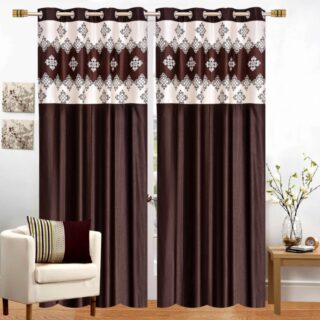 Stella Creations 214 cm (7 ft) Polyester Room Darkening Door Curtain (Pack Of 2)(Abstract, Brown)
Original price was: ₹1,299.00.₹449.00Current price is: ₹449.00.
Stella Creations 214 cm (7 ft) Polyester Room Darkening Door Curtain (Pack Of 2)(Abstract, Brown)
Original price was: ₹1,299.00.₹449.00Current price is: ₹449.00.
-
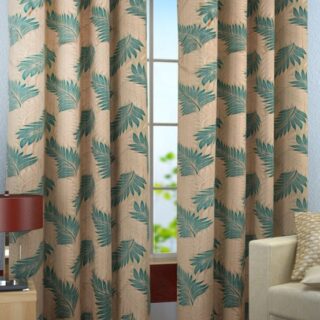 Homefab India 152.5 cm (5 ft) Polyester Room Darkening Window Curtain (Pack Of 2)(Floral, Light Blue)
Original price was: ₹1,199.00.₹319.00Current price is: ₹319.00.
Homefab India 152.5 cm (5 ft) Polyester Room Darkening Window Curtain (Pack Of 2)(Floral, Light Blue)
Original price was: ₹1,199.00.₹319.00Current price is: ₹319.00.
-
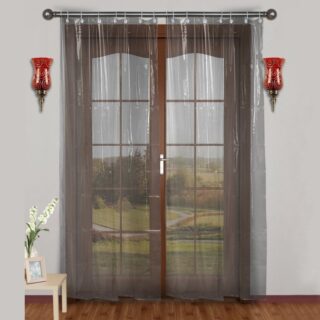 Urban Home 214 cm (7 ft) PVC Transparent Door Curtain Single Curtain(Solid, Off White)
Original price was: ₹699.00.₹203.00Current price is: ₹203.00.
Urban Home 214 cm (7 ft) PVC Transparent Door Curtain Single Curtain(Solid, Off White)
Original price was: ₹699.00.₹203.00Current price is: ₹203.00.
-
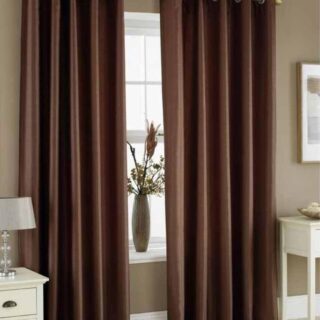 Panipat Textile Hub 213 cm (7 ft) Polyester Door Curtain (Pack Of 2)(Solid, Brown)
Original price was: ₹1,199.00.₹349.00Current price is: ₹349.00.
Panipat Textile Hub 213 cm (7 ft) Polyester Door Curtain (Pack Of 2)(Solid, Brown)
Original price was: ₹1,199.00.₹349.00Current price is: ₹349.00.

Hey friends, Jessica here. If you’re setting up a TV, projector, or gaming system and wondering how far you can stretch your HDMI cable without losing picture quality — you’re in the right place. I’ve installed home theater setups, helped friends run TV wires through walls, and dealt with eccentric splitters and extenders. And trust me — cable length does matter more than some folks realize.
In this article, I’ll walk you through:
- The technical reality of how HDMI signals behave over distance
- Real-world length guidelines
- Factors that cause signal degradation
- Solutions if you need a longer run than usual
- Practical setup tips for your living room, office, or presentation space
📌 Why HDMI Cable Length Matters
HDMI is a digital interface, meaning it transmits binary data (0s and 1s). From a pure theory perspective, if the cable is built perfectly, “digital” should either work or not — there’s no “half signal.”
However, in practice, physical factors like cable construction, resolution, refresh rate, shielding, and interference affect whether the display works reliably. Once the signal is too weak or distorted, you might see flickering, dropouts, no signal at all, or reduced resolution.
So yes — there is a practical maximum length for HDMI cables if you want flawless performance.
✅ Real-World Length Guidelines
Here are generally accepted max lengths for passive HDMI cables without signal boosters, based on resolution and cable quality:
- For 1080p (Full HD) resolutions: cables up to 15–20 meters (about 50–65 feet) often work fine in ideal conditions.
- For 4K (UHD) signals, especially at higher refresh rates: many sources recommend keeping cable length under 3–10 meters (10–33 feet) for reliable performance.
- Many experts say beyond 7.6 meters (25 feet) passive cables risk degradation unless they’re premium or active cables.
So if you’re connecting a TV just across your living room — no problem. If you’re running HDMI through walls, up stairs, or across a long distance — you’ll need to be more cautious.
🎛 What Factors Affect Maximum Length
Several variables determine how long your HDMI cable can be before you start having issues:
• Cable Quality & Category
Higher quality cables (thicker conductors, better shielding) maintain signal integrity further. For example, cables that meet “High Speed” or “Ultra High Speed” standards.
• Signal Bandwidth (Resolution + Refresh Rate)
The more bandwidth you use (4K60, 8K, HDR, high refresh), the more demanding the link. Higher data rates = greater signal loss risk over distance.
• Interference & Cable Route
Running HDMI alongside power cables, bending it sharply, or passing through walls without proper shielding can reduce effective length. Environmental noise also plays a role.
• Source & Display Device Tolerance
Some TVs or graphics cards are better at amplifying weak signals. Others are picky and drop out faster.
• Connector & Cable Certifications
Using certified cables (Premium High Speed, etc.) gives better assurance. Cheap generic cables may fail earlier.
🔧 Solutions for Long HDMI Runs
If you need to run HDMI farther than the “safe passive length,” here are options:
1. Use an Active HDMI Cable
These include built-in signal boosters or electronics to maintain integrity over long runs.
2. Use Fiber Optic HDMI Cables
These convert the signal to light and can go much further — 50 ft, 100 ft or more — often one way only though.
3. Use HDMI Extenders or HDBaseT
You can transmit HDMI over Cat5e/Cat6/ethernet cable or coax using extenders. Some commercial systems reach 100 meters (328 ft) using HDBaseT.
4. Use Signal Repeaters or Boosters
Insert a repeater mid-cable to refresh the signal.
🛋 Practical Tips When Installing Home Theater Cables
- Always choose the shortest cable possible.
- Run the cable away from power lines and avoid tight bends.
- For in-wall installation: use cables rated CL2 or CL3 (fire-safe) and test first.
- If connecting 4K @ 60 Hz or higher: invest in a certified high-speed or active cable rather than thinking longer = better.
- Label both ends of the run when fishing through walls.
- When testing, check for flicker, dropouts, or reduced resolution — if any appear, length or quality may be the issue.
✅ My Recommendation for Everyday Users
Since I often help family and friends set up TVs, here’s what I tell them:
- For normal setups where the source and TV are in the same room (e.g., living room): a 5-10 meter (15-30 feet) passive HDMI cable is completely safe if it’s a good quality one.
- For wall-mounted TVs where you run cable inside wall: keep under 15 meters (50 feet) if possible. Use active/fiber/extender if longer.
- If you’re running extremely long distances (across multiple rooms or floors): skip standard passive cables — go for fiber HDMI or HDBaseT solution.
Final Thoughts
Yes — HDMI cable length does impact signal quality, especially when you push past typical distances. If you exceed safe lengths, you risk flickering, artifacts, lower refresh rates, or complete signal loss. But by paying attention to purpose-built cables, active/fiber solutions, and correct installation practices — you can run HDMI almost anywhere reliably.
If you’re installing a home theater in your basement or home office, take the time to plan your cable route, choose the right type, and test the run before permanently hiding it. That way you avoid headaches later.
Until next time — enjoy your setup, and may your HDMI signal run clean and strong.
— Jessica

- How to Change the Default Audio Output Device on Windows 11

- How to Fix Taskbar and Settings Not Working After a Windows 11 Update
- How to Fix Microsoft Store Logging You Out Randomly on Windows 11

- How to Fix Volume Shadow Copy Service Errors in Windows (Complete Troubleshooting Guide)

- How to Fix Game Lag After a Windows Update (10 Proven Solutions)

Products
-
![Apple Watch Ultra 3 [GPS + Cellular 49mm] Running & Multisport Smartwatch w/Rugged Titanium Case w/Black Titanium Milanese Loop - M. Satellite Communications, Advanced Health & Fitness Tracking](https://bazaronweb.com/retailstores/wp-content/uploads/2025/09/apple-watch-320x320.jpg) Apple Watch Ultra 3 [GPS + Cellular 49mm] Running & Multisport Smartwatch w/Rugged Titanium Case w/Black Titanium Milanese Loop - M. Satellite Communications, Advanced Health & Fitness Tracking
Apple Watch Ultra 3 [GPS + Cellular 49mm] Running & Multisport Smartwatch w/Rugged Titanium Case w/Black Titanium Milanese Loop - M. Satellite Communications, Advanced Health & Fitness Tracking
-
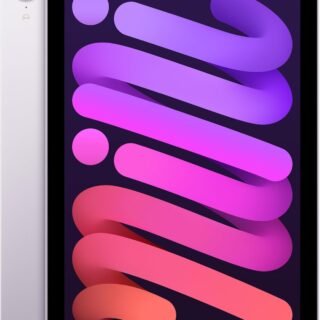 Apple iPad mini (A17 Pro): Apple Intelligence, 8.3-inch Liquid Retina Display, 256GB, Wi-Fi 6E, 12MP Front/12MP Back Camera, Touch ID, All-Day Battery Life — Purple
-
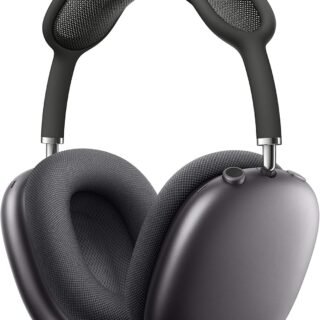 Apple AirPods Max Wireless Over-Ear Headphones, Active Noise Cancelling, Transparency Mode, Personalized Spatial Audio, Dolby Atmos, Bluetooth Headphones for iPhone – Space Gray
-
 Apple AirPods Pro 2 Wireless Earbuds, Active Noise Cancellation, Hearing Aid Feature, Bluetooth Headphones, Transparency, Personalized Spatial Audio, High-Fidelity Sound, H2 Chip, USB-C Charging
-
Leo Creation 144 TC Cotton Double Jaipuri Prints Flat Bedsheet(Pack of 1, Blue, Gree, Red, Grey, Light Grey)
Original price was: ₹2,999.00.₹329.00Current price is: ₹329.00.
Leave a Reply