Discounted Products
-
 Leo Creation 144 TC Cotton Double Jaipuri Prints Flat Bedsheet(Pack of 1, Blue, Gree, Red, Grey, Light Grey)
Original price was: ₹2,999.00.₹329.00Current price is: ₹329.00.
Leo Creation 144 TC Cotton Double Jaipuri Prints Flat Bedsheet(Pack of 1, Blue, Gree, Red, Grey, Light Grey)
Original price was: ₹2,999.00.₹329.00Current price is: ₹329.00.
-
 Home Garage 210 TC Cotton King Floral Fitted (Elastic) Bedsheet(Pack of 1, Grey)
Original price was: ₹999.00.₹299.00Current price is: ₹299.00.
Home Garage 210 TC Cotton King Floral Fitted (Elastic) Bedsheet(Pack of 1, Grey)
Original price was: ₹999.00.₹299.00Current price is: ₹299.00.
-
 Goodrik 140 TC Cotton Double 3D Printed Flat Bedsheet(Pack of 1, Brown)
Original price was: ₹499.00.₹229.00Current price is: ₹229.00.
Goodrik 140 TC Cotton Double 3D Printed Flat Bedsheet(Pack of 1, Brown)
Original price was: ₹499.00.₹229.00Current price is: ₹229.00.
-
 GLOBALSHOP 350 TC Microfiber Double Floral Flat Bedsheet(Pack of 1, Multicolor)
Original price was: ₹1,250.00.₹263.00Current price is: ₹263.00.
GLOBALSHOP 350 TC Microfiber Double Floral Flat Bedsheet(Pack of 1, Multicolor)
Original price was: ₹1,250.00.₹263.00Current price is: ₹263.00.
-
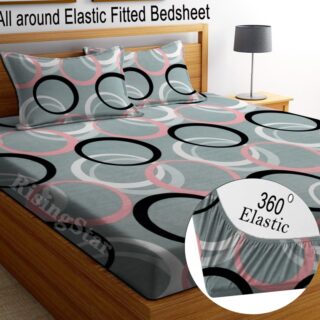 RisingStar 250 TC Microfiber King Printed Fitted (Elastic) Bedsheet(Pack of 1, FITTED-ROUND-CIRCLES-PREMIUM)
Original price was: ₹2,299.00.₹299.00Current price is: ₹299.00.
RisingStar 250 TC Microfiber King Printed Fitted (Elastic) Bedsheet(Pack of 1, FITTED-ROUND-CIRCLES-PREMIUM)
Original price was: ₹2,299.00.₹299.00Current price is: ₹299.00.
-
 Home Garage 210 TC Cotton King Floral Fitted (Elastic) Bedsheet(Pack of 1, Fitted Black Green)
Original price was: ₹1,299.00.₹299.00Current price is: ₹299.00.
Home Garage 210 TC Cotton King Floral Fitted (Elastic) Bedsheet(Pack of 1, Fitted Black Green)
Original price was: ₹1,299.00.₹299.00Current price is: ₹299.00.
-
 Home Garage 180 TC Cotton King 3D Printed Flat Bedsheet(Pack of 1, White)
Original price was: ₹999.00.₹229.00Current price is: ₹229.00.
Home Garage 180 TC Cotton King 3D Printed Flat Bedsheet(Pack of 1, White)
Original price was: ₹999.00.₹229.00Current price is: ₹229.00.
-
 Home Sizzler 153 cm (5 ft) Polyester Room Darkening Window Curtain (Pack Of 2)(Floral, Maroon)
Original price was: ₹799.00.₹299.00Current price is: ₹299.00.
Home Sizzler 153 cm (5 ft) Polyester Room Darkening Window Curtain (Pack Of 2)(Floral, Maroon)
Original price was: ₹799.00.₹299.00Current price is: ₹299.00.
-
 Panipat Textile Hub 152.4 cm (5 ft) Polyester Window Curtain (Pack Of 2)(Solid, Aqua)
Original price was: ₹1,899.00.₹299.00Current price is: ₹299.00.
Panipat Textile Hub 152.4 cm (5 ft) Polyester Window Curtain (Pack Of 2)(Solid, Aqua)
Original price was: ₹1,899.00.₹299.00Current price is: ₹299.00.
-
 Home Sizzler 214 cm (7 ft) Polyester Semi Transparent Door Curtain (Pack Of 2)(Floral, Maroon)
Original price was: ₹1,199.00.₹399.00Current price is: ₹399.00.
Home Sizzler 214 cm (7 ft) Polyester Semi Transparent Door Curtain (Pack Of 2)(Floral, Maroon)
Original price was: ₹1,199.00.₹399.00Current price is: ₹399.00.
-
 Home Sizzler 153 cm (5 ft) Polyester Room Darkening Window Curtain (Pack Of 2)(Floral, Brown)
Original price was: ₹799.00.₹299.00Current price is: ₹299.00.
Home Sizzler 153 cm (5 ft) Polyester Room Darkening Window Curtain (Pack Of 2)(Floral, Brown)
Original price was: ₹799.00.₹299.00Current price is: ₹299.00.
-
 Stella Creations 214 cm (7 ft) Polyester Room Darkening Door Curtain (Pack Of 2)(Abstract, Brown)
Original price was: ₹1,299.00.₹449.00Current price is: ₹449.00.
Stella Creations 214 cm (7 ft) Polyester Room Darkening Door Curtain (Pack Of 2)(Abstract, Brown)
Original price was: ₹1,299.00.₹449.00Current price is: ₹449.00.
-
 Homefab India 152.5 cm (5 ft) Polyester Room Darkening Window Curtain (Pack Of 2)(Floral, Light Blue)
Original price was: ₹1,199.00.₹319.00Current price is: ₹319.00.
Homefab India 152.5 cm (5 ft) Polyester Room Darkening Window Curtain (Pack Of 2)(Floral, Light Blue)
Original price was: ₹1,199.00.₹319.00Current price is: ₹319.00.
-
 Urban Home 214 cm (7 ft) PVC Transparent Door Curtain Single Curtain(Solid, Off White)
Original price was: ₹699.00.₹203.00Current price is: ₹203.00.
Urban Home 214 cm (7 ft) PVC Transparent Door Curtain Single Curtain(Solid, Off White)
Original price was: ₹699.00.₹203.00Current price is: ₹203.00.
-
 Panipat Textile Hub 213 cm (7 ft) Polyester Door Curtain (Pack Of 2)(Solid, Brown)
Original price was: ₹1,199.00.₹349.00Current price is: ₹349.00.
Panipat Textile Hub 213 cm (7 ft) Polyester Door Curtain (Pack Of 2)(Solid, Brown)
Original price was: ₹1,199.00.₹349.00Current price is: ₹349.00.

Introduction
Deleting large folders on Windows 11 might sound like a simple task, but anyone who has tried removing folders with thousands of files knows how frustratingly slow it can be. Whether it’s an old project directory, leftover software files, backups, or cache folders, Windows often takes several minutes—or even freezes—while attempting to delete them. This is especially common for developers, students, content creators, and professionals who regularly deal with data-heavy folders.
The reason behind this slow behavior is not poor hardware or a faulty system. Windows 11 is designed with safety, file integrity, and recovery in mind. Before deleting anything, the operating system checks permissions, scans files, calculates folder size, indexes content, and often moves everything to the Recycle Bin first. While these steps are useful for small deletions, they become a major performance bottleneck when handling folders containing tens of thousands of files.
Another common issue is background interference. Antivirus scans, search indexing, file previews, and active applications can lock files or slow the deletion process even further. As a result, users often see errors like “File in use,” “Access denied,” or a progress bar that barely moves.
This guide is designed to solve that problem completely. Instead of relying on trial and error, you’ll learn proven, practical methods to delete large folders faster on Windows 11. These techniques range from simple keyboard shortcuts to advanced command-line and system-level solutions, all explained in a clear, step-by-step manner.
Whether you’re a casual Windows user or someone who regularly manages large datasets, these methods will help you save time, reduce system strain, and avoid unnecessary frustration when cleaning up your storage.
Deleting large folders on Windows 11 can feel painfully slow—especially when the folder contains thousands of files, mixed file types, or deeply nested subfolders. Many users assume this delay is a system bug, but in reality, Windows performs several background operations that significantly slow down deletion. Understanding why this happens and how to bypass the bottlenecks can dramatically speed things up.
This in-depth guide explains the fastest and safest ways to delete large folders on Windows 11, whether they’re on your system drive, an external disk, or a network location.
Why Deleting Large Folders Is Slow on Windows 11
Before jumping into solutions, it’s important to understand what slows the process:
-
Windows checks each file individually before deletion
-
File Explorer calculates folder size and contents in real time
-
Files are first moved to the Recycle Bin, not deleted instantly
-
Antivirus software scans files during deletion
-
NTFS permissions and indexing add overhead
-
Long file paths increase processing time
When you delete a folder with tens of thousands of small files, Windows repeats these steps thousands of times.
Method 1: Use Shift + Delete to Bypass the Recycle Bin (Fastest for Most Users)
The Recycle Bin is one of the biggest performance killers during deletion.
Steps
-
Select the large folder
-
Press Shift + Delete
-
Confirm permanent deletion
Why this works
-
Files are deleted directly instead of being copied to Recycle Bin
-
No size calculation for recovery
-
Less disk I/O
When to use
-
You are 100% sure you don’t need the files again
-
Ideal for temporary files, build folders, cache data, or backups
This single shortcut can cut deletion time by more than half in many cases.
Method 2: Delete Using Command Prompt (Much Faster Than File Explorer)
Command Prompt avoids the graphical overhead of File Explorer.
Steps
-
Press Win + X → Terminal (Admin) or Command Prompt (Admin)
-
Navigate to the parent folder:
-
Delete the folder:
What the command does
-
/sdeletes all subfolders and files -
/qruns silently without confirmation prompts
Why it’s faster
-
No UI rendering
-
No folder size calculation
-
Minimal system calls
This is one of the most reliable methods for deleting massive directories like node_modules, old project builds, or software leftovers.
Method 3: Use Windows Terminal with PowerShell
PowerShell is optimized for large file operations and handles long paths better.
Steps
-
Open Windows Terminal (Admin)
-
Run:
Advantages
-
Better handling of locked files
-
Works well with scripts
-
Faster than File Explorer
Bonus tip
If you get permission errors, add:
Method 4: Disable File Explorer Preview and Thumbnails
File Explorer slows down deletion by trying to read file metadata.
Steps
-
Open File Explorer
-
Click View → Options
-
Under View tab:
-
Enable Always show icons, never thumbnails
-
Disable Show preview handlers in preview pane
-
-
Restart File Explorer
Why this helps
-
Prevents Windows from scanning files before deletion
-
Reduces memory usage
-
Improves responsiveness during mass operations
This is especially useful for folders with images, videos, or mixed file formats.
Method 5: Turn Off Antivirus Real-Time Scanning Temporarily
Antivirus software scans every file before deletion, which can slow things dramatically.
When this matters
-
Deleting development folders
-
Old backups
-
Large datasets
-
Temporary system files
What to do
-
Temporarily disable real-time protection
-
Delete the folder
-
Re-enable protection immediately after
⚠️ Only do this if the folder contents are trusted.
Method 6: Use Disk Cleanup for System-Related Folders
Some large folders are protected or system-managed.
Best for deleting
-
Windows Update leftovers
-
Temporary system files
-
Old installation files
Steps
-
Search Disk Cleanup
-
Select system drive
-
Click Clean up system files
-
Select unwanted categories
-
Confirm
This avoids permission issues and is safer than manual deletion.
Method 7: Delete in Safe Mode (For Stubborn or Locked Folders)
Some folders are locked by background services.
Steps
-
Restart PC → Advanced Startup
-
Boot into Safe Mode
-
Delete the folder normally or via Command Prompt
Why this works
-
Minimal services running
-
No background file locks
-
No third-party interference
Use this if you see “File in use” or “Access denied” errors.
Method 8: Disable Indexing for the Drive (Optional but Effective)
Windows Search indexing slows file operations.
Steps
-
Right-click drive → Properties
-
Uncheck Allow files on this drive to have contents indexed
-
Apply to all subfolders
Impact
-
Faster deletions
-
Slightly slower Windows search
-
Best for data or project drives
Method 9: Use Robocopy to Delete Extremely Large Folder Trees
This is a professional-grade workaround.
Steps
-
Create an empty folder:
-
Mirror empty folder to target:
-
Delete the now-empty folder
Why it works
-
Robocopy is optimized for large file operations
-
Faster than Explorer for massive directories
This method is ideal for folders with hundreds of thousands of files.
Method 10: Shorten Long File Paths (Windows 11 Limitation)
Long paths slow deletion and can cause failures.
Fix
-
Move the folder closer to root:
-
Then delete
This reduces NTFS path resolution overhead.
Common Mistakes That Slow Down Deletion
-
Deleting via right-click → Delete (Recycle Bin)
-
Keeping File Explorer preview pane open
-
Running multiple Explorer windows
-
Deleting from synced cloud folders
-
Deleting while apps are running
-
Ignoring permission ownership
Best Method Comparison
| Scenario | Best Method |
|---|---|
| Small large folder | Shift + Delete |
| Developer folders | Command Prompt / PowerShell |
| System files | Disk Cleanup |
| Locked files | Safe Mode |
| Massive directories | Robocopy |
| External drives | Command Prompt |
| Slow Explorer | Disable thumbnails |
Final Practical Advice
If you want the fastest and safest universal approach, use Command Prompt with rmdir /s /q or Shift + Delete. File Explorer should be your last option for deleting very large folders.
Windows 11 is powerful, but it prioritizes safety and recoverability over speed. Once you understand how to bypass unnecessary steps—like the Recycle Bin, previews, and background scanning—you can delete even massive folders in seconds instead of minutes.
If you want, I can also provide:
-
A one-click batch file for fast deletion
-
PowerShell scripts for automation
-
Troubleshooting steps for “Access Denied” errors
Conclusion
Deleting large folders efficiently on Windows 11 is less about brute force and more about understanding how the operating system works behind the scenes. Windows prioritizes safety, recoverability, and system stability, which is why File Explorer often feels slow when handling massive deletions. Once you recognize these built-in behaviors, it becomes much easier to work around them and dramatically speed up the process.
One of the biggest takeaways is that File Explorer is not the best tool for deleting large folders. While it’s convenient for everyday tasks, it introduces unnecessary overhead such as previews, metadata scanning, indexing, and Recycle Bin processing. For large-scale deletions, command-line tools like Command Prompt and PowerShell offer a far more direct and efficient approach. They bypass graphical overhead and execute deletions with minimal system interference.
Another important factor is background activity. Antivirus software, Windows Search indexing, and running applications can all slow or block deletion. Knowing when it’s safe to temporarily disable scanning, boot into Safe Mode, or turn off indexing can make the difference between a deletion that takes seconds and one that takes hours—or fails entirely.
Advanced methods like using Robocopy or shortening file paths are especially useful for power users dealing with extremely large directory trees. These techniques may seem unconventional, but they leverage Windows’ own high-performance tools to handle tasks that File Explorer struggles with. For developers and IT professionals, these methods are often the fastest and most reliable solution available.
It’s also worth emphasizing caution. Faster deletion methods often skip safety nets like the Recycle Bin, meaning recovery is not possible once files are removed. Before using any permanent deletion method, it’s essential to double-check folder contents and ensure backups exist where necessary. Speed should never come at the cost of accidental data loss.
Ultimately, the key to deleting large folders faster on Windows 11 lies in choosing the right method for the situation. Small folders may only need a simple shortcut, while massive or locked folders require more advanced techniques. By applying the strategies outlined in this guide, you can clean up your system efficiently, reclaim storage space, and keep Windows 11 running smoothly without unnecessary delays or errors.
Disclaimer
This guide is for informational purposes only. Deleting files permanently may result in irreversible data loss. Always verify folder contents and create backups before using advanced or permanent deletion methods. The author is not responsible for any data loss or system issues resulting from the use of these techniques.

- 7 Best Methods to Fix “Undoing Changes Made to Your PC” Error (Complete Guide)

- How to Turn On Spam Blocker on Android: Stop Unwanted Calls and Messages Easily

- Can’t View Comments on YouTube Shorts? 6 Ways to Fix It (Complete Guide)

- How to Block Users From Installing Programs in Windows 11 Complete Step-by-Step Guide for Better Security

- How to Fix Chrome Automatically Deleting Downloaded Files (Complete Step-by-Step Guide)

Products
-
![Apple Watch Ultra 3 [GPS + Cellular 49mm] Running & Multisport Smartwatch w/Rugged Titanium Case w/Black Titanium Milanese Loop - M. Satellite Communications, Advanced Health & Fitness Tracking](https://bazaronweb.com/retailstores/wp-content/uploads/2025/09/apple-watch-320x320.jpg) Apple Watch Ultra 3 [GPS + Cellular 49mm] Running & Multisport Smartwatch w/Rugged Titanium Case w/Black Titanium Milanese Loop - M. Satellite Communications, Advanced Health & Fitness Tracking
Apple Watch Ultra 3 [GPS + Cellular 49mm] Running & Multisport Smartwatch w/Rugged Titanium Case w/Black Titanium Milanese Loop - M. Satellite Communications, Advanced Health & Fitness Tracking
-
 Apple iPad mini (A17 Pro): Apple Intelligence, 8.3-inch Liquid Retina Display, 256GB, Wi-Fi 6E, 12MP Front/12MP Back Camera, Touch ID, All-Day Battery Life — Purple
-
 Apple AirPods Max Wireless Over-Ear Headphones, Active Noise Cancelling, Transparency Mode, Personalized Spatial Audio, Dolby Atmos, Bluetooth Headphones for iPhone – Space Gray
-
 Apple AirPods Pro 2 Wireless Earbuds, Active Noise Cancellation, Hearing Aid Feature, Bluetooth Headphones, Transparency, Personalized Spatial Audio, High-Fidelity Sound, H2 Chip, USB-C Charging
-
Leo Creation 144 TC Cotton Double Jaipuri Prints Flat Bedsheet(Pack of 1, Blue, Gree, Red, Grey, Light Grey)
Original price was: ₹2,999.00.₹329.00Current price is: ₹329.00.
Leave a Reply