Discounted Products
-
 Leo Creation 144 TC Cotton Double Jaipuri Prints Flat Bedsheet(Pack of 1, Blue, Gree, Red, Grey, Light Grey)
Original price was: ₹2,999.00.₹329.00Current price is: ₹329.00.
Leo Creation 144 TC Cotton Double Jaipuri Prints Flat Bedsheet(Pack of 1, Blue, Gree, Red, Grey, Light Grey)
Original price was: ₹2,999.00.₹329.00Current price is: ₹329.00.
-
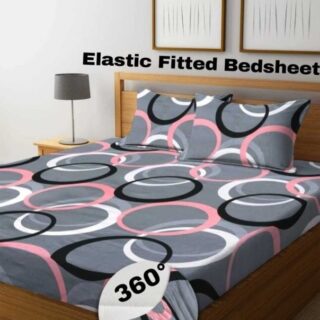 Home Garage 210 TC Cotton King Floral Fitted (Elastic) Bedsheet(Pack of 1, Grey)
Original price was: ₹999.00.₹299.00Current price is: ₹299.00.
Home Garage 210 TC Cotton King Floral Fitted (Elastic) Bedsheet(Pack of 1, Grey)
Original price was: ₹999.00.₹299.00Current price is: ₹299.00.
-
 Goodrik 140 TC Cotton Double 3D Printed Flat Bedsheet(Pack of 1, Brown)
Original price was: ₹499.00.₹229.00Current price is: ₹229.00.
Goodrik 140 TC Cotton Double 3D Printed Flat Bedsheet(Pack of 1, Brown)
Original price was: ₹499.00.₹229.00Current price is: ₹229.00.
-
 GLOBALSHOP 350 TC Microfiber Double Floral Flat Bedsheet(Pack of 1, Multicolor)
Original price was: ₹1,250.00.₹263.00Current price is: ₹263.00.
GLOBALSHOP 350 TC Microfiber Double Floral Flat Bedsheet(Pack of 1, Multicolor)
Original price was: ₹1,250.00.₹263.00Current price is: ₹263.00.
-
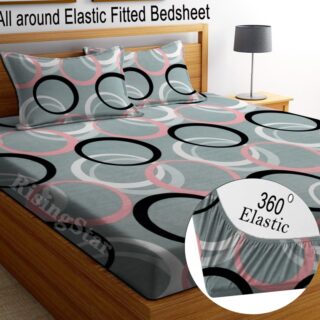 RisingStar 250 TC Microfiber King Printed Fitted (Elastic) Bedsheet(Pack of 1, FITTED-ROUND-CIRCLES-PREMIUM)
Original price was: ₹2,299.00.₹299.00Current price is: ₹299.00.
RisingStar 250 TC Microfiber King Printed Fitted (Elastic) Bedsheet(Pack of 1, FITTED-ROUND-CIRCLES-PREMIUM)
Original price was: ₹2,299.00.₹299.00Current price is: ₹299.00.
-
 Home Garage 210 TC Cotton King Floral Fitted (Elastic) Bedsheet(Pack of 1, Fitted Black Green)
Original price was: ₹1,299.00.₹299.00Current price is: ₹299.00.
Home Garage 210 TC Cotton King Floral Fitted (Elastic) Bedsheet(Pack of 1, Fitted Black Green)
Original price was: ₹1,299.00.₹299.00Current price is: ₹299.00.
-
 Home Garage 180 TC Cotton King 3D Printed Flat Bedsheet(Pack of 1, White)
Original price was: ₹999.00.₹229.00Current price is: ₹229.00.
Home Garage 180 TC Cotton King 3D Printed Flat Bedsheet(Pack of 1, White)
Original price was: ₹999.00.₹229.00Current price is: ₹229.00.
-
 Home Sizzler 153 cm (5 ft) Polyester Room Darkening Window Curtain (Pack Of 2)(Floral, Maroon)
Original price was: ₹799.00.₹299.00Current price is: ₹299.00.
Home Sizzler 153 cm (5 ft) Polyester Room Darkening Window Curtain (Pack Of 2)(Floral, Maroon)
Original price was: ₹799.00.₹299.00Current price is: ₹299.00.
-
 Panipat Textile Hub 152.4 cm (5 ft) Polyester Window Curtain (Pack Of 2)(Solid, Aqua)
Original price was: ₹1,899.00.₹299.00Current price is: ₹299.00.
Panipat Textile Hub 152.4 cm (5 ft) Polyester Window Curtain (Pack Of 2)(Solid, Aqua)
Original price was: ₹1,899.00.₹299.00Current price is: ₹299.00.
-
 Home Sizzler 214 cm (7 ft) Polyester Semi Transparent Door Curtain (Pack Of 2)(Floral, Maroon)
Original price was: ₹1,199.00.₹399.00Current price is: ₹399.00.
Home Sizzler 214 cm (7 ft) Polyester Semi Transparent Door Curtain (Pack Of 2)(Floral, Maroon)
Original price was: ₹1,199.00.₹399.00Current price is: ₹399.00.
-
 Home Sizzler 153 cm (5 ft) Polyester Room Darkening Window Curtain (Pack Of 2)(Floral, Brown)
Original price was: ₹799.00.₹299.00Current price is: ₹299.00.
Home Sizzler 153 cm (5 ft) Polyester Room Darkening Window Curtain (Pack Of 2)(Floral, Brown)
Original price was: ₹799.00.₹299.00Current price is: ₹299.00.
-
 Stella Creations 214 cm (7 ft) Polyester Room Darkening Door Curtain (Pack Of 2)(Abstract, Brown)
Original price was: ₹1,299.00.₹449.00Current price is: ₹449.00.
Stella Creations 214 cm (7 ft) Polyester Room Darkening Door Curtain (Pack Of 2)(Abstract, Brown)
Original price was: ₹1,299.00.₹449.00Current price is: ₹449.00.
-
 Homefab India 152.5 cm (5 ft) Polyester Room Darkening Window Curtain (Pack Of 2)(Floral, Light Blue)
Original price was: ₹1,199.00.₹319.00Current price is: ₹319.00.
Homefab India 152.5 cm (5 ft) Polyester Room Darkening Window Curtain (Pack Of 2)(Floral, Light Blue)
Original price was: ₹1,199.00.₹319.00Current price is: ₹319.00.
-
 Urban Home 214 cm (7 ft) PVC Transparent Door Curtain Single Curtain(Solid, Off White)
Original price was: ₹699.00.₹203.00Current price is: ₹203.00.
Urban Home 214 cm (7 ft) PVC Transparent Door Curtain Single Curtain(Solid, Off White)
Original price was: ₹699.00.₹203.00Current price is: ₹203.00.
-
 Panipat Textile Hub 213 cm (7 ft) Polyester Door Curtain (Pack Of 2)(Solid, Brown)
Original price was: ₹1,199.00.₹349.00Current price is: ₹349.00.
Panipat Textile Hub 213 cm (7 ft) Polyester Door Curtain (Pack Of 2)(Solid, Brown)
Original price was: ₹1,199.00.₹349.00Current price is: ₹349.00.
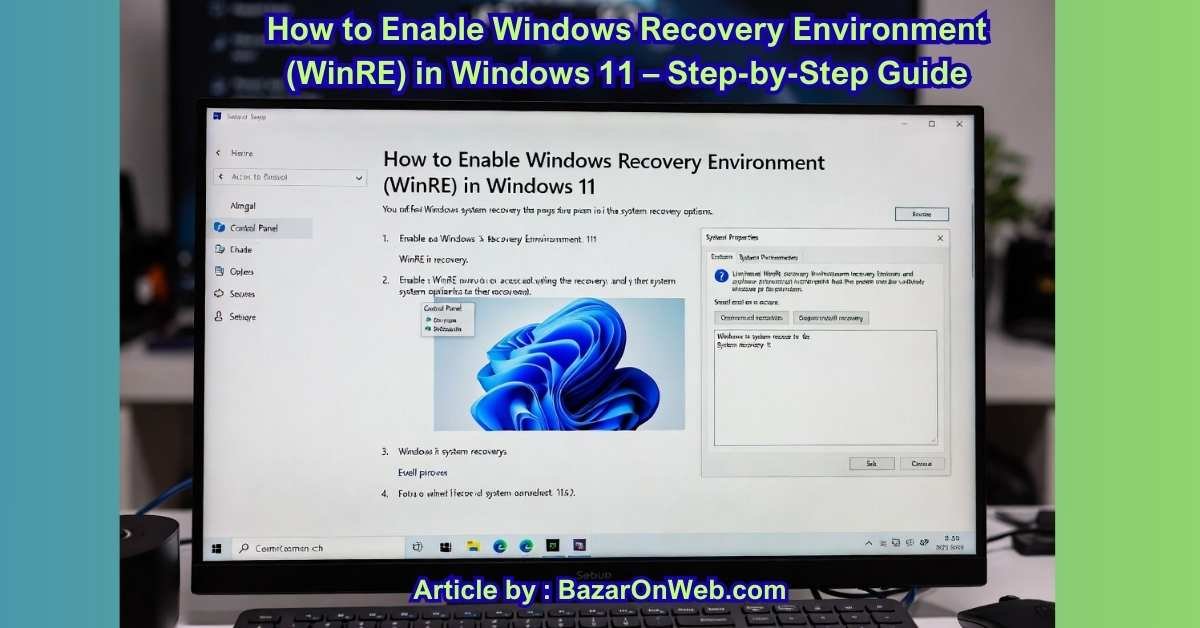
What Is Windows Recovery Environment (WinRE)
Windows Recovery Environment (WinRE) is a built-in recovery platform in Windows 11 that helps diagnose, repair, and restore the system when Windows fails to boot properly or encounters serious errors. WinRE includes tools such as Startup Repair, System Restore, System Image Recovery, Command Prompt, and access to advanced startup options.
WinRE runs from a dedicated recovery partition and operates independently of the main Windows installation, making it a critical safety layer for troubleshooting boot failures, corrupted system files, driver issues, and update problems.
Check Whether WinRE Is Already Enabled
Before enabling WinRE, confirm its current status.
Using Command Prompt
- Press Windows + S
- Search for Command Prompt
- Right-click and select Run as administrator
- Run the following command:
reagentc /info
Interpret the Output
- Windows RE status: Enabled → WinRE is already active
- Windows RE status: Disabled → WinRE needs to be enabled
- Windows RE location: \?\GLOBALROOT\device\harddiskX\partitionY\Recovery\WindowsRE → Confirms the recovery partition exists
If WinRE is disabled but a valid location is listed, it can usually be enabled immediately.
Method 1: Enable WinRE Using Command Prompt (Recommended)
This is the safest and most reliable method.
Step 1: Open Command Prompt as Administrator
- Press Windows + X
- Select Terminal (Admin) or Command Prompt (Admin)
Step 2: Enable WinRE
Run:
reagentc /enable
Step 3: Verify WinRE Status
Run:
reagentc /info
Confirm:
Windows RE status: Enabled
If successful, WinRE is now fully active and accessible during startup or through advanced restart options.
Method 2: Enable WinRE Using Windows Terminal (PowerShell)
Windows Terminal can also be used to enable WinRE.
- Right-click Start
- Select Windows Terminal (Admin)
- Run:
reagentc /enable
- Verify:
reagentc /info
PowerShell behaves the same as Command Prompt for WinRE configuration.
Method 3: Enable WinRE from Advanced Startup Settings
This method is useful if Windows boots but recovery tools are inaccessible.
- Open Settings
- Go to System → Recovery
- Under Advanced startup, click Restart now
- Windows reboots into recovery mode
- Select Troubleshoot → Advanced options
If WinRE opens successfully, it indicates WinRE is functional. If tools are missing, enable WinRE using the command-line methods above.
Fix WinRE Disabled Due to Missing Recovery Partition
Sometimes WinRE is disabled because the recovery partition is missing or misconfigured.
Check Disk Partitions
- Press Windows + X
- Select Disk Management
- Look for:
- A Recovery Partition
- Size typically between 500 MB – 1 GB
- No drive letter assigned
If the recovery partition exists, WinRE can usually be enabled.
Set WinRE Image Location Manually (If Required)
If reagentc /enable fails with a location error, manually set the WinRE image path.
Step 1: Locate WinRE Image File
Default location:
C:\Windows\System32\Recovery\Winre.wim
Confirm the file exists.
Step 2: Set WinRE Image Path
Run:
reagentc /setreimage /path C:\Windows\System32\Recovery
Then enable WinRE:
reagentc /enable
Verify status:
reagentc /info
Restore Missing WinRE File (Advanced)
If Winre.wim is missing, it must be restored.
Option 1: Copy from Windows Installation Media
- Mount Windows 11 ISO
- Navigate to:
sources\install.wim
- Extract Winre.wim using DISM or a WIM extraction tool
- Copy to:
C:\Windows\System32\Recovery
- Run:
reagentc /setreimage /path C:\Windows\System32\Recovery
reagentc /enable
Enable WinRE Using Group Policy (Enterprise Systems)
For managed or enterprise environments:
- Press Windows + R
- Type:
gpedit.msc
- Navigate to:
Computer Configuration → Administrative Templates → System → Recovery
- Enable:
- Enable Windows Recovery Environment
- Restart the system
This method is mainly applicable to Windows 11 Pro, Enterprise, and Education editions.
Enable WinRE After a Major Windows Update
Some Windows updates disable WinRE temporarily.
Fix Steps
- Open Command Prompt (Admin)
- Run:
reagentc /disable
reagentc /enable
- Restart the system
- Verify using:
reagentc /info
This refreshes WinRE configuration.
Confirm WinRE Is Working Properly
Test via Forced Startup Interrupt
- Restart the PC
- Interrupt boot 3 times by holding the power button during startup
- Windows should enter Preparing Automatic Repair
- Select Advanced options
If recovery tools appear, WinRE is fully operational.
Access WinRE After Enabling
Once enabled, WinRE can be accessed through multiple methods:
From Settings
- Settings → System → Recovery → Restart now
From Power Menu
- Hold Shift
- Click Restart
From Boot Failure
- Automatically launches after repeated boot failures
Common Errors and Fixes
Error: “REAGENTC.EXE: Operation Failed”
Fix:
- Run Command Prompt as Administrator
- Ensure WinRE image path is valid
Error: “Windows RE Location Not Found”
Fix:
- Set image path manually
- Confirm recovery partition exists
Error: WinRE Enabled but Not Accessible
Fix:
- Disable and re-enable WinRE
- Restart system
- Run
sfc /scannow
Verify Recovery Partition Is Protected
Ensure the recovery partition is not assigned a drive letter.
- Open Disk Management
- Right-click recovery partition
- Select Change Drive Letter and Paths
- Remove any assigned drive letter
This prevents accidental deletion or modification.
Best Practices After Enabling WinRE
- Keep WinRE enabled at all times
- Avoid deleting recovery partitions
- Update Windows regularly
- Create system restore points
- Keep a Windows recovery USB as backup
When WinRE Cannot Be Enabled
If WinRE fails to enable even after all steps:
- Perform in-place upgrade repair
- Reinstall Windows while keeping files
- Contact Microsoft Support for enterprise systems
Commands Summary (Quick Reference)
reagentc /info
reagentc /enable
reagentc /disable
reagentc /setreimage /path C:\Windows\System32\Recovery
Conclusion
Windows Recovery Environment (WinRE) is one of the most important yet often underappreciated components of Windows 11. While it operates quietly in the background during normal system use, its true value becomes evident the moment something goes wrong. Boot failures, corrupted system files, driver conflicts, failed Windows updates, and unexpected shutdowns are not rare events—they are part of the reality of modern computing. In those moments, WinRE serves as a lifeline, providing access to tools that can repair, restore, or recover the system without immediately resorting to a full reinstallation.
One of the most important lessons when dealing with WinRE is that recovery preparedness should be proactive, not reactive. Many users discover WinRE only after their system fails to boot, and at that point, finding it disabled or inaccessible can turn a manageable problem into a serious one. Enabling WinRE in advance ensures that essential recovery tools are always available, significantly reducing downtime and the risk of data loss. It transforms Windows recovery from a last-resort scenario into a controlled troubleshooting process.
Another key takeaway is that WinRE’s reliability depends heavily on correct configuration. The recovery partition, WinRE image location, and system registration must all be properly set for WinRE to function as intended. Disk resizing, partition deletion, and third-party optimization tools are common causes of WinRE failures, often without the user realizing it. Understanding how to verify WinRE status, set the recovery image path manually, and re-enable the environment using built-in tools like reagentc gives users full control over their recovery setup.
WinRE also highlights how modern Windows systems are designed with layered recovery mechanisms. Instead of relying on a single repair option, WinRE provides multiple tools tailored to different types of problems. Startup Repair addresses boot-level issues, System Restore rolls back problematic changes, System Image Recovery restores full system backups, and Command Prompt enables advanced offline troubleshooting. This modular approach allows users to choose the least disruptive solution first, preserving data and configurations whenever possible.
For IT professionals and advanced users, WinRE offers even greater strategic value. It enables offline servicing, disk repairs, boot configuration fixes, and BitLocker recovery operations in a secure environment that is isolated from the main operating system. In enterprise environments, WinRE plays a critical role in standard recovery workflows, compliance requirements, and incident response procedures. Ensuring that WinRE is consistently enabled across systems is a best practice that supports both operational efficiency and security.
It is also important to recognize the role WinRE plays in long-term system stability. Recovery tools are not only for emergencies; they are part of responsible system maintenance. Knowing that WinRE is enabled allows users to confidently apply updates, install drivers, and make system changes, because a recovery path is always available if something goes wrong. This confidence reduces hesitation and improves overall system management.
Another critical aspect of WinRE is accessibility. Windows 11 provides multiple ways to enter the recovery environment, including advanced startup options, forced boot interruptions, and recovery shortcuts from within the operating system. This flexibility ensures that WinRE remains accessible even in scenarios where Windows cannot load normally. However, accessibility is only guaranteed if WinRE is properly enabled and the recovery partition is intact—making initial setup and verification essential.
From a practical standpoint, enabling WinRE should be treated as a mandatory post-installation step, similar to enabling backups or creating restore points. While Windows 11 often enables WinRE automatically, relying on default behavior is not always sufficient. Verifying WinRE status after major updates, system migrations, or disk changes ensures that recovery capabilities remain intact over time.
In situations where WinRE cannot be enabled through standard methods, the guide demonstrates that recovery is still possible through advanced techniques such as manually restoring the WinRE image, repairing the recovery partition, or performing an in-place upgrade. These options reinforce the idea that WinRE is resilient by design, but it requires informed management to function reliably.
Ultimately, Windows Recovery Environment is not just a troubleshooting tool—it is a critical component of system resilience. It represents Windows’ built-in ability to recover from failure without immediately sacrificing data or productivity. By understanding how WinRE works, how to enable it, and how to verify its functionality, users gain a significant advantage in maintaining a stable and recoverable Windows 11 system.
Ensuring WinRE is enabled is a small investment of time that can prevent hours—or even days—of frustration in the future. Whether you are a home user, a professional, or an IT administrator, making WinRE part of your standard system setup is one of the smartest steps you can take toward long-term Windows reliability and peace of mind.
Disclaimer (Bazaronweb.com)
The information provided in this article is for educational and informational purposes only. While Bazaronweb.com makes every effort to ensure accuracy, system configurations, Windows versions, and hardware environments may vary. The steps described may behave differently depending on individual system setups, installed software, and update status.
Bazaronweb.com is not responsible for data loss, system instability, or other issues that may arise from following the procedures outlined. Users are strongly advised to back up important data before making system-level changes and to proceed with caution. Bazaronweb.com is not affiliated with Microsoft Corporation, and all trademarks referenced remain the property of their respective owners.

- What Is Killer Network Service in Windows Complete Guide for Gamers and Laptop Users

- Windows Defender Not Opening in Windows 11? Complete Guide to Fix Windows Security App Issues

- How to Switch User Accounts in Windows 11: Complete Guide for Quick and Secure Account Switching
- How to Use PowerShell to Scan and Repair Windows 10 System Files Easily

- How to Fix Green or Purple Videos in Google Chrome (Complete Troubleshooting Guide)

Products
-
![Apple Watch Ultra 3 [GPS + Cellular 49mm] Running & Multisport Smartwatch w/Rugged Titanium Case w/Black Titanium Milanese Loop - M. Satellite Communications, Advanced Health & Fitness Tracking](https://bazaronweb.com/retailstores/wp-content/uploads/2025/09/apple-watch-320x320.jpg) Apple Watch Ultra 3 [GPS + Cellular 49mm] Running & Multisport Smartwatch w/Rugged Titanium Case w/Black Titanium Milanese Loop - M. Satellite Communications, Advanced Health & Fitness Tracking
Apple Watch Ultra 3 [GPS + Cellular 49mm] Running & Multisport Smartwatch w/Rugged Titanium Case w/Black Titanium Milanese Loop - M. Satellite Communications, Advanced Health & Fitness Tracking
-
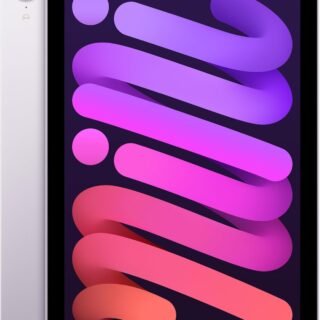 Apple iPad mini (A17 Pro): Apple Intelligence, 8.3-inch Liquid Retina Display, 256GB, Wi-Fi 6E, 12MP Front/12MP Back Camera, Touch ID, All-Day Battery Life — Purple
-
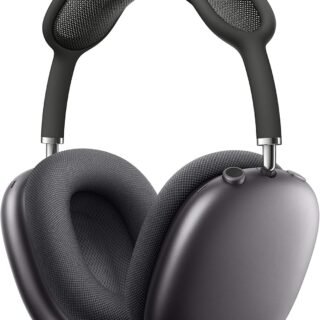 Apple AirPods Max Wireless Over-Ear Headphones, Active Noise Cancelling, Transparency Mode, Personalized Spatial Audio, Dolby Atmos, Bluetooth Headphones for iPhone – Space Gray
-
 Apple AirPods Pro 2 Wireless Earbuds, Active Noise Cancellation, Hearing Aid Feature, Bluetooth Headphones, Transparency, Personalized Spatial Audio, High-Fidelity Sound, H2 Chip, USB-C Charging
-
Leo Creation 144 TC Cotton Double Jaipuri Prints Flat Bedsheet(Pack of 1, Blue, Gree, Red, Grey, Light Grey)
Original price was: ₹2,999.00.₹329.00Current price is: ₹329.00.
Leave a Reply