How to Reset Network Settings on iPhone in 2026: Complete Step-by-Step Guide to Fix WiFi, Cellular, and Bluetooth Issues
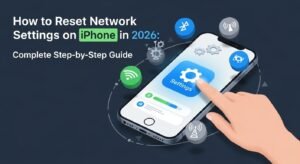
How to Reset Network Settings on iPhone in 2026 Complete Step-by-Step Guide

Hi, I’m Jessica. Like most people juggling work, family schedules, grocery apps, group chats, and constant notifications, my iPhone is the center of my digital life. Between work emails, WhatsApp school groups for my kids, Instagram messages, and quick Google searches, I rely on stable internet connectivity all day. So when my iPhone suddenly started refusing to connect to WiFi and my mobile data kept dropping randomly, I knew something wasn’t right.

At first, I assumed it was my router or a weak network signal. But after restarting the router, toggling airplane mode, and reconnecting multiple times, the issue kept returning. That’s when I discovered one of the most effective troubleshooting tools available on the iPhone — Reset Network Settings.

If you’re dealing with WiFi problems, Bluetooth issues, mobile data not working, or random connection drops, resetting your iPhone’s network settings can often solve the problem quickly. The best part is that it doesn’t erase your photos, apps, or personal files. Instead, it simply resets the system configurations that control how your iPhone connects to networks.

In this guide, I’ll walk you through everything you need to know about resetting network settings on an iPhone — including when you should do it, what happens when you reset them, and how to complete the process safely.


What Does “Reset Network Settings” Actually Mean?

Before performing any type of reset, it’s important to understand exactly what the option does.

When you reset network settings on an iPhone, the device clears all saved network-related configurations and restores them to their default factory state.

This includes:

  • Saved WiFi networks and passwords

  • Cellular network settings

  • Bluetooth connections and paired devices

  • VPN configurations

  • APN settings used by mobile carriers

Essentially, the phone forgets all previously connected networks and starts fresh.

This can resolve many hidden configuration problems that develop over time, especially after software updates, network changes, or corrupted system settings.


Common Problems That a Network Reset Can Fix

Resetting network settings is one of the most effective solutions for connectivity problems. If you’re experiencing any of the following issues, this reset may help.

Your iPhone may repeatedly disconnect from WiFi even when the signal is strong.

Sometimes the device refuses to connect to a WiFi network altogether, even though other devices connect without problems.

Mobile data might suddenly stop working despite having full signal bars.

Bluetooth devices like AirPods, speakers, or car systems may fail to connect or keep disconnecting.

VPN connections may stop working after an iOS update.

In many cases, these issues occur because network configurations become corrupted or outdated. Resetting them allows the system to rebuild the network environment from scratch.


When Should You Reset Network Settings?

Although this reset can fix many issues, it shouldn’t be the very first troubleshooting step.

Instead, you should consider it after trying simpler fixes such as:

Restarting your iPhone.

Turning airplane mode on and off.

Restarting your WiFi router.

Forgetting and reconnecting to a WiFi network.

Checking for iOS updates.

If none of those methods solve the problem, resetting network settings becomes the next logical step.


Things to Do Before Resetting Network Settings

Before proceeding, there are a few things you should prepare.

Since the reset deletes all saved WiFi networks and passwords, make sure you know the password for your home or office network so you can reconnect afterward.

If you use a VPN, note down the VPN configuration details because they may need to be reconfigured after the reset.

You should also ensure that your Apple ID credentials are available if certain services request authentication after reconnecting to networks.

Although the reset doesn’t delete personal data, having these details ready will save time during reconnection.


Step-by-Step: How to Reset Network Settings on iPhone

Now let’s go through the actual process.

First, open the Settings app on your iPhone.

Scroll down and tap General.

Inside the General settings menu, scroll to the bottom and select Transfer or Reset iPhone.

Next, tap Reset.

You will see several reset options. Choose Reset Network Settings.

Your iPhone may ask for your device passcode to confirm the action.

After entering the passcode, tap Reset Network Settings again.

Your iPhone will restart automatically, and the reset process will complete in a few seconds.

Once the phone powers back on, all previous network configurations will be cleared.


What Happens After the Reset?

After the reset finishes, your iPhone behaves as if it has never connected to any networks before.

You will need to reconnect to WiFi networks manually by entering the passwords again.

Bluetooth devices will need to be paired again.

Cellular settings will automatically reload from your carrier when the phone reconnects to the mobile network.

For most users, connectivity problems disappear immediately after this reset because the system rebuilds its network configuration.


Reconnecting to WiFi After the Reset

Once your phone restarts, reconnecting to WiFi is straightforward.

Open Settings, then tap WiFi.

Select your network from the list of available networks.

Enter the WiFi password.

Tap Join.

Your device should now reconnect normally.

If the original issue was caused by corrupted WiFi settings, the connection should now be stable.


Reconnecting Bluetooth Devices

Bluetooth devices such as wireless headphones, speakers, keyboards, and car systems will also need to be paired again.

Open Settings.

Tap Bluetooth.

Turn Bluetooth on if it isn’t already.

Put your accessory into pairing mode and select it from the device list.

Once connected, the device should function normally again.


Why Network Settings Become Corrupted

Many users wonder why network settings stop working correctly in the first place.

Several factors can cause this.

Frequent switching between different WiFi networks may create conflicts.

iOS updates sometimes modify network protocols or settings.

Using VPN apps can alter network configurations.

Third-party apps may also interact with network services in unexpected ways.

Over time, these small changes accumulate and eventually lead to connectivity problems.

Resetting network settings clears all those accumulated conflicts.


Does Resetting Network Settings Delete Personal Data?

One of the biggest concerns users have is whether resetting network settings will erase their data.

The answer is no.

This reset does not remove:

Photos
Videos
Apps
Messages
Contacts
Documents

It only removes network-related information like saved WiFi passwords and Bluetooth pairings.

Your personal data remains completely safe.


Network Reset vs. Factory Reset

Many people confuse a network reset with a full factory reset.

These two options are very different.

A network reset only clears connectivity settings.

A factory reset erases everything on the device and restores it to its original state.

Because of this, network reset is considered a safe troubleshooting step that carries minimal risk.


Why This Fix Works So Often

Modern smartphones store a large amount of connectivity data in the background.

This includes network preferences, encryption keys, routing information, and carrier settings.

If even a small portion of this configuration becomes corrupted, the device may struggle to connect properly.

Resetting network settings forces iOS to rebuild the entire network configuration system.

That’s why this simple reset often solves stubborn WiFi or cellular problems that other troubleshooting methods cannot fix.


Signs You Should Reset Network Settings Immediately

If you notice the following symptoms repeatedly, a network reset is likely the fastest fix.

Your WiFi connects but says No Internet Connection.

Your iPhone keeps disconnecting from the same network.

Bluetooth devices randomly stop pairing.

Cellular data works on other phones but not yours.

Apps constantly show Network Error messages.

In these situations, resetting network settings can restore stable connectivity quickly.


Final Thoughts

Network connectivity issues can be frustrating, especially when your phone is essential for communication, work, and daily tasks. Fortunately, Apple provides simple tools like the Reset Network Settings feature that can resolve many problems without complicated troubleshooting.

By understanding what the reset does, when to use it, and how to reconnect your networks afterward, you can quickly restore reliable internet and Bluetooth connections on your iPhone.

What to Do If Network Reset Doesn’t Fix the Problem

Although resetting network settings solves many connectivity problems, there are situations where the issue may still continue. When this happens, it usually means the problem is related to deeper system settings, your router configuration, or even your mobile carrier.

The first step after a network reset is to test all connections again. Try connecting to WiFi, enable mobile data, and test Bluetooth devices. If everything works normally, the reset has successfully cleared the corrupted settings.

However, if the problem persists, there are several additional troubleshooting steps you can try.

Start by restarting both your iPhone and your router. Even after resetting network settings, a router restart helps refresh the connection between your device and the network.

Next, check whether the issue occurs only on one WiFi network or on multiple networks. If the problem happens only on your home network, the router configuration may be causing the issue rather than the iPhone itself.

Another useful step is checking whether other devices are experiencing the same problem. If laptops, tablets, or other phones also struggle to connect, the problem is likely related to the internet connection rather than your iPhone.


Update iOS to Fix Network Bugs

Apple regularly releases software updates that improve system stability and fix connectivity bugs. If your iPhone is running an outdated version of iOS, network problems may occur more frequently.

To check for updates:

Open Settings, then tap General, and select Software Update.

If an update is available, install it and restart your device.

Many network-related bugs are resolved through system updates, especially after major iOS releases.


Reset All Settings if Network Reset Fails

If connectivity issues continue even after resetting network settings, the next step is to reset all system settings.

Unlike a factory reset, this option does not delete your files, photos, or apps. Instead, it restores all system configurations to their default values.

To do this:

Open Settings and go to General.

Scroll down and tap Transfer or Reset iPhone.

Select Reset, then choose Reset All Settings.

Enter your passcode and confirm the reset.

Your phone will restart and rebuild system settings from scratch.

This step can fix deeper configuration problems that affect connectivity, notifications, or system behavior.


Check Your SIM Card and Carrier Settings

If mobile data or cellular connectivity is the problem, the issue may involve your SIM card or carrier settings.

First, check whether Carrier Settings Update is available.

Open Settings, tap General, and then select About. If a carrier update is available, a prompt will appear allowing you to install it.

You can also try removing and reinserting your SIM card.

Turn off your iPhone, remove the SIM card using the SIM eject tool, wait a few seconds, and then insert it again.

Once the phone powers back on, the device will reconnect to the carrier network.

This often resolves mobile data or signal-related issues.


Forget and Reconnect to Problematic WiFi Networks

Sometimes a single WiFi network becomes problematic due to password mismatches, encryption changes, or router updates.

To fix this, forget the network completely and reconnect.

Open Settings, then tap WiFi.

Find the network you’re connected to and tap the information icon next to it.

Select Forget This Network.

After removing the network, reconnect by selecting it again from the available networks list and entering the password.

This forces your iPhone to establish a fresh connection with the router.


Reset Your Router for Persistent WiFi Issues

If your phone connects to WiFi but the internet still doesn’t work properly, the router may need to be reset.

Many routers accumulate configuration errors over time, especially if they run continuously for months without restarting.

Restarting the router clears temporary memory and refreshes the network environment.

Unplug the router from power, wait about 30 seconds, and plug it back in.

Once the network reconnects, try connecting your iPhone again.

If multiple devices experience network problems, you may need to reset the router to factory settings or update its firmware.


Check VPN or Security Apps

VPN services and security apps can sometimes interfere with network connectivity.

If you use a VPN, temporarily disable it and test your internet connection again.

Go to Settings, tap VPN, and switch it off.

Some VPN apps continue running in the background even when not actively connected. Closing the app completely can help resolve conflicts.

If disabling the VPN fixes your connection problem, you may need to reinstall or update the VPN application.


When to Consider a Factory Reset

If all network troubleshooting steps fail, a full factory reset may be necessary.

A factory reset erases everything on your iPhone and installs a fresh copy of iOS.

Before performing this step, it’s essential to back up your data using iCloud or a computer.

To reset your device completely:

Open Settings, tap General, then select Transfer or Reset iPhone.

Choose Erase All Content and Settings.

Follow the on-screen instructions to complete the reset.

After the reset finishes, set up the phone as new and test network connectivity before restoring your backup.

This ensures that any deep software corruption is removed.


Preventing Future Network Issues on iPhone

While network problems can occur occasionally, there are several ways to reduce the chances of experiencing them frequently.

Keeping your iPhone updated is one of the most effective preventative steps. Software updates often include improvements to WiFi, Bluetooth, and cellular connectivity.

It’s also helpful to restart your phone periodically. Restarting clears temporary processes and refreshes network services.

Avoid connecting to unknown or unstable public WiFi networks whenever possible. Poorly configured public networks can sometimes create connection conflicts.

If you regularly use VPN apps or network-related utilities, ensure they are updated and compatible with the current iOS version.

Finally, keeping your router updated and properly configured ensures stable connections for all devices in your home.


Conclusion

Resetting network settings on an iPhone is one of the simplest yet most powerful solutions for fixing connectivity problems. Whether you’re dealing with WiFi connection failures, unstable mobile data, Bluetooth pairing issues, or VPN conflicts, this reset clears corrupted configurations and restores the network system to its default state.

Because it only removes network-related data and does not affect personal files, apps, or photos, it’s a safe troubleshooting step that many users can perform without worry.

If the reset solves the issue, reconnecting your networks and Bluetooth devices takes only a few minutes. If the problem continues, additional troubleshooting steps such as updating iOS, checking router settings, resetting all system settings, or reinstalling iOS can help restore normal connectivity.

Understanding how and when to use network resets ensures that you can quickly resolve connectivity problems and keep your iPhone functioning smoothly for everyday communication, work, and entertainment.


Disclaimer

This article is intended for informational purposes only. The steps provided may vary depending on the iPhone model and iOS version. Always ensure important data is backed up before performing resets or system changes.

Leave a Reply

Your email address will not be published. Required fields are marked *

Select the fields to be shown. Others will be hidden. Drag and drop to rearrange the order.
  • Image
  • SKU
  • Rating
  • Price
  • Stock
  • Availability
  • Add to cart
  • Description
  • Content
  • Weight
  • Dimensions
  • Additional information
Click outside to hide the comparison bar
Compare