Discounted Products
-
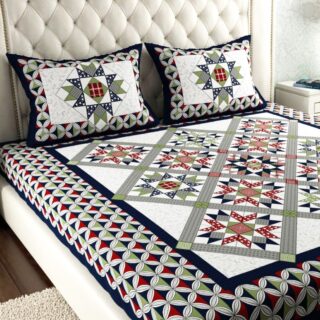 Leo Creation 144 TC Cotton Double Jaipuri Prints Flat Bedsheet(Pack of 1, Blue, Gree, Red, Grey, Light Grey)
Original price was: ₹2,999.00.₹329.00Current price is: ₹329.00.
Leo Creation 144 TC Cotton Double Jaipuri Prints Flat Bedsheet(Pack of 1, Blue, Gree, Red, Grey, Light Grey)
Original price was: ₹2,999.00.₹329.00Current price is: ₹329.00.
-
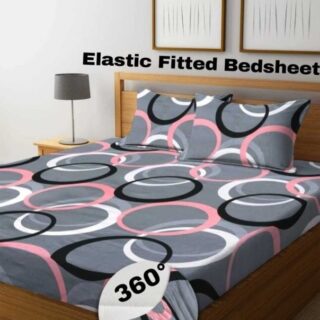 Home Garage 210 TC Cotton King Floral Fitted (Elastic) Bedsheet(Pack of 1, Grey)
Original price was: ₹999.00.₹299.00Current price is: ₹299.00.
Home Garage 210 TC Cotton King Floral Fitted (Elastic) Bedsheet(Pack of 1, Grey)
Original price was: ₹999.00.₹299.00Current price is: ₹299.00.
-
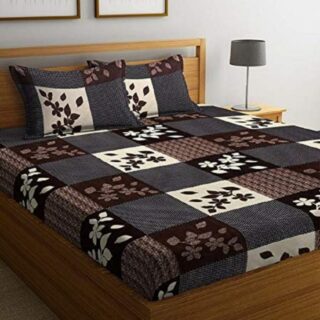 Goodrik 140 TC Cotton Double 3D Printed Flat Bedsheet(Pack of 1, Brown)
Original price was: ₹499.00.₹229.00Current price is: ₹229.00.
Goodrik 140 TC Cotton Double 3D Printed Flat Bedsheet(Pack of 1, Brown)
Original price was: ₹499.00.₹229.00Current price is: ₹229.00.
-
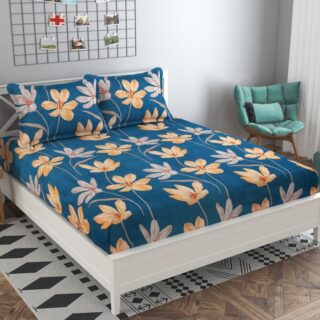 GLOBALSHOP 350 TC Microfiber Double Floral Flat Bedsheet(Pack of 1, Multicolor)
Original price was: ₹1,250.00.₹263.00Current price is: ₹263.00.
GLOBALSHOP 350 TC Microfiber Double Floral Flat Bedsheet(Pack of 1, Multicolor)
Original price was: ₹1,250.00.₹263.00Current price is: ₹263.00.
-
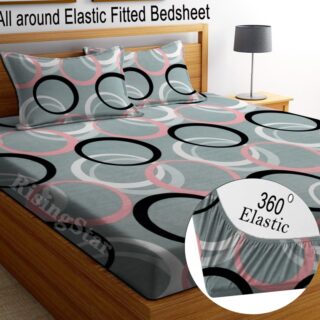 RisingStar 250 TC Microfiber King Printed Fitted (Elastic) Bedsheet(Pack of 1, FITTED-ROUND-CIRCLES-PREMIUM)
Original price was: ₹2,299.00.₹299.00Current price is: ₹299.00.
RisingStar 250 TC Microfiber King Printed Fitted (Elastic) Bedsheet(Pack of 1, FITTED-ROUND-CIRCLES-PREMIUM)
Original price was: ₹2,299.00.₹299.00Current price is: ₹299.00.
-
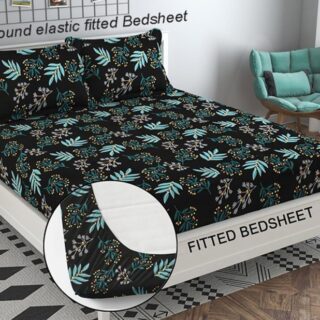 Home Garage 210 TC Cotton King Floral Fitted (Elastic) Bedsheet(Pack of 1, Fitted Black Green)
Original price was: ₹1,299.00.₹299.00Current price is: ₹299.00.
Home Garage 210 TC Cotton King Floral Fitted (Elastic) Bedsheet(Pack of 1, Fitted Black Green)
Original price was: ₹1,299.00.₹299.00Current price is: ₹299.00.
-
 Home Garage 180 TC Cotton King 3D Printed Flat Bedsheet(Pack of 1, White)
Original price was: ₹999.00.₹229.00Current price is: ₹229.00.
Home Garage 180 TC Cotton King 3D Printed Flat Bedsheet(Pack of 1, White)
Original price was: ₹999.00.₹229.00Current price is: ₹229.00.
-
 Home Sizzler 153 cm (5 ft) Polyester Room Darkening Window Curtain (Pack Of 2)(Floral, Maroon)
Original price was: ₹799.00.₹299.00Current price is: ₹299.00.
Home Sizzler 153 cm (5 ft) Polyester Room Darkening Window Curtain (Pack Of 2)(Floral, Maroon)
Original price was: ₹799.00.₹299.00Current price is: ₹299.00.
-
 Panipat Textile Hub 152.4 cm (5 ft) Polyester Window Curtain (Pack Of 2)(Solid, Aqua)
Original price was: ₹1,899.00.₹299.00Current price is: ₹299.00.
Panipat Textile Hub 152.4 cm (5 ft) Polyester Window Curtain (Pack Of 2)(Solid, Aqua)
Original price was: ₹1,899.00.₹299.00Current price is: ₹299.00.
-
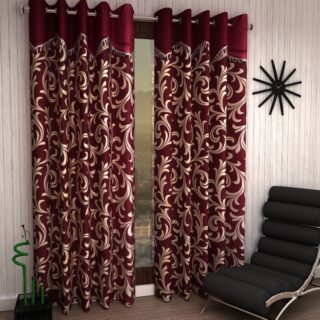 Home Sizzler 214 cm (7 ft) Polyester Semi Transparent Door Curtain (Pack Of 2)(Floral, Maroon)
Original price was: ₹1,199.00.₹399.00Current price is: ₹399.00.
Home Sizzler 214 cm (7 ft) Polyester Semi Transparent Door Curtain (Pack Of 2)(Floral, Maroon)
Original price was: ₹1,199.00.₹399.00Current price is: ₹399.00.
-
 Home Sizzler 153 cm (5 ft) Polyester Room Darkening Window Curtain (Pack Of 2)(Floral, Brown)
Original price was: ₹799.00.₹299.00Current price is: ₹299.00.
Home Sizzler 153 cm (5 ft) Polyester Room Darkening Window Curtain (Pack Of 2)(Floral, Brown)
Original price was: ₹799.00.₹299.00Current price is: ₹299.00.
-
 Stella Creations 214 cm (7 ft) Polyester Room Darkening Door Curtain (Pack Of 2)(Abstract, Brown)
Original price was: ₹1,299.00.₹449.00Current price is: ₹449.00.
Stella Creations 214 cm (7 ft) Polyester Room Darkening Door Curtain (Pack Of 2)(Abstract, Brown)
Original price was: ₹1,299.00.₹449.00Current price is: ₹449.00.
-
 Homefab India 152.5 cm (5 ft) Polyester Room Darkening Window Curtain (Pack Of 2)(Floral, Light Blue)
Original price was: ₹1,199.00.₹319.00Current price is: ₹319.00.
Homefab India 152.5 cm (5 ft) Polyester Room Darkening Window Curtain (Pack Of 2)(Floral, Light Blue)
Original price was: ₹1,199.00.₹319.00Current price is: ₹319.00.
-
 Urban Home 214 cm (7 ft) PVC Transparent Door Curtain Single Curtain(Solid, Off White)
Original price was: ₹699.00.₹203.00Current price is: ₹203.00.
Urban Home 214 cm (7 ft) PVC Transparent Door Curtain Single Curtain(Solid, Off White)
Original price was: ₹699.00.₹203.00Current price is: ₹203.00.
-
 Panipat Textile Hub 213 cm (7 ft) Polyester Door Curtain (Pack Of 2)(Solid, Brown)
Original price was: ₹1,199.00.₹349.00Current price is: ₹349.00.
Panipat Textile Hub 213 cm (7 ft) Polyester Door Curtain (Pack Of 2)(Solid, Brown)
Original price was: ₹1,199.00.₹349.00Current price is: ₹349.00.
Introduction
If you share a computer with family members, coworkers, or friends, you’ve probably encountered situations where multiple people need to use the same device while keeping their files and settings separate. This is where user accounts in Windows 11 become incredibly useful. Each user account creates a personalized workspace where individuals can maintain their own files, apps, desktop layouts, and system preferences without interfering with anyone else’s setup.
In my household, shared devices are pretty common. Between work tasks, managing schedules, helping kids with homework, and browsing online, the same laptop often gets passed around throughout the day. Instead of constantly signing out and signing back in, switching between user accounts in Windows 11 makes the process quick, seamless, and much more convenient.
User accounts essentially create separate environments on the same computer. Each account can have its own desktop wallpaper, browser bookmarks, application preferences, and saved documents. Even system-level configurations such as accessibility options or notification preferences can differ from one user to another.
For families, this feature helps maintain privacy and organization. Kids can have their own login with parental controls enabled, while adults maintain full access to system settings and work-related applications. Similarly, professionals who share office computers can keep their files separate from colleagues.
Windows 11 offers several ways to switch between user accounts depending on your situation. You can switch accounts from the Start menu, the lock screen, keyboard shortcuts, or through system settings. These options allow users to quickly move between profiles without shutting down running applications.
One of the best aspects of Windows’ account switching feature is that it allows multiple users to remain signed in simultaneously. This means someone can switch accounts without closing programs that another user may still need later. For example, if someone leaves a document open in their account, switching users will not automatically close their session.
This capability is especially useful in busy households or workplaces where different users access the computer throughout the day.
Another benefit of multiple user accounts is improved security and privacy. When users log into their own accounts, their personal files and settings remain protected from others. Windows also allows administrators to manage permissions and restrict access to certain features or files.
For example, an administrator account can install applications, modify system settings, and create additional users, while standard accounts have limited permissions. This setup helps prevent accidental changes that could affect the system’s stability.
Windows 11 also integrates user accounts with Microsoft accounts, allowing users to sync settings, passwords, browser data, and other preferences across multiple devices. If you sign in with your Microsoft account, your personalized settings can follow you wherever you log in.
However, Windows also supports local accounts, which do not require an internet connection or Microsoft login. These accounts are often used for privacy-focused setups or for users who simply want a straightforward login without cloud synchronization.
Regardless of which type of account you use, switching between accounts is a quick process that takes only a few seconds once you know where to look.
Many users are unaware that Windows offers several different methods for switching users. While the Start menu method is the most common, there are faster options available through keyboard shortcuts and system tools.
Understanding these methods can make managing shared computers much easier. Instead of logging out and restarting sessions repeatedly, you can quickly move between user accounts while keeping everything running in the background.
Another situation where account switching becomes useful is when troubleshooting or testing software. If you suspect that an application behaves differently depending on user settings, switching accounts allows you to test it under another profile without disrupting your primary account.
Additionally, developers, IT professionals, and system administrators often use multiple accounts to simulate different user environments during testing.
Even for casual users, knowing how to switch accounts can improve daily computer usage. Whether someone wants to check their email, access personal documents, or run a specific program configured under their profile, account switching keeps things organized and efficient.
Windows 11 has also made the process more streamlined compared to previous versions of Windows. The redesigned Start menu and improved account interface make it easier to locate user options and switch between profiles quickly.
Despite its simplicity, some users still struggle to find the right option for switching accounts, especially if they’re new to Windows 11’s interface.
That’s why it’s helpful to understand the different ways Windows allows you to switch users and when each method is most useful.
In this guide, we’ll explore the most effective ways to switch user accounts in Windows 11. You’ll learn where to find the account switching options, how to move between accounts quickly, and how Windows manages multiple user sessions.
By the end of this guide, you’ll have a clear understanding of how to switch users efficiently so that everyone sharing the computer can access their own workspace without disrupting others.
Switch User Accounts from the Start Menu
The easiest and most commonly used way to switch user accounts in Windows 11 is through the Start menu. Microsoft designed this method to be quick and accessible so users can change accounts without navigating through complicated settings.
To begin, click the Start button located on the taskbar. Once the Start menu opens, look at the bottom-left corner where your current account name and profile picture appear.
Click on your profile icon, and a small menu will appear displaying other available user accounts on the system.
Select the account you want to switch to. Windows will then move you to the login screen where the selected user can enter their password or PIN.
This method is convenient because it does not close your current session. Your apps and files remain open in the background while another user logs in.
Switch Users Using the Lock Screen
Another simple method to switch accounts is through the Windows lock screen. This approach is especially useful if you want to quickly lock your current session before allowing another user to access the computer.
To do this, press the Windows + L keyboard shortcut. This will immediately lock your screen and display the Windows login interface.
On the left side of the login screen, you will see a list of available user accounts. Click on the account you want to switch to.
After selecting the account, enter the user’s password, PIN, or Windows Hello authentication to sign in.
The lock screen method is often used in workplaces or shared environments where users want to protect their current session while switching access to another user.
Switch User Accounts Using Ctrl + Alt + Delete
Windows also allows account switching through the Ctrl + Alt + Delete security screen. This method is often preferred by advanced users or administrators because it provides access to several system options in one place.
Press Ctrl + Alt + Delete on your keyboard. A screen will appear showing multiple options such as:
-
Lock
-
Switch User
-
Sign Out
-
Task Manager
Click Switch User to return to the login screen where you can select another account.
This method is particularly helpful when troubleshooting system issues or when the Start menu becomes unresponsive.
Switch Accounts Using the Sign-Out Option
If you want to completely close your session before another user signs in, you can use the Sign Out option.
Open the Start menu, click your profile icon, and select Sign Out.
Once signed out, the system will return to the login screen where another user can log into their account.
Unlike switching users, signing out will close all running apps and processes associated with your account. This helps free up system resources and can improve performance if multiple accounts were previously active.
However, make sure to save your work before signing out, as unsaved files may be lost.
Use Fast User Switching in Windows 11
Windows 11 supports a feature known as Fast User Switching, which allows multiple users to remain logged in simultaneously.
With Fast User Switching enabled, users can switch between accounts without logging out of their sessions. This means each user’s apps and files stay open even when another user logs into the system.
This feature is extremely useful in shared environments because it allows quick transitions between users while maintaining active sessions.
For example, someone can pause their work, switch accounts so another person can use the computer, and later return to their session exactly where they left off.
However, it’s important to note that having multiple active sessions may consume more system memory and CPU resources. On devices with limited hardware resources, this could slightly affect performance.
Add a New User Account in Windows 11
If the account you want to switch to doesn’t exist yet, you’ll need to create a new user profile first.
Open Settings, then navigate to Accounts → Family & other users.
Click Add account and follow the instructions to create a new user. You can choose between adding a Microsoft account or creating a local account.
Once the account is created, it will appear on the login screen and in the Start menu’s account list, allowing users to switch to it easily.
Creating separate accounts ensures that each user has their own personalized environment while keeping files private.
When Switching Users Is Most Useful
Switching user accounts in Windows 11 becomes especially useful in several everyday situations.
Shared family computers are one of the most common examples. Parents, children, and other family members can each maintain their own account while using the same device.
Work environments also benefit from user switching when multiple employees share a workstation or office computer.
Another scenario involves troubleshooting or testing applications under different user environments.
Developers and IT professionals often use multiple accounts to simulate different system configurations or permission levels.
Even for personal use, having multiple accounts can help separate work, personal tasks, and administrative settings.
Conclusion
Windows 11 makes managing multiple user accounts easier and more flexible than ever before. Whether you share your computer with family members, coworkers, or friends, switching between accounts allows each person to maintain their own personalized workspace while using the same device.
Instead of signing out and closing everything each time someone else needs access to the computer, Windows offers several convenient methods to switch users instantly. The Start menu, lock screen, Ctrl + Alt + Delete menu, and sign-out options all provide quick ways to move between accounts.
One of the most useful features of Windows 11 is Fast User Switching, which allows multiple users to remain logged in simultaneously. This means users can switch accounts without closing apps or losing their progress, making shared computer usage much smoother.
User accounts also help improve privacy, organization, and system security. Each account keeps files, settings, and preferences separate, ensuring that users do not accidentally modify or access another person’s data.
For families, separate accounts allow parents to set restrictions and maintain safer digital environments for children. For workplaces, they ensure that employees can access their own files without interfering with shared system settings.
Learning how to switch user accounts effectively can make everyday computer usage far more efficient. Whether you’re managing multiple users in a household, sharing a workstation at the office, or simply organizing different work environments, Windows 11 provides all the tools needed to handle multiple accounts smoothly.
By understanding the different switching methods available, you can quickly move between user profiles while keeping sessions active and organized.
Disclaimer
This article is intended for informational purposes only. Features and steps may vary slightly depending on Windows 11 updates, system configurations, and device manufacturer settings.

- How to Switch User Accounts in Windows 11: Complete Guide for Quick and Secure Account Switching
- How to Use PowerShell to Scan and Repair Windows 10 System Files Easily

- How to Fix Green or Purple Videos in Google Chrome (Complete Troubleshooting Guide)

- How to Check Which Apps Are Draining Battery on Windows 11 and Improve Laptop Battery Life

- How to Hide a Drive in Windows 11 Using Local Group Policy Editor: Complete Step-by-Step Guide for Privacy and Security
Products
-
![Apple Watch Ultra 3 [GPS + Cellular 49mm] Running & Multisport Smartwatch w/Rugged Titanium Case w/Black Titanium Milanese Loop - M. Satellite Communications, Advanced Health & Fitness Tracking](https://bazaronweb.com/retailstores/wp-content/uploads/2025/09/apple-watch-320x320.jpg) Apple Watch Ultra 3 [GPS + Cellular 49mm] Running & Multisport Smartwatch w/Rugged Titanium Case w/Black Titanium Milanese Loop - M. Satellite Communications, Advanced Health & Fitness Tracking
Apple Watch Ultra 3 [GPS + Cellular 49mm] Running & Multisport Smartwatch w/Rugged Titanium Case w/Black Titanium Milanese Loop - M. Satellite Communications, Advanced Health & Fitness Tracking
-
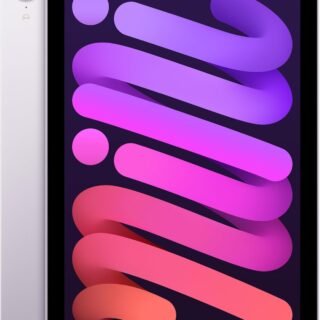 Apple iPad mini (A17 Pro): Apple Intelligence, 8.3-inch Liquid Retina Display, 256GB, Wi-Fi 6E, 12MP Front/12MP Back Camera, Touch ID, All-Day Battery Life — Purple
-
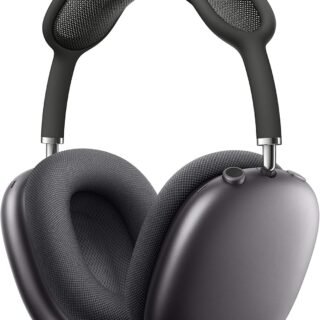 Apple AirPods Max Wireless Over-Ear Headphones, Active Noise Cancelling, Transparency Mode, Personalized Spatial Audio, Dolby Atmos, Bluetooth Headphones for iPhone – Space Gray
-
 Apple AirPods Pro 2 Wireless Earbuds, Active Noise Cancellation, Hearing Aid Feature, Bluetooth Headphones, Transparency, Personalized Spatial Audio, High-Fidelity Sound, H2 Chip, USB-C Charging
-
Leo Creation 144 TC Cotton Double Jaipuri Prints Flat Bedsheet(Pack of 1, Blue, Gree, Red, Grey, Light Grey)
Original price was: ₹2,999.00.₹329.00Current price is: ₹329.00.
Leave a Reply