Discounted Products
-
 Leo Creation 144 TC Cotton Double Jaipuri Prints Flat Bedsheet(Pack of 1, Blue, Gree, Red, Grey, Light Grey)
Original price was: ₹2,999.00.₹329.00Current price is: ₹329.00.
Leo Creation 144 TC Cotton Double Jaipuri Prints Flat Bedsheet(Pack of 1, Blue, Gree, Red, Grey, Light Grey)
Original price was: ₹2,999.00.₹329.00Current price is: ₹329.00.
-
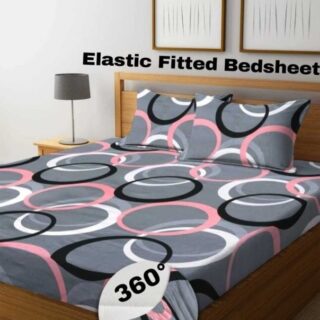 Home Garage 210 TC Cotton King Floral Fitted (Elastic) Bedsheet(Pack of 1, Grey)
Original price was: ₹999.00.₹299.00Current price is: ₹299.00.
Home Garage 210 TC Cotton King Floral Fitted (Elastic) Bedsheet(Pack of 1, Grey)
Original price was: ₹999.00.₹299.00Current price is: ₹299.00.
-
 Goodrik 140 TC Cotton Double 3D Printed Flat Bedsheet(Pack of 1, Brown)
Original price was: ₹499.00.₹229.00Current price is: ₹229.00.
Goodrik 140 TC Cotton Double 3D Printed Flat Bedsheet(Pack of 1, Brown)
Original price was: ₹499.00.₹229.00Current price is: ₹229.00.
-
 GLOBALSHOP 350 TC Microfiber Double Floral Flat Bedsheet(Pack of 1, Multicolor)
Original price was: ₹1,250.00.₹263.00Current price is: ₹263.00.
GLOBALSHOP 350 TC Microfiber Double Floral Flat Bedsheet(Pack of 1, Multicolor)
Original price was: ₹1,250.00.₹263.00Current price is: ₹263.00.
-
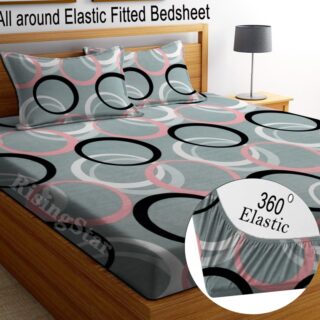 RisingStar 250 TC Microfiber King Printed Fitted (Elastic) Bedsheet(Pack of 1, FITTED-ROUND-CIRCLES-PREMIUM)
Original price was: ₹2,299.00.₹299.00Current price is: ₹299.00.
RisingStar 250 TC Microfiber King Printed Fitted (Elastic) Bedsheet(Pack of 1, FITTED-ROUND-CIRCLES-PREMIUM)
Original price was: ₹2,299.00.₹299.00Current price is: ₹299.00.
-
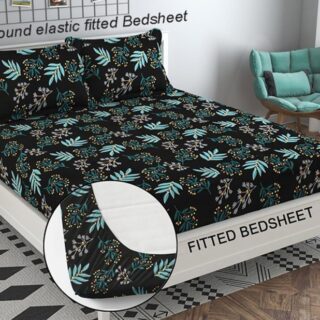 Home Garage 210 TC Cotton King Floral Fitted (Elastic) Bedsheet(Pack of 1, Fitted Black Green)
Original price was: ₹1,299.00.₹299.00Current price is: ₹299.00.
Home Garage 210 TC Cotton King Floral Fitted (Elastic) Bedsheet(Pack of 1, Fitted Black Green)
Original price was: ₹1,299.00.₹299.00Current price is: ₹299.00.
-
 Home Garage 180 TC Cotton King 3D Printed Flat Bedsheet(Pack of 1, White)
Original price was: ₹999.00.₹229.00Current price is: ₹229.00.
Home Garage 180 TC Cotton King 3D Printed Flat Bedsheet(Pack of 1, White)
Original price was: ₹999.00.₹229.00Current price is: ₹229.00.
-
 Home Sizzler 153 cm (5 ft) Polyester Room Darkening Window Curtain (Pack Of 2)(Floral, Maroon)
Original price was: ₹799.00.₹299.00Current price is: ₹299.00.
Home Sizzler 153 cm (5 ft) Polyester Room Darkening Window Curtain (Pack Of 2)(Floral, Maroon)
Original price was: ₹799.00.₹299.00Current price is: ₹299.00.
-
 Panipat Textile Hub 152.4 cm (5 ft) Polyester Window Curtain (Pack Of 2)(Solid, Aqua)
Original price was: ₹1,899.00.₹299.00Current price is: ₹299.00.
Panipat Textile Hub 152.4 cm (5 ft) Polyester Window Curtain (Pack Of 2)(Solid, Aqua)
Original price was: ₹1,899.00.₹299.00Current price is: ₹299.00.
-
 Home Sizzler 214 cm (7 ft) Polyester Semi Transparent Door Curtain (Pack Of 2)(Floral, Maroon)
Original price was: ₹1,199.00.₹399.00Current price is: ₹399.00.
Home Sizzler 214 cm (7 ft) Polyester Semi Transparent Door Curtain (Pack Of 2)(Floral, Maroon)
Original price was: ₹1,199.00.₹399.00Current price is: ₹399.00.
-
 Home Sizzler 153 cm (5 ft) Polyester Room Darkening Window Curtain (Pack Of 2)(Floral, Brown)
Original price was: ₹799.00.₹299.00Current price is: ₹299.00.
Home Sizzler 153 cm (5 ft) Polyester Room Darkening Window Curtain (Pack Of 2)(Floral, Brown)
Original price was: ₹799.00.₹299.00Current price is: ₹299.00.
-
 Stella Creations 214 cm (7 ft) Polyester Room Darkening Door Curtain (Pack Of 2)(Abstract, Brown)
Original price was: ₹1,299.00.₹449.00Current price is: ₹449.00.
Stella Creations 214 cm (7 ft) Polyester Room Darkening Door Curtain (Pack Of 2)(Abstract, Brown)
Original price was: ₹1,299.00.₹449.00Current price is: ₹449.00.
-
 Homefab India 152.5 cm (5 ft) Polyester Room Darkening Window Curtain (Pack Of 2)(Floral, Light Blue)
Original price was: ₹1,199.00.₹319.00Current price is: ₹319.00.
Homefab India 152.5 cm (5 ft) Polyester Room Darkening Window Curtain (Pack Of 2)(Floral, Light Blue)
Original price was: ₹1,199.00.₹319.00Current price is: ₹319.00.
-
 Urban Home 214 cm (7 ft) PVC Transparent Door Curtain Single Curtain(Solid, Off White)
Original price was: ₹699.00.₹203.00Current price is: ₹203.00.
Urban Home 214 cm (7 ft) PVC Transparent Door Curtain Single Curtain(Solid, Off White)
Original price was: ₹699.00.₹203.00Current price is: ₹203.00.
-
 Panipat Textile Hub 213 cm (7 ft) Polyester Door Curtain (Pack Of 2)(Solid, Brown)
Original price was: ₹1,199.00.₹349.00Current price is: ₹349.00.
Panipat Textile Hub 213 cm (7 ft) Polyester Door Curtain (Pack Of 2)(Solid, Brown)
Original price was: ₹1,199.00.₹349.00Current price is: ₹349.00.
If you’ve ever found yourself in a conversation with a tech enthusiast, you might have heard the claim, “Android is just Linux.” It’s a statement that seems simple on the surface, but the reality is a fascinating and nuanced relationship. It’s less about simple identity and more about a shared heritage.
So, let’s settle the question right away: Is Android Linux?
The most accurate answer is: Yes, but not in the way you probably think.
It’s like asking if a champion race car is the same as the basic engine block it was built from. They share a fundamental core, but one is a highly specialized, purpose-built machine, while the other is the raw, versatile foundation.
Let’s unpack what that really means, moving beyond the tech jargon and into a clear understanding of how your phone’s operating system is connected to the powerful world of Linux.
The Core of the Matter: The Linux Kernel
To understand the connection, we first need to talk about the Linux Kernel. Don’t let the term intimidate you. Think of the kernel as the “brainstem” or the “conductor” of an operating system. It’s the most fundamental piece of software, responsible for managing the conversation between your hardware (the screen, the battery, the processor) and your software (your apps, your touch inputs).
This Linux Kernel is open-source, meaning its code is freely available for anyone to use, modify, and distribute. This is the critical piece that Android borrowed.
Here’s the key takeaway: Android uses the Linux Kernel at its very core. This gives it a rock-solid, proven, and powerful foundation for managing memory, power, and hardware drivers. This shared kernel is the primary source of the “Android is Linux” argument, and technically, it’s correct.
Where the Paths Diverge: The Great Fork in the Road
However, an operating system is much more than just its kernel. Once you move past this shared foundation, Android and what we call “traditional Linux” (like Ubuntu or Fedora on a desktop computer) take dramatically different paths. They are cousins, not twins.
Imagine two master chefs starting with the same high-quality flour (the Linux Kernel). One uses it to make a classic, crusty French baguette (traditional Linux), while the other uses it to make a soft, shelf-stable slice of sandwich bread (Android). The core ingredient is the same, but the final products are designed for entirely different purposes and experiences.
Let’s look at the key differences:
1. The User Interface: A World of Difference
This is the most obvious distinction. When you use a desktop Linux distribution, you interact with a desktop environment like GNOME or KDE. You have a mouse and keyboard, resizable windows, and a file manager. It’s built for precision and multitasking on a large screen.
Android, on the other hand, has a touch-first interface designed for small screens. Its interaction model is based on taps, swipes, and gestures. You don’t have a desktop in the traditional sense; you have a home screen of app icons and a notification shade. The entire user experience is built from the ground up for a mobile device.
2. The Software Ecosystem: A Different Language
This is arguably the biggest divider. On a traditional Linux system, most applications are written in programming languages like C or C++ and compiled to run directly on the system’s architecture. They are often installed from centralized repositories using a package manager.
Android introduced a completely different application framework. Most Android apps are written in Java or Kotlin and run on the Android Runtime (ART). Before ART, it used the Dalvik Virtual Machine. This was a conscious design choice by Google to create a secure “sandbox” where apps run in isolation from the core system and from each other.
The consequence? You cannot take a Linux desktop application like GIMP or LibreOffice and run it on your Android phone. The two systems speak completely different “languages” when it comes to software.
3. The “GNU” in “GNU/Linux” – What’s Missing?
You might have heard the term “GNU/Linux.” This refers to the vast collection of core utilities (like bash, grep, and cp) that come from the GNU project. These command-line tools are what give traditional Linux distributions their power and character.
Android, in its standard form on your phone, does not include these GNU utilities. You can’t open a terminal and start using classic Linux commands—at least, not without “rooting” your phone and installing them yourself. The shell environment on Android is a much more minimal, purpose-built one called Toolbox or, in newer versions, Toybox.
The Bridge Between Worlds: What This Means for You
So, if they’re so different, does this technical connection matter to the average user? In some ways, no. You don’t need to know about the Linux Kernel to send a text message. But in other ways, this shared foundation has profound benefits that you experience every day:
-
Stability and Performance: The Linux Kernel is a masterpiece of engineering, refined over decades. It’s incredibly efficient at managing resources, which is why your Android phone can run dozens of apps, play high-definition videos, and maintain a stable connection without constantly crashing. This reliability is a direct gift from its Linux core.
-
Hardware Compatibility: The kernel’s robust driver model makes it easier for manufacturers (like Samsung, Google, and OnePlus) to get Android working reliably on a huge variety of devices with different chipsets, screens, and sensors.
-
Security: The Linux Kernel provides a strong security model that Android builds upon. The fundamental concept of user and file permissions forms the basis for Android’s app sandboxing, which prevents a rogue app from accessing data from another app or the core system.
A Fun Experiment: Seeing the Linux Core
If you’re curious to see this connection for yourself, it’s possible! You can download a terminal app from the Play Store. When you open it, you can type the command uname -a. This will spit out a line of text that includes the word “Linux”—showing you the kernel that is currently running your phone. It’s a small but direct glimpse under the hood.
The Final Verdict
So, let’s return to our original question: Is Android Linux?
-
Technically, yes. Its heart and soul—the kernel—is Linux.
-
Practically, no. The user experience, the app ecosystem, and the entire software layer built on top of that kernel are so different from a desktop Linux distribution that they constitute a distinct operating system.
Android is a specialized fork of the Linux Kernel, meticulously crafted for the mobile world. It took a powerful, versatile foundation and built something entirely new and revolutionary upon it.
Understanding this relationship helps us appreciate the engineering marvel in our pockets. It’s not just a phone; it’s a device powered by the same robust technology that runs most of the internet and the world’s supercomputers, all wrapped in a friendly, touch-screen interface designed for our everyday lives. And that, in my opinion, is pretty incredible.

- Can’t View Comments on YouTube Shorts? 6 Ways to Fix It (Complete Guide)

- How to Block Users From Installing Programs in Windows 11 Complete Step-by-Step Guide for Better Security

- How to Fix Chrome Automatically Deleting Downloaded Files (Complete Step-by-Step Guide)

- How to View Apps That Windows Security Identifies as PUA (Step-by-Step Guide)

- How to Add Custom DNS Server on iPhone to Fix DNS Errors and Improve Internet Speed

Products
-
![Apple Watch Ultra 3 [GPS + Cellular 49mm] Running & Multisport Smartwatch w/Rugged Titanium Case w/Black Titanium Milanese Loop - M. Satellite Communications, Advanced Health & Fitness Tracking](https://bazaronweb.com/retailstores/wp-content/uploads/2025/09/apple-watch-320x320.jpg) Apple Watch Ultra 3 [GPS + Cellular 49mm] Running & Multisport Smartwatch w/Rugged Titanium Case w/Black Titanium Milanese Loop - M. Satellite Communications, Advanced Health & Fitness Tracking
Apple Watch Ultra 3 [GPS + Cellular 49mm] Running & Multisport Smartwatch w/Rugged Titanium Case w/Black Titanium Milanese Loop - M. Satellite Communications, Advanced Health & Fitness Tracking
-
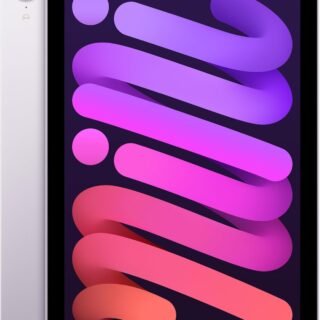 Apple iPad mini (A17 Pro): Apple Intelligence, 8.3-inch Liquid Retina Display, 256GB, Wi-Fi 6E, 12MP Front/12MP Back Camera, Touch ID, All-Day Battery Life — Purple
-
 Apple AirPods Max Wireless Over-Ear Headphones, Active Noise Cancelling, Transparency Mode, Personalized Spatial Audio, Dolby Atmos, Bluetooth Headphones for iPhone – Space Gray
-
 Apple AirPods Pro 2 Wireless Earbuds, Active Noise Cancellation, Hearing Aid Feature, Bluetooth Headphones, Transparency, Personalized Spatial Audio, High-Fidelity Sound, H2 Chip, USB-C Charging
-
Leo Creation 144 TC Cotton Double Jaipuri Prints Flat Bedsheet(Pack of 1, Blue, Gree, Red, Grey, Light Grey)
Original price was: ₹2,999.00.₹329.00Current price is: ₹329.00.
Leave a Reply