Discounted Products
-
 Leo Creation 144 TC Cotton Double Jaipuri Prints Flat Bedsheet(Pack of 1, Blue, Gree, Red, Grey, Light Grey)
Original price was: ₹2,999.00.₹329.00Current price is: ₹329.00.
Leo Creation 144 TC Cotton Double Jaipuri Prints Flat Bedsheet(Pack of 1, Blue, Gree, Red, Grey, Light Grey)
Original price was: ₹2,999.00.₹329.00Current price is: ₹329.00.
-
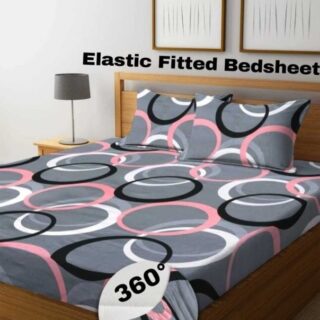 Home Garage 210 TC Cotton King Floral Fitted (Elastic) Bedsheet(Pack of 1, Grey)
Original price was: ₹999.00.₹299.00Current price is: ₹299.00.
Home Garage 210 TC Cotton King Floral Fitted (Elastic) Bedsheet(Pack of 1, Grey)
Original price was: ₹999.00.₹299.00Current price is: ₹299.00.
-
 Goodrik 140 TC Cotton Double 3D Printed Flat Bedsheet(Pack of 1, Brown)
Original price was: ₹499.00.₹229.00Current price is: ₹229.00.
Goodrik 140 TC Cotton Double 3D Printed Flat Bedsheet(Pack of 1, Brown)
Original price was: ₹499.00.₹229.00Current price is: ₹229.00.
-
 GLOBALSHOP 350 TC Microfiber Double Floral Flat Bedsheet(Pack of 1, Multicolor)
Original price was: ₹1,250.00.₹263.00Current price is: ₹263.00.
GLOBALSHOP 350 TC Microfiber Double Floral Flat Bedsheet(Pack of 1, Multicolor)
Original price was: ₹1,250.00.₹263.00Current price is: ₹263.00.
-
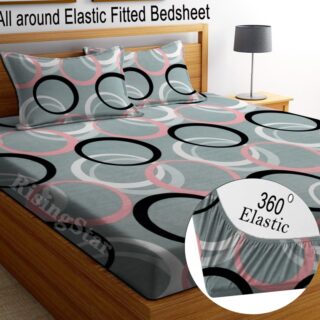 RisingStar 250 TC Microfiber King Printed Fitted (Elastic) Bedsheet(Pack of 1, FITTED-ROUND-CIRCLES-PREMIUM)
Original price was: ₹2,299.00.₹299.00Current price is: ₹299.00.
RisingStar 250 TC Microfiber King Printed Fitted (Elastic) Bedsheet(Pack of 1, FITTED-ROUND-CIRCLES-PREMIUM)
Original price was: ₹2,299.00.₹299.00Current price is: ₹299.00.
-
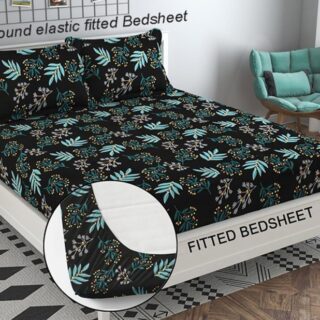 Home Garage 210 TC Cotton King Floral Fitted (Elastic) Bedsheet(Pack of 1, Fitted Black Green)
Original price was: ₹1,299.00.₹299.00Current price is: ₹299.00.
Home Garage 210 TC Cotton King Floral Fitted (Elastic) Bedsheet(Pack of 1, Fitted Black Green)
Original price was: ₹1,299.00.₹299.00Current price is: ₹299.00.
-
 Home Garage 180 TC Cotton King 3D Printed Flat Bedsheet(Pack of 1, White)
Original price was: ₹999.00.₹229.00Current price is: ₹229.00.
Home Garage 180 TC Cotton King 3D Printed Flat Bedsheet(Pack of 1, White)
Original price was: ₹999.00.₹229.00Current price is: ₹229.00.
-
 Home Sizzler 153 cm (5 ft) Polyester Room Darkening Window Curtain (Pack Of 2)(Floral, Maroon)
Original price was: ₹799.00.₹299.00Current price is: ₹299.00.
Home Sizzler 153 cm (5 ft) Polyester Room Darkening Window Curtain (Pack Of 2)(Floral, Maroon)
Original price was: ₹799.00.₹299.00Current price is: ₹299.00.
-
 Panipat Textile Hub 152.4 cm (5 ft) Polyester Window Curtain (Pack Of 2)(Solid, Aqua)
Original price was: ₹1,899.00.₹299.00Current price is: ₹299.00.
Panipat Textile Hub 152.4 cm (5 ft) Polyester Window Curtain (Pack Of 2)(Solid, Aqua)
Original price was: ₹1,899.00.₹299.00Current price is: ₹299.00.
-
 Home Sizzler 214 cm (7 ft) Polyester Semi Transparent Door Curtain (Pack Of 2)(Floral, Maroon)
Original price was: ₹1,199.00.₹399.00Current price is: ₹399.00.
Home Sizzler 214 cm (7 ft) Polyester Semi Transparent Door Curtain (Pack Of 2)(Floral, Maroon)
Original price was: ₹1,199.00.₹399.00Current price is: ₹399.00.
-
 Home Sizzler 153 cm (5 ft) Polyester Room Darkening Window Curtain (Pack Of 2)(Floral, Brown)
Original price was: ₹799.00.₹299.00Current price is: ₹299.00.
Home Sizzler 153 cm (5 ft) Polyester Room Darkening Window Curtain (Pack Of 2)(Floral, Brown)
Original price was: ₹799.00.₹299.00Current price is: ₹299.00.
-
 Stella Creations 214 cm (7 ft) Polyester Room Darkening Door Curtain (Pack Of 2)(Abstract, Brown)
Original price was: ₹1,299.00.₹449.00Current price is: ₹449.00.
Stella Creations 214 cm (7 ft) Polyester Room Darkening Door Curtain (Pack Of 2)(Abstract, Brown)
Original price was: ₹1,299.00.₹449.00Current price is: ₹449.00.
-
 Homefab India 152.5 cm (5 ft) Polyester Room Darkening Window Curtain (Pack Of 2)(Floral, Light Blue)
Original price was: ₹1,199.00.₹319.00Current price is: ₹319.00.
Homefab India 152.5 cm (5 ft) Polyester Room Darkening Window Curtain (Pack Of 2)(Floral, Light Blue)
Original price was: ₹1,199.00.₹319.00Current price is: ₹319.00.
-
 Urban Home 214 cm (7 ft) PVC Transparent Door Curtain Single Curtain(Solid, Off White)
Original price was: ₹699.00.₹203.00Current price is: ₹203.00.
Urban Home 214 cm (7 ft) PVC Transparent Door Curtain Single Curtain(Solid, Off White)
Original price was: ₹699.00.₹203.00Current price is: ₹203.00.
-
 Panipat Textile Hub 213 cm (7 ft) Polyester Door Curtain (Pack Of 2)(Solid, Brown)
Original price was: ₹1,199.00.₹349.00Current price is: ₹349.00.
Panipat Textile Hub 213 cm (7 ft) Polyester Door Curtain (Pack Of 2)(Solid, Brown)
Original price was: ₹1,199.00.₹349.00Current price is: ₹349.00.
Introduction
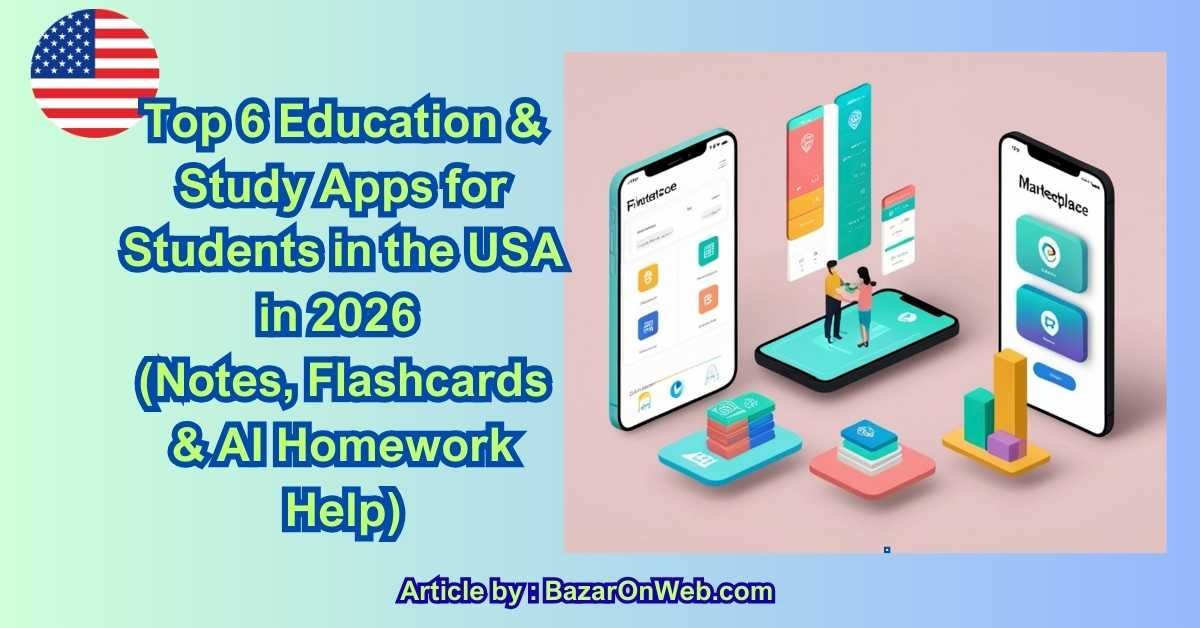
As a student in the USA in 2026, studying is no longer limited to classrooms, heavy textbooks, or late-night cramming sessions. Learning has become smarter, more flexible, and deeply personalized—thanks to modern education and study apps. Whether you’re a high school student preparing for exams, a college learner juggling multiple subjects, or someone returning to education to upskill, the right apps can completely transform how you learn.
From my perspective as a working professional and parent, I see how students today face very different challenges than we did years ago. There’s more information, faster-paced curricula, and constant digital distractions. This makes it essential to use tools that don’t just store information but actively help students understand, retain, and apply knowledge. That’s exactly where today’s note-taking apps, flashcard tools, and AI-powered homework assistants shine.
The best study apps in 2026 are not about shortcuts. They are about clarity. They help students organize thoughts, break down complex topics, revise efficiently, and study with confidence. Whether it’s structuring lecture notes, mastering vocabulary through spaced repetition, or getting step-by-step help with tough math problems, these apps act like personal study companions.
In this guide, we’ve explored six of the most effective education and study apps used by students across the USA. Each one serves a specific purpose—some excel at organizing knowledge, others at memorization, and some at explaining difficult concepts using AI. Together, they represent how modern learning has evolved: more visual, more adaptive, and far more student-centric than ever before.
If you’re serious about improving grades, reducing stress, and studying smarter instead of longer, these apps deserve a place in your daily academic routine.
1. Notion
Notion has become one of the most powerful all-in-one study apps for students in the USA, and in 2026 it is practically a digital study headquarters. Students use Notion to take structured notes, manage assignments, plan semesters, and collaborate on group projects—all in one workspace. Unlike traditional note-taking apps, Notion allows complete customization. You can create class-wise dashboards, embed PDFs, link lecture notes to tasks, and even track exam preparation progress.
For college and high school students, Notion’s strength lies in how it mirrors real academic workflows. You can store lecture notes, research material, deadlines, and revision schedules in a single place, reducing the mental overload caused by juggling multiple apps. Templates for class notes, Cornell notes, project planners, and exam trackers save hours of setup time.
In 2026, Notion’s AI features play a major role in student productivity. Students use AI to summarize long lecture notes, rewrite concepts in simpler language, generate practice questions, and even create study plans based on exam dates. For research-heavy subjects, Notion AI helps outline essays and organize references logically.
Another major advantage is cross-device syncing. Whether students are using laptops in class, tablets for handwritten notes, or phones for quick revisions, everything stays updated in real time. Group projects also benefit from shared workspaces, allowing classmates to collaborate seamlessly.
For students who prefer structured, visual, and highly flexible study systems, Notion stands out as one of the most future-ready education apps in the USA.
2. Evernote
Evernote continues to be a trusted note-taking app for students who value simplicity, speed, and reliability. In 2026, Evernote remains especially popular among university students who attend lecture-heavy courses and need fast, searchable notes. The app allows students to capture lecture notes through typing, voice recordings, images, PDFs, and handwritten notes.
One of Evernote’s strongest features is its advanced search capability. Students can search text inside images, handwritten notes, and scanned documents, making it incredibly useful during exam season when time is limited. Organizing notes into notebooks and tags helps students keep subjects, semesters, and projects clearly separated.
Evernote’s AI-powered features now assist students by summarizing long notes, highlighting key points, and suggesting related content. This is particularly helpful for subjects like history, law, and biology, where large volumes of information must be reviewed repeatedly.
The app also integrates well with academic workflows. Students can clip web articles, research papers, and reference material directly into their notes. This makes Evernote a strong choice for research assignments and term papers.
Cross-platform availability ensures students can switch seamlessly between phones, tablets, and laptops. For students who want a clean, distraction-free environment focused purely on capturing and revising information, Evernote remains a dependable study companion in 2026.
3. Quizlet
Quizlet is one of the most widely used flashcard-based learning apps among students in the USA, and in 2026 it continues to dominate exam preparation and concept memorization. The app is especially popular among high school students, AP learners, and college students preparing for midterms, finals, and standardized tests.
Quizlet allows students to create custom flashcards or use millions of pre-made study sets covering subjects like math, science, languages, history, and test prep. Its smart learning modes adapt to a student’s progress, focusing more on weak areas and less on concepts already mastered.
AI-driven features in Quizlet now help generate flashcards automatically from notes, textbooks, or uploaded documents. Students can turn entire chapters into interactive study material within minutes. The app also offers practice tests, matching games, and timed quizzes to make learning engaging and effective.
Quizlet’s collaborative features allow students to share study sets with classmates, making group study sessions more productive. Teachers across the USA also integrate Quizlet into classrooms, aligning student study material with coursework.
For students who learn best through repetition, self-testing, and active recall, Quizlet remains one of the most effective study apps available in 2026.
4. Anki
Anki is a powerful flashcard app designed for serious learners who want long-term retention. In 2026, Anki is widely used by medical students, law students, engineering majors, and anyone preparing for competitive exams. Its core strength lies in spaced repetition—a scientifically proven learning technique that schedules reviews at optimal intervals.
Unlike traditional flashcard apps, Anki adapts to how well you know each card. Concepts you struggle with appear more frequently, while mastered topics are shown less often. This makes study sessions highly efficient and time-effective.
Students in the USA use Anki to memorize formulas, definitions, vocabulary, case laws, and complex concepts. The app supports images, audio, equations, and even code snippets, making it suitable for a wide range of subjects.
In 2026, Anki benefits from community-created decks and AI-assisted card generation. Students can convert notes into flashcards automatically and improve card quality with smart suggestions. While the interface may feel less polished than newer apps, its effectiveness keeps it extremely popular among disciplined learners.
For students focused on mastery and long-term academic success, Anki remains one of the most powerful study tools available.
5. Photomath
Photomath is one of the most widely used AI-powered homework help apps for math students in the USA. In 2026, it has evolved into a comprehensive math learning assistant rather than just a problem solver. Students can scan handwritten or printed math problems and receive step-by-step explanations instantly.
The app covers a wide range of topics, including arithmetic, algebra, geometry, trigonometry, calculus, and statistics. What makes Photomath especially valuable is its focus on showing the solution process, helping students understand how to arrive at the answer rather than just copying it.
AI-powered explanations adapt to student skill levels, offering simpler breakdowns or advanced methods when needed. Many students use Photomath as a revision tool after attempting homework on their own, ensuring they truly understand the logic behind each step.
For parents and teachers, Photomath acts as a learning support tool rather than a shortcut. Used correctly, it helps reduce math anxiety and builds confidence over time.
For middle school, high school, and early college students struggling with math concepts, Photomath remains one of the best AI homework help apps in 2026.
6. Khan Academy
Khan Academy continues to be one of the most trusted free education platforms for students across the USA. In 2026, it remains a go-to app for concept-based learning, homework support, and skill-building across math, science, economics, and test preparation.
The app offers structured courses aligned with U.S. curricula, making it ideal for students who want to strengthen fundamentals or catch up on difficult topics. Video lessons, practice exercises, and mastery-based progress tracking help students learn at their own pace.
AI-driven personalization now helps recommend lessons based on performance, ensuring students focus on weak areas. Khan Academy is widely used for SAT, ACT, and AP exam preparation, making it valuable for college-bound students.
Teachers and parents also rely on Khan Academy to track progress and support learning outside the classroom. Its nonprofit model ensures high-quality education remains accessible to all students, regardless of background.
For students seeking reliable, concept-focused learning support without pressure, Khan Academy remains an essential study app in 2026.
Conclusion (500 words)
Education in 2026 is no longer about who studies the longest—it’s about who studies the smartest. The apps discussed in this guide clearly show how technology has reshaped the student learning experience in the USA. From intelligent note-taking systems to AI-driven homework support, these tools help students take control of their education rather than feeling overwhelmed by it.
One of the biggest advantages of modern study apps is personalization. Students don’t all learn the same way, and these apps respect that. Some learners need visual organization, others rely on repetition, and some need detailed explanations to truly understand a concept. By combining tools for notes, flashcards, and homework help, students can build a study system that fits their unique learning style.
Another key benefit is time efficiency. Between school, extracurricular activities, part-time jobs, and social life, students today are constantly managing their time. The right study apps reduce wasted effort by keeping everything organized, searchable, and accessible across devices. Instead of flipping through notebooks or rewatching entire lectures, students can quickly review summaries, flashcards, or step-by-step solutions.
AI has also played a major role in leveling the playing field. Concepts that once required expensive tutoring or extra classes are now explained clearly through intelligent assistance. When used responsibly, AI doesn’t replace learning—it enhances understanding and builds confidence. Students who once struggled silently can now get immediate help and move forward without frustration.
It’s important to remember that apps are tools, not magic solutions. Their real power comes from consistent use and honest effort. The most successful students in 2026 are those who combine discipline with the right digital resources. These apps support learning, but curiosity, practice, and persistence still matter most.
If you’re a student—or a parent helping one—think of these apps as long-term academic investments. Choose a combination that helps with organization, revision, and understanding. Once integrated into daily study habits, they don’t just improve grades; they reduce stress and make learning feel more manageable and even enjoyable.
In a fast-changing educational landscape, students who embrace smart study tools today are setting themselves up for long-term success tomorrow.
Disclaimer
This article is for informational and educational purposes only. App features, pricing, and availability may change over time. Students are encouraged to evaluate each app based on their academic needs and institutional guidelines. The use of AI tools should align with school or college academic integrity policies.

- 7 Best Methods to Fix “Undoing Changes Made to Your PC” Error (Complete Guide)

- How to Turn On Spam Blocker on Android: Stop Unwanted Calls and Messages Easily

- Can’t View Comments on YouTube Shorts? 6 Ways to Fix It (Complete Guide)

- How to Block Users From Installing Programs in Windows 11 Complete Step-by-Step Guide for Better Security

- How to Fix Chrome Automatically Deleting Downloaded Files (Complete Step-by-Step Guide)

Products
-
![Apple Watch Ultra 3 [GPS + Cellular 49mm] Running & Multisport Smartwatch w/Rugged Titanium Case w/Black Titanium Milanese Loop - M. Satellite Communications, Advanced Health & Fitness Tracking](https://bazaronweb.com/retailstores/wp-content/uploads/2025/09/apple-watch-320x320.jpg) Apple Watch Ultra 3 [GPS + Cellular 49mm] Running & Multisport Smartwatch w/Rugged Titanium Case w/Black Titanium Milanese Loop - M. Satellite Communications, Advanced Health & Fitness Tracking
Apple Watch Ultra 3 [GPS + Cellular 49mm] Running & Multisport Smartwatch w/Rugged Titanium Case w/Black Titanium Milanese Loop - M. Satellite Communications, Advanced Health & Fitness Tracking
-
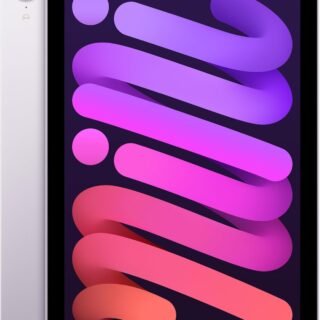 Apple iPad mini (A17 Pro): Apple Intelligence, 8.3-inch Liquid Retina Display, 256GB, Wi-Fi 6E, 12MP Front/12MP Back Camera, Touch ID, All-Day Battery Life — Purple
-
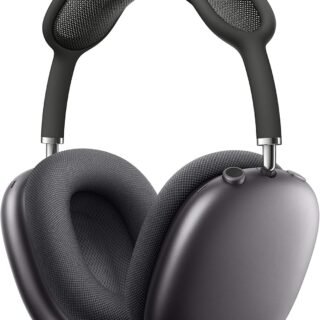 Apple AirPods Max Wireless Over-Ear Headphones, Active Noise Cancelling, Transparency Mode, Personalized Spatial Audio, Dolby Atmos, Bluetooth Headphones for iPhone – Space Gray
-
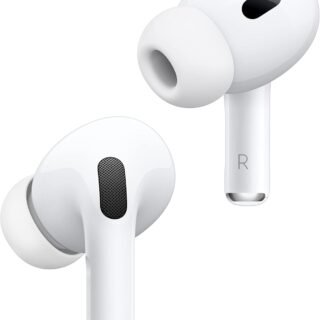 Apple AirPods Pro 2 Wireless Earbuds, Active Noise Cancellation, Hearing Aid Feature, Bluetooth Headphones, Transparency, Personalized Spatial Audio, High-Fidelity Sound, H2 Chip, USB-C Charging
-
Leo Creation 144 TC Cotton Double Jaipuri Prints Flat Bedsheet(Pack of 1, Blue, Gree, Red, Grey, Light Grey)
Original price was: ₹2,999.00.₹329.00Current price is: ₹329.00.
Leave a Reply