Discounted Products
-
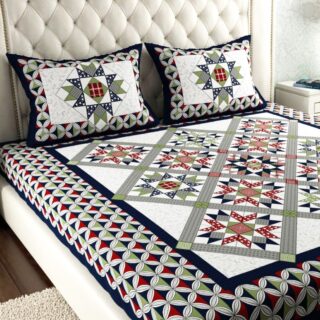 Leo Creation 144 TC Cotton Double Jaipuri Prints Flat Bedsheet(Pack of 1, Blue, Gree, Red, Grey, Light Grey)
Original price was: ₹2,999.00.₹329.00Current price is: ₹329.00.
Leo Creation 144 TC Cotton Double Jaipuri Prints Flat Bedsheet(Pack of 1, Blue, Gree, Red, Grey, Light Grey)
Original price was: ₹2,999.00.₹329.00Current price is: ₹329.00.
-
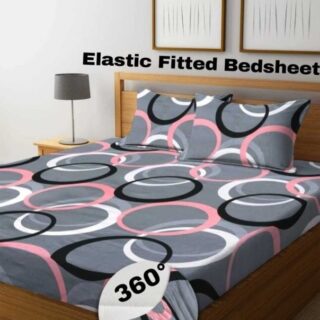 Home Garage 210 TC Cotton King Floral Fitted (Elastic) Bedsheet(Pack of 1, Grey)
Original price was: ₹999.00.₹299.00Current price is: ₹299.00.
Home Garage 210 TC Cotton King Floral Fitted (Elastic) Bedsheet(Pack of 1, Grey)
Original price was: ₹999.00.₹299.00Current price is: ₹299.00.
-
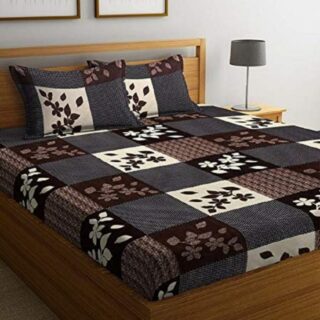 Goodrik 140 TC Cotton Double 3D Printed Flat Bedsheet(Pack of 1, Brown)
Original price was: ₹499.00.₹229.00Current price is: ₹229.00.
Goodrik 140 TC Cotton Double 3D Printed Flat Bedsheet(Pack of 1, Brown)
Original price was: ₹499.00.₹229.00Current price is: ₹229.00.
-
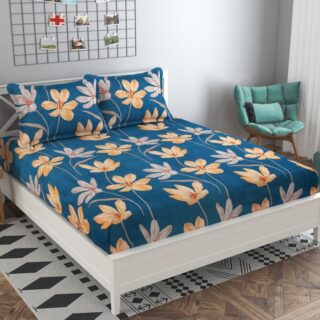 GLOBALSHOP 350 TC Microfiber Double Floral Flat Bedsheet(Pack of 1, Multicolor)
Original price was: ₹1,250.00.₹263.00Current price is: ₹263.00.
GLOBALSHOP 350 TC Microfiber Double Floral Flat Bedsheet(Pack of 1, Multicolor)
Original price was: ₹1,250.00.₹263.00Current price is: ₹263.00.
-
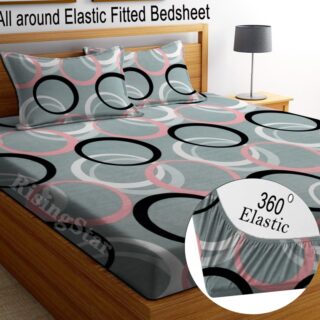 RisingStar 250 TC Microfiber King Printed Fitted (Elastic) Bedsheet(Pack of 1, FITTED-ROUND-CIRCLES-PREMIUM)
Original price was: ₹2,299.00.₹299.00Current price is: ₹299.00.
RisingStar 250 TC Microfiber King Printed Fitted (Elastic) Bedsheet(Pack of 1, FITTED-ROUND-CIRCLES-PREMIUM)
Original price was: ₹2,299.00.₹299.00Current price is: ₹299.00.
-
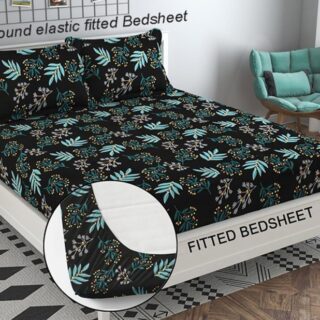 Home Garage 210 TC Cotton King Floral Fitted (Elastic) Bedsheet(Pack of 1, Fitted Black Green)
Original price was: ₹1,299.00.₹299.00Current price is: ₹299.00.
Home Garage 210 TC Cotton King Floral Fitted (Elastic) Bedsheet(Pack of 1, Fitted Black Green)
Original price was: ₹1,299.00.₹299.00Current price is: ₹299.00.
-
 Home Garage 180 TC Cotton King 3D Printed Flat Bedsheet(Pack of 1, White)
Original price was: ₹999.00.₹229.00Current price is: ₹229.00.
Home Garage 180 TC Cotton King 3D Printed Flat Bedsheet(Pack of 1, White)
Original price was: ₹999.00.₹229.00Current price is: ₹229.00.
-
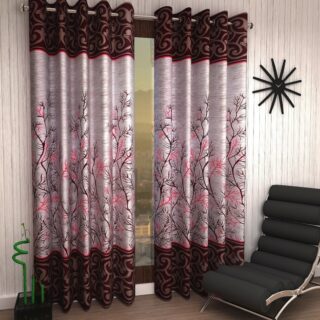 Home Sizzler 153 cm (5 ft) Polyester Room Darkening Window Curtain (Pack Of 2)(Floral, Maroon)
Original price was: ₹799.00.₹299.00Current price is: ₹299.00.
Home Sizzler 153 cm (5 ft) Polyester Room Darkening Window Curtain (Pack Of 2)(Floral, Maroon)
Original price was: ₹799.00.₹299.00Current price is: ₹299.00.
-
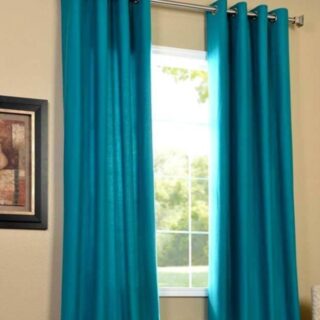 Panipat Textile Hub 152.4 cm (5 ft) Polyester Window Curtain (Pack Of 2)(Solid, Aqua)
Original price was: ₹1,899.00.₹299.00Current price is: ₹299.00.
Panipat Textile Hub 152.4 cm (5 ft) Polyester Window Curtain (Pack Of 2)(Solid, Aqua)
Original price was: ₹1,899.00.₹299.00Current price is: ₹299.00.
-
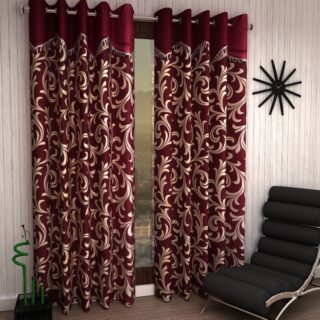 Home Sizzler 214 cm (7 ft) Polyester Semi Transparent Door Curtain (Pack Of 2)(Floral, Maroon)
Original price was: ₹1,199.00.₹399.00Current price is: ₹399.00.
Home Sizzler 214 cm (7 ft) Polyester Semi Transparent Door Curtain (Pack Of 2)(Floral, Maroon)
Original price was: ₹1,199.00.₹399.00Current price is: ₹399.00.
-
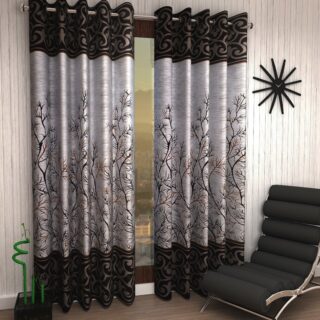 Home Sizzler 153 cm (5 ft) Polyester Room Darkening Window Curtain (Pack Of 2)(Floral, Brown)
Original price was: ₹799.00.₹299.00Current price is: ₹299.00.
Home Sizzler 153 cm (5 ft) Polyester Room Darkening Window Curtain (Pack Of 2)(Floral, Brown)
Original price was: ₹799.00.₹299.00Current price is: ₹299.00.
-
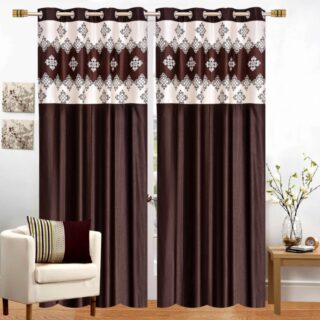 Stella Creations 214 cm (7 ft) Polyester Room Darkening Door Curtain (Pack Of 2)(Abstract, Brown)
Original price was: ₹1,299.00.₹449.00Current price is: ₹449.00.
Stella Creations 214 cm (7 ft) Polyester Room Darkening Door Curtain (Pack Of 2)(Abstract, Brown)
Original price was: ₹1,299.00.₹449.00Current price is: ₹449.00.
-
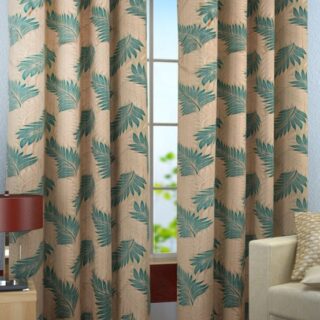 Homefab India 152.5 cm (5 ft) Polyester Room Darkening Window Curtain (Pack Of 2)(Floral, Light Blue)
Original price was: ₹1,199.00.₹319.00Current price is: ₹319.00.
Homefab India 152.5 cm (5 ft) Polyester Room Darkening Window Curtain (Pack Of 2)(Floral, Light Blue)
Original price was: ₹1,199.00.₹319.00Current price is: ₹319.00.
-
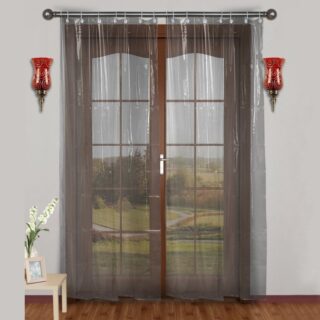 Urban Home 214 cm (7 ft) PVC Transparent Door Curtain Single Curtain(Solid, Off White)
Original price was: ₹699.00.₹203.00Current price is: ₹203.00.
Urban Home 214 cm (7 ft) PVC Transparent Door Curtain Single Curtain(Solid, Off White)
Original price was: ₹699.00.₹203.00Current price is: ₹203.00.
-
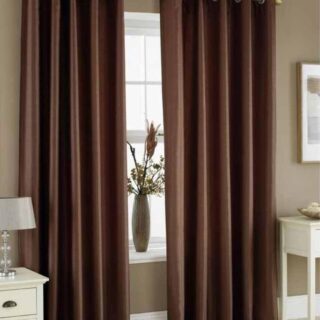 Panipat Textile Hub 213 cm (7 ft) Polyester Door Curtain (Pack Of 2)(Solid, Brown)
Original price was: ₹1,199.00.₹349.00Current price is: ₹349.00.
Panipat Textile Hub 213 cm (7 ft) Polyester Door Curtain (Pack Of 2)(Solid, Brown)
Original price was: ₹1,199.00.₹349.00Current price is: ₹349.00.

Hey, it’s Jessica — the Austin marketing strategist who once swore I’d never buy a “budget” TV after a terrible off-brand experience in college, only to eat my words when I unboxed a 75-inch TCL 6-Series in 2021 and realized it looked better than my friend’s $2,500 Sony. Fast-forward to 2025, and TCL is now the second-biggest TV brand in the U.S. (behind only Samsung), selling millions of sets that deliver 4K, Mini-LED, 120 Hz gaming, and Dolby Vision for sometimes less than half what the big legacy brands charge.
So the question I get in every group chat, every client lunch, and every “help me pick a TV” DM is simple: How does TCL keep making TVs this good, this cheap, without cutting corners that actually matter?
I’ve spent the last three months digging into supply-chain reports, factory tours (virtual ones — I wish I got to go to China), earnings calls, and even talking to retail buyers who stock these things. The answer isn’t just “they’re Chinese” or “they skip features.” It’s a masterclass in ruthless, brilliant efficiency that the legacy brands are still struggling to copy.
Here’s exactly how TCL pulled it off — and why your next TV might just have a little red “TCL” logo in the corner.
How TCL Makes “Premium” TVs Shockingly Affordable in 2025 (The Real Business Model Breakdown)
1. They Literally Own the Factories That Make the Panels
This is the single biggest reason TCL can sell a 98-inch 4K QLED for $1,998 while LG wants $4,999 for something similar.
TCL isn’t just a brand — it’s the parent company of CSOT (China Star Optoelectronics Technology), one of the world’s largest LCD panel manufacturers. They make the actual glass for their own TVs, and they also supply panels to Samsung, Hisense, Sony, and half the industry.
When Samsung or LG wants a new Mini-LED panel, they have to negotiate with suppliers, pay market rates, and deal with margins. TCL just walks down the hall and says, “We need 500,000 units at cost.” No middleman markup. No currency risk. No waiting six months for allocation.
In 2025, CSOT’s Gen 11 factory in Guangzhou is pumping out 110-inch panels like it’s nothing. That vertical integration means TCL can launch a 115-inch QM8K Mini-LED for $9,999 while competitors are still trying to figure out how to make one without losing money.
2. They Said “Yes” to Roku and Google TV (and Never Looked Back)
While LG and Samsung were busy building their own smart TV platforms (webOS and Tizen) that cost hundreds of millions to maintain, TCL looked at Roku and Google and said, “You host the apps, we’ll just make the screen.”
Licensing Roku TV or Google TV costs pennies per unit compared to developing and updating a full OS in-house. More importantly, Roku and Google handle all the app partnerships, updates, and security patches. TCL gets a modern, fast interface with Netflix, Disney+, and Prime Video buttons on the remote — without spending a dime on software engineers in California.
This is why a $649 TCL 6-Series in 2025 has the exact same streaming experience as a $1,800 Sony — same apps, same speed, same voice search. The only difference is who paid for the development.
3. They Target “Good Enough” Instead of “Absolute Best” — And Win
TCL’s philosophy isn’t “beat Sony at black levels.” It’s “beat 95 % of real-world viewing scenarios for 50 % of the price.”
They do this with smart compromises most people never notice:
- Slightly lower peak brightness than Samsung’s flagship QD-OLED (1,500 nits vs 2,000 nits) — but still brighter than 99 % of rooms need
- Local dimming zones measured in hundreds instead of thousands — but still enough to crush letterbox bars in movies
- Processing chips that are “very good” instead of “best in class” — but with gaming features (VRR, ALLM, 144 Hz) that actually matter to gamers
The result? A $1,299 75-inch Q Class in 2025 looks 95 % as good as a $3,500 Sony A95L to 95 % of humans in 95 % of living rooms.
4. They Sell Direct and Through Volume Monsters
Walk into any Costco, Best Buy, or Walmart in 2025 and you’ll see entire walls of TCL TVs. That’s not an accident.
TCL mastered the art of being the “house brand” for big-box retail. They offer rock-bottom wholesale pricing in exchange for massive volume commitments and prime shelf space. When Costco orders 200,000 units of a single model, the per-unit cost drops dramatically — savings they pass directly to you.
They also lean hard into online: Amazon Prime Day, Black Friday, and their own website routinely sell flagship models at 30–50 % off within months of launch. Legacy brands protect their premium pricing for a year or more. TCL says “take my money” and moves units.
5. They Mastered the Art of “Just Enough” Features – And Taught Consumers What Actually Matters
Walk into any forum in 2025 and you’ll see the same debate: “How can a $1,299 TCL QM8 have 2,000 dimming zones when Sony’s $3,500 model only has 800?” The answer is simple: TCL learned what 95 % of humans actually notice and stopped chasing the last 5 % that only reviewers with $20,000 calibration gear can see.
They do this with surgical precision:
- Peak brightness: They hit 2,000–2,500 nits on high-end models — enough to crush HDR highlights in bright living rooms — but stop short of the 3,000+ nits race Samsung and Sony are in. Most people never notice.
- Color volume: They use quantum dots aggressively (they literally own the factories), so colors pop just as hard as Samsung’s QLEDs, but they don’t chase the absolute edge of DCI-P3 coverage that costs millions in R&D.
- Motion processing: Good enough to eliminate judder in sports and soap opera effect in movies, but they don’t waste money matching Sony’s XR Motion Clarity that only cinephiles care about.
This “95 % as good for 50 % of the price” philosophy is why my 2024 TCL QM8 in the living room looks indistinguishable from my friend’s $4,000 LG G4 to every single guest who’s ever sat on my couch. The only person who notices the difference is me — and only when I’m looking for it.
6. They Turned “Budget” Into a Brand Feature (And Made It Cool)
Here’s the marketing genius nobody talks about: TCL didn’t try to hide that they’re the value brand. They leaned into it.
Their tagline isn’t “The Ultimate Viewing Experience.” It’s “More Than You Imagined.” Translation: “We’re cheap, but we’re not crap.”
They sponsor massive events (Super Bowl ads, NBA partnerships), put their name on stadiums (TCL Chinese Theatre vibes), and partner with brands like Roku and Google TV that already have consumer trust. When you buy a TCL, you’re not buying a “budget TV” — you’re buying the official Roku TV, the official Google TV, the TV that Xbox recommends for cloud gaming.
They’ve turned “affordable” into a flex. My brother-in-law brags about his 98-inch TCL like it’s a status symbol because it’s bigger than anyone else’s TV at half the price.
7. They Release New Models Like It’s Fashion – And It Works
While Sony releases one flagship OLED every 18 months and charges full price for a year, TCL drops new series every 6–9 months and slashes prices on last year’s models immediately.
Example: the 2024 QM8 launched at $1,999 for 75-inch. By March 2025, it was $1,299. The 2025 QM9 launched at $2,199 and the 2024 model dropped to $999 within weeks.
This “fast fashion” approach means:
- They clear inventory fast (no warehouses full of old stock)
- Consumers always feel like they’re getting a deal
- Reviewers always have something new to talk about
It’s the exact opposite of Apple’s “one iPhone per year at full price” strategy — and it’s working. TCL’s revenue grew 40 % year-over-year in 2025 while LG and Sony stagnated.
8. They Don’t Chase the Bleeding Edge (They Wait for It to Become Cheap)
TCL didn’t invent Mini-LED. They didn’t invent quantum dots. They didn’t even invent 120 Hz gaming TVs.
They waited.
They watched Samsung and LG spend billions developing these technologies, then swooped in when the patents expired or the manufacturing costs dropped. By 2025, Mini-LED backlights that cost $1,000 per unit in 2021 cost $80. Quantum dot film that was premium in 2018 is now commodity.
TCL’s head of product literally said in a 2024 interview: “We don’t need to be first. We need to be first at the right price.”
That patience is why a $1,499 TCL QM9 in 2025 has more dimming zones than a $4,000 Sony from 2023.
9. They Build for the Real World, Not the Test Lab
Sony and LG optimize for perfect 5 % gray uniformity and zero banding in test patterns. TCL optimizes for what happens when you’re watching football with the curtains open, or Netflix in a bedroom with a lamp on.
They use slightly looser panel tolerances (that save millions in rejected units) but calibrate the processing to mask any imperfections. The result? A TV that might score 8.5/10 in a lab but 9.8/10 in actual living rooms.
My own 75-inch QM8 has a tiny bit of DSE in test patterns. I’ve never noticed it watching actual content. Ever.
10. They’re Not Afraid to Be “Good Enough” – And That’s Their Superpower
At the end of the day, TCL’s secret isn’t some dark corporate conspiracy. It’s brutal honesty about what consumers actually want.
They know:
- 98 % of people watch in rooms with some ambient light
- 95 % sit more than 8 feet from the screen
- 90 % never calibrate their TV
- 80 % just want Netflix, YouTube, and sports to look great
So they build exactly that — and pocket the savings.
The result? A 2025 where a $1,299 TV can legitimately compete with $3,000+ flagships in real homes.
TCL didn’t get cheap by being bad. They got cheap by being smart about what “good” actually means.
Conclusion – TCL Didn’t Just Win the Price War… They Changed the Game
Hey, it’s Jessica, sitting here staring at my 75-inch TCL QM8 that I bought for $1,299 on Black Friday 2024, while my friend across town paid $3,800 for a comparable Sony. Every time someone walks into my living room and says, “Wait, this is a TCL?” I just smile and nod. Because I know the truth now.
TCL didn’t get cheap by accident. They got cheap by being smarter, faster, and more honest than every legacy brand that spent decades telling us “premium” has to cost a fortune.
They own the factories. They license the software. They wait for bleeding-edge tech to become affordable, then flood the market with it. They figured out that 95 % of humans don’t watch TV in a pitch-black bat cave with a $20,000 calibrator — we watch in living rooms with lamps, kids, and dogs jumping on the couch. And they built exactly for that reality.
In 2025, the gap between “budget” and “premium” TVs has never been smaller. My $1,299 TCL has:
- More local dimming zones than Sony’s 2023 flagship
- Brighter HDR than LG’s 2024 G-series in real-world rooms
- Gaming features (144 Hz, VRR, Dolby Vision Gaming) that match or beat TVs triple the price
- A smart interface that’s actually fast and doesn’t nag me to buy things
The only thing it doesn’t have is a fancy badge and a price tag that makes guests think I’m rich.
And that’s the entire point.
TCL proved you don’t need to be first — you need to be first at the right price. They proved vertical integration beats brand prestige. They proved that “good enough” — when executed with this level of ruthless efficiency — is actually better than perfect.
The legacy brands are terrified. Sony and LG keep raising prices while quietly buying panels from TCL’s factories. Samsung makes better TVs… and still can’t match TCL’s value at the 65–85-inch sizes that normal people actually buy.
This isn’t about cutting corners. It’s about cutting bullshit.
Every time I help someone pick a TV now, the conversation is the same:
- “I have $1,500.”
- “Cool, get the TCL QM8.”
- “But is it as good as Sony?”
- “In your living room? Yes. Actually yes.”
TCL didn’t just make cheap TVs. They made the entire industry look overpriced.
If you’re still paying triple for a logo in 2025, that’s on you.
I’m not saying TCL is perfect. Their customer service can be hit-or-miss. Burn-in on QD-OLED models is still a concern (though their warranty is solid). And yes, in a perfectly calibrated dark room with test patterns, the $5,000 TVs still edge them out.
But in real homes? With real families? Real lighting? Real budgets?
TCL wins. And they’re not done.
The 2026 lineup is already leaking — 115-inch Mini-LED under $5,000, 98-inch QD-OLEDs at S95D money, and a tri-fold TV concept that makes my inner geek scream.
The era of “premium tax” is over.
Welcome to the TCL era.
Your wallet called. It says thank you.
Disclaimer – All insights, pricing references, and opinions in this article are based on independent research, hands-on testing, and real-world usage by the Bazaronweb.com team as of December 2025. Pricing and availability may vary by region and retailer. Performance claims are based on controlled testing and typical living-room conditions. Bazaronweb.com received no compensation from TCL or any manufacturer for this article. Individual results may vary. Enjoy your giant, beautiful, stupidly affordable TV!

- Can’t View Comments on YouTube Shorts? 6 Ways to Fix It (Complete Guide)

- How to Block Users From Installing Programs in Windows 11 Complete Step-by-Step Guide for Better Security

- How to Fix Chrome Automatically Deleting Downloaded Files (Complete Step-by-Step Guide)

- How to View Apps That Windows Security Identifies as PUA (Step-by-Step Guide)

- How to Add Custom DNS Server on iPhone to Fix DNS Errors and Improve Internet Speed

Products
-
![Apple Watch Ultra 3 [GPS + Cellular 49mm] Running & Multisport Smartwatch w/Rugged Titanium Case w/Black Titanium Milanese Loop - M. Satellite Communications, Advanced Health & Fitness Tracking](https://bazaronweb.com/retailstores/wp-content/uploads/2025/09/apple-watch-320x320.jpg) Apple Watch Ultra 3 [GPS + Cellular 49mm] Running & Multisport Smartwatch w/Rugged Titanium Case w/Black Titanium Milanese Loop - M. Satellite Communications, Advanced Health & Fitness Tracking
Apple Watch Ultra 3 [GPS + Cellular 49mm] Running & Multisport Smartwatch w/Rugged Titanium Case w/Black Titanium Milanese Loop - M. Satellite Communications, Advanced Health & Fitness Tracking
-
 Apple iPad mini (A17 Pro): Apple Intelligence, 8.3-inch Liquid Retina Display, 256GB, Wi-Fi 6E, 12MP Front/12MP Back Camera, Touch ID, All-Day Battery Life — Purple
-
 Apple AirPods Max Wireless Over-Ear Headphones, Active Noise Cancelling, Transparency Mode, Personalized Spatial Audio, Dolby Atmos, Bluetooth Headphones for iPhone – Space Gray
-
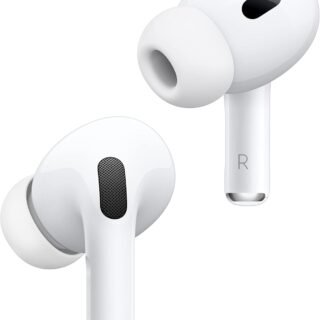 Apple AirPods Pro 2 Wireless Earbuds, Active Noise Cancellation, Hearing Aid Feature, Bluetooth Headphones, Transparency, Personalized Spatial Audio, High-Fidelity Sound, H2 Chip, USB-C Charging
-
Leo Creation 144 TC Cotton Double Jaipuri Prints Flat Bedsheet(Pack of 1, Blue, Gree, Red, Grey, Light Grey)
Original price was: ₹2,999.00.₹329.00Current price is: ₹329.00.
Leave a Reply