Discounted Products
-
 Leo Creation 144 TC Cotton Double Jaipuri Prints Flat Bedsheet(Pack of 1, Blue, Gree, Red, Grey, Light Grey)
Original price was: ₹2,999.00.₹329.00Current price is: ₹329.00.
Leo Creation 144 TC Cotton Double Jaipuri Prints Flat Bedsheet(Pack of 1, Blue, Gree, Red, Grey, Light Grey)
Original price was: ₹2,999.00.₹329.00Current price is: ₹329.00.
-
 Home Garage 210 TC Cotton King Floral Fitted (Elastic) Bedsheet(Pack of 1, Grey)
Original price was: ₹999.00.₹299.00Current price is: ₹299.00.
Home Garage 210 TC Cotton King Floral Fitted (Elastic) Bedsheet(Pack of 1, Grey)
Original price was: ₹999.00.₹299.00Current price is: ₹299.00.
-
 Goodrik 140 TC Cotton Double 3D Printed Flat Bedsheet(Pack of 1, Brown)
Original price was: ₹499.00.₹229.00Current price is: ₹229.00.
Goodrik 140 TC Cotton Double 3D Printed Flat Bedsheet(Pack of 1, Brown)
Original price was: ₹499.00.₹229.00Current price is: ₹229.00.
-
 GLOBALSHOP 350 TC Microfiber Double Floral Flat Bedsheet(Pack of 1, Multicolor)
Original price was: ₹1,250.00.₹263.00Current price is: ₹263.00.
GLOBALSHOP 350 TC Microfiber Double Floral Flat Bedsheet(Pack of 1, Multicolor)
Original price was: ₹1,250.00.₹263.00Current price is: ₹263.00.
-
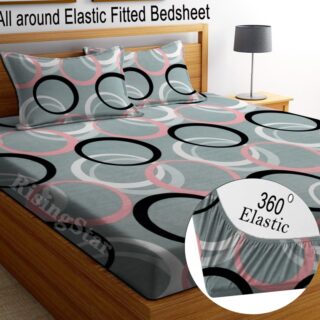 RisingStar 250 TC Microfiber King Printed Fitted (Elastic) Bedsheet(Pack of 1, FITTED-ROUND-CIRCLES-PREMIUM)
Original price was: ₹2,299.00.₹299.00Current price is: ₹299.00.
RisingStar 250 TC Microfiber King Printed Fitted (Elastic) Bedsheet(Pack of 1, FITTED-ROUND-CIRCLES-PREMIUM)
Original price was: ₹2,299.00.₹299.00Current price is: ₹299.00.
-
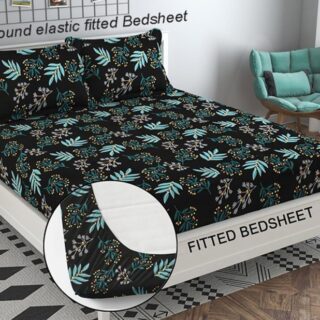 Home Garage 210 TC Cotton King Floral Fitted (Elastic) Bedsheet(Pack of 1, Fitted Black Green)
Original price was: ₹1,299.00.₹299.00Current price is: ₹299.00.
Home Garage 210 TC Cotton King Floral Fitted (Elastic) Bedsheet(Pack of 1, Fitted Black Green)
Original price was: ₹1,299.00.₹299.00Current price is: ₹299.00.
-
 Home Garage 180 TC Cotton King 3D Printed Flat Bedsheet(Pack of 1, White)
Original price was: ₹999.00.₹229.00Current price is: ₹229.00.
Home Garage 180 TC Cotton King 3D Printed Flat Bedsheet(Pack of 1, White)
Original price was: ₹999.00.₹229.00Current price is: ₹229.00.
-
 Home Sizzler 153 cm (5 ft) Polyester Room Darkening Window Curtain (Pack Of 2)(Floral, Maroon)
Original price was: ₹799.00.₹299.00Current price is: ₹299.00.
Home Sizzler 153 cm (5 ft) Polyester Room Darkening Window Curtain (Pack Of 2)(Floral, Maroon)
Original price was: ₹799.00.₹299.00Current price is: ₹299.00.
-
 Panipat Textile Hub 152.4 cm (5 ft) Polyester Window Curtain (Pack Of 2)(Solid, Aqua)
Original price was: ₹1,899.00.₹299.00Current price is: ₹299.00.
Panipat Textile Hub 152.4 cm (5 ft) Polyester Window Curtain (Pack Of 2)(Solid, Aqua)
Original price was: ₹1,899.00.₹299.00Current price is: ₹299.00.
-
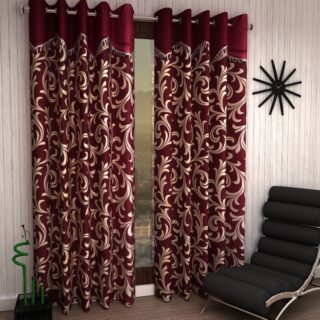 Home Sizzler 214 cm (7 ft) Polyester Semi Transparent Door Curtain (Pack Of 2)(Floral, Maroon)
Original price was: ₹1,199.00.₹399.00Current price is: ₹399.00.
Home Sizzler 214 cm (7 ft) Polyester Semi Transparent Door Curtain (Pack Of 2)(Floral, Maroon)
Original price was: ₹1,199.00.₹399.00Current price is: ₹399.00.
-
 Home Sizzler 153 cm (5 ft) Polyester Room Darkening Window Curtain (Pack Of 2)(Floral, Brown)
Original price was: ₹799.00.₹299.00Current price is: ₹299.00.
Home Sizzler 153 cm (5 ft) Polyester Room Darkening Window Curtain (Pack Of 2)(Floral, Brown)
Original price was: ₹799.00.₹299.00Current price is: ₹299.00.
-
 Stella Creations 214 cm (7 ft) Polyester Room Darkening Door Curtain (Pack Of 2)(Abstract, Brown)
Original price was: ₹1,299.00.₹449.00Current price is: ₹449.00.
Stella Creations 214 cm (7 ft) Polyester Room Darkening Door Curtain (Pack Of 2)(Abstract, Brown)
Original price was: ₹1,299.00.₹449.00Current price is: ₹449.00.
-
 Homefab India 152.5 cm (5 ft) Polyester Room Darkening Window Curtain (Pack Of 2)(Floral, Light Blue)
Original price was: ₹1,199.00.₹319.00Current price is: ₹319.00.
Homefab India 152.5 cm (5 ft) Polyester Room Darkening Window Curtain (Pack Of 2)(Floral, Light Blue)
Original price was: ₹1,199.00.₹319.00Current price is: ₹319.00.
-
 Urban Home 214 cm (7 ft) PVC Transparent Door Curtain Single Curtain(Solid, Off White)
Original price was: ₹699.00.₹203.00Current price is: ₹203.00.
Urban Home 214 cm (7 ft) PVC Transparent Door Curtain Single Curtain(Solid, Off White)
Original price was: ₹699.00.₹203.00Current price is: ₹203.00.
-
 Panipat Textile Hub 213 cm (7 ft) Polyester Door Curtain (Pack Of 2)(Solid, Brown)
Original price was: ₹1,199.00.₹349.00Current price is: ₹349.00.
Panipat Textile Hub 213 cm (7 ft) Polyester Door Curtain (Pack Of 2)(Solid, Brown)
Original price was: ₹1,199.00.₹349.00Current price is: ₹349.00.
Hey, it’s Jessica. If your iPhone apps keep crashing—closing suddenly, freezing mid-task, or kicking you back to the home screen—you’re not alone. It’s one of those problems that feels random and frustrating. One moment you’re replying to a message or editing a photo, and the next the app disappears. You reopen it, it works for a minute… then crashes again. It makes your phone feel unreliable, even if everything else seems fine. The good news? App crashes almost always have a reason—and most of them are fixable without drastic measures.
App Crashes Are Usually System Conflicts, Not Hardware Failure
When apps crash, many people immediately assume their iPhone is “getting old” or damaged. In reality, crashes are usually caused by temporary conflicts between the app and iOS. Apps depend on system resources—memory, storage, network access, and background permissions. When something interrupts or overloads one of those areas, the app shuts down as a protective measure.
The crash isn’t random. It’s iOS preventing instability.
Low Available Storage Is a Major Trigger
One of the most common causes of app crashes is low free storage. Even if your iPhone isn’t fully full, running close to the limit restricts how iOS manages temporary files and memory swapping.
Apps need space to:
-
Cache data
-
Load media
-
Save temporary edits
-
Process content
When there’s not enough breathing room, the app may crash mid-operation. The phone isn’t broken—it’s constrained.
Outdated Apps Conflict With Updated iOS
After iOS updates, some apps lag behind. Developers need time to optimize their apps for new system changes. If you notice crashes right after a major iOS update, it’s often compatibility-related.
In these cases:
-
The app may not yet support the latest system behavior
-
Background processes may conflict
-
Permissions may need resetting
The solution isn’t always resetting your phone—it’s making sure apps are fully updated.
Background App Overload Strains Memory
iPhones are excellent at managing memory, but they aren’t unlimited. If you frequently switch between heavy apps—camera, social media, editing tools, streaming apps—memory pressure increases.
When RAM is stretched thin, iOS prioritizes system stability. Instead of slowing everything down, it simply closes the app that’s under strain.
From the user’s perspective, it feels like a crash. From the system’s perspective, it’s cleanup.
Corrupted App Cache or Data
Apps build cache over time to improve performance. But occasionally, that cache becomes corrupted—especially after updates or interrupted downloads.
Signs of corrupted cache:
-
App crashes immediately upon opening
-
Crashes during specific actions
-
Freezing during login
In these cases, reinstalling the app often resolves the issue completely.
Unstable Internet Can Cause App Failures
Apps that rely heavily on network access—banking, streaming, social media—may crash when network connections drop repeatedly.
If your Wi-Fi signal fluctuates or mobile data struggles, the app may fail to load required content and shut down.
This is especially common when:
-
Switching between Wi-Fi and cellular
-
Using VPN services
-
Traveling internationally
The crash isn’t the app malfunctioning—it’s the connection failing.
Battery Health Can Influence Stability
As battery health declines, iOS regulates peak performance to prevent shutdowns. During demanding tasks, this can cause apps to behave unpredictably—especially games or video editing apps.
While battery-related crashes aren’t the most common cause, they become more noticeable on older devices under heavy load.
Permissions and Privacy Conflicts
Sometimes apps crash because they don’t have the permissions they expect. For example:
-
Camera access denied
-
Location access blocked
-
Microphone disabled
If an app relies on a permission and suddenly loses it after an update, instability can occur.
Beta iOS Versions Increase Crash Frequency
If you’re using a beta version of iOS, crashes are far more common. Beta software is designed for testing, not stability. Apps may not be fully optimized yet.
Many people forget they installed a beta profile months ago and wonder why apps feel unstable.
When It’s Just One App vs. All Apps
This distinction matters.
If:
-
Only one app crashes → The issue is likely app-specific.
-
Multiple apps crash → The issue is likely system-wide (storage, memory, or iOS conflict).
Identifying this difference helps avoid unnecessary troubleshooting.
The Important Shift: Crashes Are Symptoms, Not Random Failures
The key realization for me was this: app crashes are signals. They indicate memory pressure, storage limitations, compatibility issues, or network instability.
Instead of asking:
“Why is my iPhone broken?”
Ask:
“What resource is this app missing?”
That shift changes everything.
Now let’s move from understanding the cause to actually fixing the crashes in a smart, controlled way.
1. Restart Your iPhone First (Yes, It Actually Helps)
Before changing settings or deleting apps, restart your iPhone.
Why this works:
-
Clears temporary memory
-
Stops stuck background processes
-
Resets minor system conflicts
If crashes stop after a restart, the issue was likely temporary memory pressure or a stalled background task. This is the fastest and least invasive fix.
2. Update the Crashing App Immediately
Go to the App Store and check for updates.
Developers constantly release:
-
Bug fixes
-
iOS compatibility patches
-
Performance improvements
If crashes began after an iOS update, an app update often resolves the conflict within days. Running outdated apps on updated iOS is one of the most common crash triggers.
3. Free Up Storage (Even If You’re Not “Full”)
If your storage is above 80–85% usage, crashes become more common.
To improve stability:
-
Delete unused apps
-
Remove large downloads
-
Clear old videos or screen recordings
-
Empty “Recently Deleted” photos
iOS needs working space for temporary files. Even freeing 5–10 GB can dramatically reduce instability.
4. Reinstall the Problem App
If one specific app keeps crashing:
-
Delete the app
-
Restart your iPhone
-
Reinstall it fresh
This clears corrupted cache and resets internal data structures. Many persistent crashes disappear completely after reinstalling.
5. Check Background App Refresh
Too many apps refreshing in the background increases memory pressure.
To manage:
-
Go to Settings → General → Background App Refresh
-
Disable for non-essential apps
This reduces system load and prevents overlapping processes that can trigger crashes.
6. Check Battery Health (For Older iPhones)
If your iPhone is several years old:
-
Go to Settings → Battery → Battery Health & Charging
-
Check Maximum Capacity
If battery health is significantly degraded (e.g., below 80%), performance regulation may impact heavy apps. In these cases, battery replacement often restores stability more than any software fix.
7. Reset Network Settings (If Crashes Are Network-Based)
If apps crash mainly during login or loading screens, network instability could be the cause.
Try:
Settings → General → Transfer or Reset iPhone → Reset → Reset Network Settings
This clears Wi-Fi, Bluetooth, and cellular configurations without deleting personal data.
8. Check for iOS Updates
If multiple apps crash, the issue may be system-level.
Go to:
Settings → General → Software Update
Apple frequently releases minor updates that fix stability bugs.
Running outdated iOS can cause widespread app instability.
9. Avoid Using Low Power Mode During Heavy Tasks
Low Power Mode reduces background processes and CPU performance. While useful for battery life, it can make demanding apps unstable.
If crashes occur during gaming, editing, or multitasking, turn off Low Power Mode temporarily.
10. When to Consider a Full Reset
Only consider a full reset if:
-
Multiple apps crash constantly
-
System apps (Settings, Messages) crash
-
All other steps fail
Before resetting:
-
Back up to iCloud or Mac
-
Restore as new (if possible) instead of restoring corrupted backups
This is rarely necessary—but sometimes helpful if system files are deeply conflicted.
How to Prevent Future App Crashes
Here’s what keeps iPhones stable long-term:
-
Keep at least 10–15% storage free
-
Update apps regularly
-
Restart occasionally
-
Limit unnecessary background refresh
-
Avoid installing unused apps
-
Keep iOS updated
App crashes usually come from system strain—not hardware damage.
Conclusion
When iPhone apps keep crashing, it doesn’t mean your device is failing. Most crashes are caused by low storage, memory pressure, outdated apps, corrupted cache, or network instability. iOS prioritizes stability, and when resources run low, it closes apps to protect the system. By managing storage, updating apps, reducing background load, and understanding how iOS allocates resources, you can restore stability without drastic measures. App crashes are signals—not disasters—and once you respond to the signal correctly, your iPhone returns to smooth performance.
Disclaimer
This article is for informational purposes only. App performance may vary depending on iPhone model, iOS version, battery health, storage capacity, and third-party app optimization.

- 7 Best Methods to Fix “Undoing Changes Made to Your PC” Error (Complete Guide)

- How to Turn On Spam Blocker on Android: Stop Unwanted Calls and Messages Easily

- Can’t View Comments on YouTube Shorts? 6 Ways to Fix It (Complete Guide)

- How to Block Users From Installing Programs in Windows 11 Complete Step-by-Step Guide for Better Security

- How to Fix Chrome Automatically Deleting Downloaded Files (Complete Step-by-Step Guide)

Products
-
![Apple Watch Ultra 3 [GPS + Cellular 49mm] Running & Multisport Smartwatch w/Rugged Titanium Case w/Black Titanium Milanese Loop - M. Satellite Communications, Advanced Health & Fitness Tracking](https://bazaronweb.com/retailstores/wp-content/uploads/2025/09/apple-watch-320x320.jpg) Apple Watch Ultra 3 [GPS + Cellular 49mm] Running & Multisport Smartwatch w/Rugged Titanium Case w/Black Titanium Milanese Loop - M. Satellite Communications, Advanced Health & Fitness Tracking
Apple Watch Ultra 3 [GPS + Cellular 49mm] Running & Multisport Smartwatch w/Rugged Titanium Case w/Black Titanium Milanese Loop - M. Satellite Communications, Advanced Health & Fitness Tracking
-
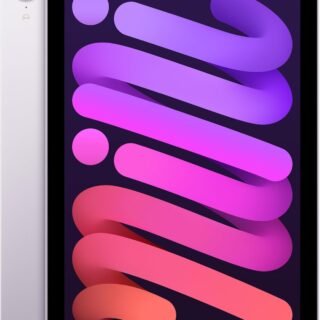 Apple iPad mini (A17 Pro): Apple Intelligence, 8.3-inch Liquid Retina Display, 256GB, Wi-Fi 6E, 12MP Front/12MP Back Camera, Touch ID, All-Day Battery Life — Purple
-
 Apple AirPods Max Wireless Over-Ear Headphones, Active Noise Cancelling, Transparency Mode, Personalized Spatial Audio, Dolby Atmos, Bluetooth Headphones for iPhone – Space Gray
-
 Apple AirPods Pro 2 Wireless Earbuds, Active Noise Cancellation, Hearing Aid Feature, Bluetooth Headphones, Transparency, Personalized Spatial Audio, High-Fidelity Sound, H2 Chip, USB-C Charging
-
Leo Creation 144 TC Cotton Double Jaipuri Prints Flat Bedsheet(Pack of 1, Blue, Gree, Red, Grey, Light Grey)
Original price was: ₹2,999.00.₹329.00Current price is: ₹329.00.
Leave a Reply