Discounted Products
-
 Home Garage 210 TC Cotton King Floral Fitted (Elastic) Bedsheet(Pack of 1, Grey)
Original price was: ₹999.00.₹299.00Current price is: ₹299.00.
Home Garage 210 TC Cotton King Floral Fitted (Elastic) Bedsheet(Pack of 1, Grey)
Original price was: ₹999.00.₹299.00Current price is: ₹299.00.
-
 Goodrik 140 TC Cotton Double 3D Printed Flat Bedsheet(Pack of 1, Brown)
Original price was: ₹499.00.₹229.00Current price is: ₹229.00.
Goodrik 140 TC Cotton Double 3D Printed Flat Bedsheet(Pack of 1, Brown)
Original price was: ₹499.00.₹229.00Current price is: ₹229.00.
-
 GLOBALSHOP 350 TC Microfiber Double Floral Flat Bedsheet(Pack of 1, Multicolor)
Original price was: ₹1,250.00.₹263.00Current price is: ₹263.00.
GLOBALSHOP 350 TC Microfiber Double Floral Flat Bedsheet(Pack of 1, Multicolor)
Original price was: ₹1,250.00.₹263.00Current price is: ₹263.00.
-
 RisingStar 250 TC Microfiber King Printed Fitted (Elastic) Bedsheet(Pack of 1, FITTED-ROUND-CIRCLES-PREMIUM)
Original price was: ₹2,299.00.₹299.00Current price is: ₹299.00.
RisingStar 250 TC Microfiber King Printed Fitted (Elastic) Bedsheet(Pack of 1, FITTED-ROUND-CIRCLES-PREMIUM)
Original price was: ₹2,299.00.₹299.00Current price is: ₹299.00.
-
 Home Garage 210 TC Cotton King Floral Fitted (Elastic) Bedsheet(Pack of 1, Fitted Black Green)
Original price was: ₹1,299.00.₹299.00Current price is: ₹299.00.
Home Garage 210 TC Cotton King Floral Fitted (Elastic) Bedsheet(Pack of 1, Fitted Black Green)
Original price was: ₹1,299.00.₹299.00Current price is: ₹299.00.
-
 Home Garage 180 TC Cotton King 3D Printed Flat Bedsheet(Pack of 1, White)
Original price was: ₹999.00.₹229.00Current price is: ₹229.00.
Home Garage 180 TC Cotton King 3D Printed Flat Bedsheet(Pack of 1, White)
Original price was: ₹999.00.₹229.00Current price is: ₹229.00.
-
 Panipat Textile Hub 152.4 cm (5 ft) Polyester Window Curtain (Pack Of 2)(Solid, Aqua)
Original price was: ₹1,899.00.₹299.00Current price is: ₹299.00.
Panipat Textile Hub 152.4 cm (5 ft) Polyester Window Curtain (Pack Of 2)(Solid, Aqua)
Original price was: ₹1,899.00.₹299.00Current price is: ₹299.00.
-
 Home Sizzler 214 cm (7 ft) Polyester Semi Transparent Door Curtain (Pack Of 2)(Floral, Maroon)
Original price was: ₹1,199.00.₹399.00Current price is: ₹399.00.
Home Sizzler 214 cm (7 ft) Polyester Semi Transparent Door Curtain (Pack Of 2)(Floral, Maroon)
Original price was: ₹1,199.00.₹399.00Current price is: ₹399.00.
-
 Home Sizzler 153 cm (5 ft) Polyester Room Darkening Window Curtain (Pack Of 2)(Floral, Brown)
Original price was: ₹799.00.₹299.00Current price is: ₹299.00.
Home Sizzler 153 cm (5 ft) Polyester Room Darkening Window Curtain (Pack Of 2)(Floral, Brown)
Original price was: ₹799.00.₹299.00Current price is: ₹299.00.
-
 Stella Creations 214 cm (7 ft) Polyester Room Darkening Door Curtain (Pack Of 2)(Abstract, Brown)
Original price was: ₹1,299.00.₹449.00Current price is: ₹449.00.
Stella Creations 214 cm (7 ft) Polyester Room Darkening Door Curtain (Pack Of 2)(Abstract, Brown)
Original price was: ₹1,299.00.₹449.00Current price is: ₹449.00.
-
 Homefab India 152.5 cm (5 ft) Polyester Room Darkening Window Curtain (Pack Of 2)(Floral, Light Blue)
Original price was: ₹1,199.00.₹319.00Current price is: ₹319.00.
Homefab India 152.5 cm (5 ft) Polyester Room Darkening Window Curtain (Pack Of 2)(Floral, Light Blue)
Original price was: ₹1,199.00.₹319.00Current price is: ₹319.00.
-
 Urban Home 214 cm (7 ft) PVC Transparent Door Curtain Single Curtain(Solid, Off White)
Original price was: ₹699.00.₹203.00Current price is: ₹203.00.
Urban Home 214 cm (7 ft) PVC Transparent Door Curtain Single Curtain(Solid, Off White)
Original price was: ₹699.00.₹203.00Current price is: ₹203.00.
-
 Panipat Textile Hub 213 cm (7 ft) Polyester Door Curtain (Pack Of 2)(Solid, Brown)
Original price was: ₹1,199.00.₹349.00Current price is: ₹349.00.
Panipat Textile Hub 213 cm (7 ft) Polyester Door Curtain (Pack Of 2)(Solid, Brown)
Original price was: ₹1,199.00.₹349.00Current price is: ₹349.00.
-
 Home Sizzler 214 cm (7 ft) Polyester Semi Transparent Door Curtain (Pack Of 2)(Floral, Brown)
Original price was: ₹999.00.₹349.00Current price is: ₹349.00.
Home Sizzler 214 cm (7 ft) Polyester Semi Transparent Door Curtain (Pack Of 2)(Floral, Brown)
Original price was: ₹999.00.₹349.00Current price is: ₹349.00.
-
 Panipat Textile Hub 213 cm (7 ft) Polyester Semi Transparent Door Curtain (Pack Of 2)(Floral, Brown)
Original price was: ₹899.00.₹299.00Current price is: ₹299.00.
Panipat Textile Hub 213 cm (7 ft) Polyester Semi Transparent Door Curtain (Pack Of 2)(Floral, Brown)
Original price was: ₹899.00.₹299.00Current price is: ₹299.00.
Android 17 Privacy Changes Explained: New Settings Every User Needs to Review for Maximum Protection
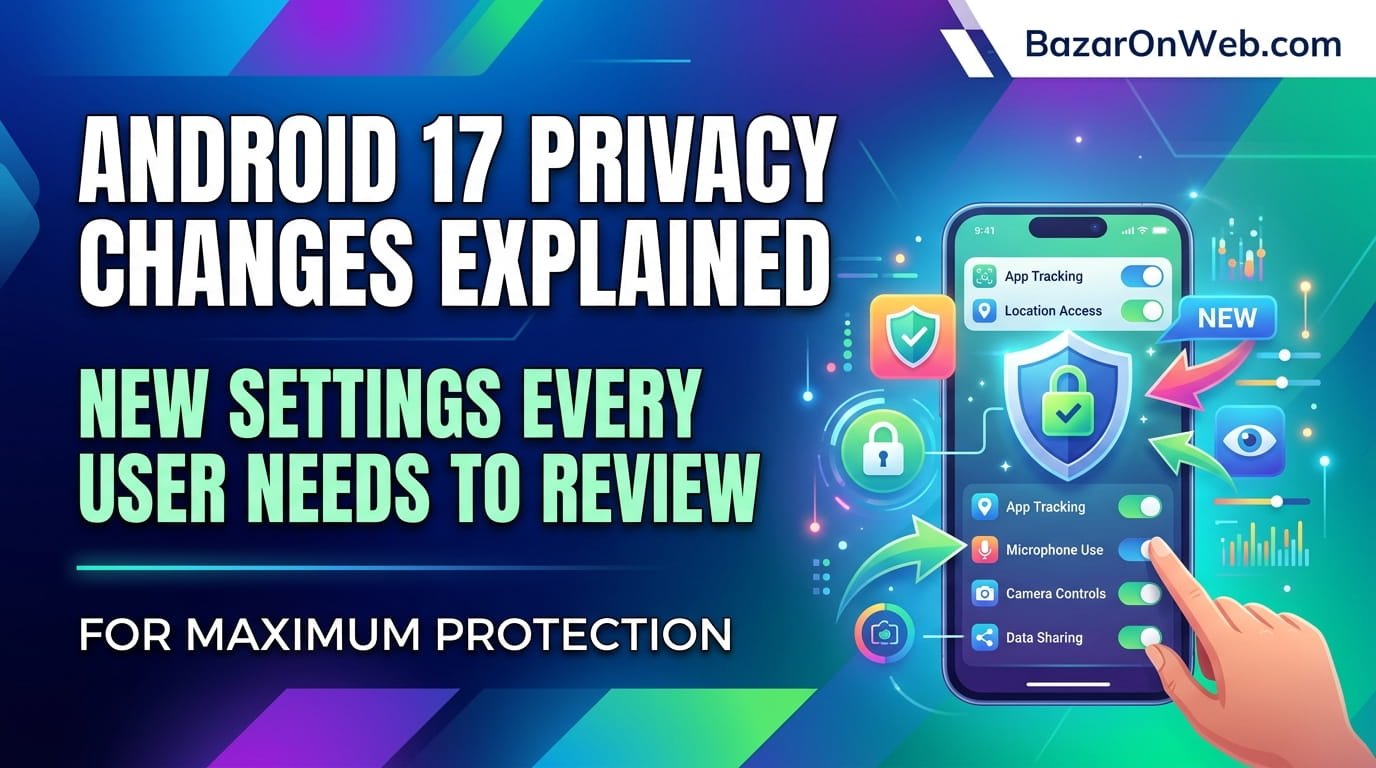
Android 17 Privacy Changes Explained: New Settings Every User Needs to Review for Maximum Protection
Introduction
Android 17 represents one of the most significant privacy overhauls Google has released in years, introducing features and settings that fundamentally change how your Android phone protects your personal information. When I first explored Android 17’s privacy features, I was impressed by how seriously Google is taking privacy concerns that users have voiced for years. However, I quickly realized that many of these powerful privacy improvements are buried in settings menus where most users will never discover them unless they actively search. This means millions of Android users will have access to these privacy protections without realizing it—similar to having a security system installed but never turning it on.
The frustrating reality is that Google’s privacy improvements require deliberate action to implement. Unlike some privacy protections that work automatically, Android 17’s most powerful privacy features need to be enabled, configured, and managed actively by users who understand what they do and why they matter. In this comprehensive guide, I’ll walk you through Android 17’s most important privacy changes, explain what each protection does, why it matters for your personal security, and exactly how to enable and configure each feature. I’ll help you understand which privacy settings apply to your specific situation and which deserve priority attention. By the end of this article, you’ll have reviewed and configured Android 17’s privacy settings to provide robust protection for your data, location, communications, and digital identity.
1. Understanding Android 17’s Privacy Philosophy: Why These Changes Matter
Android 17 represents Google’s response to years of privacy advocacy, regulatory pressure, and user complaints about data collection practices on Android devices. The underlying philosophy is that users should have granular control over what information apps access, when they can access it, and what they do with it. This represents a significant shift from previous Android versions where users had limited visibility into or control over app data access. Google’s approach in Android 17 focuses on transparency—showing users exactly what data apps are accessing and allowing precise control over permissions.
The changes in Android 17 reflect broader privacy concerns in the technology industry. Users increasingly understand that their location data, contact information, photo libraries, and communication history are valuable assets that deserve protection. Regulators worldwide have begun implementing privacy regulations requiring companies to give users meaningful control over personal data. Android 17 implements features addressing these regulatory requirements while also genuinely improving user privacy. Understanding that Android 17’s privacy changes aren’t merely cosmetic features but rather substantive protections against unwanted data access helps you appreciate why reviewing and configuring these settings matters. Apps that previously accessed your data without obvious indication now face restrictions and require explicit permission. Location data that previously transmitted continuously now respects your privacy preferences. Clipboard data that apps accessed freely without user awareness is now protected. These aren’t small tweaks—they represent fundamental changes in how Android protects your information.
2. Android 17’s Enhanced App Permissions System: Granular Control Over Data Access
Android 17 introduces the most sophisticated app permissions system Android has ever included, moving beyond simple yes/no permission approval to nuanced, context-aware permissions. Previously, granting an app permission meant giving it permanent access to that data type. Android 17 allows granting permission only while the app is actively being used, only once per session, or allowing permission for specific data subsets rather than entire categories. For example, you can grant a photo-editing app permission to access only specific photos you select rather than your entire photo library. You can grant location permission for the single journey home rather than permanent access.
To access these granular permissions, open Settings > Apps & notifications > App permissions. For each permission category—Location, Camera, Contacts, Files, Calendar, Photos, and others—you’ll see every app that has requested that permission. Tap any permission to see detailed information about which apps have access and at what scope. You can individually configure each app’s access level. Some apps display usage indicators showing when they accessed data, helping you identify suspicious access patterns. Additionally, Android 17 includes a permissions dashboard that shows comprehensive information about all apps accessing your data, how frequently they access it, and when access occurred. This transparency helps you identify apps that access sensitive data unexpectedly. The granular permission system represents a fundamental shift from trusting app developers to respect privacy to enforcing privacy through technical controls that prevent access regardless of developer intentions.
3. Location Privacy Enhancements: Precise Control Over Geographic Data
Location data is among the most sensitive personal information, revealing intimate details about your life including where you live, work, visit, and travel. Android 17 introduces sophisticated location privacy controls that give you unprecedented control over when and how apps access your location. Beyond the basic Location on/off toggle, Android 17 allows specifying approximate location instead of precise location for most apps. Approximate location provides accuracy to within several hundred meters, sufficient for most app functions like weather or local search results, without revealing your exact position. Open Settings > Location > App permissions > Location, then for each app, you can select “Allow only while using the app,” “Only this time,” or “Don’t allow.” Additionally, you can choose whether to share precise or approximate location with each app individually.
Android 17 introduces location history controls that prevent apps from accessing your historical location data even if you grant location permission. Previously, apps with location permission could often access where you’d been in the past. Android 17 separates location access (where you are now) from location history (where you’ve been). You can grant current location access while preventing history access. Furthermore, Android 17’s location timeline feature now requires explicit opt-in, and you can delete location history for specific time periods or locations. This is particularly valuable for privacy—you can delete location data from visiting sensitive locations like medical clinics, religious institutions, or political events without deleting your entire location history. The map view of location history now shows which apps accessed location data at specific times, helping you identify suspicious access patterns. These location privacy enhancements represent recognition that location data is incredibly sensitive and deserves protection beyond generic location permission controls.
4. Clipboard Privacy Protection: Preventing Apps from Monitoring Your Copied Data
One of Android 17’s most important but least visible privacy improvements is clipboard protection. Previously, apps could monitor your clipboard and access anything you copied—passwords, private messages, financial information, or sensitive URLs. This access happened silently without user awareness or indication, meaning apps could harvest sensitive information whenever you copied something. Android 17 prevents this invasive access through clipboard privacy controls that require explicit permission for apps to access clipboard data. Additionally, when apps access your clipboard, you receive notifications indicating which app accessed it and when, providing visibility into this previously-hidden behavior.
To configure clipboard privacy, open Settings > Privacy > Clipboard access. You’ll see a history of clipboard access attempts by all apps—this log shows exactly which apps tried to read your clipboard and when. From this screen, you can deny clipboard access to specific apps or revoke previous clipboard permission grants. For each app in your app list, you can individually configure whether it can access clipboard data. Most apps don’t need clipboard access, and many that request it do so for suspicious reasons. Revoking clipboard access for non-essential apps protects against information harvesting without impacting app functionality. Additionally, Android 17’s clipboard notification system alerts you whenever any app accesses your clipboard, helping you identify suspicious behavior immediately. If you see notifications of app clipboard access you didn’t authorize or expect, those notifications indicate potentially problematic apps. The clipboard protection in Android 17 represents a fundamental shift from allowing apps unrestricted access to data you work with to requiring permission and providing transparency when apps access sensitive information.
5. Camera and Microphone Access Indicators and Kill Switch Controls
Android 17 implements visual indicators that show when apps are using your camera or microphone, addressing a major privacy concern where apps could secretly record without user awareness. A small indicator appears in the status bar whenever camera or microphone access occurs, making it immediately visible when apps are using these sensors. Additionally, a more detailed indicator accessed through the notification shade shows which specific app is accessing camera or microphone, when it started accessing, and how long it’s been accessing. This transparency prevents apps from recording secretly—you’ll immediately notice if an app is accessing these sensors unexpectedly.
Beyond indicators, Android 17 includes a hardware-level camera and microphone kill switch accessible through Quick Settings. You can completely disable camera and microphone access system-wide, preventing all apps from accessing these sensors regardless of permissions granted. This is valuable when you want absolute assurance that no apps are using these sensors. Simply toggle “Camera off” or “Microphone off” in Quick Settings to implement this control. Unlike software-based permission denials that apps might attempt to circumvent, hardware-level kill switches physically prevent sensor access at the system level. You can enable these kill switches for specific time periods—perhaps disable camera and microphone when you’re not actively using them, then enable when needed. Additionally, per-app camera and microphone access can be revoked in Settings > Apps > Permissions > Camera or Microphone, allowing you to prevent specific apps from accessing these sensors while allowing others. These camera and microphone protections represent critical privacy controls preventing the most invasive form of surveillance—secret recording of your environment and conversations.
6. Android 17’s Private Spaces Feature: Isolated Protected Sections of Your Phone
Android 17 introduces Private Spaces, a revolutionary feature allowing you to create isolated, encrypted sections of your Android phone that require separate authentication to access. A Private Space is essentially a separate Android environment within your phone containing its own apps, data, contacts, and messages. You could create a Private Space containing apps and information you want completely separated from your main phone environment—perhaps messaging apps used only for specific purposes, financial apps, or personal documents.
To create a Private Space, open Settings > Privacy > Private Space, then follow the setup wizard. You’ll choose authentication method (biometric, PIN, or password) for accessing the Private Space separately from your main phone unlock. Once created, the Private Space appears as a separate environment accessible only through Settings > Private Space authentication. Apps installed in your Private Space don’t appear in your main app drawer or notifications. Data stored in Private Space is encrypted separately from main device data. This isolation means even if your main phone is compromised, Private Space remains protected. You can create multiple Private Spaces for different purposes, each with independent authentication. Private Spaces are particularly valuable for separating work and personal information, creating a children’s protected environment with limited app access, or protecting sensitive documents and communications. The innovative approach of Private Spaces acknowledges that users often want different levels of privacy for different phone uses, allowing compartmentalization that wasn’t previously possible on Android.
7. Enhanced App Data Privacy: Controlling What Data Apps Can Store and Transmit
Android 17 introduces sophisticated controls over what data apps can store locally on your device and what data they can transmit to remote servers. Beyond controlling data access through permissions, Android 17 allows controlling data retention—specifying how long apps can keep data after you stop using them, after uninstalling them, or after a specified time period. Open Settings > Apps & notifications > App data privacy to access these controls. For each app, you can specify data retention policies, automatic data deletion schedules, and what data the app is allowed to store.
Additionally, Android 17’s data transmission controls allow you to see what data each app transmits to remote servers and block transmission of specific data types. You can permit an app to transmit financial data but block location transmission, or permit contact transmission but block photo transmission. This granular control prevents apps from transmitting data you didn’t authorize them to have access to in the first place. The app data privacy dashboard shows you exactly what data each app stores locally and what it’s transmitted remotely based on network traffic analysis. For apps you’re suspicious about, you can review this data and revoke transmission permissions if concerning data is being sent. Android 17 also includes automatic data deletion features that remove app data after specified periods—you could configure automatic deletion of app cache and temporary files weekly, preventing data accumulation. These app data controls address the reality that even if you control what data apps can access, you also need control over what they do with that data once they have it.
8. Advanced Network Privacy: VPN Integration, DNS Privacy, and Secure DNS Configuration
Android 17 deepens network privacy controls allowing you to secure all network traffic through VPN integration, encrypted DNS, and proxy configuration directly from settings. Previously, VPN and advanced network configuration required third-party apps or developer knowledge. Android 17 integrates these tools directly into privacy settings, accessible to all users. Open Settings > Privacy > Network privacy to access VPN and DNS configuration. You can configure your device to use a system-wide VPN that encrypts all traffic from all apps, protecting data from ISP monitoring and network eavesdropping.
Additionally, Android 17 includes Encrypted DNS configuration allowing you to specify DNS servers that encrypt DNS queries, preventing ISPs and network administrators from seeing which websites you visit. You can configure DNS-over-HTTPS (DoH) or DNS-over-TLS (DoT) through settings, eliminating the need for VPN services specifically for DNS privacy. Proxy configuration allows routing traffic through specific proxy servers, valuable for enterprise security or advanced privacy configurations. Furthermore, Android 17’s Private DNS feature allows configuring DNS services that provide privacy and security benefits like malware filtering and adult content blocking without third-party apps. These network privacy controls acknowledge that protecting privacy requires protecting network traffic, not just controlling app access to local data. By encrypting network traffic, you prevent ISPs from profiling your browsing, prevent eavesdropping on public networks, and maintain privacy from network administrators and government surveillance.
9. Biometric and Authentication Privacy: Enhanced Control Over Unlock Methods and Sensitive Data Access
Android 17 introduces sophisticated biometric authentication controls allowing you to specify which apps require biometric authentication before accessing sensitive data, extending beyond phone unlock to app-level security. Previously, biometric authentication was primarily for device unlock; Android 17 allows requiring fingerprint, face recognition, or iris scanning before apps can access sensitive data like passwords, financial information, or private documents. To configure biometric privacy, open Settings > Security > Biometric settings, then configure per-app biometric requirements. You can specify that your banking app requires biometric authentication for every transaction, or that your password manager requires biometric authentication for viewing saved passwords.
Additionally, Android 17’s behavioral biometrics feature learns your typical interaction patterns with your phone and can detect unusual behavior like someone else using your device. If someone other than you uses your phone, Android 17’s behavioral biometrics might detect the inconsistency and require additional authentication. This protection works transparently without requiring any configuration—Android analyzes your typing speed, swipe patterns, and interaction style and uses that profile to detect anomalies. Furthermore, Android 17 includes privacy controls for facial recognition and fingerprint data, allowing you to view which apps have access to biometric data and revoke access if desired. You can also delete biometric templates and reconfigure which biometric methods are available, allowing you to disable face recognition if concerned about facial recognition privacy, for example. These biometric privacy controls acknowledge that authentication methods themselves can be privacy-sensitive and deserve user control.
10. Reviewing and Auditing Your Privacy Settings: Tools for Understanding Your Current Protection Level
Android 17 includes comprehensive privacy auditing tools that show you exactly what protection you currently have and what gaps exist in your privacy configuration. The Privacy Dashboard, accessible through Settings > Privacy > Privacy dashboard, shows a comprehensive overview of all data access, permissions granted, and suspicious activities on your device. The dashboard displays which apps accessed sensitive data in the past 24 hours, week, or month, helping you identify apps with concerning access patterns. For each app, you can view detailed access logs showing exactly what data was accessed and when.
Additionally, Android 17’s Permission Manager shows all permissions granted to all apps in a single view, helping you understand your current permission configuration. You can filter by permission type to see which apps have location access, camera access, or contact access, making it easy to identify over-permissioned apps. The Permissions Auto-reset feature automatically removes permissions from apps you haven’t used in a specified time period (typically 30 days), preventing unused apps from maintaining data access indefinitely. Furthermore, Privacy Checkup, accessible through Settings > Privacy, guides you through reviewing your most important privacy settings with explanations of each setting’s importance. This guided approach helps users understand which settings matter most and what they should prioritize configuring. Regularly reviewing these auditing tools—perhaps monthly—ensures you maintain awareness of your privacy configuration and can identify and address new concerns as they arise. The comprehensive auditing tools in Android 17 empower users to understand their privacy posture and maintain control over their information.
Disclaimer
This article provides guidance on understanding and configuring Android 17 privacy features and settings. The information is intended for educational purposes to help users optimize their device privacy and security. Specific features, menus, settings locations, and availability may vary depending on your Android version, device manufacturer, and regional settings.
Important Disclaimers:
- Features and settings described may differ from your specific Android version or device due to manufacturer customizations and regional variations
- Some privacy features may not be available on all Android devices; older devices may have limited access to Android 17 features
- Screenshots, menu names, and interface elements may differ from your current device due to manufacturer skins and customizations
- This guide describes Android 17 features as of publication; future Android updates may change feature availability, locations, or functionality
- Privacy settings should be reviewed regularly as your needs and circumstances change
- Some privacy restrictions may affect app functionality; test apps after implementing privacy restrictions to ensure they work as expected
Regional and Legal Variations:
- Privacy regulations vary by region (GDPR in Europe, CCPA in California, etc.); your applicable privacy rights may differ from features described
- Some features may be restricted in specific regions due to local regulations or government restrictions
- Data localization requirements in certain regions may affect how apps store and transmit your data
Device-Specific Limitations:
- Manufacturer-customized Android versions (Samsung One UI, OnePlus OxygenOS, etc.) may have different privacy features or locations
- Older device models may not support all Android 17 privacy features due to hardware limitations
- Devices with limited RAM or storage may experience performance impacts when enabling certain privacy features
- Custom ROMs and rooted devices may have modified privacy features or reduced protection
App Compatibility:
- Some privacy restrictions may prevent certain apps from functioning correctly; test apps after enabling privacy restrictions
- Older apps may not be compatible with Android 17’s granular permission system
- Some enterprise applications may require specific privacy settings to be disabled for functionality
- Using Private Spaces may prevent some apps from functioning if they expect access to main device data
Performance and Battery Impact:
- Enabling VPN, encrypted DNS, or hardware kill switches may slightly reduce device performance or battery life
- Private Spaces and advanced privacy features consume additional storage space
- Network privacy features may increase data usage if not properly configured
- Enabling all privacy features simultaneously may impact device responsiveness
Backup and Recovery:
- Private Spaces data may not back up to cloud services; ensure you maintain backups of sensitive Private Space data
- Deleting authentication for Private Spaces will permanently lock access to that space
- Some privacy features may complicate device recovery if your device malfunctions
Third-Party App Behavior:
- Privacy restrictions may cause some apps to malfunction or behave unexpectedly
- Apps designed with poor privacy practices may stop working when restricted
- Some apps may attempt to circumvent privacy restrictions; monitor app behavior and revoke permissions from suspicious apps
- Granting permissions to apps does not guarantee they’ll respect those privacy boundaries
Network and Connectivity:
- VPN and encrypted DNS may cause connectivity issues with certain networks
- Some corporate networks may require specific VPN or proxy configurations conflicting with privacy settings
- Using privacy features may affect device connectivity on restricted networks
Security vs. Privacy Trade-offs:
- Some privacy features may reduce your ability to recover your device if you forget authentication credentials
- Disabling features through privacy settings may reduce system security if those features provide security benefits
- Understand the implications of each privacy feature before implementing it
When to Seek Support:
- If privacy settings cause apps to malfunction or device performance issues, contact the app developer or Google Support
- If you forget Private Space authentication credentials, professional recovery services may be necessary
- For specific device manufacturer features, consult manufacturer support documentation
Liability:
We are not responsible for any issues resulting from configuring Android 17 privacy settings as described in this article, including app malfunctions, device performance problems, data loss, or unexpected behavior. Users assume full responsibility for understanding privacy features before implementing them. Most privacy settings are easily reversible by adjusting configuration, but some actions (like deleting Private Space authentication) may have permanent consequences. If you’re uncomfortable with making privacy configuration changes, consult official Android documentation or contact Google Support before proceeding.
About the Author
Jessica Miller is a marketing manager and digital privacy advocate who believes all users deserve control over their personal information. With expertise in Android privacy features, device security, and practical data protection solutions, she helps users understand and implement privacy protections that match their needs. When she’s not writing comprehensive privacy guides or managing her marketing team, she’s exploring new security features, testing privacy tools, and advocating for user-centered privacy practices.

- How to Remotely Control Another Computer Using Windows Quick Assist

- 5 Must-Have Electronics Gadgets for a More Comfortable Living Room

- How to Create a Windows 11 System Backup on an External Hard Drive

- 10 Smart Home Ideas That Make Everyday Life Easier

- Gemini Live Avatar: How to Talk to Gemini Face-to-Face

Products
-
![Apple Watch Ultra 3 [GPS + Cellular 49mm] Running & Multisport Smartwatch w/Rugged Titanium Case w/Black Titanium Milanese Loop - M. Satellite Communications, Advanced Health & Fitness Tracking](https://bazaronweb.com/retailstores/wp-content/uploads/2025/09/apple-watch-320x320.jpg) Apple Watch Ultra 3 [GPS + Cellular 49mm] Running & Multisport Smartwatch w/Rugged Titanium Case w/Black Titanium Milanese Loop - M. Satellite Communications, Advanced Health & Fitness Tracking
Apple Watch Ultra 3 [GPS + Cellular 49mm] Running & Multisport Smartwatch w/Rugged Titanium Case w/Black Titanium Milanese Loop - M. Satellite Communications, Advanced Health & Fitness Tracking
-
 Apple iPad mini (A17 Pro): Apple Intelligence, 8.3-inch Liquid Retina Display, 256GB, Wi-Fi 6E, 12MP Front/12MP Back Camera, Touch ID, All-Day Battery Life — Purple
-
 Apple AirPods Max Wireless Over-Ear Headphones, Active Noise Cancelling, Transparency Mode, Personalized Spatial Audio, Dolby Atmos, Bluetooth Headphones for iPhone – Space Gray
-
 Apple AirPods Pro 2 Wireless Earbuds, Active Noise Cancellation, Hearing Aid Feature, Bluetooth Headphones, Transparency, Personalized Spatial Audio, High-Fidelity Sound, H2 Chip, USB-C Charging
-
Home Garage 210 TC Cotton King Floral Fitted (Elastic) Bedsheet(Pack of 1, Grey)
Original price was: ₹999.00.₹299.00Current price is: ₹299.00.
Leave a Reply