Discounted Products
-
 Home Garage 210 TC Cotton King Floral Fitted (Elastic) Bedsheet(Pack of 1, Grey)
Original price was: ₹999.00.₹299.00Current price is: ₹299.00.
Home Garage 210 TC Cotton King Floral Fitted (Elastic) Bedsheet(Pack of 1, Grey)
Original price was: ₹999.00.₹299.00Current price is: ₹299.00.
-
 Goodrik 140 TC Cotton Double 3D Printed Flat Bedsheet(Pack of 1, Brown)
Original price was: ₹499.00.₹229.00Current price is: ₹229.00.
Goodrik 140 TC Cotton Double 3D Printed Flat Bedsheet(Pack of 1, Brown)
Original price was: ₹499.00.₹229.00Current price is: ₹229.00.
-
 GLOBALSHOP 350 TC Microfiber Double Floral Flat Bedsheet(Pack of 1, Multicolor)
Original price was: ₹1,250.00.₹263.00Current price is: ₹263.00.
GLOBALSHOP 350 TC Microfiber Double Floral Flat Bedsheet(Pack of 1, Multicolor)
Original price was: ₹1,250.00.₹263.00Current price is: ₹263.00.
-
 RisingStar 250 TC Microfiber King Printed Fitted (Elastic) Bedsheet(Pack of 1, FITTED-ROUND-CIRCLES-PREMIUM)
Original price was: ₹2,299.00.₹299.00Current price is: ₹299.00.
RisingStar 250 TC Microfiber King Printed Fitted (Elastic) Bedsheet(Pack of 1, FITTED-ROUND-CIRCLES-PREMIUM)
Original price was: ₹2,299.00.₹299.00Current price is: ₹299.00.
-
 Home Garage 210 TC Cotton King Floral Fitted (Elastic) Bedsheet(Pack of 1, Fitted Black Green)
Original price was: ₹1,299.00.₹299.00Current price is: ₹299.00.
Home Garage 210 TC Cotton King Floral Fitted (Elastic) Bedsheet(Pack of 1, Fitted Black Green)
Original price was: ₹1,299.00.₹299.00Current price is: ₹299.00.
-
 Home Garage 180 TC Cotton King 3D Printed Flat Bedsheet(Pack of 1, White)
Original price was: ₹999.00.₹229.00Current price is: ₹229.00.
Home Garage 180 TC Cotton King 3D Printed Flat Bedsheet(Pack of 1, White)
Original price was: ₹999.00.₹229.00Current price is: ₹229.00.
-
 Panipat Textile Hub 152.4 cm (5 ft) Polyester Window Curtain (Pack Of 2)(Solid, Aqua)
Original price was: ₹1,899.00.₹299.00Current price is: ₹299.00.
Panipat Textile Hub 152.4 cm (5 ft) Polyester Window Curtain (Pack Of 2)(Solid, Aqua)
Original price was: ₹1,899.00.₹299.00Current price is: ₹299.00.
-
 Home Sizzler 214 cm (7 ft) Polyester Semi Transparent Door Curtain (Pack Of 2)(Floral, Maroon)
Original price was: ₹1,199.00.₹399.00Current price is: ₹399.00.
Home Sizzler 214 cm (7 ft) Polyester Semi Transparent Door Curtain (Pack Of 2)(Floral, Maroon)
Original price was: ₹1,199.00.₹399.00Current price is: ₹399.00.
-
 Home Sizzler 153 cm (5 ft) Polyester Room Darkening Window Curtain (Pack Of 2)(Floral, Brown)
Original price was: ₹799.00.₹299.00Current price is: ₹299.00.
Home Sizzler 153 cm (5 ft) Polyester Room Darkening Window Curtain (Pack Of 2)(Floral, Brown)
Original price was: ₹799.00.₹299.00Current price is: ₹299.00.
-
 Stella Creations 214 cm (7 ft) Polyester Room Darkening Door Curtain (Pack Of 2)(Abstract, Brown)
Original price was: ₹1,299.00.₹449.00Current price is: ₹449.00.
Stella Creations 214 cm (7 ft) Polyester Room Darkening Door Curtain (Pack Of 2)(Abstract, Brown)
Original price was: ₹1,299.00.₹449.00Current price is: ₹449.00.
-
 Homefab India 152.5 cm (5 ft) Polyester Room Darkening Window Curtain (Pack Of 2)(Floral, Light Blue)
Original price was: ₹1,199.00.₹319.00Current price is: ₹319.00.
Homefab India 152.5 cm (5 ft) Polyester Room Darkening Window Curtain (Pack Of 2)(Floral, Light Blue)
Original price was: ₹1,199.00.₹319.00Current price is: ₹319.00.
-
 Urban Home 214 cm (7 ft) PVC Transparent Door Curtain Single Curtain(Solid, Off White)
Original price was: ₹699.00.₹203.00Current price is: ₹203.00.
Urban Home 214 cm (7 ft) PVC Transparent Door Curtain Single Curtain(Solid, Off White)
Original price was: ₹699.00.₹203.00Current price is: ₹203.00.
-
 Panipat Textile Hub 213 cm (7 ft) Polyester Door Curtain (Pack Of 2)(Solid, Brown)
Original price was: ₹1,199.00.₹349.00Current price is: ₹349.00.
Panipat Textile Hub 213 cm (7 ft) Polyester Door Curtain (Pack Of 2)(Solid, Brown)
Original price was: ₹1,199.00.₹349.00Current price is: ₹349.00.
-
 Home Sizzler 214 cm (7 ft) Polyester Semi Transparent Door Curtain (Pack Of 2)(Floral, Brown)
Original price was: ₹999.00.₹349.00Current price is: ₹349.00.
Home Sizzler 214 cm (7 ft) Polyester Semi Transparent Door Curtain (Pack Of 2)(Floral, Brown)
Original price was: ₹999.00.₹349.00Current price is: ₹349.00.
-
 Panipat Textile Hub 213 cm (7 ft) Polyester Semi Transparent Door Curtain (Pack Of 2)(Floral, Brown)
Original price was: ₹899.00.₹299.00Current price is: ₹299.00.
Panipat Textile Hub 213 cm (7 ft) Polyester Semi Transparent Door Curtain (Pack Of 2)(Floral, Brown)
Original price was: ₹899.00.₹299.00Current price is: ₹299.00.
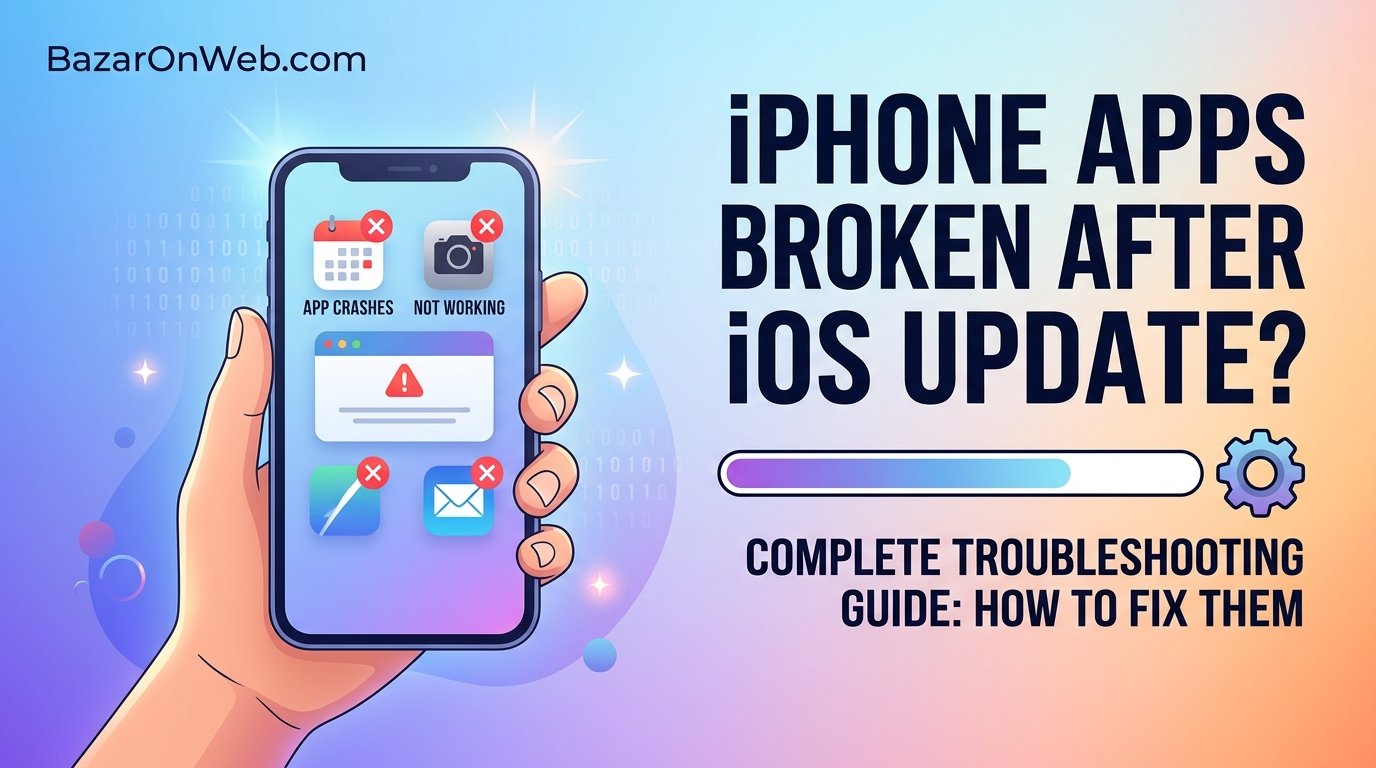
I’ve learned the hard way that iOS updates can sometimes break apps you rely on daily. After installing a new iOS version, I’ve opened apps only to find them crashing immediately, refusing to load data, or displaying error messages. What frustrated me most initially was not understanding why this happened—I assumed my iPhone was broken or the apps were poorly designed. What I discovered through research and troubleshooting is that app incompatibility after iOS updates is actually quite common and usually fixable without drastic action. iOS updates fundamentally change how the operating system works, and apps built for previous iOS versions sometimes struggle to adapt to these changes until developers release updates.
In this comprehensive guide, I’ll explain exactly why iOS updates break apps, what specific changes in each iOS version cause these problems, and most importantly, how to fix broken apps and prevent this frustration in the future. I’ll walk you through multiple troubleshooting steps starting with the simplest solutions you can implement immediately and progressing to more involved fixes if needed. I’ll also explain why certain apps are more prone to breaking after updates and help you understand which fixes apply to your specific situation. By understanding the mechanics of app incompatibility and having a systematic troubleshooting approach, you’ll be able to restore functionality to broken apps quickly and confidently. You’ll also know exactly when to contact app developers versus when to expect automatic fixes as they update their apps.
1. Understanding iOS Updates and Why They Break Apps: The Technical Foundation
iOS updates introduce fundamental changes to the operating system’s architecture, APIs (application programming interfaces), and how the system manages resources. Apps are built on these operating system features, and when iOS changes how those features work, apps must adapt or they break. Think of it like a house built on a foundation—if the foundation changes shape, the house’s structure may no longer fit properly. iOS updates can change which programming interfaces apps use to access device features, modify how memory management works, alter permissions systems, or introduce new security restrictions that break previously-functioning code.
Apple provides developers with advance notice of these changes through beta versions released months before public iOS release. Responsible developers test their apps against beta versions and update them before public release. However, some developers don’t test against betas, don’t prioritize updates for lesser-used apps, or have abandoned apps entirely. When these apps encounter iOS changes, they break. Additionally, some apps use undocumented or unauthorized methods to access iPhone features—these apps are particularly vulnerable to breaking when iOS changes because they rely on accessing features in ways Apple didn’t intend. Finally, some apps have bugs that only manifest when iOS changes trigger those bugs. Understanding that app incompatibility results from apps not adapting to OS changes helps explain why the solution often involves waiting for app updates rather than fixing your iPhone. The good news is that app developers usually update quickly to address compatibility issues, meaning most apps work again within days or weeks of iOS release.
2. Common Reasons Apps Fail After iOS Updates: Specific Incompatibilities and Issues
Several specific incompatibilities commonly occur when iOS updates break apps. The most frequent cause is outdated SDK (software development kit)—the programming toolkit developers use to build apps. When iOS updates introduce new SDKs and Apple deprecates old SDKs, apps built on deprecated SDKs sometimes stop functioning. Additionally, iOS updates change permission requirements, and apps built without understanding new permission systems may crash when accessing features. Changes to frameworks developers use—like changes to notification handling, graphics rendering, or data storage—can break apps that relied on previous framework behavior.
Another common issue is 32-bit versus 64-bit compatibility. Older iOS versions supported 32-bit apps, but iOS 11 dropped 32-bit support entirely, rendering 32-bit apps non-functional. Similarly, some iOS updates change supported processor instruction sets, breaking apps compiled for older instruction sets. Furthermore, iOS updates sometimes change how much memory apps can access, how much storage they can use, or how they interact with system resources. Apps that assumed previous resource limitations now fail with new limitations. Additionally, iOS privacy and security changes sometimes break apps accessing data in ways iOS now restricts. For example, when iOS implemented privacy protections preventing apps from accessing location history without explicit permission, apps relying on unauthorized location access broke. Understanding these specific incompatibility types helps you recognize which category your particular app problem falls into and which fix is most likely to work.
3. Fix 1: Update Apps to Latest Version Through App Store
The simplest and most effective fix for app incompatibility is updating the app to the latest version, which should include compatibility fixes for the current iOS version. Open the App Store, tap your profile icon in the upper right, then scroll to “Available Updates” section. You’ll see all installed apps with available updates. For each broken app, tap “Update” to install the latest version. Alternatively, enable automatic app updates by tapping your profile icon, selecting Settings, then enabling “App Updates” under Automatic Downloads. With automatic updates enabled, apps update overnight without your intervention, ensuring you always have the latest compatible version.
When updating, give the installation time to complete—updates can take several minutes depending on file size and your internet connection. After updating, force-close the app completely by swiping up from the bottom of the screen (or double-clicking the Home button on older iPhones) to access the app switcher, then swiping up on the app’s preview to close it. Wait a few seconds, then reopen the app fresh. This ensures the updated app fully loads rather than continuing to run the older version’s code. Test the app thoroughly—try its primary functions, check that it opens without crashing, verify that data loads correctly. Many broken apps are fixed by this simple update step. If the app still doesn’t work after updating to the latest version, move to the next fix. However, if no update is available but the app still crashes, it suggests the developer hasn’t yet released a compatibility fix, and you may need to wait for a future update or contact the developer directly.
4. Fix 2: Offload and Reinstall the App for Fresh Installation
If updating the app didn’t resolve the issue, completely removing and reinstalling the app often fixes compatibility problems. Offloading removes the app while preserving its data, while reinstalling from scratch gives you a completely fresh copy. Open Settings > General > iPhone Storage, find the problematic app, then tap it. You’ll see “Offload App” and “Delete App” options. Tap “Offload App” to remove the app while keeping its associated data and documents. The app icon disappears from your home screen, but you’ll see an option to “Reinstall App” next to the app name.
After offloading, wait a few seconds for complete removal, then tap “Reinstall App” to download the fresh copy from the App Store. The reinstall downloads the latest version, ensuring you get the most current version rather than restoring the old version. After reinstalling, open the app and verify functionality. The fresh installation often clears any corrupted app data or settings that might have been causing crashes. If you want to remove all app data completely rather than preserving it, tap “Delete App” instead of “Offload App,” then reinstall. Be aware that deleting removes all local app data—any information stored only on your device is lost, though cloud-synced data and account information are preserved. After offloading and reinstalling, your app should function with the latest version on your current iOS. This fix resolves app compatibility issues in a surprisingly high percentage of cases because it essentially gives the app a completely fresh start.
5. Fix 3: Clear App Cache and App Data Through Settings
Corrupted app cache or data files sometimes cause app crashes even after iOS updates. Your iPhone stores app-related data in caches and temporary files, and if this data becomes corrupted or incompatible with new iOS versions, it can cause crashes. Clearing app cache and temporary data usually resolves this without affecting your actual app data. However, iOS doesn’t provide a direct “Clear Cache” option for individual apps like Android does. Instead, use the offload method described in Fix 2, or manually delete app-related files through Settings.
For some apps, you can manage data through Settings > [App Name] if the app includes its own storage management options. Open Settings, scroll down to find your problematic app’s section, and look for options like “Clear Cache,” “Storage,” or “Data Management.” If your app includes these options, use them to clear cache and temporary files. Additionally, iCloud Documents & Data sometimes causes incompatibilities—if your problematic app syncs data through iCloud, open Settings > [Your Name] > iCloud > Apps, then toggle off the problematic app’s iCloud sync. Wait a few seconds, then toggle it back on to resync data using the latest sync protocols. This forces iCloud to resynchronize app data with iOS’s current implementation, sometimes resolving compatibility issues. After clearing cache or resyncing iCloud data, restart your iPhone completely by powering off and back on. A complete restart clears system-level caches that might also be affecting app functionality. After restarting, open the app and test whether crashes have resolved.
6. Fix 4: Check iOS Compatibility and Version Requirements
Before assuming an app is broken, verify that your iOS version is compatible with the app and that the app hasn’t been dropped from current support. Open the App Store, search for the app, and review the information page. Look for “Requires iOS [version] or later”—this specifies the minimum iOS version the app requires. If your iPhone is running an older iOS version than the app requires, the app won’t function properly. However, this shouldn’t be the issue if you just updated iOS and the app worked before.
Conversely, if the app specifies a maximum iOS version (older apps sometimes have this), your newer iOS might exceed that maximum, causing incompatibility. Additionally, check the app’s update history—open the “Version History” section on the app’s App Store page to see recent updates. If the latest update was released months ago and predates your iOS update, the developer might not have released a compatibility update yet. Check the app’s reviews—if other users recently report crashes after iOS updates, that’s a clear indication the app needs a developer update for compatibility. If the app appears to be abandoned (no updates in years), you might need to find an alternative app because the developer likely won’t release an iOS compatibility fix. Understanding your app’s current support status helps you make informed decisions about whether to wait for updates or switch to alternative apps. If you need the app’s functionality urgently and compatibility fixes aren’t available, finding a well-maintained alternative might be necessary.
7. Fix 5: Restart Your iPhone Completely to Clear System-Level Issues
Sometimes app crashes result from temporary system-level issues rather than permanent incompatibility. A complete iPhone restart clears system memory, stops background processes that might be interfering, and resets system services that sometimes malfunction. Restarting is particularly effective if multiple apps are crashing—this indicates a system issue rather than a single app problem. To restart your iPhone, press and hold the power button and either volume button until “Slide to Power Off” appears. Swipe to shut down completely. Wait 10-15 seconds, then press the power button to restart. During restart, your iPhone loads iOS fresh and resets all system services.
After restarting, open the problematic app and test functionality. Many temporary app crashes resolve with a restart because they result from temporary memory issues or system state problems. Additionally, restart performs a subtle optimization—it clears RAM, resets system caches, and ensures all services load properly. Users often report improved overall iPhone performance after restarting, particularly if they haven’t restarted in weeks. Make restarting a habit—many power users restart their iPhones weekly to maintain optimal performance and prevent system-level issues from accumulating. If app crashes persist even after restarting, the problem likely isn’t temporary system issues but rather genuine app incompatibility requiring developer fixes or app reinstallation.
8. Fix 6: Check App Permissions and Grant Necessary Access
iOS updates sometimes introduce new permission requirements that apps must request before accessing certain features. If a new iOS version introduced new permissions that your app needs but hasn’t properly requested, the app might crash when attempting to access features without permission. Open Settings > Privacy & Security to review all permission categories. For your problematic app, check which permissions it currently has and which are denied. If the app should have access to certain data (location, contacts, photos, microphone, etc.), verify that permissions are granted.
Look for any permission denials and consider whether the app actually needs that permission. Some apps request overly broad permissions they don’t actually require. However, if the app genuinely needs certain permissions to function, granting those permissions is necessary. Additionally, open Settings > Apps > Permissions to see more detailed permission information. Some apps display explicit notifications when lacking required permissions; if your app shows such a notification, granting the requested permission usually resolves the issue. After adjusting permissions, force-close the app completely and reopen it fresh. The app should now have access to necessary features and should function properly. If the app still crashes even with full permissions granted, the problem likely isn’t permission-related but rather something more fundamental requiring developer fixes or reinstallation.
9. Fix 7: Contact App Developer and Report the Issue
If you’ve tried all previous fixes and the app still doesn’t work, contact the app developer directly. Developers rely on user reports to identify compatibility issues they might have missed during testing. Open the App Store, find the app, and scroll to the bottom of the information page. You’ll see a “Contact Developer” button. Tap it to email the developer, or look for the developer’s website listed on the App Store page for alternative contact options. In your message, clearly describe the problem: which iOS version you’re running, which iPhone model you have, what action causes the crash, and which fixes you’ve already tried.
Additionally, leave a detailed review on the App Store describing the crash. Developers actively monitor reviews and often see crash reports before receiving direct emails. Many developers respond quickly to compatibility reports, particularly if multiple users report the same issue. If the app is from a major developer with many users, compatibility fixes often arrive within days of iOS release. For small developers or abandoned apps, responses might take longer or never arrive. Contacting developers ensures they know about the problem and can prioritize fixes. Additionally, reporting to Apple through the App Store feedback option helps Apple track problematic apps. After contacting the developer, you have two options: wait for a compatibility update, or switch to an alternative app that provides similar functionality and works with your current iOS. If the app is essential to your workflow, switching might be necessary rather than waiting indefinitely for fixes that might never arrive.
10. Preventing Future App Incompatibility: Proactive Steps and Best Practices
Rather than troubleshooting broken apps after iOS updates, taking proactive steps prevents incompatibility issues. When Apple announces a new iOS version, wait a few days before updating. This gives developers time to release compatibility updates before you encounter broken apps. Check app reviews and social media for reports of compatibility issues with the new iOS. If multiple users report crashes, waiting until developers release fixes prevents the frustration of dealing with broken apps immediately after updating. Additionally, enable automatic app updates so apps update in the background without your intervention. This ensures you have the latest compatible versions automatically.
Furthermore, be selective about which apps you install. Apps from major developers with large user bases typically receive compatibility updates quickly because crashes affect many users. Niche apps or apps from small developers might not receive prompt updates. When choosing apps, prioritize those from developers with good track records of maintaining and updating their apps. Additionally, monitor your iOS version—keeping iOS current ensures you receive security updates and bug fixes, though waiting a few weeks after new iOS release gives developers time to address compatibility issues. Finally, maintain regular backups so if app data becomes corrupted or you need to reinstall apps, you can restore from backup. Taking these proactive steps prevents the frustration of encountering broken apps after iOS updates. By understanding the typical app incompatibility timeline and planning your updates accordingly, you can minimize the disruption that iOS updates sometimes cause to your app experience.
Disclaimer
This article provides troubleshooting guidance for app incompatibility issues that occur following iOS updates. The information is intended for educational purposes to help users diagnose and resolve app functionality problems. Specific fixes, compatibility timelines, and app behavior may vary depending on your iPhone model, iOS version, individual apps, and specific technical circumstances.
Important Disclaimers:
- App incompatibility issues vary significantly based on app developer response speed, which apps you use, and your specific iOS version
- Solutions described may not resolve all app compatibility issues; some apps may require developer updates that take weeks or may never arrive
- Clearing app data through offloading or deletion removes local app data; ensure cloud backup exists if you have important app-related information
- Not all apps include settings for cache management; availability of these options varies by app
- Contacting developers does not guarantee response or resolution; some developers may not maintain apps actively
- Alternative apps may have different functionality or user experience compared to your preferred app
- Performance improvements from restarting iPhone may be temporary; restarting doesn’t permanently fix broken incompatibilities
iOS Update Timing:
- Installing iOS updates immediately after release may cause temporary app incompatibility; waiting 1-2 weeks allows developers to release compatibility updates
- iOS updates are mandatory for security; waiting too long risks security vulnerabilities for the sake of app compatibility
- Beta iOS versions may have more significant app incompatibilities; only install beta versions if you understand the risks
App Developer Considerations:
- App developers typically prioritize updates for their most popular apps; obscure or niche apps may receive slower or no compatibility updates
- Abandoned apps that haven’t been updated in years are unlikely to receive iOS compatibility fixes
- Some apps may be removed from the App Store if developers cease supporting them; these apps become inaccessible regardless of troubleshooting
Data and Backup:
- Before clearing app data or reinstalling apps, ensure important information is backed up to iCloud or another cloud service
- Some app data is stored locally only and cannot be recovered after deletion
- Regular backups prevent data loss if incompatibility issues require complete app reinstallation
Permission Changes:
- iOS updates sometimes introduce new privacy features that require explicit permission grants
- Granting all requested permissions may enable tracking or data collection you’re uncomfortable with; balance functionality against privacy preferences
- Denying permissions may prevent apps from functioning properly even after iOS updates
Third-Party Solutions:
- Be cautious about third-party apps claiming to “fix” app compatibility issues; most such claims are misleading
- Avoid downloading modified or unofficial app versions; these bypass App Store protections and may contain malware
- Stick to official app sources (App Store) rather than experimental solutions
iPhone Model Limitations:
- Older iPhone models may not support the latest iOS features that newer apps require
- Some apps may be incompatible with older iPhone models even after updating to the latest OS version
- As iPhone models age, finding compatible apps becomes increasingly difficult
When to Accept Apps Won’t Work:
- If an app remains broken for months after iOS updates and developers show no sign of fixing it, the app is likely abandoned
- For abandoned apps, switching to maintained alternatives is more practical than waiting for fixes that won’t arrive
- Some aged apps may never receive updates; accepting this limitation prevents frustration
Liability:
We are not responsible for any issues resulting from attempting the troubleshooting steps described in this article, including app data loss, permanent app damage, unresolved crashes, or other unexpected consequences. Users assume full responsibility for understanding each step before implementing it. Most steps are reversible (updates, permissions, data clearing), but some may have permanent consequences (deleting app data). If you’re uncomfortable with making changes to your iPhone, consult official Apple documentation or contact Apple Support before proceeding.
About the Author
Jessica Miller is a marketing manager and iPhone user who understands the frustration of app incompatibility after iOS updates. With expertise in iOS troubleshooting, app maintenance, and practical technology solutions, she helps busy professionals resolve app issues quickly and efficiently. When she’s not writing comprehensive tech guides or managing her marketing team, she’s testing apps, exploring iOS updates, and helping friends troubleshoot their iPhone problems.

- How to Remotely Control Another Computer Using Windows Quick Assist

- 5 Must-Have Electronics Gadgets for a More Comfortable Living Room

- How to Create a Windows 11 System Backup on an External Hard Drive

- 10 Smart Home Ideas That Make Everyday Life Easier

- Gemini Live Avatar: How to Talk to Gemini Face-to-Face

Products
-
![Apple Watch Ultra 3 [GPS + Cellular 49mm] Running & Multisport Smartwatch w/Rugged Titanium Case w/Black Titanium Milanese Loop - M. Satellite Communications, Advanced Health & Fitness Tracking](https://bazaronweb.com/retailstores/wp-content/uploads/2025/09/apple-watch-320x320.jpg) Apple Watch Ultra 3 [GPS + Cellular 49mm] Running & Multisport Smartwatch w/Rugged Titanium Case w/Black Titanium Milanese Loop - M. Satellite Communications, Advanced Health & Fitness Tracking
Apple Watch Ultra 3 [GPS + Cellular 49mm] Running & Multisport Smartwatch w/Rugged Titanium Case w/Black Titanium Milanese Loop - M. Satellite Communications, Advanced Health & Fitness Tracking
-
 Apple iPad mini (A17 Pro): Apple Intelligence, 8.3-inch Liquid Retina Display, 256GB, Wi-Fi 6E, 12MP Front/12MP Back Camera, Touch ID, All-Day Battery Life — Purple
-
 Apple AirPods Max Wireless Over-Ear Headphones, Active Noise Cancelling, Transparency Mode, Personalized Spatial Audio, Dolby Atmos, Bluetooth Headphones for iPhone – Space Gray
-
 Apple AirPods Pro 2 Wireless Earbuds, Active Noise Cancellation, Hearing Aid Feature, Bluetooth Headphones, Transparency, Personalized Spatial Audio, High-Fidelity Sound, H2 Chip, USB-C Charging
-
Home Garage 210 TC Cotton King Floral Fitted (Elastic) Bedsheet(Pack of 1, Grey)
Original price was: ₹999.00.₹299.00Current price is: ₹299.00.
Leave a Reply