Discounted Products
-
 Home Garage 210 TC Cotton King Floral Fitted (Elastic) Bedsheet(Pack of 1, Grey)
Original price was: ₹999.00.₹299.00Current price is: ₹299.00.
Home Garage 210 TC Cotton King Floral Fitted (Elastic) Bedsheet(Pack of 1, Grey)
Original price was: ₹999.00.₹299.00Current price is: ₹299.00.
-
 Goodrik 140 TC Cotton Double 3D Printed Flat Bedsheet(Pack of 1, Brown)
Original price was: ₹499.00.₹229.00Current price is: ₹229.00.
Goodrik 140 TC Cotton Double 3D Printed Flat Bedsheet(Pack of 1, Brown)
Original price was: ₹499.00.₹229.00Current price is: ₹229.00.
-
 GLOBALSHOP 350 TC Microfiber Double Floral Flat Bedsheet(Pack of 1, Multicolor)
Original price was: ₹1,250.00.₹263.00Current price is: ₹263.00.
GLOBALSHOP 350 TC Microfiber Double Floral Flat Bedsheet(Pack of 1, Multicolor)
Original price was: ₹1,250.00.₹263.00Current price is: ₹263.00.
-
 RisingStar 250 TC Microfiber King Printed Fitted (Elastic) Bedsheet(Pack of 1, FITTED-ROUND-CIRCLES-PREMIUM)
Original price was: ₹2,299.00.₹299.00Current price is: ₹299.00.
RisingStar 250 TC Microfiber King Printed Fitted (Elastic) Bedsheet(Pack of 1, FITTED-ROUND-CIRCLES-PREMIUM)
Original price was: ₹2,299.00.₹299.00Current price is: ₹299.00.
-
 Home Garage 210 TC Cotton King Floral Fitted (Elastic) Bedsheet(Pack of 1, Fitted Black Green)
Original price was: ₹1,299.00.₹299.00Current price is: ₹299.00.
Home Garage 210 TC Cotton King Floral Fitted (Elastic) Bedsheet(Pack of 1, Fitted Black Green)
Original price was: ₹1,299.00.₹299.00Current price is: ₹299.00.
-
 Home Garage 180 TC Cotton King 3D Printed Flat Bedsheet(Pack of 1, White)
Original price was: ₹999.00.₹229.00Current price is: ₹229.00.
Home Garage 180 TC Cotton King 3D Printed Flat Bedsheet(Pack of 1, White)
Original price was: ₹999.00.₹229.00Current price is: ₹229.00.
-
 Panipat Textile Hub 152.4 cm (5 ft) Polyester Window Curtain (Pack Of 2)(Solid, Aqua)
Original price was: ₹1,899.00.₹299.00Current price is: ₹299.00.
Panipat Textile Hub 152.4 cm (5 ft) Polyester Window Curtain (Pack Of 2)(Solid, Aqua)
Original price was: ₹1,899.00.₹299.00Current price is: ₹299.00.
-
 Home Sizzler 214 cm (7 ft) Polyester Semi Transparent Door Curtain (Pack Of 2)(Floral, Maroon)
Original price was: ₹1,199.00.₹399.00Current price is: ₹399.00.
Home Sizzler 214 cm (7 ft) Polyester Semi Transparent Door Curtain (Pack Of 2)(Floral, Maroon)
Original price was: ₹1,199.00.₹399.00Current price is: ₹399.00.
-
 Home Sizzler 153 cm (5 ft) Polyester Room Darkening Window Curtain (Pack Of 2)(Floral, Brown)
Original price was: ₹799.00.₹299.00Current price is: ₹299.00.
Home Sizzler 153 cm (5 ft) Polyester Room Darkening Window Curtain (Pack Of 2)(Floral, Brown)
Original price was: ₹799.00.₹299.00Current price is: ₹299.00.
-
 Stella Creations 214 cm (7 ft) Polyester Room Darkening Door Curtain (Pack Of 2)(Abstract, Brown)
Original price was: ₹1,299.00.₹449.00Current price is: ₹449.00.
Stella Creations 214 cm (7 ft) Polyester Room Darkening Door Curtain (Pack Of 2)(Abstract, Brown)
Original price was: ₹1,299.00.₹449.00Current price is: ₹449.00.
-
 Homefab India 152.5 cm (5 ft) Polyester Room Darkening Window Curtain (Pack Of 2)(Floral, Light Blue)
Original price was: ₹1,199.00.₹319.00Current price is: ₹319.00.
Homefab India 152.5 cm (5 ft) Polyester Room Darkening Window Curtain (Pack Of 2)(Floral, Light Blue)
Original price was: ₹1,199.00.₹319.00Current price is: ₹319.00.
-
 Urban Home 214 cm (7 ft) PVC Transparent Door Curtain Single Curtain(Solid, Off White)
Original price was: ₹699.00.₹203.00Current price is: ₹203.00.
Urban Home 214 cm (7 ft) PVC Transparent Door Curtain Single Curtain(Solid, Off White)
Original price was: ₹699.00.₹203.00Current price is: ₹203.00.
-
 Panipat Textile Hub 213 cm (7 ft) Polyester Door Curtain (Pack Of 2)(Solid, Brown)
Original price was: ₹1,199.00.₹349.00Current price is: ₹349.00.
Panipat Textile Hub 213 cm (7 ft) Polyester Door Curtain (Pack Of 2)(Solid, Brown)
Original price was: ₹1,199.00.₹349.00Current price is: ₹349.00.
-
 Home Sizzler 214 cm (7 ft) Polyester Semi Transparent Door Curtain (Pack Of 2)(Floral, Brown)
Original price was: ₹999.00.₹349.00Current price is: ₹349.00.
Home Sizzler 214 cm (7 ft) Polyester Semi Transparent Door Curtain (Pack Of 2)(Floral, Brown)
Original price was: ₹999.00.₹349.00Current price is: ₹349.00.
-
 Panipat Textile Hub 213 cm (7 ft) Polyester Semi Transparent Door Curtain (Pack Of 2)(Floral, Brown)
Original price was: ₹899.00.₹299.00Current price is: ₹299.00.
Panipat Textile Hub 213 cm (7 ft) Polyester Semi Transparent Door Curtain (Pack Of 2)(Floral, Brown)
Original price was: ₹899.00.₹299.00Current price is: ₹299.00.
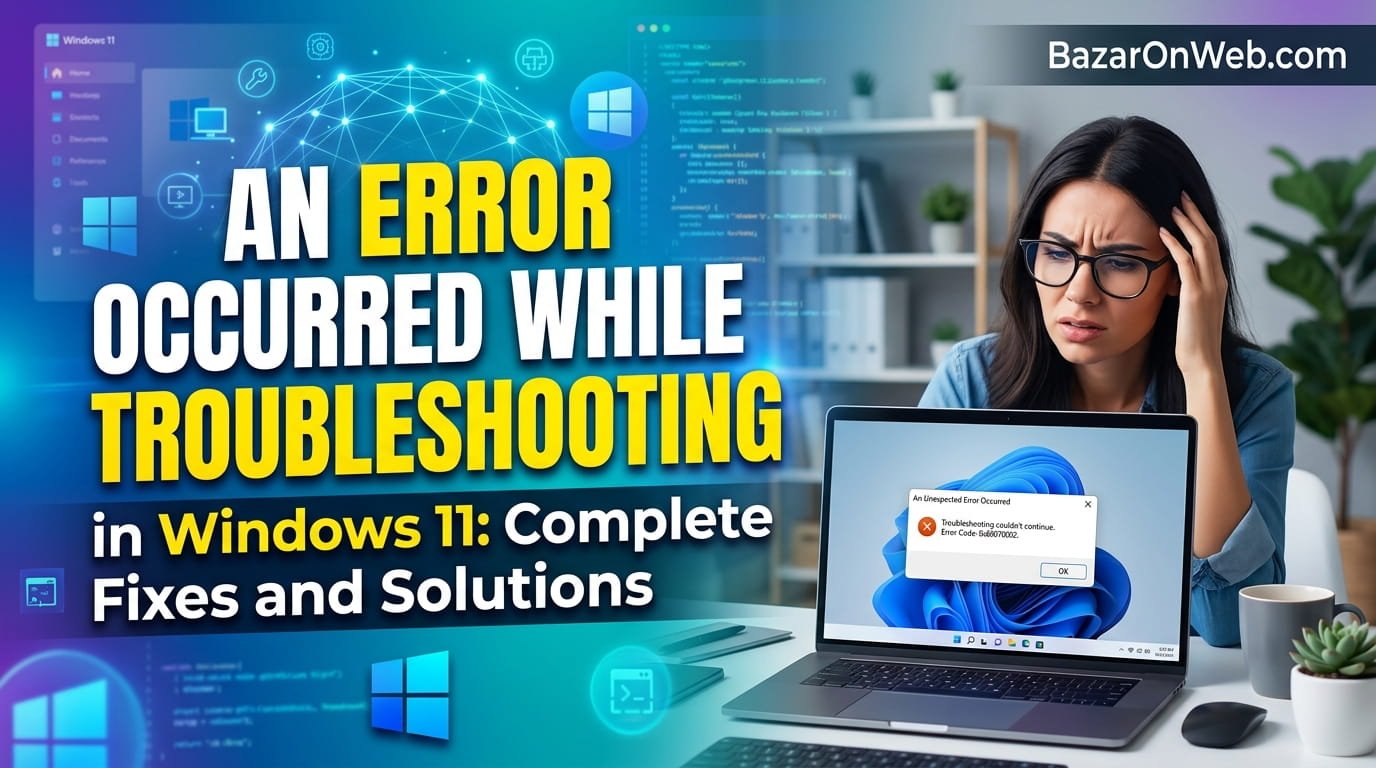
Windows 11’s built-in troubleshooting tools are supposed to help fix problems, but I was shocked when launching a troubleshooter to diagnose an issue resulted in the frustrating error message “An error occurred while troubleshooting.” This meta-problem—where the tool meant to fix problems becomes broken itself—is ironically common on Windows 11. What frustrated me most was that Windows provided no explanation of what specifically went wrong, no error code to research, and no obvious path forward. After extensive troubleshooting, I discovered this error stems from multiple potential causes ranging from corrupted troubleshooter files to permission issues to conflicts with security software. Understanding the various causes helped me systematically resolve the problem and discover that this error is usually fixable without extreme measures like Windows reinstallation.
In this comprehensive guide, I’ll walk you through the most common causes of the “An error occurred while troubleshooting” message and provide seven proven methods to resolve it. I’ll explain what causes troubleshooters to fail, why Microsoft’s built-in diagnostics sometimes malfunction, and most importantly, how to systematically work through solutions from simplest to most involved. Each solution addresses different underlying causes, so trying multiple approaches increases your chance of success. I’ll help you understand which fix is most likely to work for your specific situation and exactly how to implement it step by step. Whether you’re trying to fix hardware issues, network problems, or other Windows problems through troubleshooters, getting the troubleshooters working again is your first priority, and this guide provides the solutions.
1. Understanding Why Troubleshooters Fail and Error Messages Appear
Windows 11’s troubleshooting tools are specialized applications designed to diagnose and sometimes automatically fix hardware, software, and connectivity problems. These tools scan system configurations, check for common issues, and attempt repairs when they identify problems. However, troubleshooters are complex software that depend on system files, proper permissions, and Windows components functioning correctly. When any of these prerequisites fail, troubleshooters themselves malfunction and display the vague “An error occurred while troubleshooting” message.
The specific causes are diverse. Corrupted troubleshooter files prevent the tool from running properly. Missing Windows components needed by troubleshooters cause failures. Permission restrictions prevent troubleshooters from accessing system areas they need to diagnose. Conflicting security software blocks troubleshooter operations. Registry errors affect troubleshooter configuration. System file corruption impacts troubleshooter functionality. Network connectivity issues prevent troubleshooters from accessing diagnostic services they depend on. Understanding that “An error occurred while troubleshooting” masks multiple potential problems helps explain why simple fixes sometimes work while other situations require more complex solutions. The error message provides no specific diagnosis, making troubleshooting the troubleshooter itself challenging. However, by systematically addressing potential causes, you can usually restore troubleshooter functionality. Understanding that this error is relatively common and usually fixable helps prevent panic—thousands of Windows users encounter this and resolve it successfully.
2. Fix 1: Run Troubleshooters in Administrator Mode for Elevated Permissions
The most common cause of troubleshooter failures is insufficient permissions. Troubleshooters need administrative privileges to access system files, modify settings, and diagnose hardware issues. If you launch a troubleshooter without administrator privileges, it lacks permission to perform necessary diagnostic operations and fails with an error message. Running troubleshooters with administrator privileges resolves this issue in many cases. Right-click the troubleshooter you’re trying to run and select “Run as administrator.” When prompted, click “Yes” to confirm that you want to allow this application to make changes to your device.
Additionally, if you can’t right-click and run as administrator, try accessing troubleshooters through Settings. Open Settings > System > Troubleshoot, then select specific troubleshooting tools. When launching troubleshooters through Settings on an administrator account, they typically run with elevated privileges automatically. However, if you’re using a standard (non-administrator) account, switch to an administrator account before running troubleshooters. You can verify your account type by opening Settings > Accounts > Your info. If you’re on a standard account, log into the administrator account, then run the troubleshooter. After completing troubleshooting, you can switch back to your standard account. This simple permission adjustment resolves troubleshooter errors for many users because the operating system finally grants the troubleshooter access it needs to function properly.
3. Fix 2: Restart Your Computer to Clear Temporary Issues and System State
Troubleshooter failures sometimes result from temporary system state problems, resource constraints, or memory issues that restart resolves. A complete restart clears temporary files, releases locked system resources, stops problematic background processes, and resets system services that might be interfering with troubleshooter operation. Restarting should be your second troubleshooting step after trying administrator mode. Restart your computer by clicking Start, selecting Power, then clicking Restart. Wait for the restart to complete fully—this ensures Windows completely reinitializes all services.
After restarting, immediately attempt running the troubleshooter again. You might notice improved performance or responsiveness after restart, suggesting temporary issues were resolved. If the troubleshooter still fails, the problem likely isn’t temporary but rather something more persistent requiring additional fixes. However, restart should always be attempted before moving to more complex solutions because many computer issues resolve simply by restarting. Additionally, before restarting, close all open applications and save any work. While restart itself won’t cause data loss if you have unsaved work in specific applications, closing applications first ensures a cleaner restart. After restart, if the troubleshooter still displays errors, you can confidently move to the next fix knowing the problem isn’t temporary or resource-related.
4. Fix 3: Clear Troubleshooter Cache and Temporary Files
Troubleshooters store cache files and temporary data that sometimes becomes corrupted, causing the tools to malfunction. Clearing this cached data forces troubleshooters to rebuild their working environment fresh, often resolving errors. Troubleshooter temporary files are stored in your user profile’s temporary folders. Open File Explorer and navigate to C:\Users[YourUsername]\AppData\Local\Temp (replace [YourUsername] with your actual username). You might receive a warning that this folder contains important files—ignore this and proceed. Look for folders named something like “DiagTrackRunner,” “TroubleshooterTemp,” or similar troubleshooter-related folder names. Delete these folders by right-clicking and selecting Delete.
Additionally, clear the main Temp folder entirely. Select all files and folders in the Temp directory, delete them. Windows may prevent deletion of some files currently in use—that’s normal, simply skip those and delete everything possible. After clearing the Temp folder, navigate to C:\Windows\Temp and repeat the process, deleting all files and folders. Be cautious in C:\Windows\Temp—don’t force-delete files if Windows warns they’re in use. Simply delete what you can. After clearing both temporary folders, restart your computer. When troubleshooters run again, they’ll create fresh cache files rather than using corrupted ones. This often resolves troubleshooter errors because the cache corruption is eliminated. If errors persist after clearing cache, the problem likely lies elsewhere requiring different solutions.
5. Fix 4: Restore Windows Default Troubleshooters Through PowerShell
Windows 11 includes a PowerShell script specifically designed to restore troubleshooters to their default, working state. This is particularly valuable if troubleshooter files became corrupted or were modified incorrectly. Open PowerShell as Administrator by right-clicking Start and selecting “Windows Terminal (Admin),” then selecting the PowerShell tab. Alternatively, search for “PowerShell” in the Start menu, right-click the result, and select “Run as administrator.”
Copy and paste the following command: “Get-ChildItem -Path ‘HKCU:\Software\Microsoft\Windows\CurrentVersion\Diagnostics\Recommended’ -Recurse | Remove-Item -Force -Recurse”. This command removes corrupted troubleshooter registry entries. Additionally, run: “Repair-WindowsImage -Online -RestoreHealth” to repair Windows system image, which sometimes resolves troubleshooter problems. After running these commands, restart your computer. The troubleshooters should now work properly because Windows has restored them to known-good configurations. These PowerShell commands are powerful but safe—they simply remove or repair problematic configurations without damaging important system files. If you’re uncomfortable with PowerShell, you can skip this fix and move to the next one, but many users find this fix resolves their troubleshooter problems without requiring further action.
6. Fix 5: Run Windows System File Checker to Repair Corrupted System Files
Corrupted system files sometimes prevent troubleshooters from functioning properly. Windows System File Checker (SFC) is a built-in tool that scans for and repairs corrupted system files. Open Command Prompt as Administrator by right-clicking Start and selecting “Windows Terminal (Admin),” then clicking the dropdown menu and selecting “Command Prompt.” Type the command: “sfc /scannow” and press Enter. The System File Checker scans your entire system for corrupted files—this process takes 15-60 minutes depending on your system. Do not interrupt the scan or close the window while it runs.
After the scan completes, it displays results indicating whether corrupted files were found and whether they were repaired. If corrupted files were found and repaired, restart your computer and attempt running the troubleshooter again. If no corrupted files were found, the problem likely isn’t file corruption but rather something else requiring different solutions. Additionally, after running SFC, you can run DISM (Deployment Image Servicing and Management) for more comprehensive repair. Run the command: “DISM /Online /Cleanup-Image /RestoreHealth”. This command repairs the Windows system image, which sometimes fixes issues SFC doesn’t address. These system repair tools are safe and thoroughly tested, making them appropriate to run if you suspect system file corruption is causing troubleshooter failures.
7. Fix 6: Disable Security Software Temporarily to Identify Conflicts
Third-party security software (antivirus, anti-malware, firewalls) sometimes interferes with Windows troubleshooters by blocking them from accessing system areas they need to diagnose. If you have antivirus or security software installed, temporarily disabling it might allow troubleshooters to run successfully, indicating a software conflict rather than system corruption. Open your security software’s settings and look for options to disable or pause protection temporarily. The procedure varies by software—Windows Defender can be disabled through Settings > Privacy & Security > Virus & threat protection > Manage settings > toggle off “Real-time protection.”
After disabling security software, attempt running the troubleshooter again. If it now works successfully, your security software is the culprit. You have several options: configure your security software to exclude or whitelist Windows troubleshooters, update your security software to a version compatible with Windows 11, or switch to different security software. After troubleshooting, re-enable your security software. Do not leave security software disabled permanently—protection against malware is important. Many security vendors have released updates specifically to improve Windows 11 compatibility after reports of troubleshooter conflicts. Updating your security software to the latest version often resolves such conflicts. However, if conflicts persist even after updating, you may need to switch to different security software or use only Windows Defender, which is built into Windows and fully compatible with troubleshooters.
8. Fix 7: Repair or Reinstall Windows Using Recovery Options
If all previous fixes fail to resolve troubleshooter errors, your Windows installation may be sufficiently corrupted that repair or reinstallation is necessary. Windows 11 includes recovery options allowing you to repair the system while preserving personal files. Open Settings > System > Recovery > Recovery options, then click “Reset this PC.” You’ll see two options: “Keep my files” preserves your personal files while reinstalling Windows system files, or “Remove everything” performs a complete fresh Windows installation. The “Keep my files” option is less disruptive and resolves most Windows corruption problems including troubleshooter issues.
After selecting “Keep my files,” Windows begins the recovery process. Your computer restarts several times, and Windows reinstalls system files from scratch. This process takes 30 minutes to several hours depending on your system. After recovery completes, your personal files and installed applications remain, but Windows system files are fresh. Troubleshooters should now function properly because they’re part of the fresh Windows installation. If you want to start completely fresh and remove installed applications, select “Remove everything” instead. This provides a completely clean Windows installation like a new computer. Recovery is less disruptive than complete Windows reinstallation and usually resolves even stubborn system problems. Before initiating recovery, back up any important files to external storage or cloud services as a safety precaution, though “Keep my files” option should preserve them.
9. Troubleshooting When Specific Troubleshooters Fail: Device-Specific Solutions
Different troubleshooters address specific problems (network, audio, hardware, printer, etc.), and sometimes only specific troubleshooters fail while others work fine. If a specific troubleshooter consistently fails while others work, the problem might be specific to that troubleshooter or the hardware it’s trying to diagnose. For network troubleshooter failures, your network adapter or connectivity might be the actual problem rather than the troubleshooter. For audio troubleshooter failures, your audio drivers or hardware might be problematic. For printer troubleshooter failures, printer drivers or connection might be the issue. In these cases, directly addressing the underlying hardware or driver problem might be more productive than repeatedly attempting to run the failing troubleshooter.
Additionally, if a specific troubleshooter fails, try using alternative diagnostic approaches. For network problems, use Command Prompt commands like “ipconfig /all” to check network configuration, or “ping” to test connectivity. For audio problems, open Settings > Sound to verify audio devices are properly configured and drivers are installed. For printer problems, open Settings > Bluetooth & devices > Printers & scanners to verify the printer is recognized. These alternative diagnostic approaches sometimes identify the problem faster than troubleshooters. However, if you want to fix the troubleshooter itself for future use, all previous fixes (administrator mode, restart, cache clearing, PowerShell repair, SFC, disabling security software, Windows repair) apply to specific troubleshooters as well as general troubleshooter failures. Try these fixes sequentially until the specific troubleshooter works properly.
10. Preventing Future Troubleshooter Problems Through Maintenance
After resolving troubleshooter issues, preventing future problems ensures your diagnostic tools remain functional. Keep Windows updated by enabling automatic Windows Updates—these include updates to troubleshooters and system files that fix known issues. Open Settings > System > Windows Update > Advanced options and ensure automatic downloads and installation are enabled. Additionally, keep third-party security software updated. Most conflicts with troubleshooters result from older security software incompatible with Windows 11. Enable automatic updates for your security software or manually check for updates monthly.
Furthermore, perform regular system maintenance through built-in Windows tools. Use Disk Cleanup to remove temporary files periodically. Enable automatic storage optimization through Settings > System > Storage > Storage Sense. Keep your system free of accumulated clutter—uninstall unused applications, remove temporary files regularly, and maintain at least 10-15% free disk space. Additionally, perform periodic full system scans for malware using Windows Defender or your security software, as malware sometimes causes system problems including troubleshooter malfunctions. Create regular system restore points so if future problems occur, you can restore to a known-good configuration. To create restore points, open System > System Protection and configure automatic restore point creation. These preventive maintenance practices keep your system healthy and reduce the likelihood of troubleshooter failures in the future.
Disclaimer
This article provides guidance on resolving “An error occurred while troubleshooting” errors in Windows 11. The information is intended for educational purposes to help users restore troubleshooter functionality. Specific error causes, resolution procedures, and outcomes may vary depending on your system configuration, installed software, and individual circumstances.
Important Disclaimers:
- Troubleshooter errors can result from multiple underlying causes; identifying the correct cause requires systematic troubleshooting
- Some procedures described (particularly PowerShell commands and System File Checker) modify system configurations; ensure you understand implications before attempting them
- Temporarily disabling security software reduces your system’s protection against malware; only disable briefly for troubleshooting
- Windows recovery options may take significant time to complete; ensure your system has adequate power and uninterrupted connection during recovery
- Some fixes require administrator privileges; if you lack administrative access, contact your system administrator
Backup Recommendations:
- Before attempting system repairs or recovery options, back up important personal files to external storage or cloud services
- While “Keep my files” option during recovery should preserve personal data, backups provide additional safety
- Critical work should be backed up regardless of troubleshooting planned
Security Considerations:
- Disabling security software temporarily removes malware protection; only disable when necessary for troubleshooting
- Re-enable security software immediately after troubleshooting
- Keep security software updated to latest version for Windows 11 compatibility
- Be cautious about third-party “troubleshooter repair” software; many are unreliable or potentially harmful
Administrative Requirements:
- Most procedures require administrator account access; if using standard account, switch to administrator account or contact your system administrator
- Troubleshooters themselves require administrative privileges to function properly
- PowerShell commands require administrator Command Prompt or PowerShell window
System Impact:
- System File Checker scan takes significant time; ensure your computer won’t be interrupted during scanning
- Windows recovery option causes multiple restarts; ensure power is connected and system won’t be interrupted
- Disabling Real-time protection in Windows Defender temporarily reduces security; re-enable immediately after troubleshooting
Third-Party Software Conflicts:
- Multiple security software installations sometimes conflict with each other and troubleshooters; ensure only one antivirus is installed
- VPN software occasionally interferes with network troubleshooters
- Browser extensions or toolbar software may cause conflicts
- Consider uninstalling problematic software if conflicts persist
Performance Impact:
- System File Checker and DISM repair operations use significant system resources; close other applications during scanning
- Windows recovery operations consume system resources and storage; ensure adequate disk space available
- After recovery, system performance may temporarily be reduced as Windows rebuilds caches and configurations
When Professional Help Is Needed:
- If troubleshooter errors persist despite attempting multiple fixes, professional IT support may be necessary
- If system recovery fails or causes additional problems, professional technicians can assist
- Hardware problems may require professional diagnostics if troubleshooters cannot run
Troubleshooter Limitations:
- Troubleshooters can identify and sometimes fix problems, but cannot resolve hardware failures
- If underlying hardware is defective, troubleshooters fail because the actual problem is physical hardware
- For hardware problems, professional diagnostics may be necessary to confirm hardware failure
Liability:
We are not responsible for any system problems, data loss, unresolved errors, or other consequences resulting from attempting troubleshooting procedures described in this article. Users assume full responsibility for understanding each procedure before implementing it. Most procedures described are reversible through undoing changes or restoring from backups, but some (particularly Windows recovery) make more permanent modifications. If you’re uncomfortable with system procedures or command-line tools, consult professional IT support rather than attempting procedures you don’t understand.
About the Author
Jessica Miller is a marketing manager and Windows troubleshooter who believes every user deserves working diagnostic tools. With expertise in Windows troubleshooting, system repair, and practical technical solutions, she helps busy professionals resolve Windows problems quickly and confidently. When she’s not writing comprehensive tech guides or managing her marketing team, she’s exploring Windows features, testing troubleshooting tools, and helping friends resolve their Windows issues.

- How to Remotely Control Another Computer Using Windows Quick Assist
- 5 Must-Have Electronics Gadgets for a More Comfortable Living Room

- How to Create a Windows 11 System Backup on an External Hard Drive

- 10 Smart Home Ideas That Make Everyday Life Easier

- Gemini Live Avatar: How to Talk to Gemini Face-to-Face

Products
-
![Apple Watch Ultra 3 [GPS + Cellular 49mm] Running & Multisport Smartwatch w/Rugged Titanium Case w/Black Titanium Milanese Loop - M. Satellite Communications, Advanced Health & Fitness Tracking](https://bazaronweb.com/retailstores/wp-content/uploads/2025/09/apple-watch-320x320.jpg) Apple Watch Ultra 3 [GPS + Cellular 49mm] Running & Multisport Smartwatch w/Rugged Titanium Case w/Black Titanium Milanese Loop - M. Satellite Communications, Advanced Health & Fitness Tracking
Apple Watch Ultra 3 [GPS + Cellular 49mm] Running & Multisport Smartwatch w/Rugged Titanium Case w/Black Titanium Milanese Loop - M. Satellite Communications, Advanced Health & Fitness Tracking
-
 Apple iPad mini (A17 Pro): Apple Intelligence, 8.3-inch Liquid Retina Display, 256GB, Wi-Fi 6E, 12MP Front/12MP Back Camera, Touch ID, All-Day Battery Life — Purple
-
 Apple AirPods Max Wireless Over-Ear Headphones, Active Noise Cancelling, Transparency Mode, Personalized Spatial Audio, Dolby Atmos, Bluetooth Headphones for iPhone – Space Gray
-
 Apple AirPods Pro 2 Wireless Earbuds, Active Noise Cancellation, Hearing Aid Feature, Bluetooth Headphones, Transparency, Personalized Spatial Audio, High-Fidelity Sound, H2 Chip, USB-C Charging
-
Home Garage 210 TC Cotton King Floral Fitted (Elastic) Bedsheet(Pack of 1, Grey)
Original price was: ₹999.00.₹299.00Current price is: ₹299.00.
Leave a Reply