Discounted Products
-
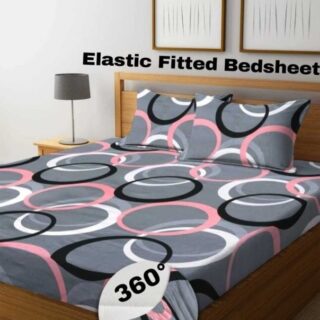 Home Garage 210 TC Cotton King Floral Fitted (Elastic) Bedsheet(Pack of 1, Grey)
Original price was: ₹999.00.₹299.00Current price is: ₹299.00.
Home Garage 210 TC Cotton King Floral Fitted (Elastic) Bedsheet(Pack of 1, Grey)
Original price was: ₹999.00.₹299.00Current price is: ₹299.00.
-
 Goodrik 140 TC Cotton Double 3D Printed Flat Bedsheet(Pack of 1, Brown)
Original price was: ₹499.00.₹229.00Current price is: ₹229.00.
Goodrik 140 TC Cotton Double 3D Printed Flat Bedsheet(Pack of 1, Brown)
Original price was: ₹499.00.₹229.00Current price is: ₹229.00.
-
 GLOBALSHOP 350 TC Microfiber Double Floral Flat Bedsheet(Pack of 1, Multicolor)
Original price was: ₹1,250.00.₹263.00Current price is: ₹263.00.
GLOBALSHOP 350 TC Microfiber Double Floral Flat Bedsheet(Pack of 1, Multicolor)
Original price was: ₹1,250.00.₹263.00Current price is: ₹263.00.
-
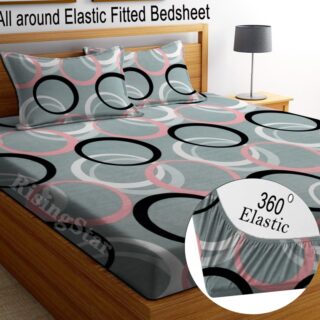 RisingStar 250 TC Microfiber King Printed Fitted (Elastic) Bedsheet(Pack of 1, FITTED-ROUND-CIRCLES-PREMIUM)
Original price was: ₹2,299.00.₹299.00Current price is: ₹299.00.
RisingStar 250 TC Microfiber King Printed Fitted (Elastic) Bedsheet(Pack of 1, FITTED-ROUND-CIRCLES-PREMIUM)
Original price was: ₹2,299.00.₹299.00Current price is: ₹299.00.
-
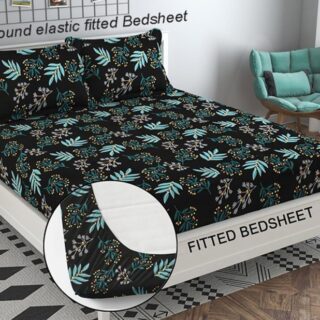 Home Garage 210 TC Cotton King Floral Fitted (Elastic) Bedsheet(Pack of 1, Fitted Black Green)
Original price was: ₹1,299.00.₹299.00Current price is: ₹299.00.
Home Garage 210 TC Cotton King Floral Fitted (Elastic) Bedsheet(Pack of 1, Fitted Black Green)
Original price was: ₹1,299.00.₹299.00Current price is: ₹299.00.
-
 Home Garage 180 TC Cotton King 3D Printed Flat Bedsheet(Pack of 1, White)
Original price was: ₹999.00.₹229.00Current price is: ₹229.00.
Home Garage 180 TC Cotton King 3D Printed Flat Bedsheet(Pack of 1, White)
Original price was: ₹999.00.₹229.00Current price is: ₹229.00.
-
 Panipat Textile Hub 152.4 cm (5 ft) Polyester Window Curtain (Pack Of 2)(Solid, Aqua)
Original price was: ₹1,899.00.₹299.00Current price is: ₹299.00.
Panipat Textile Hub 152.4 cm (5 ft) Polyester Window Curtain (Pack Of 2)(Solid, Aqua)
Original price was: ₹1,899.00.₹299.00Current price is: ₹299.00.
-
 Home Sizzler 214 cm (7 ft) Polyester Semi Transparent Door Curtain (Pack Of 2)(Floral, Maroon)
Original price was: ₹1,199.00.₹399.00Current price is: ₹399.00.
Home Sizzler 214 cm (7 ft) Polyester Semi Transparent Door Curtain (Pack Of 2)(Floral, Maroon)
Original price was: ₹1,199.00.₹399.00Current price is: ₹399.00.
-
 Home Sizzler 153 cm (5 ft) Polyester Room Darkening Window Curtain (Pack Of 2)(Floral, Brown)
Original price was: ₹799.00.₹299.00Current price is: ₹299.00.
Home Sizzler 153 cm (5 ft) Polyester Room Darkening Window Curtain (Pack Of 2)(Floral, Brown)
Original price was: ₹799.00.₹299.00Current price is: ₹299.00.
-
 Stella Creations 214 cm (7 ft) Polyester Room Darkening Door Curtain (Pack Of 2)(Abstract, Brown)
Original price was: ₹1,299.00.₹449.00Current price is: ₹449.00.
Stella Creations 214 cm (7 ft) Polyester Room Darkening Door Curtain (Pack Of 2)(Abstract, Brown)
Original price was: ₹1,299.00.₹449.00Current price is: ₹449.00.
-
 Homefab India 152.5 cm (5 ft) Polyester Room Darkening Window Curtain (Pack Of 2)(Floral, Light Blue)
Original price was: ₹1,199.00.₹319.00Current price is: ₹319.00.
Homefab India 152.5 cm (5 ft) Polyester Room Darkening Window Curtain (Pack Of 2)(Floral, Light Blue)
Original price was: ₹1,199.00.₹319.00Current price is: ₹319.00.
-
 Urban Home 214 cm (7 ft) PVC Transparent Door Curtain Single Curtain(Solid, Off White)
Original price was: ₹699.00.₹203.00Current price is: ₹203.00.
Urban Home 214 cm (7 ft) PVC Transparent Door Curtain Single Curtain(Solid, Off White)
Original price was: ₹699.00.₹203.00Current price is: ₹203.00.
-
 Panipat Textile Hub 213 cm (7 ft) Polyester Door Curtain (Pack Of 2)(Solid, Brown)
Original price was: ₹1,199.00.₹349.00Current price is: ₹349.00.
Panipat Textile Hub 213 cm (7 ft) Polyester Door Curtain (Pack Of 2)(Solid, Brown)
Original price was: ₹1,199.00.₹349.00Current price is: ₹349.00.
-
 Home Sizzler 214 cm (7 ft) Polyester Semi Transparent Door Curtain (Pack Of 2)(Floral, Brown)
Original price was: ₹999.00.₹349.00Current price is: ₹349.00.
Home Sizzler 214 cm (7 ft) Polyester Semi Transparent Door Curtain (Pack Of 2)(Floral, Brown)
Original price was: ₹999.00.₹349.00Current price is: ₹349.00.
-
 Panipat Textile Hub 213 cm (7 ft) Polyester Semi Transparent Door Curtain (Pack Of 2)(Floral, Brown)
Original price was: ₹899.00.₹299.00Current price is: ₹299.00.
Panipat Textile Hub 213 cm (7 ft) Polyester Semi Transparent Door Curtain (Pack Of 2)(Floral, Brown)
Original price was: ₹899.00.₹299.00Current price is: ₹299.00.
I was frustrated when I needed to organize a major project involving creating dozens of folders and subfolders manually through File Explorer. Clicking, typing, creating, clicking again for each folder seemed like it would take hours. After discovering that Windows Command Prompt and PowerShell provide methods for creating multiple folders simultaneously through text commands, my entire approach to folder organization changed. What surprised me most was discovering that batch folder creation isn’t just faster—it’s dramatically faster, completing in seconds what would take manual clicking for hours. Additionally, once I learned the syntax for creating folder structures through commands, I could create consistent folder hierarchies across multiple projects, ensuring organized file systems without repeating the same manual steps repeatedly.
Understanding folder creation automation is particularly valuable for users managing large projects, organizing extensive file systems, or setting up standardized folder structures for teams. Rather than manually creating folders individually through File Explorer’s slow point-and-click interface, you can create entire hierarchies through simple commands. What impressed me most was discovering that PowerShell and Command Prompt provide numerous methods—from simple single-line commands to sophisticated scripts creating complex folder structures with specific naming conventions. In this comprehensive guide, I’ll explain why batch folder creation is valuable, walk you through multiple methods from simple to advanced, and show you how to create folder structures that would take hours manually in just seconds through automation.
1. Understanding Batch Folder Creation: Why Automating Folder Organization Matters
Batch folder creation refers to creating multiple folders or entire folder hierarchies through command-line tools rather than manually creating each folder individually through File Explorer. Understanding why this matters helps explain why learning folder creation commands is worthwhile investment. Manual folder creation through File Explorer requires opening File Explorer, navigating to the desired location, right-clicking, selecting “New Folder,” typing a name, pressing Enter, then repeating this process for each folder. Creating dozens of folders this way takes hours of repetitive clicking and typing, consuming enormous amounts of time while providing no real value—you’re not doing creative work, just performing mechanical operations computers excel at.
Batch folder creation through Command Prompt or PowerShell automates this mechanical work, allowing you to create complex folder hierarchies in seconds rather than hours. Beyond time savings, batch creation ensures consistency—when manually creating folders, you might accidentally misname folders, create them in wrong locations, or miss creating required folders. Automated creation ensures exactly the intended folders are created exactly where intended with exact naming. Additionally, batch creation becomes valuable for repetitive tasks—if you regularly create the same folder structure for different projects, writing a script once and reusing it saves enormous time across multiple projects. Understanding batch folder creation as automation of mechanical work rather than complex programming helps explain why even non-technical users can benefit from learning these techniques.
2. Basic Folder Creation Using Command Prompt: Simple Commands for Quick Results
Command Prompt provides straightforward commands for creating single or multiple folders quickly. The simplest command is “mkdir” (make directory) which creates a single folder. Open Command Prompt by right-clicking Start, selecting “Windows Terminal,” or searching for “Command Prompt” in the Start menu. Type the command: “mkdir FolderName” and press Enter to create a folder named “FolderName” in your current directory.
To create multiple folders at once, use: “mkdir Folder1 Folder2 Folder3” to create three folders in a single command. This saves time compared to creating each folder individually. Additionally, create folders in specific locations by including the full path: “mkdir C:\Users\YourUsername\Documents\ProjectFolder\Subfolder1 Subfolder2” to create multiple subfolders within a specific location.
For creating nested subfolders (folders within folders), use the /s parameter: “mkdir C:\MyProject\Folder1\Subfolder1\SubSubFolder” creates the entire hierarchy even if parent folders don’t exist. Without the /s parameter, Command Prompt creates only the immediate folder if parent folders exist; if parent folders don’t exist, the command fails. Understanding these variations helps you create appropriate folder structures for your needs. For quick folder creation tasks, Command Prompt provides simplicity—basic commands accomplish the job without requiring sophisticated scripting knowledge.
3. Creating Folder Hierarchies with Subfolders Using Command Prompt
Creating complex folder hierarchies with multiple levels of subfolders is where batch creation truly shines. Rather than manually creating parent folders, then subfolders within each, then sub-subfolders within those (requiring dozens of operations), Command Prompt creates entire hierarchies through single commands. Use the syntax: “mkdir Project\Documents Project\Images Project\Videos Project\Archives” to create a parent “Project” folder with four subfolders—all created from a single command.
For deeper hierarchies, continue the pattern: “mkdir Project\2024\Q1 Project\2024\Q2 Project\2024\Q3 Project\2024\Q4” creates nested quarterly folders within a 2024 parent folder. This approach quickly creates organizational structures that would take manual clicking for extended periods. Additionally, combine the /s parameter with multiple paths: “mkdir /s Documents\Work\Projects\Active Documents\Work\Projects\Archived Documents\Work\Clients” creates multiple hierarchies efficiently.
Understanding folder path syntax—using backslashes to separate folder levels, including drive letters for specific locations—enables creating sophisticated structures. For users needing to organize files into consistent hierarchies regularly, learning these patterns transforms folder creation from tedious manual process to automated routine. Document the folder creation commands you find useful—you can reuse them for future projects, reducing setup time for each new project to mere seconds.
4. Using PowerShell for Advanced Folder Creation and Scripting
PowerShell provides more sophisticated folder creation capabilities than Command Prompt, enabling conditional logic, loops, and complex automation. Open PowerShell as Administrator by right-clicking Start and selecting “Windows Terminal (Admin),” then switching to the PowerShell tab. Use the command: “New-Item -Path ‘C:\FolderPath’ -ItemType Directory” to create a single folder, or combine with multiple paths for batch creation.
PowerShell’s real power comes from loops creating many folders with pattern-based names. Create numbered folders using: “1..10 | ForEach-Object { New-Item -Path “C:\Folders\Folder_” -ItemType Directory }” to create Folder1 through Folder10 automatically. This pattern-based creation is particularly valuable for creating consistent naming schemes. Additionally, create folders based on date patterns: ” startDate = [datetime]’2024-01-01′; 1..12 | ForEach-Object { folderName = $startDate.AddMonths( _ – 1).ToString(‘yyyy-MM’); New-Item -Path “C:\Archive$folderName” -ItemType Directory }” creates monthly folders for an entire year.
PowerShell’s flexibility enables creating custom folder structures matching specific organizational needs. Users familiar with programming concepts find PowerShell powerful, while non-technical users might prefer simpler Command Prompt approaches. However, learning basic PowerShell loops opens possibilities for advanced automation worth exploring.
5. Creating Folders Based on Lists: Importing Data from CSV or Text Files
For creating numerous folders with specific names from an existing list, importing names from CSV or text files streamlines the process. Create a text file (e.g., FolderNames.txt) with one folder name per line: “Project1, Project2, Project3, Project4” (or one per line). Then use PowerShell: “Get-Content ‘C:\FolderNames.txt’ | ForEach-Object { New-Item -Path “C:\MyFolders$_” -ItemType Directory }” to create folders matching each name in your list.
For CSV files (comma-separated values), use similar syntax adjusting for CSV format. This approach is particularly valuable when folder names come from existing data—client names, employee names, project codes—rather than manually typing each name. Create your list once in a spreadsheet or document, save as text/CSV, then import it into your folder creation script. This eliminates manual typing of dozens of folder names, reducing both time and the possibility of typos.
Additionally, this approach enables creating identical folder structures for multiple projects or clients. Create one template list, then reuse it for each project by simply changing the parent path. This consistency ensures organized file systems across all your projects without needing to remember or recreate the folder structure manually for each project.
6. Creating Batch Folder Structures with Automated Naming Conventions
Beyond simple folder names, PowerShell enables creating folders with sophisticated naming conventions including dates, sequential numbering, or category-based organization. Create folders with date-based names: “today = Get-Date -Format ‘yyyy-MM-dd’; New-Item -Path “C:\Projects\Project_ today” -ItemType Directory” creates a folder with today’s date in the name, useful for organizing daily project folders.
For category-based naming, use: “categories = @(‘Development’, ‘Testing’, ‘Documentation’, ‘Deployment’); $categories | ForEach-Object { New-Item -Path “C:\Project\$_” -ItemType Directory }” creates folders for each project phase, ensuring consistent categorization. Additionally, combine categories with subfolders: ” quarter = ‘Q1’; $months = @(‘January’, ‘February’, ‘March’); $months | ForEach-Object { New-Item -Path “C:\2024\$quarter\$_” -ItemType Directory }” creates hierarchical structures combining multiple organizational dimensions.
Understanding naming conventions before creating folders ensures your organizational structure supports your workflow. Well-designed naming conventions make finding files easier later—folders organized by project, date, and category are inherently more organized than folders created ad-hoc with inconsistent naming. Taking time to plan folder structures before automating their creation pays dividends throughout your project.
7. Creating Complete Project Templates: Standardized Folder Structures for Consistency
Many organizations or individuals benefit from standardized folder structures—creating the same folder hierarchy for each new project ensures consistency and prevents accidentally omitting necessary folders. Create a PowerShell script defining your standard project template, then reuse it for each new project. For example: “param([string]ProjectName); $basePath = “C:\Projects\$ProjectName”; @(‘Documents’, ‘Documents\Planning’, ‘Documents\Reports’, ‘Images’, ‘Images\Screenshots’, ‘Images\Mockups’, ‘Files’, ‘Archive’) | ForEach-Object { New-Item -Path ” basePath\$_” -ItemType Directory }” creates a standard folder structure for any project.
Save this script as “CreateProjectFolders.ps1” and execute it with a project name: “.\CreateProjectFolders.ps1 -ProjectName ‘ClientProject'” to create complete folder structures instantly. This approach scales effectively—once your template is refined, creating new projects takes seconds regardless of complexity. Organizations can standardize project structures across teams, ensuring every project follows identical organization patterns.
Furthermore, distribute templates across teams ensuring consistent project organization. Rather than each team member creating folders individually (with potential inconsistencies), use centralized templates ensuring every project structure is identical. This coordination becomes increasingly valuable for larger teams where consistency prevents confusion about where files should be stored.
8. Troubleshooting Common Folder Creation Issues and Permission Problems
Sometimes folder creation commands fail due to path issues, permission problems, or incorrect syntax. Understanding common problems and their solutions helps you troubleshoot creation failures. If commands return “Access Denied,” you lack permissions to create folders in that location. Run Command Prompt or PowerShell as Administrator (right-click and select “Run as Administrator”) to gain necessary permissions.
If commands return “The system cannot find the path specified,” the parent folder path doesn’t exist. Use the /s parameter in Command Prompt to create parent folders automatically: “mkdir /s C:\NonExistent\Path\Folder” creates the entire path. In PowerShell, ensure the parent path exists before creating subfolders, or use: “New-Item -Path ‘FolderPath’ -ItemType Directory -Force” which creates parent folders automatically.
Additionally, if folder names contain special characters, quote the path appropriately. Spaces in folder names require quotes: “mkdir ‘My Project Folder'” succeeds while “mkdir My Project Folder” fails. Troubleshoot by starting with simple commands verifying basic functionality, then gradually increasing complexity. Test commands on a temporary location before running them on important directories.
9. Backing Up and Documenting Folder Creation Scripts for Future Reuse
After creating useful folder creation scripts, save and document them for future reuse. Save PowerShell scripts with a .ps1 extension (e.g., “CreateProjectStructure.ps1”) in a scripts folder you maintain. Add comments explaining what the script does: “# Creates standard project folder structure for new projects” at the top of scripts, making their purpose immediately clear.
Additionally, maintain a documentation file describing your scripts, parameters they accept, and how to execute them. This documentation becomes invaluable if you need to modify scripts later or if team members need to use them. Include example execution commands: “.\CreateProjectStructure.ps1 -ProjectName ‘NewProject’ -BaseFolder ‘C:\Projects'” showing exactly how to run the script.
Furthermore, consider creating a batch file (.bat) wrapper for PowerShell scripts, allowing non-technical users to execute complex scripts through simple file clicks. Create BatchCreateFolders.bat containing: “@echo off powershell.exe -ExecutionPolicy Bypass -File C:\Scripts\CreateProjectFolders.ps1 -ProjectName %1” enabling users to drag-and-drop folder names or enter them when prompted.
Maintaining a scripts library transforms time-consuming setup processes into quick executions. Over time, investing in script creation pays dividends as you reuse and refine scripts across multiple projects and potentially share them with team members.
10. Best Practices for Organizing Batch Folder Creation and File Management Workflow
Effective batch folder creation requires planning folder structures before creating them. Take time designing your organizational hierarchy—what categories matter for your work? What subfolders do each project need? Once you’ve defined your structure, automate its creation rather than manually creating variations for each project. This consistency improves file findability and prevents accidentally omitting folders.
Additionally, establish naming conventions determining how you name folders—use clear, descriptive names avoiding vague terms. Instead of “Data,” use “SourceData” or “ProcessedData” clarifying folder contents. Use consistent date formats (YYYY-MM-DD) ensuring chronological ordering. Avoid special characters that cause command-line issues or operating system problems. Test your folder structures before committing to them—create a test structure, use it for a project, then refine based on actual usage before finalizing your template.
Furthermore, maintain folder creation scripts in version control or backup locations—if your computer crashes, your scripts remain accessible for restoring folder structures on new machines. Share standardized templates with team members ensuring everyone follows identical organization patterns. Finally, periodically audit folder structures identifying improvements—if you discover your structure doesn’t serve your workflow well, modify your template and create improved structures for future projects.
Disclaimer
This article provides guidance on creating multiple folders at once in Windows using Command Prompt and PowerShell. The information is intended for educational purposes to help users automate folder creation and organize file systems efficiently. Specific commands, scripts, and outcomes may vary depending on your Windows version, system permissions, and individual circumstances.
Important Disclaimers:
- Folder creation commands execute immediately; incorrect paths create folders in unintended locations
- Batch creation commands without verification can create hundreds of folders accidentally if syntax errors cause loops to repeat excessively
- Administrator permissions are required for creating folders in system directories; standard user permissions suffice for user directories
- PowerShell script execution requires appropriate execution policy settings; scripts may not run if policies restrict execution
- Deleting large numbers of folders created accidentally requires careful commands to avoid data loss
- Path length limitations in Windows (260 characters) can prevent creating deeply nested folder hierarchies
- Special characters in folder names can cause command-line issues; test paths with special characters before committing to them
Command Syntax and Safety:
- Typos in commands can create folders with incorrect names; verify commands before executing
- Loops in PowerShell can repeat excessively if conditions aren’t properly defined; test loop logic before executing on important directories
- Wildcards and pattern matching in batch commands can affect unintended folders; review commands carefully
- Batch operations affecting many folders are difficult to undo; backup folders before running complex operations
- Command execution is immediate; no confirmation dialog warns before folder creation occurs
Permission and Access Issues:
- Administrator privileges required for creating folders in protected directories
- User account permissions affect which folders you can create and access
- Network drives and shared folders have additional permission requirements
- Some locations (Program Files, Windows system folders) restrict folder creation to administrators
- Denied access errors indicate permission problems; verify you’re executing as administrator if creating system folders
File Organization:
- Well-planned folder structures improve file organization but require planning before automation
- Inconsistent folder hierarchies created manually are difficult to standardize later
- Deep folder nesting (many levels) can exceed Windows path length limits
- Folder naming conventions should be established before creating templates
- Test folder structures on small scale before deploying to large projects
Script Execution and PowerShell:
- PowerShell execution policy can prevent script running; “Set-ExecutionPolicy -ExecutionPolicy RemoteSigned -Scope CurrentUser” enables script execution
- PowerShell scripts require .ps1 extension; ensure scripts are saved as correct file type
- Variables and parameters in PowerShell require proper syntax; incorrect syntax prevents execution
- Comments in PowerShell use # symbol; document scripts explaining what they do
- PowerShell profiles can execute automatically on startup; be cautious about which scripts are automatic
Batch File Creation and Automation:
- Batch files (.bat) provide simpler automation than PowerShell for non-technical users
- Batch file syntax differs from PowerShell; commands written for one don’t work in the other
- Error handling in batch files is limited; PowerShell provides more sophisticated error management
- Batch file parameters allow passing information when executing; use %1, %2 for first and second parameters
- Testing batch operations on sample directories prevents accidental problems
Folder Structure Planning:
- Overly complex hierarchies become difficult to navigate; balance organization with simplicity
- Folder depth (number of nested levels) affects navigation ease; limit depth to 4-6 levels when practical
- Naming consistency across folders improves organization; establish conventions before creating templates
- Standard templates ensure team consistency; distribute templates to all team members
- Periodic review of folder structures identifies improvements for future projects
Performance and System Impact:
- Creating very large numbers of folders (thousands or more) can slow system performance
- Batch operations affecting many folders consume system resources; execute during off-hours for extensive operations
- Antivirus software sometimes slows down batch folder creation; temporarily disable during large operations if performance issues occur
- Large folder creation operations should allow sufficient system resources; close unnecessary applications
- Backup systems should be running; don’t disable backups during large folder operations
Data Management and Recovery:
- Folders created accidentally are difficult to delete at scale; verify commands before execution
- Backup important directories before executing batch operations affecting them
- Deleted folders are difficult to recover; prevention through careful command verification is preferable
- Version control systems help restore folder structures if changes cause problems
- Maintain documentation of folder structures for recovery if data loss occurs
When Professional Help Is Needed:
- For complex script requirements, scripting professionals can develop sophisticated solutions
- For enterprise-wide folder standardization, IT departments should design and deploy templates
- If folder creation fails consistently, professional IT support can diagnose permission or system issues
- For teams needing coordinated folder structures, centralized IT management ensures consistency
- If data loss results from incorrect folder operations, professional recovery services may be necessary
Liability:
We are not responsible for any folders created in unintended locations, accidental deletion of folders, data loss, system problems, or other consequences resulting from folder creation commands described in this article. Users assume full responsibility for verifying commands before execution and for maintaining backups before running batch operations. Folder creation commands execute immediately without confirmation; careful review of commands before pressing Enter prevents most problems. Test all commands on non-critical directories first, verifying behavior before executing on important file systems. If you’re uncomfortable with command-line tools or uncertain about syntax, consult professional IT support rather than attempting complex batch operations independently.
About the Author
Jessica Miller is a marketing manager and organized file system enthusiast who believes efficient folder structure and batch automation transform file organization from tedious manual process to quick and consistent operations. With expertise in Command Prompt, PowerShell scripting, and practical file management solutions, she helps busy professionals create organized, maintainable file systems that support their workflows. When she’s not writing comprehensive tech guides or managing her marketing team, she’s developing folder structure templates, refining automation scripts, and helping friends organize their chaotic file systems into efficiently organized hierarchies.

- How to Fix “Unable to Initialize Windows App SDK” Error in Windows 11

- How to Fix “Try Again Later – Something Happened on Our End” Error in Microsoft Store

- What Are iPhone Background Sounds? Their Uses and How to Enable Them

- How to Run a Safety Check in Google Chrome and Protect Your Browser

- Samsung Phone’s Keyboard Not Working? Here’s How to Fix It

Products
-
![Apple Watch Ultra 3 [GPS + Cellular 49mm] Running & Multisport Smartwatch w/Rugged Titanium Case w/Black Titanium Milanese Loop - M. Satellite Communications, Advanced Health & Fitness Tracking](https://bazaronweb.com/retailstores/wp-content/uploads/2025/09/apple-watch-320x320.jpg) Apple Watch Ultra 3 [GPS + Cellular 49mm] Running & Multisport Smartwatch w/Rugged Titanium Case w/Black Titanium Milanese Loop - M. Satellite Communications, Advanced Health & Fitness Tracking
Apple Watch Ultra 3 [GPS + Cellular 49mm] Running & Multisport Smartwatch w/Rugged Titanium Case w/Black Titanium Milanese Loop - M. Satellite Communications, Advanced Health & Fitness Tracking
-
 Apple iPad mini (A17 Pro): Apple Intelligence, 8.3-inch Liquid Retina Display, 256GB, Wi-Fi 6E, 12MP Front/12MP Back Camera, Touch ID, All-Day Battery Life — Purple
-
 Apple AirPods Max Wireless Over-Ear Headphones, Active Noise Cancelling, Transparency Mode, Personalized Spatial Audio, Dolby Atmos, Bluetooth Headphones for iPhone – Space Gray
-
 Apple AirPods Pro 2 Wireless Earbuds, Active Noise Cancellation, Hearing Aid Feature, Bluetooth Headphones, Transparency, Personalized Spatial Audio, High-Fidelity Sound, H2 Chip, USB-C Charging
-
Home Garage 210 TC Cotton King Floral Fitted (Elastic) Bedsheet(Pack of 1, Grey)
Original price was: ₹999.00.₹299.00Current price is: ₹299.00.
Leave a Reply