Category
Popular Articles
- AI (20)
- Air Tag (1)
- Android (53)
- App Suggest (13)
- Apple (42)
- Apple TV (4)
- Bluetooth (3)
- Cars (2)
- ChatGpt (1)
- Chrome (3)
- Did you know? (1)
- E-Commerce News (1)
- Ecommerce Websites business (7)
- Electronics Shopping (5)
- Fashion Tips (3)
- Gaming (7)
- Google Gemini (3)
- Hair Care Tips (2)
- How to (13)
- iCloud (1)
- Infotainment System (1)
- Iphone (159)
- Job Posting (1)
- Lifestyle (3)
- Mac (28)
- Mobile Games (1)
- Netflix (1)
- Online Shopping Websites (2)
- Personal Finance Management (3)
- Product Reviews (3)
- Roku TV (4)
- Samsung (10)
- Shopping Tips (13)
- Spotify (1)
- Tech (162)
- VPN (2)
- Windows 11 (105)
- Youtube (1)
- Zero Waste (3)
Discounted Products
-

Leo Creation 144 TC Cotton Double Jaipuri Prints Flat Bedsheet(Pack of 1, Blue, Gree, Red, Grey, Light Grey)
₹2,999.00Original price was: ₹2,999.00.₹329.00Current price is: ₹329.00. -
Home Garage 210 TC Cotton King Floral Fitted (Elastic) Bedsheet(Pack of 1, Grey)
₹999.00Original price was: ₹999.00.₹299.00Current price is: ₹299.00. -

Goodrik 140 TC Cotton Double 3D Printed Flat Bedsheet(Pack of 1, Brown)
₹499.00Original price was: ₹499.00.₹229.00Current price is: ₹229.00. -

GLOBALSHOP 350 TC Microfiber Double Floral Flat Bedsheet(Pack of 1, Multicolor)
₹1,250.00Original price was: ₹1,250.00.₹263.00Current price is: ₹263.00. -

RisingStar 250 TC Microfiber King Printed Fitted (Elastic) Bedsheet(Pack of 1, FITTED-ROUND-CIRCLES-PREMIUM)
₹2,299.00Original price was: ₹2,299.00.₹299.00Current price is: ₹299.00. -

Home Garage 210 TC Cotton King Floral Fitted (Elastic) Bedsheet(Pack of 1, Fitted Black Green)
₹1,299.00Original price was: ₹1,299.00.₹299.00Current price is: ₹299.00. -

Home Garage 180 TC Cotton King 3D Printed Flat Bedsheet(Pack of 1, White)
₹999.00Original price was: ₹999.00.₹229.00Current price is: ₹229.00. -

Home Sizzler 153 cm (5 ft) Polyester Room Darkening Window Curtain (Pack Of 2)(Floral, Maroon)
₹799.00Original price was: ₹799.00.₹299.00Current price is: ₹299.00. -

Panipat Textile Hub 152.4 cm (5 ft) Polyester Window Curtain (Pack Of 2)(Solid, Aqua)
₹1,899.00Original price was: ₹1,899.00.₹299.00Current price is: ₹299.00. -
Home Sizzler 214 cm (7 ft) Polyester Semi Transparent Door Curtain (Pack Of 2)(Floral, Maroon)
₹1,199.00Original price was: ₹1,199.00.₹399.00Current price is: ₹399.00. -

Home Sizzler 153 cm (5 ft) Polyester Room Darkening Window Curtain (Pack Of 2)(Floral, Brown)
₹799.00Original price was: ₹799.00.₹299.00Current price is: ₹299.00. -

Stella Creations 214 cm (7 ft) Polyester Room Darkening Door Curtain (Pack Of 2)(Abstract, Brown)
₹1,299.00Original price was: ₹1,299.00.₹449.00Current price is: ₹449.00. -

Homefab India 152.5 cm (5 ft) Polyester Room Darkening Window Curtain (Pack Of 2)(Floral, Light Blue)
₹1,199.00Original price was: ₹1,199.00.₹319.00Current price is: ₹319.00. -

Urban Home 214 cm (7 ft) PVC Transparent Door Curtain Single Curtain(Solid, Off White)
₹699.00Original price was: ₹699.00.₹203.00Current price is: ₹203.00. -

Panipat Textile Hub 213 cm (7 ft) Polyester Door Curtain (Pack Of 2)(Solid, Brown)
₹1,199.00Original price was: ₹1,199.00.₹349.00Current price is: ₹349.00.
Affiliate Links
Promotion
Hi, I’m Jessica, and I still remember the first time I tried installing another operating system alongside Windows on my laptop. Everything seemed simple until I encountered a frustrating message saying Secure Boot was preventing the installation from continuing. At first, I thought something was wrong with my computer, but I soon realized that Secure Boot is actually designed to protect your PC from malicious software during startup. While it is an excellent security feature, it can sometimes become a roadblock for advanced users who want more control over their systems.
Secure Boot is enabled by default on most modern Windows 11 devices that use UEFI firmware. Its main purpose is to ensure that only trusted software loads during the boot process. This helps block rootkits, bootkits, and other dangerous malware from taking over your machine before Windows even starts. However, there are situations where users may need to disable it temporarily, especially when installing Linux, using certain virtualization tools, upgrading hardware, or running unsigned drivers.
In this guide, I’ll walk you through everything you need to know about disabling Secure Boot in Windows 11 safely. We’ll cover what Secure Boot does, why it matters, potential risks, and step-by-step instructions to help you avoid problems while making changes to your PC’s firmware settings.
Understanding What Secure Boot Actually Does
Secure Boot is a security standard developed to protect computers from malicious software that attempts to load during the startup process. Before Windows begins running, your system checks whether the bootloader and startup files are digitally signed and trusted. If unauthorized software attempts to launch, Secure Boot blocks it from executing. This process creates an important layer of defense against advanced threats that attack computers before antivirus software becomes active.
Modern Windows 11 PCs use UEFI firmware instead of the older BIOS system. UEFI includes Secure Boot as one of its key security technologies. Microsoft strongly recommends keeping it enabled because it helps protect users from rootkits, firmware attacks, and boot-level malware that can remain hidden from traditional security tools. For everyday users, Secure Boot works quietly in the background without requiring any interaction.
However, Secure Boot can sometimes interfere with advanced system modifications. Users attempting dual-boot installations with Linux distributions, custom operating systems, or older hardware drivers may encounter compatibility issues. Some specialized software tools also require Secure Boot to be disabled temporarily to function properly. This is why many power users search for ways to turn it off safely.
It’s important to understand that disabling Secure Boot does not instantly make your computer unsafe. The real risk comes from downloading untrusted software or modifying system files carelessly after the protection is disabled. Responsible users can disable it temporarily and re-enable it once their tasks are complete.
Why Some Users Need to Disable Secure Boot
Although Secure Boot provides excellent protection, there are legitimate reasons users may choose to disable it. One of the most common reasons is installing Linux alongside Windows 11. Some Linux distributions support Secure Boot, but others require it to be turned off during installation. Enthusiasts who enjoy experimenting with multiple operating systems often encounter this requirement.
Gamers and advanced PC users may also need to disable Secure Boot for compatibility reasons. Certain hardware utilities, custom drivers, or overclocking tools may not function properly while Secure Boot is active. Developers and IT professionals who work with virtualization, custom kernels, or testing environments frequently disable it while configuring their systems.
Another common reason involves older hardware. Some expansion cards, storage devices, or legacy software components were not designed with Secure Boot compatibility in mind. In these cases, users may experience startup failures or hardware recognition problems until Secure Boot is disabled.
There are also situations where troubleshooting becomes easier after temporarily disabling Secure Boot. Certain recovery tools, bootable USB utilities, and low-level diagnostic software cannot run properly under Secure Boot restrictions. Technicians often disable it briefly to perform repairs or data recovery operations.
Still, it’s important to remember that Secure Boot exists for a reason. Many malware attacks specifically target the boot process because traditional antivirus tools cannot detect threats that load before Windows starts. Disabling Secure Boot permanently without understanding the risks can expose your PC to unnecessary vulnerabilities, especially if you frequently download files from unknown sources.
Preparing Your Computer Before Disabling Secure Boot
Before making changes to Secure Boot settings, it’s essential to prepare your computer properly. Many users rush into firmware settings without backing up important files or understanding how their system works. Taking a few precautions can prevent serious issues later.
Start by creating a backup of important data. While disabling Secure Boot itself usually does not erase files, mistakes inside UEFI settings can sometimes affect system startup behavior. A backup ensures you can recover important documents, photos, and applications if something unexpected happens.
Next, verify that your Windows 11 account credentials are accessible. Some systems using BitLocker encryption may request recovery keys after firmware changes. If BitLocker is enabled, make sure you save your recovery key before proceeding. You can usually find it in your Microsoft account or organization management portal.
It’s also helpful to document your current firmware settings. Many UEFI menus contain advanced options related to boot order, virtualization, CPU settings, and storage configuration. Accidentally changing unrelated settings may cause boot problems. Taking photos of important menus with your phone can help restore original configurations if needed.
Another smart step involves updating your BIOS or UEFI firmware before making modifications. Manufacturers often release updates that improve compatibility and security. An outdated firmware version may behave unpredictably when Secure Boot settings are changed.
Finally, ensure your device has enough battery power or remains connected to a stable power source during the process. Interruptions while accessing firmware settings can create complications, especially during updates or advanced configuration changes.
How to Access UEFI Firmware Settings in Windows 11
To disable Secure Boot, you first need to enter your computer’s UEFI firmware settings. Unlike older BIOS systems that relied on keyboard shortcuts during startup, Windows 11 provides a convenient method directly through system settings.
Begin by opening the Windows Settings app. Navigate to the System section and select Recovery. Under Advanced Startup, click Restart Now. Your computer will reboot into a special recovery environment instead of loading Windows normally.
Once the recovery screen appears, select Troubleshoot, then Advanced Options, and finally choose UEFI Firmware Settings. After clicking Restart, your PC will boot directly into the motherboard’s firmware interface.
Some computers may still support traditional startup keys such as F2, Delete, Esc, or F12 during power-on. The exact key depends on your motherboard or laptop manufacturer. Popular brands like Dell, HP, ASUS, Lenovo, and MSI often display the correct key briefly during startup.
Inside the UEFI menu, navigation methods vary depending on the manufacturer. Some interfaces use keyboard controls, while others support mouse input. Look carefully for sections labeled Security, Boot, Authentication, or Advanced Settings. Secure Boot is usually located within one of these categories.
Users should avoid changing unrelated settings while inside the firmware menu. Accidentally modifying CPU configurations, memory settings, or storage options can lead to startup instability. Take your time, read menu descriptions carefully, and only adjust the Secure Boot option if that is your intended goal.
Step-by-Step Process to Disable Secure Boot
Once you enter the UEFI firmware interface, the process of disabling Secure Boot is usually straightforward, although the exact wording may differ between manufacturers. Most systems place the option under Boot, Security, or Authentication tabs.
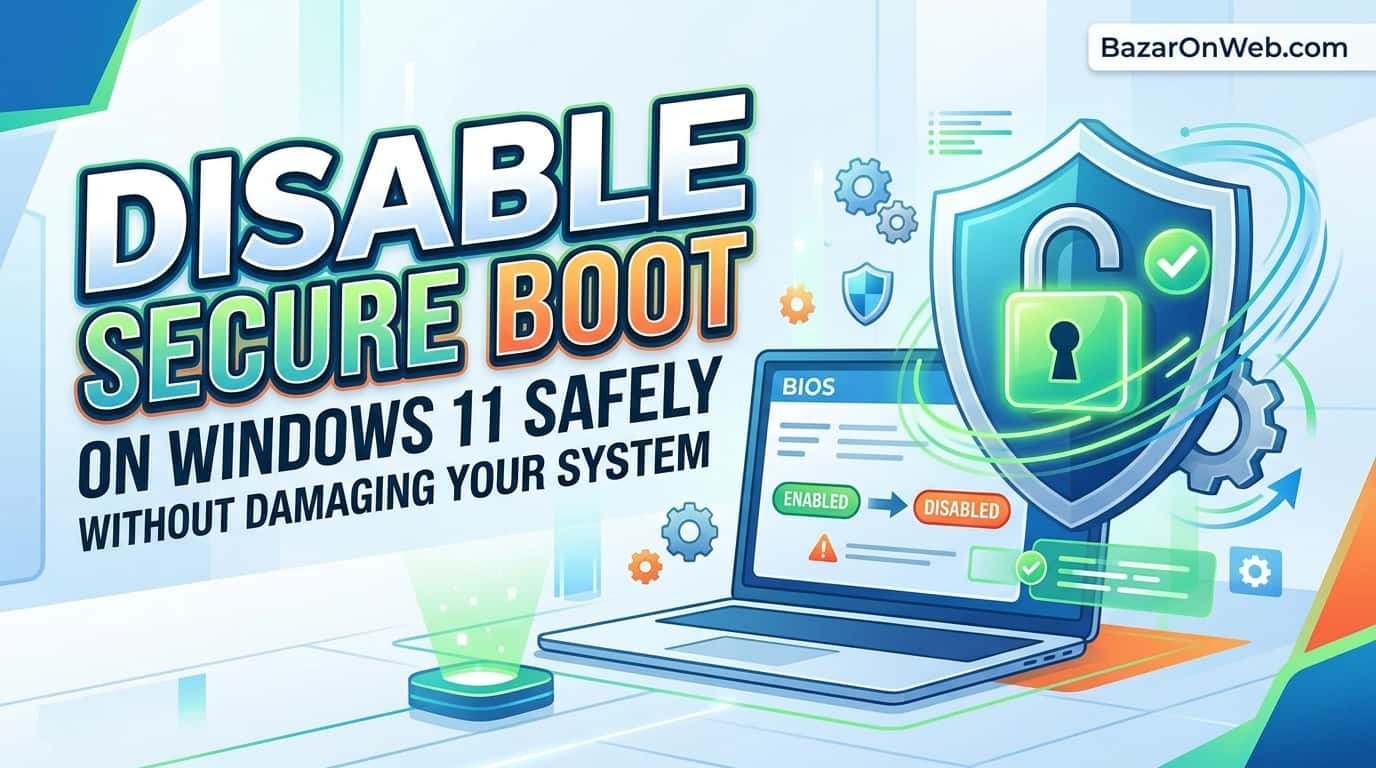
Locate the Secure Boot setting and change its status from Enabled to Disabled. Some systems may require setting an Administrator Password before allowing modifications to security settings. If prompted, create a temporary password and remember it carefully.
After disabling Secure Boot, save your changes before exiting the firmware interface. Most systems use the F10 key for Save and Exit, though menu options may vary. Your computer will then restart automatically.
When Windows 11 loads again, Secure Boot will no longer be active. You can confirm this by opening System Information in Windows. Press Windows + R, type msinfo32, and look for the Secure Boot State entry. It should display Off if the change was successful.
Users who plan to install Linux, use advanced drivers, or run unsupported boot tools can now proceed with their tasks. However, it’s wise to complete the required work efficiently and avoid unnecessary exposure while Secure Boot remains disabled.
Some users encounter systems where the Secure Boot option appears greyed out. In these situations, you may need to disable Fast Boot, enable CSM compatibility mode, or reset factory keys first. Motherboard manufacturers implement firmware settings differently, so consulting your device manual can help if options are difficult to locate.
Risks of Disabling Secure Boot Permanently
Disabling Secure Boot permanently can expose your system to several security risks, especially if you are not careful about what software you install or which websites you visit. While experienced users may manage these risks effectively, casual users often underestimate the importance of boot-level protection.
One of the biggest dangers involves rootkits and bootkits. These forms of malware attack the startup process itself, allowing malicious code to load before Windows security tools activate. Because they operate at such a low level, they can be extremely difficult to detect and remove.
Secure Boot helps prevent unauthorized bootloaders and startup files from running. Without it, attackers may have more opportunities to compromise your firmware or operating system through infected USB drives, modified boot files, or malicious software installers.
Another issue is driver integrity. Secure Boot works alongside Windows driver signature enforcement to ensure that only trusted drivers load during startup. Disabling these protections can increase compatibility, but it also raises the risk of unstable or malicious drivers affecting system reliability.
Some enterprise applications, online games, or security platforms may also require Secure Boot to remain enabled. Disabling it could trigger compatibility warnings or restrict access to certain features. Windows 11 itself performs best when all recommended security protections remain active.
This doesn’t mean users should never disable Secure Boot. The key is understanding when it’s necessary and minimizing the duration whenever possible. For users who only need temporary access for dual-boot installations or troubleshooting, re-enabling Secure Boot afterward provides a good balance between flexibility and security.
Using Dual Boot Systems Without Secure Boot Problems
Many users disable Secure Boot because they want to run multiple operating systems on the same computer. Dual-boot configurations are popular among developers, cybersecurity professionals, and Linux enthusiasts who need access to different environments for work or learning.
Fortunately, modern Linux distributions have improved Secure Boot compatibility significantly. Ubuntu, Fedora, and several other major distributions support signed bootloaders that work with Secure Boot enabled. This allows users to install Linux without compromising system security.
However, not all distributions or custom kernels support Microsoft’s Secure Boot signing requirements. In those cases, disabling Secure Boot becomes necessary during installation. Once Linux is installed, some users choose to re-enable Secure Boot if their setup supports it.
Planning your disk partitions carefully is critical before configuring a dual-boot system. Improper partitioning can result in bootloader conflicts, missing operating systems, or accidental data loss. Using tools like Disk Management in Windows or Linux partition utilities can help organize storage safely.
Another consideration involves boot managers. GRUB is commonly used in Linux dual-boot environments, but Windows Boot Manager may also interact with system startup configurations. Firmware updates or Windows upgrades occasionally modify boot priorities, requiring users to reconfigure startup settings afterward.
Dual-boot setups provide excellent flexibility for learning, software development, gaming, and cybersecurity testing. However, they require a basic understanding of UEFI, partitions, and operating system installation procedures. Users unfamiliar with these topics should research carefully or seek professional assistance before making significant system modifications.
Secure Boot and Gaming Performance Misconceptions
A surprising number of users believe disabling Secure Boot improves gaming performance, but this is usually a misconception. Secure Boot itself has almost no measurable impact on frame rates, CPU usage, GPU performance, or gaming responsiveness during normal gameplay.
The confusion often comes from advanced anti-cheat systems or hardware optimization tools. Some gamers disable Secure Boot while troubleshooting compatibility problems with custom drivers, emulators, virtualization software, or older peripherals. In these situations, performance improvements may result from other changes rather than Secure Boot itself.
Modern games increasingly rely on advanced security technologies to prevent cheating and unauthorized modifications. Some anti-cheat platforms actually require Secure Boot and TPM protections to remain enabled. Games that use these systems may refuse to launch properly if key security features are disabled.
Windows 11 was designed with security-focused hardware standards in mind. Features such as Secure Boot, TPM 2.0, virtualization-based security, and memory integrity work together to create a safer gaming and computing environment. Disabling these protections unnecessarily can reduce overall system resilience without providing meaningful performance gains.
That said, certain modding communities, emulator users, and advanced hardware enthusiasts occasionally disable Secure Boot for compatibility reasons. Specialized GPU BIOS tools, unsigned drivers, or experimental system modifications may function better when restrictions are removed temporarily.
For the average gamer, however, keeping Secure Boot enabled is usually the best option. It helps maintain system integrity while ensuring compatibility with modern gaming platforms, online services, and security-focused software ecosystems.
How to Re-Enable Secure Boot After Finishing Your Tasks
After completing your installation, troubleshooting, or customization work, re-enabling Secure Boot is strongly recommended. The process is very similar to disabling it and usually takes only a few minutes.
Restart your PC and enter the UEFI firmware settings again using the same method you used previously. Navigate to the Security or Boot section where the Secure Boot option is located. Change the setting from Disabled back to Enabled.
Save the changes and restart your computer. Once Windows 11 loads, verify the status using System Information by checking the Secure Boot State field again. It should now display On.
In some cases, Secure Boot may fail to re-enable because of unsigned operating systems or modified bootloaders currently installed on the machine. If this happens, you may need to restore default factory keys or remove incompatible startup files. Certain Linux configurations may also require additional setup to support Secure Boot properly.
If your system uses BitLocker encryption, Windows may request your recovery key after Secure Boot settings change again. This is normal behavior because firmware modifications can trigger security verification checks.
Keeping Secure Boot enabled whenever possible provides stronger defense against boot-level attacks. Even advanced users who frequently experiment with operating systems or development environments often re-enable it once their work is complete. Balancing flexibility with security is one of the smartest ways to maintain a stable and protected Windows 11 system.
Best Practices for Staying Secure After Disabling Secure Boot
If you choose to disable Secure Boot temporarily or permanently, following strong cybersecurity habits becomes even more important. Without boot-level verification protecting your startup process, your overall security depends heavily on responsible computing behavior.
Always download software from trusted official websites rather than third-party repositories or suspicious forums. Malicious boot tools, fake drivers, and modified operating system images are common attack methods targeting users who disable firmware protections.
Maintaining updated antivirus and anti-malware software is also critical. Windows Security provides strong built-in protection, but keeping definitions updated ensures newer threats can be detected effectively. Running regular system scans adds another layer of defense.
Users should also enable multi-factor authentication on important accounts and keep Windows 11 updated with the latest security patches. Microsoft frequently releases updates that address newly discovered vulnerabilities affecting system stability and security.
Avoid using unknown USB drives or bootable media from untrusted sources. Malware capable of infecting boot sectors often spreads through removable devices. Secure Boot normally helps block these threats, but disabled systems rely more heavily on user caution.
Finally, monitor your PC for unusual startup behavior, unexpected crashes, or suspicious performance issues. Early signs of compromise may include boot delays, strange error messages, unauthorized driver installations, or security warnings.
Disabling Secure Boot does not automatically make a computer unsafe. Problems usually arise when users combine reduced security protections with risky online behavior. By staying cautious and informed, users can safely manage advanced system configurations while minimizing potential security threats.
Disclaimer
The information provided in this article is for educational and informational purposes only. Modifying BIOS or UEFI firmware settings, including disabling Secure Boot, may affect system stability, security, or compatibility depending on your hardware configuration. Always back up important data before making firmware or operating system changes. Procedures may vary between manufacturers and device models. If you are unsure about any step, consult your motherboard or laptop manufacturer’s documentation or seek assistance from a qualified technician.
Written by Bazaronweb
Latest Tech Articles
- How to Disable Secure Boot in Windows 11 Safely Without Damaging Your System

- How to Use Disk Cleanup Utility on Windows 11 to Improve Performance and Free Storage Space

- How to Use Mail on Your Mac to Manage All Your Email Accounts Efficiently

- Internet Kill Switch Explained: How This Digital Panic Button Protects Your Privacy and Security

- How to Disable Hyper-V in Windows 11 to Improve Performance and Avoid Virtualization Conflicts

Products
-
Apple Watch Ultra 3 [GPS + Cellular 49mm] Running & Multisport Smartwatch w/Rugged Titanium Case w/Black Titanium Milanese Loop - M. Satellite Communications, Advanced Health & Fitness Tracking
-
Apple iPad mini (A17 Pro): Apple Intelligence, 8.3-inch Liquid Retina Display, 256GB, Wi-Fi 6E, 12MP Front/12MP Back Camera, Touch ID, All-Day Battery Life — Purple
-
Apple AirPods Max Wireless Over-Ear Headphones, Active Noise Cancelling, Transparency Mode, Personalized Spatial Audio, Dolby Atmos, Bluetooth Headphones for iPhone – Space Gray
-

Apple AirPods Pro 2 Wireless Earbuds, Active Noise Cancellation, Hearing Aid Feature, Bluetooth Headphones, Transparency, Personalized Spatial Audio, High-Fidelity Sound, H2 Chip, USB-C Charging
-
Leo Creation 144 TC Cotton Double Jaipuri Prints Flat Bedsheet(Pack of 1, Blue, Gree, Red, Grey, Light Grey)
₹2,999.00Original price was: ₹2,999.00.₹329.00Current price is: ₹329.00.
Leave a Reply