Category
Popular Articles
- AI (20)
- Air Tag (1)
- Android (53)
- App Suggest (13)
- Apple (42)
- Apple TV (4)
- Bluetooth (3)
- Cars (2)
- ChatGpt (1)
- Chrome (3)
- Did you know? (1)
- E-Commerce News (1)
- Ecommerce Websites business (7)
- Electronics Shopping (5)
- Fashion Tips (3)
- Gaming (7)
- Google Gemini (3)
- Hair Care Tips (2)
- How to (13)
- iCloud (1)
- Infotainment System (1)
- Iphone (159)
- Job Posting (1)
- Lifestyle (3)
- Mac (27)
- Mobile Games (1)
- Netflix (1)
- Online Shopping Websites (2)
- Personal Finance Management (3)
- Product Reviews (3)
- Roku TV (4)
- Samsung (10)
- Shopping Tips (13)
- Spotify (1)
- Tech (162)
- VPN (2)
- Windows 11 (102)
- Youtube (1)
- Zero Waste (3)
Discounted Products
-

Leo Creation 144 TC Cotton Double Jaipuri Prints Flat Bedsheet(Pack of 1, Blue, Gree, Red, Grey, Light Grey)
₹2,999.00Original price was: ₹2,999.00.₹329.00Current price is: ₹329.00. -
Home Garage 210 TC Cotton King Floral Fitted (Elastic) Bedsheet(Pack of 1, Grey)
₹999.00Original price was: ₹999.00.₹299.00Current price is: ₹299.00. -

Goodrik 140 TC Cotton Double 3D Printed Flat Bedsheet(Pack of 1, Brown)
₹499.00Original price was: ₹499.00.₹229.00Current price is: ₹229.00. -

GLOBALSHOP 350 TC Microfiber Double Floral Flat Bedsheet(Pack of 1, Multicolor)
₹1,250.00Original price was: ₹1,250.00.₹263.00Current price is: ₹263.00. -

RisingStar 250 TC Microfiber King Printed Fitted (Elastic) Bedsheet(Pack of 1, FITTED-ROUND-CIRCLES-PREMIUM)
₹2,299.00Original price was: ₹2,299.00.₹299.00Current price is: ₹299.00. -

Home Garage 210 TC Cotton King Floral Fitted (Elastic) Bedsheet(Pack of 1, Fitted Black Green)
₹1,299.00Original price was: ₹1,299.00.₹299.00Current price is: ₹299.00. -

Home Garage 180 TC Cotton King 3D Printed Flat Bedsheet(Pack of 1, White)
₹999.00Original price was: ₹999.00.₹229.00Current price is: ₹229.00. -

Home Sizzler 153 cm (5 ft) Polyester Room Darkening Window Curtain (Pack Of 2)(Floral, Maroon)
₹799.00Original price was: ₹799.00.₹299.00Current price is: ₹299.00. -

Panipat Textile Hub 152.4 cm (5 ft) Polyester Window Curtain (Pack Of 2)(Solid, Aqua)
₹1,899.00Original price was: ₹1,899.00.₹299.00Current price is: ₹299.00. -
Home Sizzler 214 cm (7 ft) Polyester Semi Transparent Door Curtain (Pack Of 2)(Floral, Maroon)
₹1,199.00Original price was: ₹1,199.00.₹399.00Current price is: ₹399.00. -

Home Sizzler 153 cm (5 ft) Polyester Room Darkening Window Curtain (Pack Of 2)(Floral, Brown)
₹799.00Original price was: ₹799.00.₹299.00Current price is: ₹299.00. -

Stella Creations 214 cm (7 ft) Polyester Room Darkening Door Curtain (Pack Of 2)(Abstract, Brown)
₹1,299.00Original price was: ₹1,299.00.₹449.00Current price is: ₹449.00. -

Homefab India 152.5 cm (5 ft) Polyester Room Darkening Window Curtain (Pack Of 2)(Floral, Light Blue)
₹1,199.00Original price was: ₹1,199.00.₹319.00Current price is: ₹319.00. -

Urban Home 214 cm (7 ft) PVC Transparent Door Curtain Single Curtain(Solid, Off White)
₹699.00Original price was: ₹699.00.₹203.00Current price is: ₹203.00. -

Panipat Textile Hub 213 cm (7 ft) Polyester Door Curtain (Pack Of 2)(Solid, Brown)
₹1,199.00Original price was: ₹1,199.00.₹349.00Current price is: ₹349.00.
Affiliate Links
Promotion
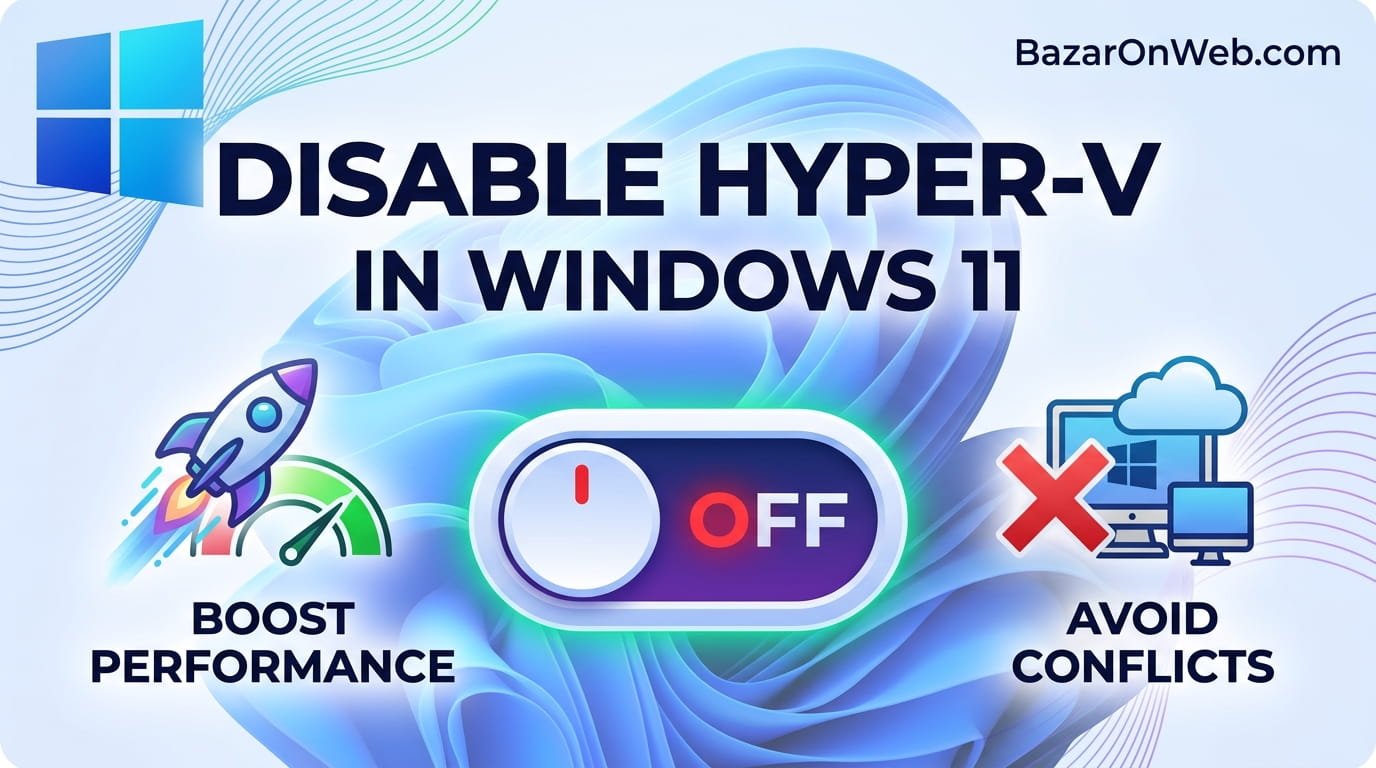
Hi, I’m Jessica, and I learned the importance of disabling Hyper-V after my laptop suddenly started slowing down during everyday work. I noticed higher RAM usage, reduced battery backup, and random conflicts while trying to run virtualization software like VirtualBox. At first, I assumed it was a hardware issue, but after digging into Windows settings, I realized Hyper-V was quietly running in the background. Once I disabled it, my system performance improved, battery life became more stable, and third-party virtual machine tools started working properly again.
Hyper-V is Microsoft’s built-in virtualization platform included in Windows 11 Pro, Enterprise, and Education editions. While it is useful for developers, testers, and IT professionals who need virtual machines, many regular users do not actively use it. Even when no virtual machine is open, Hyper-V can still reserve system resources and interfere with other virtualization applications. This is why many users prefer keeping it disabled unless they specifically need it.
In this guide, I’ll explain how Hyper-V affects your system, why disabling it can help improve performance, and the safest ways to turn it off in Windows 11. Whether you want better battery life, smoother performance, or compatibility with VirtualBox and VMware, this article covers everything you need to know.
Understanding What Hyper-V Actually Does in Windows 11
Hyper-V is a native virtualization technology developed by Microsoft that allows users to create and manage virtual machines directly inside Windows. A virtual machine behaves like a separate computer running within your existing operating system. Developers often use Hyper-V to test software, run multiple operating systems, or create isolated environments for security and experimentation purposes.
When Hyper-V is enabled, Windows reserves certain hardware virtualization features for itself. This includes CPU virtualization instructions and memory management functions. Even if you are not actively using virtual machines, the Hyper-V hypervisor can continue running in the background. Because of this, your computer may consume additional RAM and CPU resources without obvious signs. Many users notice slower startup times, reduced battery efficiency, and increased heat generation after enabling virtualization features.
Another important aspect is software compatibility. Programs like Oracle VM VirtualBox and VMware Workstation may struggle to function properly when Hyper-V is active. Some virtual machine applications display errors, crash unexpectedly, or run significantly slower because Hyper-V takes control of the virtualization layer first. Disabling Hyper-V often resolves these conflicts and restores normal performance for alternative virtualization tools.
Why Hyper-V Can Increase RAM Usage and Reduce System Performance
One of the biggest reasons users disable Hyper-V is excessive memory consumption. Hyper-V creates a virtualization environment that reserves system resources for virtual machine operations. Even when no virtual machine is currently running, Windows may still allocate memory for virtualization services in the background. This can reduce the amount of RAM available for regular applications such as browsers, editing tools, games, and office software.
Users with 8GB or 16GB RAM often feel the impact more clearly. Opening multiple browser tabs, video conferencing apps, or creative software while Hyper-V is enabled can lead to sluggish performance. Applications may take longer to launch, multitasking becomes slower, and background services consume additional CPU power. In laptops, this constant resource usage also contributes to higher battery drain because the processor remains more active than usual.
Gaming performance can also suffer. Hyper-V introduces an additional virtualization layer between Windows and the hardware. Some games experience lower frame rates, increased latency, or compatibility issues because virtualization-based security and hypervisor services remain active. This is especially noticeable on mid-range systems where hardware resources are limited.
Disabling Hyper-V frees up these reserved resources and allows Windows to interact more directly with the hardware. Many users report faster boot times, smoother multitasking, lower RAM consumption, and improved overall responsiveness after turning off virtualization services they do not actually need.
Common Signs That Hyper-V Should Be Disabled
Many Windows 11 users do not even realize Hyper-V is enabled until performance problems begin appearing. One of the most common warning signs is unusually high RAM usage during light tasks. If your laptop becomes slow while browsing the internet or using office applications, Hyper-V may be consuming background resources without your knowledge.
Battery drain is another major indicator. Laptops running Hyper-V often experience shorter battery backup because virtualization services keep hardware components active more frequently. Users may notice fans spinning more often, increased heat generation, or processors staying under continuous load even when performing basic activities. These symptoms usually become more obvious after Windows updates or enabling development-related features.
Conflicts with virtualization software are also extremely common. Programs like VirtualBox or VMware may display warnings stating that Hyper-V is interfering with hardware acceleration. Virtual machines may fail to start, run slowly, or crash unexpectedly. Some users even experience Blue Screen errors or unstable performance after enabling multiple virtualization platforms together.
Gaming issues can point toward Hyper-V activity as well. Reduced FPS, controller lag, stuttering, and anti-cheat compatibility problems occasionally occur because certain games dislike active hypervisors. If your PC feels slower despite having decent hardware specifications, disabling Hyper-V can often help restore better system responsiveness and compatibility across applications.
How to Disable Hyper-V Using Windows Features
The easiest method to disable Hyper-V in Windows 11 is through the Windows Features panel. This approach is beginner-friendly and does not require advanced technical knowledge. Before starting, save your work and close any running applications because your computer will need to restart afterward.
First, open the Start menu and search for “Turn Windows features on or off.” Click the matching result to open the Windows Features dialog box. Inside the list, locate the option labeled Hyper-V. Expand the category and uncheck all related components, including Hyper-V Management Tools and Hyper-V Platform.
You should also look for features connected to virtualization, such as Virtual Machine Platform, Windows Hypervisor Platform, and Windows Sandbox. If you plan to use VirtualBox or VMware instead, disabling these additional virtualization components may help avoid conflicts. After unchecking the necessary options, click OK and allow Windows to process the changes.
The system will then prompt you to restart your computer. Once the restart is complete, Hyper-V should be fully disabled. You can verify this by opening Task Manager or System Information and checking whether virtualization services are still running. Most users immediately notice reduced RAM usage and smoother performance after disabling unnecessary virtualization features through Windows settings.
Turning Off Hyper-V with Command Prompt
Advanced users often prefer disabling Hyper-V through Command Prompt because it is faster and more direct. This method works particularly well when Windows Features fails to disable virtualization completely or when certain Hyper-V services continue running after rebooting the system.
To begin, open the Start menu and search for Command Prompt. Right-click it and choose “Run as administrator.” Administrative permissions are necessary because the command modifies boot configuration settings within Windows. Once the terminal window opens, type the following command carefully:
bcdedit /set hypervisorlaunchtype off
Press Enter after typing the command. If successful, Windows will display a confirmation message indicating that the operation completed successfully. This command prevents the Hyper-V hypervisor from launching during system startup.
Next, restart your computer to apply the changes. After rebooting, Hyper-V services should remain inactive. Many users prefer this method because it directly disables the hypervisor rather than only removing interface components from Windows Features.
If you ever want to re-enable Hyper-V later, you can repeat the process using a different command:
bcdedit /set hypervisorlaunchtype auto
This restores the default behavior and allows Windows to start Hyper-V normally again. Using Command Prompt gives users greater control over virtualization settings and often resolves persistent compatibility problems with third-party virtualization software.
Disabling Virtualization-Based Security Features in Windows 11
Even after turning off Hyper-V, some virtualization-related features may continue operating in the background. Windows 11 includes security technologies such as Memory Integrity and Virtualization-Based Security that rely on hypervisor components. These features improve security but can still affect system performance and compatibility with virtualization software.
To disable these settings, open Windows Security from the Start menu. Navigate to Device Security and then select Core Isolation Details. Inside this section, you may see an option called Memory Integrity. If it is enabled, toggle it off. Windows will usually require a restart before the change takes effect.
Memory Integrity helps protect against malicious drivers and kernel-level attacks, but it can increase system overhead. Some users experience lower gaming performance, slower application launches, or driver conflicts because of this feature. Turning it off can improve responsiveness, especially on older hardware or laptops with limited RAM.
You should also check BIOS or UEFI settings if virtualization remains active after disabling Windows features. Some systems automatically keep hardware virtualization enabled at the firmware level. Accessing BIOS settings during startup allows you to disable Intel VT-x or AMD-V if necessary.
While security features are important, not every user needs virtualization-based protection enabled at all times. Balancing security, performance, and software compatibility is essential for achieving the best Windows 11 experience.
How Hyper-V Affects VirtualBox and VMware Performance
Many users discover Hyper-V because their favorite virtualization software suddenly stops working properly. Applications like VirtualBox and VMware require direct access to hardware virtualization technologies such as Intel VT-x or AMD-V. When Hyper-V is active, Windows takes exclusive control of these resources, limiting how other virtualization platforms can operate.
As a result, users often encounter frustrating problems. Virtual machines may refuse to start, display compatibility warnings, or perform extremely slowly. Even when VirtualBox or VMware manages to launch successfully, performance can degrade significantly because the software must run through Microsoft’s hypervisor layer instead of directly accessing the processor virtualization features.
Developers, cybersecurity students, and IT professionals frequently rely on multiple virtualization tools for testing environments. Hyper-V conflicts can interrupt workflows and create instability during software testing or operating system installation. Some users experience random freezing, networking issues, or crashes while running Linux virtual machines alongside active Hyper-V services.
Disabling Hyper-V usually restores normal functionality immediately. VirtualBox and VMware regain direct hardware access, allowing virtual machines to run faster and more reliably. Boot times improve, CPU efficiency increases, and virtualization errors disappear. For users who primarily depend on third-party virtualization software rather than Microsoft’s own tools, disabling Hyper-V is often the most practical solution.
Battery Life Improvements After Disabling Hyper-V
Laptop users are often surprised by how much Hyper-V can impact battery life. Virtualization technologies keep certain processor functions active even when the system appears idle. This continuous background activity increases power consumption and prevents the CPU from entering lower-power states efficiently.
When Hyper-V is enabled, Windows may maintain additional virtualization services, memory allocation processes, and hardware monitoring tasks. These operations can reduce battery backup noticeably, especially on thin-and-light laptops designed for portability. Users commonly report faster battery drain during web browsing, streaming, or document editing despite performing lightweight tasks.
Heat generation is another side effect. Because virtualization keeps the processor more active, cooling fans may run more frequently. Increased fan activity itself consumes additional power while also creating more noise. Over time, constant thermal stress can affect overall laptop efficiency and user comfort.
After disabling Hyper-V, many users notice immediate improvements in battery performance. The processor operates more efficiently, background resource usage decreases, and idle power consumption drops significantly. While the exact improvement depends on hardware specifications and usage patterns, laptops generally become quieter, cooler, and more power-efficient once unnecessary virtualization features are disabled.
For people who prioritize mobility, travel frequently, or work remotely without constant charger access, disabling Hyper-V can be a practical way to extend daily battery life and improve overall laptop usability.
Situations Where You Should Keep Hyper-V Enabled
Although disabling Hyper-V benefits many regular users, there are situations where keeping it enabled makes complete sense. Developers, IT administrators, software testers, and cybersecurity professionals often rely heavily on virtualization technology for daily tasks. Hyper-V provides a stable and integrated environment for creating and managing virtual machines directly within Windows.
If you regularly test multiple operating systems, run Linux environments, or experiment with server configurations, Hyper-V can be extremely valuable. It allows users to isolate software safely without affecting the primary Windows installation. Businesses also use Hyper-V for virtualization labs, network simulations, and development environments.
Windows Subsystem for Linux features may also depend partially on virtualization technologies. Certain advanced developer tools, Android emulators, Docker containers, and cloud-testing environments function better with Hyper-V enabled. Disabling it could limit functionality for programming or DevOps workflows.
Security-conscious users may also appreciate virtualization-based security features connected to Hyper-V. Memory isolation and kernel protection mechanisms provide an extra defense layer against sophisticated malware attacks. While these features can slightly reduce performance, they improve overall system protection in enterprise environments.
The decision ultimately depends on how you use your computer. If virtualization is central to your workflow, keeping Hyper-V active may outweigh the performance trade-offs. However, for everyday users focused on gaming, productivity, and battery efficiency, disabling it is often the better option.
Best Practices Before and After Disabling Hyper-V
Before disabling Hyper-V, it is important to prepare your system properly to avoid unexpected problems. Start by shutting down any active virtual machines and backing up important virtual machine data if you use virtualization occasionally. Removing Hyper-V while virtual environments are running can sometimes cause configuration issues or corrupted sessions.
You should also create a system restore point before making significant Windows configuration changes. Although disabling Hyper-V is generally safe, restore points provide an easy recovery method if anything behaves unexpectedly afterward. This precaution is especially helpful for users experimenting with virtualization settings for the first time.
After disabling Hyper-V, restart your system fully rather than using Fast Startup or sleep mode. A clean reboot ensures all hypervisor-related services stop correctly. Once Windows loads again, check Task Manager and virtualization software performance to confirm the changes worked successfully.
If you plan to use VirtualBox or VMware, install the latest versions because newer releases offer improved compatibility with modern Windows 11 systems. Keeping chipset drivers, BIOS firmware, and graphics drivers updated also helps maintain stable virtualization performance.
Finally, monitor system behavior over the next few days. Most users notice smoother multitasking, lower RAM usage, reduced battery drain, and improved compatibility with third-party software. Properly managing virtualization settings can significantly improve overall Windows 11 performance and user experience.
Final Thoughts on Managing Hyper-V in Windows 11
Hyper-V is a powerful virtualization feature, but not every Windows 11 user actually needs it enabled. While it provides valuable tools for developers and IT professionals, it can also consume RAM, reduce battery life, increase heat generation, and create compatibility problems with virtualization software like VirtualBox and VMware.
For regular users focused on productivity, gaming, multimedia work, or better laptop efficiency, disabling Hyper-V can often deliver noticeable performance improvements. Systems may feel faster, quieter, and more responsive after removing unnecessary virtualization overhead. Many users also experience smoother operation from third-party virtualization applications once Hyper-V is fully disabled.
The good news is that Microsoft provides multiple ways to turn Hyper-V off safely. Whether you prefer using Windows Features, Command Prompt, or adjusting security settings, the process is relatively simple and reversible. If your needs change later, you can always re-enable Hyper-V whenever virtualization becomes necessary again.
Understanding how Windows virtualization works helps you make better decisions about performance optimization and software compatibility. Instead of leaving advanced features enabled by default, tailoring Windows 11 to your actual workflow can improve stability, efficiency, and overall daily usability.
Disclaimer:
This article is for informational and educational purposes only. Windows settings, virtualization features, and system configurations may vary depending on your device manufacturer, Windows version, and hardware specifications. Disabling Hyper-V or virtualization-related features may affect certain applications, developer tools, security functions, or enterprise environments. Always create backups or restore points before making system-level changes. The author and publisher are not responsible for any data loss, software conflicts, or performance issues resulting from the use of this guide.
Written by Bazaronweb
Latest Tech Articles
- How to Disable Hyper-V in Windows 11 to Improve Performance and Avoid Virtualization Conflicts

- How to Check Your Phone’s Real Charging Speed and Understand Fast Charging Performance

- How to Update Audio Drivers in Windows 11 for Better Sound Performance and Stability

- How to Open DMG Files on Windows Easily Using Safe and Reliable Methods

- How to Fix Left and Right Sound Imbalance on Windows, Android, iPhone, and Headphones

Products
-
Apple Watch Ultra 3 [GPS + Cellular 49mm] Running & Multisport Smartwatch w/Rugged Titanium Case w/Black Titanium Milanese Loop - M. Satellite Communications, Advanced Health & Fitness Tracking
-
Apple iPad mini (A17 Pro): Apple Intelligence, 8.3-inch Liquid Retina Display, 256GB, Wi-Fi 6E, 12MP Front/12MP Back Camera, Touch ID, All-Day Battery Life — Purple
-
Apple AirPods Max Wireless Over-Ear Headphones, Active Noise Cancelling, Transparency Mode, Personalized Spatial Audio, Dolby Atmos, Bluetooth Headphones for iPhone – Space Gray
-

Apple AirPods Pro 2 Wireless Earbuds, Active Noise Cancellation, Hearing Aid Feature, Bluetooth Headphones, Transparency, Personalized Spatial Audio, High-Fidelity Sound, H2 Chip, USB-C Charging
-
Leo Creation 144 TC Cotton Double Jaipuri Prints Flat Bedsheet(Pack of 1, Blue, Gree, Red, Grey, Light Grey)
₹2,999.00Original price was: ₹2,999.00.₹329.00Current price is: ₹329.00.
Leave a Reply