Discounted Products
-
 Home Garage 210 TC Cotton King Floral Fitted (Elastic) Bedsheet(Pack of 1, Grey)
Original price was: ₹999.00.₹299.00Current price is: ₹299.00.
Home Garage 210 TC Cotton King Floral Fitted (Elastic) Bedsheet(Pack of 1, Grey)
Original price was: ₹999.00.₹299.00Current price is: ₹299.00.
-
 Goodrik 140 TC Cotton Double 3D Printed Flat Bedsheet(Pack of 1, Brown)
Original price was: ₹499.00.₹229.00Current price is: ₹229.00.
Goodrik 140 TC Cotton Double 3D Printed Flat Bedsheet(Pack of 1, Brown)
Original price was: ₹499.00.₹229.00Current price is: ₹229.00.
-
 GLOBALSHOP 350 TC Microfiber Double Floral Flat Bedsheet(Pack of 1, Multicolor)
Original price was: ₹1,250.00.₹263.00Current price is: ₹263.00.
GLOBALSHOP 350 TC Microfiber Double Floral Flat Bedsheet(Pack of 1, Multicolor)
Original price was: ₹1,250.00.₹263.00Current price is: ₹263.00.
-
 RisingStar 250 TC Microfiber King Printed Fitted (Elastic) Bedsheet(Pack of 1, FITTED-ROUND-CIRCLES-PREMIUM)
Original price was: ₹2,299.00.₹299.00Current price is: ₹299.00.
RisingStar 250 TC Microfiber King Printed Fitted (Elastic) Bedsheet(Pack of 1, FITTED-ROUND-CIRCLES-PREMIUM)
Original price was: ₹2,299.00.₹299.00Current price is: ₹299.00.
-
 Home Garage 210 TC Cotton King Floral Fitted (Elastic) Bedsheet(Pack of 1, Fitted Black Green)
Original price was: ₹1,299.00.₹299.00Current price is: ₹299.00.
Home Garage 210 TC Cotton King Floral Fitted (Elastic) Bedsheet(Pack of 1, Fitted Black Green)
Original price was: ₹1,299.00.₹299.00Current price is: ₹299.00.
-
 Home Garage 180 TC Cotton King 3D Printed Flat Bedsheet(Pack of 1, White)
Original price was: ₹999.00.₹229.00Current price is: ₹229.00.
Home Garage 180 TC Cotton King 3D Printed Flat Bedsheet(Pack of 1, White)
Original price was: ₹999.00.₹229.00Current price is: ₹229.00.
-
 Panipat Textile Hub 152.4 cm (5 ft) Polyester Window Curtain (Pack Of 2)(Solid, Aqua)
Original price was: ₹1,899.00.₹299.00Current price is: ₹299.00.
Panipat Textile Hub 152.4 cm (5 ft) Polyester Window Curtain (Pack Of 2)(Solid, Aqua)
Original price was: ₹1,899.00.₹299.00Current price is: ₹299.00.
-
 Home Sizzler 214 cm (7 ft) Polyester Semi Transparent Door Curtain (Pack Of 2)(Floral, Maroon)
Original price was: ₹1,199.00.₹399.00Current price is: ₹399.00.
Home Sizzler 214 cm (7 ft) Polyester Semi Transparent Door Curtain (Pack Of 2)(Floral, Maroon)
Original price was: ₹1,199.00.₹399.00Current price is: ₹399.00.
-
 Home Sizzler 153 cm (5 ft) Polyester Room Darkening Window Curtain (Pack Of 2)(Floral, Brown)
Original price was: ₹799.00.₹299.00Current price is: ₹299.00.
Home Sizzler 153 cm (5 ft) Polyester Room Darkening Window Curtain (Pack Of 2)(Floral, Brown)
Original price was: ₹799.00.₹299.00Current price is: ₹299.00.
-
 Stella Creations 214 cm (7 ft) Polyester Room Darkening Door Curtain (Pack Of 2)(Abstract, Brown)
Original price was: ₹1,299.00.₹449.00Current price is: ₹449.00.
Stella Creations 214 cm (7 ft) Polyester Room Darkening Door Curtain (Pack Of 2)(Abstract, Brown)
Original price was: ₹1,299.00.₹449.00Current price is: ₹449.00.
-
 Homefab India 152.5 cm (5 ft) Polyester Room Darkening Window Curtain (Pack Of 2)(Floral, Light Blue)
Original price was: ₹1,199.00.₹319.00Current price is: ₹319.00.
Homefab India 152.5 cm (5 ft) Polyester Room Darkening Window Curtain (Pack Of 2)(Floral, Light Blue)
Original price was: ₹1,199.00.₹319.00Current price is: ₹319.00.
-
 Urban Home 214 cm (7 ft) PVC Transparent Door Curtain Single Curtain(Solid, Off White)
Original price was: ₹699.00.₹203.00Current price is: ₹203.00.
Urban Home 214 cm (7 ft) PVC Transparent Door Curtain Single Curtain(Solid, Off White)
Original price was: ₹699.00.₹203.00Current price is: ₹203.00.
-
 Panipat Textile Hub 213 cm (7 ft) Polyester Door Curtain (Pack Of 2)(Solid, Brown)
Original price was: ₹1,199.00.₹349.00Current price is: ₹349.00.
Panipat Textile Hub 213 cm (7 ft) Polyester Door Curtain (Pack Of 2)(Solid, Brown)
Original price was: ₹1,199.00.₹349.00Current price is: ₹349.00.
-
 Home Sizzler 214 cm (7 ft) Polyester Semi Transparent Door Curtain (Pack Of 2)(Floral, Brown)
Original price was: ₹999.00.₹349.00Current price is: ₹349.00.
Home Sizzler 214 cm (7 ft) Polyester Semi Transparent Door Curtain (Pack Of 2)(Floral, Brown)
Original price was: ₹999.00.₹349.00Current price is: ₹349.00.
-
 Panipat Textile Hub 213 cm (7 ft) Polyester Semi Transparent Door Curtain (Pack Of 2)(Floral, Brown)
Original price was: ₹899.00.₹299.00Current price is: ₹299.00.
Panipat Textile Hub 213 cm (7 ft) Polyester Semi Transparent Door Curtain (Pack Of 2)(Floral, Brown)
Original price was: ₹899.00.₹299.00Current price is: ₹299.00.
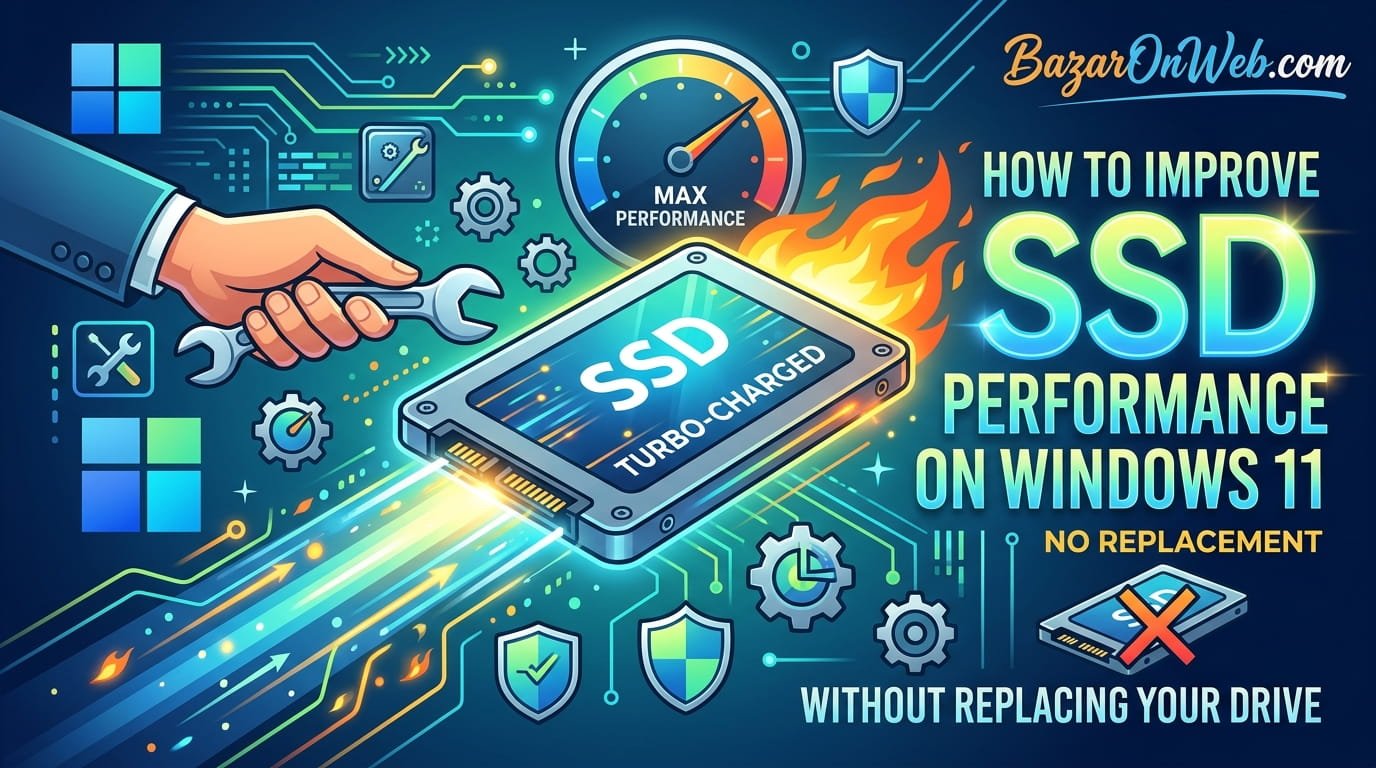
Hi, I’m Jessica, and I recently noticed my Windows 11 laptop taking much longer to boot than it used to. Apps that once opened instantly started lagging, file transfers slowed down, and even basic multitasking felt frustrating. At first, I thought my SSD was failing, but after digging deeper, I realized that Windows 11 settings, background services, storage clutter, and outdated configurations were actually causing most of the slowdown. The good news is that many SSD performance issues can be fixed without buying new hardware.
Solid State Drives are designed to provide fast boot times, quick file access, and smooth multitasking. However, after major Windows updates or long-term use, performance can gradually decline if the operating system is not optimized properly. Temporary files accumulate, startup apps consume resources, outdated firmware creates compatibility issues, and certain Windows features may unintentionally reduce SSD efficiency. Many users experience slower SSD speeds after upgrading to Windows 11 because the system settings are not always perfectly optimized for every device.
In this guide, I’ll walk you through practical and effective ways to improve SSD performance on Windows 11. These methods are beginner-friendly, safe to perform, and can help restore the speed and responsiveness your system originally had. Whether you use your PC for gaming, office work, editing, or everyday browsing, these tips can significantly improve overall system performance.
Check SSD Health and Storage Status
Before making changes to your Windows 11 system, the first thing you should do is check the health status of your SSD. Many users assume their SSD is slow because of software issues, but sometimes the drive itself may be nearing failure or operating under stress due to insufficient free space. Windows 11 includes basic tools to monitor drive conditions, while SSD manufacturers also provide specialized utilities for detailed diagnostics.
Start by opening Windows Settings and navigating to the Storage section. Look at how much free space remains on your SSD. Ideally, you should keep at least 15 to 20 percent of the total storage free. When SSDs become nearly full, write speeds can decrease significantly because the controller has less room to manage data efficiently. Delete unnecessary downloads, duplicate media files, old backups, and unused applications to free up space.
You can also use the Command Prompt to check basic drive health. Running SSD diagnostic tools from brands like Samsung, Western Digital, Kingston, or Crucial can provide deeper insights into temperature, wear levels, firmware condition, and remaining lifespan. If your SSD shows warning signs such as high temperatures or excessive wear, performance issues may be hardware-related rather than software-related.
Keeping track of SSD health helps you identify problems early before they become severe. Regular monitoring ensures your system remains stable, responsive, and capable of maintaining fast performance over time.
Enable TRIM to Maintain SSD Efficiency
TRIM is one of the most important features for maintaining SSD performance on Windows 11. Unlike traditional hard drives, SSDs manage data differently. When files are deleted, the storage cells still contain residual information until the operating system informs the SSD controller that those blocks can be cleaned and reused. TRIM automates this process and prevents the drive from becoming slower over time.
Windows 11 usually enables TRIM automatically, but sometimes updates, system tweaks, or third-party optimization tools can disable it accidentally. To check whether TRIM is active, open Command Prompt as an administrator and run the following command:
fsutil behavior query DisableDeleteNotify
If the result shows “0,” TRIM is enabled. If it shows “1,” then TRIM is disabled and should be activated immediately. To enable it, use:
fsutil behavior set DisableDeleteNotify 0
Once TRIM is functioning correctly, your SSD can better manage deleted data blocks and sustain faster write performance. This is especially important for users who frequently install software, transfer large files, or edit multimedia content. Without TRIM, SSD performance gradually deteriorates because the drive spends more time cleaning storage cells during active use.
Enabling TRIM does not increase storage capacity, but it improves responsiveness and prolongs the lifespan of the SSD. Many users notice smoother application launches and improved file transfer speeds after confirming that TRIM is working properly.
Disable Unnecessary Startup Programs
One of the most common reasons Windows 11 feels slow despite having an SSD is excessive startup applications. Many software programs automatically launch in the background every time the computer starts. Even though SSDs reduce boot times significantly, too many startup apps can still create delays and consume valuable system resources.
To optimize startup performance, open Task Manager by pressing Ctrl + Shift + Esc and navigate to the Startup Apps section. Here, you will see a list of applications that load during boot. Pay attention to the “Startup Impact” column, which indicates how heavily each program affects system startup speed. Disable apps that are unnecessary during boot, such as gaming launchers, chat tools, update managers, and background utilities you rarely use.
Be cautious not to disable essential drivers, antivirus software, or critical Windows services. The goal is to reduce clutter while maintaining system stability. Removing excessive startup apps allows Windows 11 to allocate resources more efficiently during boot and normal operation.
In addition to improving SSD responsiveness, reducing startup programs can lower memory usage and CPU activity. This creates a smoother overall computing experience, especially on systems with limited RAM. Many users are surprised at how much faster their PC feels simply by disabling background startup processes they never actually use.
A clean startup environment helps your SSD perform closer to its intended speed and reduces unnecessary wear caused by constant background activity.
Update SSD Firmware and Windows Drivers
Outdated firmware and storage drivers can significantly affect SSD performance on Windows 11. SSD manufacturers regularly release firmware updates to improve compatibility, stability, thermal management, and read/write performance. Similarly, motherboard chipset drivers and storage controller drivers play a critical role in how efficiently Windows communicates with your SSD.
Start by visiting the official website of your SSD manufacturer and downloading their management software. Most major brands provide tools that automatically detect firmware updates and install them safely. Firmware updates may fix bugs, improve performance consistency, and resolve slowdowns introduced after Windows updates.
Next, check Device Manager in Windows 11 and update storage controller drivers, chipset drivers, and NVMe drivers if applicable. Many users rely only on Windows Update, but motherboard manufacturers often provide newer optimized drivers through their support pages.
You should also keep Windows 11 fully updated because Microsoft occasionally releases patches related to storage optimization and system performance. However, if you notice SSD issues immediately after a major Windows update, investigate whether the update introduced compatibility problems affecting your hardware.
Updating firmware and drivers helps maintain stable communication between the operating system and SSD controller. This can improve boot times, file transfers, application responsiveness, and overall system smoothness. Properly updated drivers also reduce the chances of unexpected freezes, storage errors, or SSD recognition problems.
Turn Off Background Apps and Services
Windows 11 runs numerous background services that continuously consume storage bandwidth, memory, and processing power. While some services are essential, many others are unnecessary for average users and can reduce overall SSD responsiveness over time.
Open Windows Settings and navigate to Apps and Installed Apps. Review the applications installed on your system and uninstall software you no longer use. Many programs continue running background tasks even when you are not actively using them. Removing unnecessary software reduces disk activity and system resource usage.
You can also manage background permissions for apps through Privacy and Security settings. Disable background activity for apps that do not need constant syncing or notifications. Examples include weather widgets, gaming overlays, cloud utilities, and communication apps you rarely open.
Windows Search indexing is another feature worth reviewing. While indexing improves search speed, excessive indexing on systems with large file collections may create continuous SSD activity. Adjust indexing settings to exclude folders that do not require frequent searching.
Additionally, disabling visual effects and animations can reduce overall system strain. Open System Properties and adjust performance settings for a more responsive interface. While SSDs are fast, unnecessary background services still compete for system resources and can make Windows feel sluggish.
Reducing background processes helps the SSD focus on active tasks rather than constant hidden operations. This leads to smoother multitasking, faster application launches, and improved long-term performance consistency.
Optimize Power Settings for Maximum Performance
Windows 11 power settings can directly influence SSD performance, especially on laptops where energy-saving features aggressively reduce hardware activity to preserve battery life. While balanced power modes are useful for efficiency, they may limit SSD responsiveness and overall system speed.
To improve performance, open the Control Panel and navigate to Power Options. Select the “High Performance” plan if available. On some systems, you may need to enable the Ultimate Performance mode through Command Prompt. This setting prioritizes speed and responsiveness over power savings.
Power-saving features sometimes place SSDs into low-power states too frequently, which can introduce small delays during file access and application launches. High-performance modes reduce these interruptions and maintain more consistent storage responsiveness.
Laptop users should understand that higher performance settings may increase battery consumption and system temperatures. However, when connected to power, these settings can significantly improve the Windows 11 experience, particularly during gaming, editing, programming, or multitasking workloads.
You should also review PCI Express Link State Power Management settings and disable aggressive power-saving behavior for storage devices. This ensures the SSD remains active and responsive during demanding tasks.
Adjusting power settings does not magically increase SSD benchmark numbers, but it improves real-world responsiveness and reduces delays caused by energy-saving mechanisms. Many users notice faster application launches, smoother multitasking, and more stable performance after switching to optimized power configurations.
Disable HDD-Oriented Features Not Needed for SSDs
Some older Windows optimization features were originally designed for traditional hard drives and are unnecessary or even counterproductive for SSDs. Although Windows 11 generally handles SSD optimization intelligently, certain legacy settings may still affect performance if not configured properly.
One important point is defragmentation. SSDs should not be manually defragmented like hard drives because SSDs access data electronically rather than mechanically. Excessive defragmentation increases unnecessary write activity and may shorten SSD lifespan. Fortunately, Windows 11 usually performs optimization correctly by using TRIM instead of traditional defragmentation for SSDs.
You can verify this by opening the Optimize Drives tool and checking the drive type. Ensure scheduled optimization is enabled because Windows uses SSD-friendly maintenance methods automatically.
Another feature worth reviewing is Superfetch, also known as SysMain. While it was useful for slower hard drives, some users report unnecessary background disk usage on SSD systems. If your SSD constantly shows high usage percentages during idle periods, temporarily disabling SysMain through Windows Services may help determine whether it is contributing to performance problems.
Hibernation can also consume significant SSD space because Windows stores memory data in a large system file. If you rarely use hibernation, disabling it can free up valuable storage space and reduce unnecessary write operations.
Properly configuring these features helps ensure Windows 11 treats your SSD efficiently rather than applying outdated storage behaviors intended for older hardware technologies.
Scan for Malware and System Corruption
Malware infections and corrupted system files can silently reduce SSD performance on Windows 11. Many users focus only on hardware optimization while ignoring the possibility that malicious software or damaged operating system files are causing slowdowns in the background.
Begin by performing a full system scan using Windows Security or another trusted antivirus solution. Malware often runs hidden processes that consume disk activity, CPU resources, and memory. Cryptominers, adware, spyware, and unwanted browser extensions can continuously access storage, making your SSD appear slower than normal.
After completing a malware scan, use Windows System File Checker to repair corrupted operating system files. Open Command Prompt as an administrator and run:
sfc /scannow
This tool checks Windows system files and replaces corrupted versions automatically. You can also run the DISM tool for deeper repair operations if issues persist.
Corrupted files created during failed updates, sudden shutdowns, or software conflicts can negatively affect storage performance and system responsiveness. Repairing these problems restores system stability and improves overall efficiency.
Browser extensions should also be reviewed carefully. Some poorly designed extensions continuously access local storage and background processes, creating hidden performance issues. Remove suspicious or unused extensions from Chrome, Edge, or Firefox.
Keeping your system clean and secure ensures your SSD is used efficiently rather than wasting resources on malicious or corrupted processes operating behind the scenes.
Reduce Browser and Temporary File Clutter
Temporary files gradually accumulate on every Windows 11 system and can contribute to slower SSD performance if left unmanaged. Browsers, update installers, applications, and cached media files consume storage space over time, reducing the SSD’s ability to maintain optimal write speeds.
Windows 11 includes built-in cleanup tools that make this process simple. Open Storage Settings and enable Storage Sense to automatically remove temporary files, recycle bin contents, and unnecessary cached data. You can also manually run Disk Cleanup for deeper cleaning.
Web browsers are often responsible for large amounts of hidden storage usage. Chrome, Edge, and Firefox store cached website data, cookies, temporary downloads, and extension files continuously. Clearing browser cache periodically can improve responsiveness and reduce unnecessary SSD writes.
Users who work with video editing, graphic design, or large downloads should pay extra attention to temporary project folders. Many creative applications store huge cache files that remain even after projects are completed. Cleaning these directories can recover significant storage space.
Duplicate files and old Windows update backups can also consume valuable SSD capacity. Using cleanup utilities carefully can help identify redundant files without deleting important data.
Maintaining free storage space is essential because SSD performance often declines when the drive becomes nearly full. A cleaner system allows the SSD controller to manage data more efficiently and maintain faster performance during daily tasks.
Consider Upgrading Hardware Settings and Cooling
If you have tried software optimizations and your SSD still feels slow, hardware limitations may be contributing to the problem. Not all SSDs perform equally, and certain system configurations can restrict storage speeds even if the drive itself is capable of better performance.
First, confirm whether your SSD is connected to the correct interface. NVMe SSDs perform much faster than SATA SSDs, but they require compatible motherboard slots and PCIe support. Some users unknowingly install high-speed SSDs into slower slots that limit performance potential.
Thermal throttling is another common issue. SSDs generate heat during intensive tasks such as gaming, editing, and large file transfers. If temperatures become too high, the SSD automatically reduces speed to protect itself. Installing a motherboard heatsink or improving airflow inside the PC case can help maintain consistent performance.
RAM capacity also affects perceived SSD speed. Systems with insufficient memory rely more heavily on virtual memory and page files stored on the SSD. Upgrading RAM can reduce excessive storage activity and improve overall responsiveness.
Laptop users should ensure ventilation openings remain clean and unobstructed. Dust buildup increases temperatures and may indirectly affect SSD stability and system speed.
In some cases, older SSD models simply cannot keep up with modern workloads and Windows 11 requirements. If performance remains poor despite optimization efforts, upgrading to a newer NVMe SSD may provide the most noticeable long-term improvement.
Conclusion
Windows 11 can deliver excellent SSD performance when properly optimized, but system updates, background services, storage clutter, outdated drivers, and misconfigured settings often reduce responsiveness over time. Fortunately, most SSD slowdowns can be fixed without replacing hardware. By checking SSD health, enabling TRIM, reducing startup programs, updating firmware, cleaning temporary files, adjusting power settings, and monitoring system activity, you can restore much of the speed your PC originally had.
I’ve personally seen dramatic improvements just by removing unnecessary background apps and freeing up storage space. Many users assume a slow SSD automatically means hardware failure, but in reality, Windows optimization plays a huge role in maintaining long-term performance. Small maintenance habits performed regularly can make a noticeable difference in boot times, multitasking, gaming, and everyday productivity.
The best approach is to combine software optimization with proper hardware care. Keeping your system updated, maintaining good airflow, and avoiding excessive storage usage helps your SSD stay fast and reliable for years. If your PC has become sluggish after updating to Windows 11, these methods can help bring back the smooth and responsive experience you expect from an SSD-powered system.
Disclaimer
This article is for informational and educational purposes only. Windows settings, SSD models, motherboard configurations, and firmware behavior may vary depending on device manufacturer and system specifications. Always back up important files before making major system changes, updating firmware, modifying services, or adjusting storage settings. The author and publisher are not responsible for data loss, hardware issues, or system instability resulting from the use of the information provided in this guide.

- How to Transcribe Audio Live on Your iPhone

- Killer Network Service: Is It a Virus or Safe to Disable?

- How to Set Up Parental Controls on Windows 11: A Step-by-Step Guide

- How to Extract Audio From a Video: Easy Ways to Save Audio

- How to Set a Photo Album as Your Wallpaper on iPhone: Step-by-Step Guide

Products
-
![Apple Watch Ultra 3 [GPS + Cellular 49mm] Running & Multisport Smartwatch w/Rugged Titanium Case w/Black Titanium Milanese Loop - M. Satellite Communications, Advanced Health & Fitness Tracking](https://bazaronweb.com/retailstores/wp-content/uploads/2025/09/apple-watch-320x320.jpg) Apple Watch Ultra 3 [GPS + Cellular 49mm] Running & Multisport Smartwatch w/Rugged Titanium Case w/Black Titanium Milanese Loop - M. Satellite Communications, Advanced Health & Fitness Tracking
Apple Watch Ultra 3 [GPS + Cellular 49mm] Running & Multisport Smartwatch w/Rugged Titanium Case w/Black Titanium Milanese Loop - M. Satellite Communications, Advanced Health & Fitness Tracking
-
 Apple iPad mini (A17 Pro): Apple Intelligence, 8.3-inch Liquid Retina Display, 256GB, Wi-Fi 6E, 12MP Front/12MP Back Camera, Touch ID, All-Day Battery Life — Purple
-
 Apple AirPods Max Wireless Over-Ear Headphones, Active Noise Cancelling, Transparency Mode, Personalized Spatial Audio, Dolby Atmos, Bluetooth Headphones for iPhone – Space Gray
-
 Apple AirPods Pro 2 Wireless Earbuds, Active Noise Cancellation, Hearing Aid Feature, Bluetooth Headphones, Transparency, Personalized Spatial Audio, High-Fidelity Sound, H2 Chip, USB-C Charging
-
Home Garage 210 TC Cotton King Floral Fitted (Elastic) Bedsheet(Pack of 1, Grey)
Original price was: ₹999.00.₹299.00Current price is: ₹299.00.
Leave a Reply