Discounted Products
-
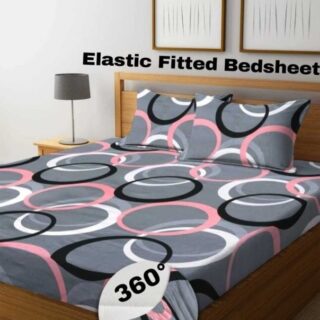 Home Garage 210 TC Cotton King Floral Fitted (Elastic) Bedsheet(Pack of 1, Grey)
Original price was: ₹999.00.₹299.00Current price is: ₹299.00.
Home Garage 210 TC Cotton King Floral Fitted (Elastic) Bedsheet(Pack of 1, Grey)
Original price was: ₹999.00.₹299.00Current price is: ₹299.00.
-
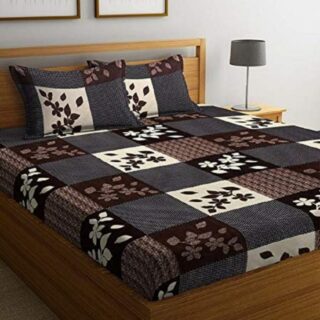 Goodrik 140 TC Cotton Double 3D Printed Flat Bedsheet(Pack of 1, Brown)
Original price was: ₹499.00.₹229.00Current price is: ₹229.00.
Goodrik 140 TC Cotton Double 3D Printed Flat Bedsheet(Pack of 1, Brown)
Original price was: ₹499.00.₹229.00Current price is: ₹229.00.
-
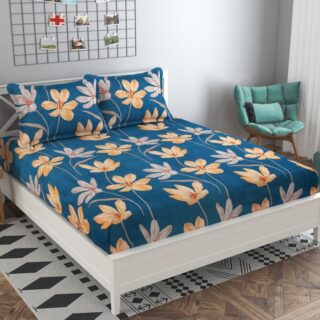 GLOBALSHOP 350 TC Microfiber Double Floral Flat Bedsheet(Pack of 1, Multicolor)
Original price was: ₹1,250.00.₹263.00Current price is: ₹263.00.
GLOBALSHOP 350 TC Microfiber Double Floral Flat Bedsheet(Pack of 1, Multicolor)
Original price was: ₹1,250.00.₹263.00Current price is: ₹263.00.
-
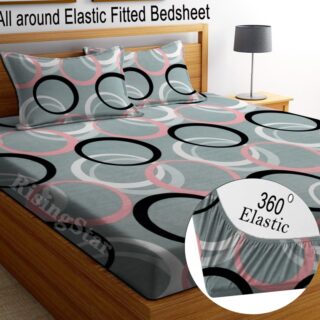 RisingStar 250 TC Microfiber King Printed Fitted (Elastic) Bedsheet(Pack of 1, FITTED-ROUND-CIRCLES-PREMIUM)
Original price was: ₹2,299.00.₹299.00Current price is: ₹299.00.
RisingStar 250 TC Microfiber King Printed Fitted (Elastic) Bedsheet(Pack of 1, FITTED-ROUND-CIRCLES-PREMIUM)
Original price was: ₹2,299.00.₹299.00Current price is: ₹299.00.
-
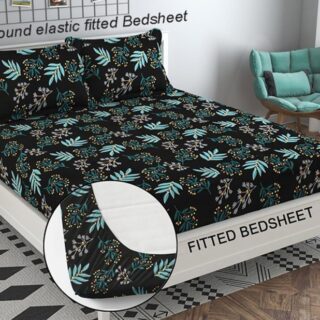 Home Garage 210 TC Cotton King Floral Fitted (Elastic) Bedsheet(Pack of 1, Fitted Black Green)
Original price was: ₹1,299.00.₹299.00Current price is: ₹299.00.
Home Garage 210 TC Cotton King Floral Fitted (Elastic) Bedsheet(Pack of 1, Fitted Black Green)
Original price was: ₹1,299.00.₹299.00Current price is: ₹299.00.
-
 Home Garage 180 TC Cotton King 3D Printed Flat Bedsheet(Pack of 1, White)
Original price was: ₹999.00.₹229.00Current price is: ₹229.00.
Home Garage 180 TC Cotton King 3D Printed Flat Bedsheet(Pack of 1, White)
Original price was: ₹999.00.₹229.00Current price is: ₹229.00.
-
 Panipat Textile Hub 152.4 cm (5 ft) Polyester Window Curtain (Pack Of 2)(Solid, Aqua)
Original price was: ₹1,899.00.₹299.00Current price is: ₹299.00.
Panipat Textile Hub 152.4 cm (5 ft) Polyester Window Curtain (Pack Of 2)(Solid, Aqua)
Original price was: ₹1,899.00.₹299.00Current price is: ₹299.00.
-
 Home Sizzler 214 cm (7 ft) Polyester Semi Transparent Door Curtain (Pack Of 2)(Floral, Maroon)
Original price was: ₹1,199.00.₹399.00Current price is: ₹399.00.
Home Sizzler 214 cm (7 ft) Polyester Semi Transparent Door Curtain (Pack Of 2)(Floral, Maroon)
Original price was: ₹1,199.00.₹399.00Current price is: ₹399.00.
-
 Home Sizzler 153 cm (5 ft) Polyester Room Darkening Window Curtain (Pack Of 2)(Floral, Brown)
Original price was: ₹799.00.₹299.00Current price is: ₹299.00.
Home Sizzler 153 cm (5 ft) Polyester Room Darkening Window Curtain (Pack Of 2)(Floral, Brown)
Original price was: ₹799.00.₹299.00Current price is: ₹299.00.
-
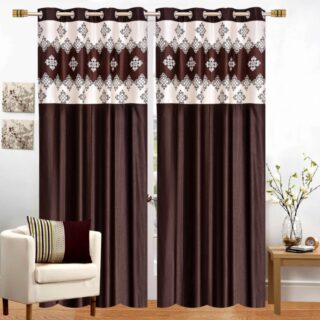 Stella Creations 214 cm (7 ft) Polyester Room Darkening Door Curtain (Pack Of 2)(Abstract, Brown)
Original price was: ₹1,299.00.₹449.00Current price is: ₹449.00.
Stella Creations 214 cm (7 ft) Polyester Room Darkening Door Curtain (Pack Of 2)(Abstract, Brown)
Original price was: ₹1,299.00.₹449.00Current price is: ₹449.00.
-
 Homefab India 152.5 cm (5 ft) Polyester Room Darkening Window Curtain (Pack Of 2)(Floral, Light Blue)
Original price was: ₹1,199.00.₹319.00Current price is: ₹319.00.
Homefab India 152.5 cm (5 ft) Polyester Room Darkening Window Curtain (Pack Of 2)(Floral, Light Blue)
Original price was: ₹1,199.00.₹319.00Current price is: ₹319.00.
-
 Urban Home 214 cm (7 ft) PVC Transparent Door Curtain Single Curtain(Solid, Off White)
Original price was: ₹699.00.₹203.00Current price is: ₹203.00.
Urban Home 214 cm (7 ft) PVC Transparent Door Curtain Single Curtain(Solid, Off White)
Original price was: ₹699.00.₹203.00Current price is: ₹203.00.
-
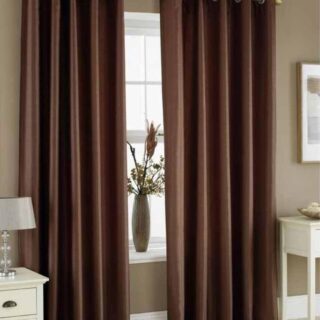 Panipat Textile Hub 213 cm (7 ft) Polyester Door Curtain (Pack Of 2)(Solid, Brown)
Original price was: ₹1,199.00.₹349.00Current price is: ₹349.00.
Panipat Textile Hub 213 cm (7 ft) Polyester Door Curtain (Pack Of 2)(Solid, Brown)
Original price was: ₹1,199.00.₹349.00Current price is: ₹349.00.
-
 Home Sizzler 214 cm (7 ft) Polyester Semi Transparent Door Curtain (Pack Of 2)(Floral, Brown)
Original price was: ₹999.00.₹349.00Current price is: ₹349.00.
Home Sizzler 214 cm (7 ft) Polyester Semi Transparent Door Curtain (Pack Of 2)(Floral, Brown)
Original price was: ₹999.00.₹349.00Current price is: ₹349.00.
-
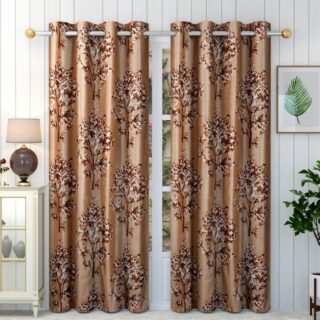 Panipat Textile Hub 213 cm (7 ft) Polyester Semi Transparent Door Curtain (Pack Of 2)(Floral, Brown)
Original price was: ₹899.00.₹299.00Current price is: ₹299.00.
Panipat Textile Hub 213 cm (7 ft) Polyester Semi Transparent Door Curtain (Pack Of 2)(Floral, Brown)
Original price was: ₹899.00.₹299.00Current price is: ₹299.00.

Introduction
Hi, I’m Jessica, and if you’ve ever felt frustrated when a favorite feature disappears after a system update, you’re not alone. When Apple Inc. introduced major updates like macOS Tahoe and iPadOS 26, many users noticed that one subtle but powerful feature had quietly vanished — the Compact Tab Bar in Safari. This layout, which combined the address bar and tabs into a single streamlined row, was a favorite for those who valued screen space and a minimal interface.
For months, users had to adjust to a more traditional tab layout, even if it disrupted their workflow. If you’re someone who relies on efficiency, especially while juggling multiple tabs for work, research, or content creation, that change likely felt like a step backward. But now, there’s good news — the Compact Tab Bar is making a comeback.
In this article, I’ll walk you through why this feature matters, what changed, why Apple removed it in the first place, and how its return impacts your browsing experience on Mac and iPad. Whether you’re a casual user or someone deeply invested in productivity tools, this update is more important than it seems.
Why the Compact Tab Bar Was So Popular Among Users
The Compact Tab Bar wasn’t just a design tweak — it fundamentally changed how users interacted with Safari. By merging the address bar and tabs into a single row, it freed up vertical screen space, which is incredibly valuable on smaller screens like MacBooks and iPads. For professionals who multitask or manage multiple tabs, every pixel counts.
This layout also reduced visual clutter. Instead of separate rows for tabs and navigation, everything was unified, creating a cleaner and more focused interface. Users reported that it improved their browsing efficiency, especially when working on research-heavy tasks or managing multiple workflows simultaneously.
Another key advantage was the seamless interaction between tabs and URLs. Switching tabs felt faster and more intuitive, and the overall browsing experience felt modern and fluid. For users who value minimalist design, the Compact Tab Bar aligned perfectly with Apple’s aesthetic philosophy.
Its popularity wasn’t limited to power users. Even casual users appreciated the simplicity and elegance it brought. It’s no surprise that its removal sparked disappointment across the Apple ecosystem.
What Changed When Apple Removed the Compact Tab Layout
When Apple removed the Compact Tab Bar in newer versions of macOS and iPadOS, the browsing experience shifted back to a more traditional layout. Tabs were separated from the address bar, occupying their own row, which increased vertical space usage.
This change might seem minor at first glance, but it had a noticeable impact on usability. Users who relied on the compact layout suddenly had to adjust their workflows. The additional row meant less visible webpage content, especially on smaller displays, which could interrupt reading or research flow.
Apple’s decision was likely influenced by usability feedback. Some users found the compact layout confusing, particularly when it came to identifying active tabs or interacting with the address bar. By reverting to a more conventional design, Apple aimed to improve clarity and accessibility.
However, this came at the cost of customization. Users who preferred the compact layout no longer had the option to choose, which led to frustration among those who value control over their interface. This removal highlighted an ongoing tension between simplicity and flexibility in software design.
The Return of the Compact Tab Bar: What’s New This Time
With the reintroduction of the Compact Tab Bar, Apple seems to have listened to user feedback. The feature is back, but with refinements that aim to address previous concerns while preserving its benefits.
This updated version focuses on improved usability. Visual cues for active tabs are clearer, and interactions between tabs and the address bar have been refined. These changes make the compact layout more accessible to a broader range of users, not just those who are tech-savvy.
Apple has also made the feature optional, which is a significant improvement. Instead of forcing a single design choice, users can now decide whether they prefer the compact layout or the traditional one. This flexibility enhances user satisfaction and allows for a more personalized browsing experience.
The return of this feature reflects Apple’s evolving approach to design — one that balances innovation with user feedback. It shows that even small interface elements can have a big impact on overall usability.
How to Enable the Compact Tab Bar on Mac and iPad
Enabling the Compact Tab Bar is straightforward, but the exact steps may vary slightly depending on your device and OS version. On Mac, you can typically find the option in Safari’s settings under the Tabs section.
Once there, you’ll see an option to switch between “Compact” and “Separate” tab layouts. Selecting the compact option will immediately update your browser interface, merging the address bar and tabs into a single row.
On iPad, the process is similar. Navigate to the Settings app, locate Safari, and look for the tab layout options. Switching to the compact layout will apply the same streamlined design seen on Mac.
It’s worth experimenting with both layouts to determine which works best for your workflow. While the compact layout offers efficiency, some users may still prefer the clarity of separate tabs. The key advantage now is choice — something that was missing before.
Benefits of Using the Compact Tab Bar for Productivity
The Compact Tab Bar isn’t just about aesthetics — it directly impacts productivity. By reducing the space taken up by browser UI elements, it allows more content to be visible on the screen. This is particularly useful for tasks like reading, writing, and data analysis.
For professionals who manage multiple tabs, the compact layout can streamline navigation. Switching between tabs feels faster, and the reduced clutter helps maintain focus. This can lead to improved efficiency, especially during long work sessions.
Another benefit is better use of screen real estate. On devices with limited display space, such as smaller MacBooks or iPads, every bit of space matters. The compact layout ensures that more of your screen is dedicated to actual content rather than interface elements.
Overall, it’s a small change that can make a big difference in how you work and interact with your browser.
Potential Drawbacks of the Compact Tab Layout
Despite its advantages, the Compact Tab Bar isn’t perfect. Some users may find it less intuitive, especially if they’re accustomed to traditional browser layouts. The merging of tabs and the address bar can sometimes make it harder to distinguish between different elements.
There’s also a learning curve. New users or those switching from other browsers might need time to adapt to the compact design. This can temporarily affect productivity until they become familiar with the interface.
Additionally, users who frequently work with many tabs may find the compact layout slightly cramped. While it saves space vertically, it can reduce the horizontal space available for each tab, making them harder to identify at a glance.
These drawbacks highlight the importance of having the option to switch between layouts. What works for one user may not work for another, and flexibility is key to a positive user experience.
Apple’s Design Philosophy Behind the Change
Apple has always prioritized simplicity and user experience in its design philosophy. The removal and subsequent return of the Compact Tab Bar reflect this approach. Initially, the company likely removed the feature to address usability concerns and streamline the interface for a broader audience.
However, the strong user demand for the compact layout demonstrated that customization is equally important. By bringing it back as an optional feature, Apple has found a middle ground between simplicity and flexibility.
This decision aligns with a broader trend in software design — giving users more control over their experience. Instead of enforcing a single design choice, companies are increasingly offering customizable options to cater to diverse user preferences.
The return of the Compact Tab Bar is a clear example of how user feedback can shape product development.
Comparing Compact vs Separate Tab Layouts
When deciding between compact and separate tab layouts, it ultimately comes down to personal preference. The compact layout is ideal for users who value efficiency and minimalism. It offers a streamlined interface and maximizes screen space.
On the other hand, the separate tab layout provides greater clarity. Tabs are easier to identify, and the distinction between the address bar and tabs is more pronounced. This can be beneficial for users who prioritize ease of navigation.
Both layouts have their strengths and weaknesses. The compact layout excels in productivity and design, while the separate layout offers simplicity and familiarity. The best choice depends on your specific needs and how you use your browser.
Having the ability to switch between these options ensures that users can tailor their experience to suit their preferences.
What This Update Means for Safari Users Moving Forward
The return of the Compact Tab Bar signals a shift in how Apple approaches user feedback. It shows that even small features can have a significant impact on user satisfaction and productivity.
For Safari users, this update enhances flexibility and personalization. It allows you to choose the interface that best suits your workflow, whether you prefer a minimalist design or a more traditional layout.
Looking ahead, this change could influence future updates across Apple’s ecosystem. It highlights the importance of balancing innovation with user preferences, ensuring that new features enhance rather than disrupt the user experience.
Ultimately, the return of the Compact Tab Bar is a win for users, offering both functionality and choice in one of the most widely used browsers.
Disclaimer
This article is for informational purposes only and is based on publicly available updates and user experience insights related to Safari, macOS, and iPadOS. Features and settings may vary depending on device model, region, and software version. Users are advised to check official Apple documentation or device settings for the most accurate and up-to-date information.






Products
-
![Apple Watch Ultra 3 [GPS + Cellular 49mm] Running & Multisport Smartwatch w/Rugged Titanium Case w/Black Titanium Milanese Loop - M. Satellite Communications, Advanced Health & Fitness Tracking](https://bazaronweb.com/retailstores/wp-content/uploads/2025/09/apple-watch-320x320.jpg) Apple Watch Ultra 3 [GPS + Cellular 49mm] Running & Multisport Smartwatch w/Rugged Titanium Case w/Black Titanium Milanese Loop - M. Satellite Communications, Advanced Health & Fitness Tracking
Apple Watch Ultra 3 [GPS + Cellular 49mm] Running & Multisport Smartwatch w/Rugged Titanium Case w/Black Titanium Milanese Loop - M. Satellite Communications, Advanced Health & Fitness Tracking
-
 Apple iPad mini (A17 Pro): Apple Intelligence, 8.3-inch Liquid Retina Display, 256GB, Wi-Fi 6E, 12MP Front/12MP Back Camera, Touch ID, All-Day Battery Life — Purple
-
 Apple AirPods Max Wireless Over-Ear Headphones, Active Noise Cancelling, Transparency Mode, Personalized Spatial Audio, Dolby Atmos, Bluetooth Headphones for iPhone – Space Gray
-
 Apple AirPods Pro 2 Wireless Earbuds, Active Noise Cancellation, Hearing Aid Feature, Bluetooth Headphones, Transparency, Personalized Spatial Audio, High-Fidelity Sound, H2 Chip, USB-C Charging
-
Home Garage 210 TC Cotton King Floral Fitted (Elastic) Bedsheet(Pack of 1, Grey)
Original price was: ₹999.00.₹299.00Current price is: ₹299.00.
Leave a Reply