Discounted Products
-
 Home Garage 210 TC Cotton King Floral Fitted (Elastic) Bedsheet(Pack of 1, Grey)
Original price was: ₹999.00.₹299.00Current price is: ₹299.00.
Home Garage 210 TC Cotton King Floral Fitted (Elastic) Bedsheet(Pack of 1, Grey)
Original price was: ₹999.00.₹299.00Current price is: ₹299.00.
-
 Goodrik 140 TC Cotton Double 3D Printed Flat Bedsheet(Pack of 1, Brown)
Original price was: ₹499.00.₹229.00Current price is: ₹229.00.
Goodrik 140 TC Cotton Double 3D Printed Flat Bedsheet(Pack of 1, Brown)
Original price was: ₹499.00.₹229.00Current price is: ₹229.00.
-
 GLOBALSHOP 350 TC Microfiber Double Floral Flat Bedsheet(Pack of 1, Multicolor)
Original price was: ₹1,250.00.₹263.00Current price is: ₹263.00.
GLOBALSHOP 350 TC Microfiber Double Floral Flat Bedsheet(Pack of 1, Multicolor)
Original price was: ₹1,250.00.₹263.00Current price is: ₹263.00.
-
 RisingStar 250 TC Microfiber King Printed Fitted (Elastic) Bedsheet(Pack of 1, FITTED-ROUND-CIRCLES-PREMIUM)
Original price was: ₹2,299.00.₹299.00Current price is: ₹299.00.
RisingStar 250 TC Microfiber King Printed Fitted (Elastic) Bedsheet(Pack of 1, FITTED-ROUND-CIRCLES-PREMIUM)
Original price was: ₹2,299.00.₹299.00Current price is: ₹299.00.
-
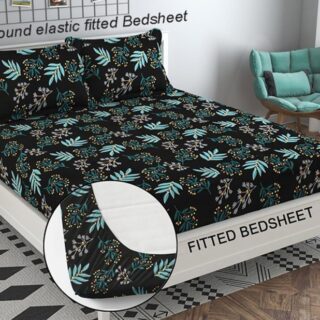 Home Garage 210 TC Cotton King Floral Fitted (Elastic) Bedsheet(Pack of 1, Fitted Black Green)
Original price was: ₹1,299.00.₹299.00Current price is: ₹299.00.
Home Garage 210 TC Cotton King Floral Fitted (Elastic) Bedsheet(Pack of 1, Fitted Black Green)
Original price was: ₹1,299.00.₹299.00Current price is: ₹299.00.
-
 Home Garage 180 TC Cotton King 3D Printed Flat Bedsheet(Pack of 1, White)
Original price was: ₹999.00.₹229.00Current price is: ₹229.00.
Home Garage 180 TC Cotton King 3D Printed Flat Bedsheet(Pack of 1, White)
Original price was: ₹999.00.₹229.00Current price is: ₹229.00.
-
 Panipat Textile Hub 152.4 cm (5 ft) Polyester Window Curtain (Pack Of 2)(Solid, Aqua)
Original price was: ₹1,899.00.₹299.00Current price is: ₹299.00.
Panipat Textile Hub 152.4 cm (5 ft) Polyester Window Curtain (Pack Of 2)(Solid, Aqua)
Original price was: ₹1,899.00.₹299.00Current price is: ₹299.00.
-
 Home Sizzler 214 cm (7 ft) Polyester Semi Transparent Door Curtain (Pack Of 2)(Floral, Maroon)
Original price was: ₹1,199.00.₹399.00Current price is: ₹399.00.
Home Sizzler 214 cm (7 ft) Polyester Semi Transparent Door Curtain (Pack Of 2)(Floral, Maroon)
Original price was: ₹1,199.00.₹399.00Current price is: ₹399.00.
-
 Home Sizzler 153 cm (5 ft) Polyester Room Darkening Window Curtain (Pack Of 2)(Floral, Brown)
Original price was: ₹799.00.₹299.00Current price is: ₹299.00.
Home Sizzler 153 cm (5 ft) Polyester Room Darkening Window Curtain (Pack Of 2)(Floral, Brown)
Original price was: ₹799.00.₹299.00Current price is: ₹299.00.
-
 Stella Creations 214 cm (7 ft) Polyester Room Darkening Door Curtain (Pack Of 2)(Abstract, Brown)
Original price was: ₹1,299.00.₹449.00Current price is: ₹449.00.
Stella Creations 214 cm (7 ft) Polyester Room Darkening Door Curtain (Pack Of 2)(Abstract, Brown)
Original price was: ₹1,299.00.₹449.00Current price is: ₹449.00.
-
 Homefab India 152.5 cm (5 ft) Polyester Room Darkening Window Curtain (Pack Of 2)(Floral, Light Blue)
Original price was: ₹1,199.00.₹319.00Current price is: ₹319.00.
Homefab India 152.5 cm (5 ft) Polyester Room Darkening Window Curtain (Pack Of 2)(Floral, Light Blue)
Original price was: ₹1,199.00.₹319.00Current price is: ₹319.00.
-
 Urban Home 214 cm (7 ft) PVC Transparent Door Curtain Single Curtain(Solid, Off White)
Original price was: ₹699.00.₹203.00Current price is: ₹203.00.
Urban Home 214 cm (7 ft) PVC Transparent Door Curtain Single Curtain(Solid, Off White)
Original price was: ₹699.00.₹203.00Current price is: ₹203.00.
-
 Panipat Textile Hub 213 cm (7 ft) Polyester Door Curtain (Pack Of 2)(Solid, Brown)
Original price was: ₹1,199.00.₹349.00Current price is: ₹349.00.
Panipat Textile Hub 213 cm (7 ft) Polyester Door Curtain (Pack Of 2)(Solid, Brown)
Original price was: ₹1,199.00.₹349.00Current price is: ₹349.00.
-
 Home Sizzler 214 cm (7 ft) Polyester Semi Transparent Door Curtain (Pack Of 2)(Floral, Brown)
Original price was: ₹999.00.₹349.00Current price is: ₹349.00.
Home Sizzler 214 cm (7 ft) Polyester Semi Transparent Door Curtain (Pack Of 2)(Floral, Brown)
Original price was: ₹999.00.₹349.00Current price is: ₹349.00.
-
 Panipat Textile Hub 213 cm (7 ft) Polyester Semi Transparent Door Curtain (Pack Of 2)(Floral, Brown)
Original price was: ₹899.00.₹299.00Current price is: ₹299.00.
Panipat Textile Hub 213 cm (7 ft) Polyester Semi Transparent Door Curtain (Pack Of 2)(Floral, Brown)
Original price was: ₹899.00.₹299.00Current price is: ₹299.00.
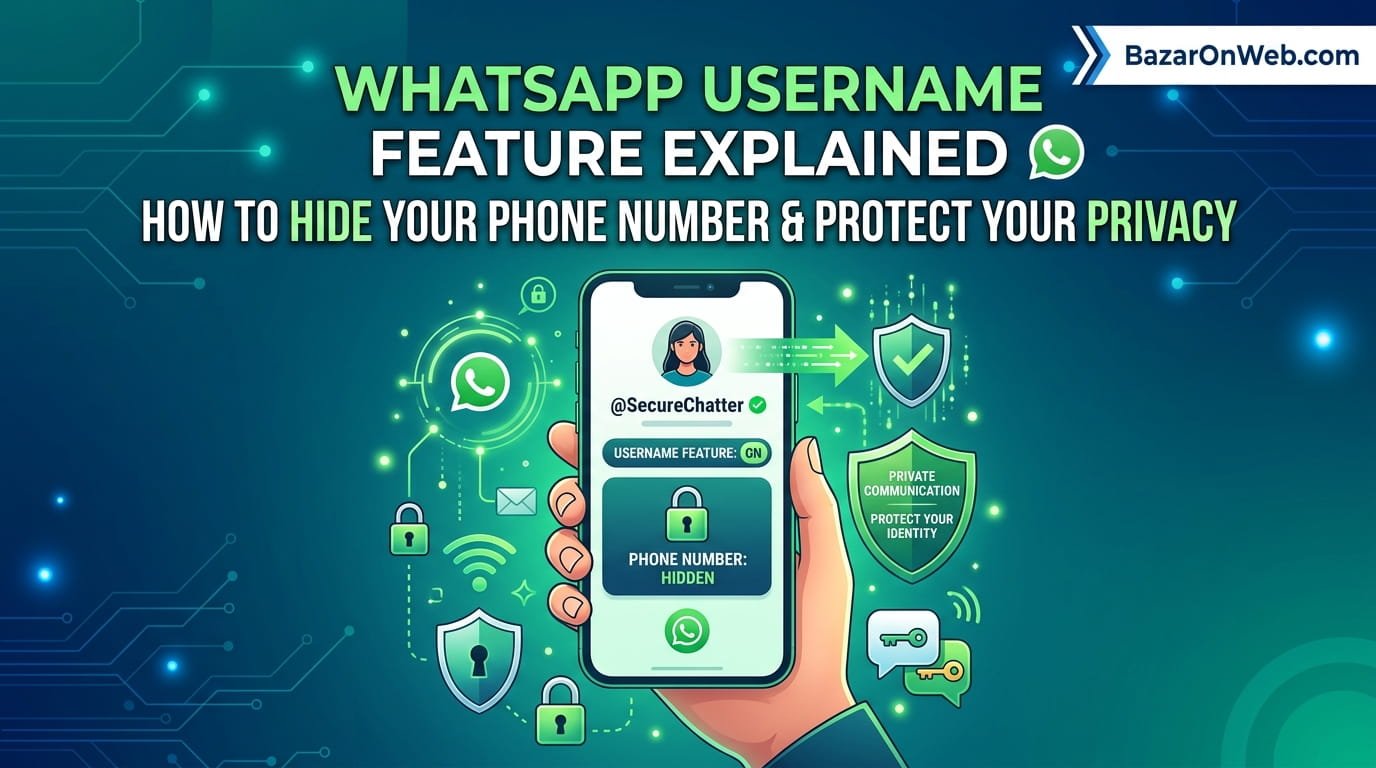
WhatsApp is preparing to introduce one of its most anticipated privacy updates: the ability to use a username instead of sharing a phone number. This new feature could significantly change how people connect on the platform by allowing users to communicate without revealing their personal mobile numbers. For years, WhatsApp has relied on phone numbers as the primary identity system, but privacy concerns, spam messages, and unwanted contact requests have made many users seek better protection. The upcoming username feature aims to address these issues while maintaining the simplicity that has made WhatsApp one of the world’s most popular messaging platforms.
The new WhatsApp username system will let users create a unique identity that others can search for and contact without needing access to their phone number. Similar to platforms like Telegram, Instagram, and X, this feature is expected to offer stronger privacy controls, reduce phone number exposure, and make online communication safer. For individuals, professionals, businesses, and creators, the update could transform how people interact while providing an additional layer of security and convenience.
Why WhatsApp Is Introducing Usernames
For many years, WhatsApp users have had only one way to identify themselves on the platform: their phone number. While this system helped verify authenticity and reduce fake accounts, it also created privacy challenges. Every time someone wanted to connect with a new contact, join a community, or communicate in a business setting, they often had to reveal their personal number.
As WhatsApp continues expanding its ecosystem with Communities, Channels, Business Accounts, and professional networking opportunities, the limitations of phone-number-based identification have become more apparent. Users increasingly want the ability to communicate without sharing sensitive personal information.
The introduction of usernames reflects a broader trend across digital communication platforms. Services such as Telegram, Discord, Instagram, and X allow users to connect through usernames instead of phone numbers. This approach helps create a safer online environment while maintaining user convenience.
For WhatsApp, adopting usernames also aligns with its ongoing focus on privacy. The company has introduced features such as disappearing messages, chat locks, encrypted backups, and enhanced privacy settings. Usernames represent the next logical step in empowering users with greater control over their personal information while still enabling seamless communication.
By reducing dependency on phone numbers for everyday interactions, WhatsApp aims to create a more secure and flexible messaging experience for millions of users worldwide.
How the WhatsApp Username Feature Will Work
The username feature is expected to function similarly to username systems found on other social media and messaging platforms. Users will likely create a unique identifier associated with their WhatsApp account, allowing others to find and connect with them without needing their mobile number.
Once the feature becomes available, users may be able to select a username through their account settings. The chosen username would need to be unique, ensuring that no two accounts share the same identifier. WhatsApp may establish specific rules regarding username length, character usage, and prohibited terms.
Instead of sharing a phone number, users could simply provide their username to friends, colleagues, clients, or community members. Individuals searching for that username would be able to initiate contact while the account holder’s mobile number remains hidden.
The system is expected to maintain WhatsApp’s existing security standards. Since accounts will still be linked internally to verified phone numbers, account ownership and authentication mechanisms will remain intact. However, external visibility of those numbers may be greatly reduced.
This balance between privacy and security could make usernames one of the most impactful additions to WhatsApp’s platform in recent years, providing users with more options for controlling how they are discovered and contacted.
The Privacy Benefits of Hiding Your Phone Number
One of the biggest advantages of the username feature is enhanced privacy. Phone numbers often serve as gateways to personal information, making them attractive targets for scammers, marketers, and malicious actors.
When users share their phone numbers publicly, they risk receiving spam calls, unwanted messages, phishing attempts, and unsolicited marketing communications. In some cases, exposed phone numbers can even contribute to identity theft or social engineering attacks.
By replacing visible phone numbers with usernames, WhatsApp creates a protective barrier between users and potential privacy threats. Individuals can communicate, join communities, participate in groups, and network professionally without exposing sensitive contact information.
This feature is particularly valuable for freelancers, consultants, teachers, content creators, online sellers, and professionals who regularly interact with new contacts. Instead of distributing personal numbers broadly, they can share usernames and maintain greater control over their accessibility.
For everyday users, the privacy benefits are equally important. Parents, students, and individuals concerned about digital safety can enjoy more confidence knowing their primary phone number is not automatically visible to everyone they communicate with on the platform.
The result is a messaging environment that prioritizes user safety while preserving the convenience that WhatsApp users expect.
Reducing Spam and Unwanted Contacts
Spam messaging has become a growing concern across digital communication platforms. As WhatsApp’s user base continues to expand, so does the challenge of managing unwanted contact requests and unsolicited communications.
Phone numbers are frequently harvested through public directories, leaked databases, social media profiles, and community groups. Once obtained, they can be used to send spam messages, fraudulent offers, phishing attempts, and scam campaigns.
The username feature offers an important layer of protection against these risks. By allowing users to hide their phone numbers, WhatsApp reduces opportunities for bad actors to collect and misuse contact information.
Usernames also provide flexibility in managing visibility. WhatsApp may introduce privacy settings that allow users to control who can discover them, who can send requests, and how usernames are displayed. These controls could significantly reduce unwanted interactions.
For professionals who engage with large audiences, usernames provide a safer way to interact with customers and clients without exposing direct contact details. Similarly, community administrators and group participants can maintain communication while preserving personal privacy.
As spam prevention becomes increasingly important, the username system may serve as a key component of WhatsApp’s broader strategy to create a safer and more trustworthy communication platform.
Comparison with Telegram, Instagram, and Other Platforms
The concept of usernames is not new in the digital communication world. Several major platforms have successfully implemented username-based identification systems for years.
Telegram allows users to create unique usernames that others can search and contact directly. Many users appreciate Telegram’s privacy model because it reduces reliance on visible phone numbers during everyday interactions.
Instagram uses usernames as primary identifiers, enabling users to connect, follow, and message one another without exchanging personal contact information. X and Discord follow similar approaches, creating environments where users can maintain separate public identities.
WhatsApp’s adoption of usernames brings it closer to these competing platforms while retaining its unique strengths, such as end-to-end encryption and widespread global adoption.
However, WhatsApp’s implementation may differ in important ways. Since WhatsApp accounts will likely continue to require phone number verification behind the scenes, the platform can preserve account authenticity while improving privacy.
The combination of verified identities, strong encryption, and username-based discovery could offer the best of both worlds. Users receive enhanced privacy protections while benefiting from the trust and reliability associated with phone-number-backed accounts.
This evolution positions WhatsApp to remain competitive in an increasingly privacy-conscious digital landscape.
What This Means for Business Users
Businesses have become a major part of the WhatsApp ecosystem. From customer support to sales inquiries and appointment scheduling, organizations increasingly rely on WhatsApp as a communication channel.
The introduction of usernames could transform how businesses interact with customers. Instead of sharing phone numbers across websites, advertisements, and social media platforms, companies may simply promote their usernames.
This approach offers several benefits. Businesses can maintain consistent branding, simplify customer discovery, and reduce exposure of direct contact numbers. Customers may also feel more comfortable initiating conversations through recognizable usernames rather than unfamiliar phone numbers.
For small businesses, freelancers, consultants, coaches, and service providers, usernames create opportunities to establish stronger digital identities. A memorable username can become part of a broader branding strategy, making accounts easier to find and remember.
The feature could also improve customer trust. Verified usernames may help distinguish legitimate businesses from fraudulent accounts attempting to impersonate brands.
As WhatsApp Business continues expanding its capabilities, usernames are likely to become an important tool for customer engagement, lead generation, and relationship management in both local and global markets.
Benefits for Communities and Group Members
WhatsApp Communities and Groups have become central to how people collaborate, learn, and share information. Educational institutions, workplaces, clubs, nonprofits, and social organizations increasingly depend on these features.
One concern among group participants is the visibility of phone numbers. In many groups, members can view one another’s contact information, which may discourage participation among privacy-conscious users.
The username feature has the potential to address this concern significantly. By allowing users to interact through usernames rather than visible phone numbers, WhatsApp could create a more comfortable and secure environment for group communication.
Community administrators may also benefit from improved privacy management. Moderators often receive messages from unknown participants and may prefer not to expose personal contact details.
For educational communities, study groups, and professional networks, usernames provide a safer framework for collaboration. Participants can focus on meaningful engagement without worrying about widespread distribution of their phone numbers.
As digital communities continue growing, privacy-friendly communication tools become increasingly important. Usernames may encourage greater participation and foster stronger online communities by reducing barriers associated with personal information sharing.
Potential Security Considerations
While usernames offer substantial privacy advantages, they also introduce new security considerations that WhatsApp will need to address carefully.
One challenge involves username impersonation. Popular names, brand identifiers, and celebrity references could become targets for fraudulent account creation attempts. WhatsApp will likely implement verification mechanisms and username availability rules to minimize these risks.
Users will also need to choose usernames thoughtfully. Selecting highly predictable or publicly identifiable usernames could potentially increase visibility beyond intended audiences. Privacy-conscious users may prefer unique identifiers that balance discoverability with discretion.
Another consideration is phishing. Scammers may attempt to create usernames that resemble legitimate accounts in order to deceive users. Verification badges, account indicators, and reporting mechanisms may play important roles in maintaining platform integrity.
WhatsApp’s existing security infrastructure, including end-to-end encryption and account verification systems, provides a strong foundation for implementing usernames securely. However, user education will remain essential.
By understanding best practices and exercising caution when interacting with unfamiliar accounts, users can maximize the privacy benefits of usernames while minimizing potential security risks.
How Users Can Prepare for the Feature
Although the username feature has not yet been fully released, users can begin preparing now to take advantage of it once available.
First, users should think about potential usernames they may want to reserve. Selecting a unique, memorable, and professional identifier early could help secure a preferred username before it becomes unavailable.
Individuals who use WhatsApp for business purposes may consider aligning usernames with existing branding across social media platforms and websites. Consistent naming helps improve recognition and discoverability.
Users should also review their privacy settings regularly. Understanding existing controls for profile photos, status updates, last seen information, and online visibility can help create a stronger overall privacy strategy.
Monitoring official WhatsApp announcements will be important as details regarding username availability, registration procedures, and privacy options become available.
Additionally, users should remain cautious about unofficial claims, fake registration pages, or scams promising early access. Waiting for official releases ensures account security and prevents exposure to fraudulent activities.
Preparation today can help users transition smoothly when the username feature becomes widely available.
The Future of Privacy on WhatsApp
The introduction of usernames represents more than a simple feature update. It signals WhatsApp’s broader commitment to evolving privacy standards in response to changing user expectations.
As digital communication becomes increasingly integrated into daily life, users demand greater control over how their personal information is shared and accessed. Privacy is no longer considered a premium feature; it has become a fundamental expectation.
Usernames could serve as the foundation for additional privacy-focused innovations in the future. Enhanced discovery controls, customizable visibility settings, professional identity options, and improved anti-spam protections may follow as part of WhatsApp’s long-term roadmap.
For users, this shift reflects a positive direction. Communication should not require sacrificing personal privacy, and technologies that reduce unnecessary exposure of sensitive information help create safer online environments.
WhatsApp’s planned username system demonstrates how major platforms can balance accessibility, security, and privacy. If implemented effectively, it may become one of the most significant privacy enhancements in the platform’s history.
As the feature rolls out, users around the world will likely welcome the opportunity to communicate more freely while maintaining greater control over their personal contact information.
Disclaimer
The information in this article is based on reports, leaks, and publicly discussed developments regarding WhatsApp’s upcoming username feature as of the time of writing. Features, functionality, availability, privacy controls, and implementation details may change before official release. Users should refer to official announcements from WhatsApp and Meta for the most accurate and up-to-date information regarding new features and privacy settings. This article is intended for informational purposes only and does not constitute technical, legal, or security advice.






Products
-
![Apple Watch Ultra 3 [GPS + Cellular 49mm] Running & Multisport Smartwatch w/Rugged Titanium Case w/Black Titanium Milanese Loop - M. Satellite Communications, Advanced Health & Fitness Tracking](https://bazaronweb.com/retailstores/wp-content/uploads/2025/09/apple-watch-320x320.jpg) Apple Watch Ultra 3 [GPS + Cellular 49mm] Running & Multisport Smartwatch w/Rugged Titanium Case w/Black Titanium Milanese Loop - M. Satellite Communications, Advanced Health & Fitness Tracking
Apple Watch Ultra 3 [GPS + Cellular 49mm] Running & Multisport Smartwatch w/Rugged Titanium Case w/Black Titanium Milanese Loop - M. Satellite Communications, Advanced Health & Fitness Tracking
-
 Apple iPad mini (A17 Pro): Apple Intelligence, 8.3-inch Liquid Retina Display, 256GB, Wi-Fi 6E, 12MP Front/12MP Back Camera, Touch ID, All-Day Battery Life — Purple
-
 Apple AirPods Max Wireless Over-Ear Headphones, Active Noise Cancelling, Transparency Mode, Personalized Spatial Audio, Dolby Atmos, Bluetooth Headphones for iPhone – Space Gray
-
 Apple AirPods Pro 2 Wireless Earbuds, Active Noise Cancellation, Hearing Aid Feature, Bluetooth Headphones, Transparency, Personalized Spatial Audio, High-Fidelity Sound, H2 Chip, USB-C Charging
-
Home Garage 210 TC Cotton King Floral Fitted (Elastic) Bedsheet(Pack of 1, Grey)
Original price was: ₹999.00.₹299.00Current price is: ₹299.00.
Leave a Reply