Discounted Products
-
 Home Garage 210 TC Cotton King Floral Fitted (Elastic) Bedsheet(Pack of 1, Grey)
Original price was: ₹999.00.₹299.00Current price is: ₹299.00.
Home Garage 210 TC Cotton King Floral Fitted (Elastic) Bedsheet(Pack of 1, Grey)
Original price was: ₹999.00.₹299.00Current price is: ₹299.00.
-
 Goodrik 140 TC Cotton Double 3D Printed Flat Bedsheet(Pack of 1, Brown)
Original price was: ₹499.00.₹229.00Current price is: ₹229.00.
Goodrik 140 TC Cotton Double 3D Printed Flat Bedsheet(Pack of 1, Brown)
Original price was: ₹499.00.₹229.00Current price is: ₹229.00.
-
 GLOBALSHOP 350 TC Microfiber Double Floral Flat Bedsheet(Pack of 1, Multicolor)
Original price was: ₹1,250.00.₹263.00Current price is: ₹263.00.
GLOBALSHOP 350 TC Microfiber Double Floral Flat Bedsheet(Pack of 1, Multicolor)
Original price was: ₹1,250.00.₹263.00Current price is: ₹263.00.
-
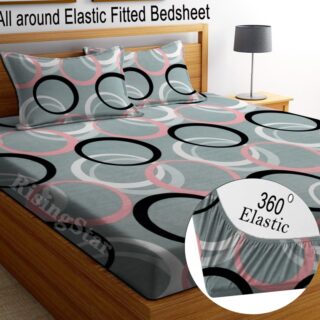 RisingStar 250 TC Microfiber King Printed Fitted (Elastic) Bedsheet(Pack of 1, FITTED-ROUND-CIRCLES-PREMIUM)
Original price was: ₹2,299.00.₹299.00Current price is: ₹299.00.
RisingStar 250 TC Microfiber King Printed Fitted (Elastic) Bedsheet(Pack of 1, FITTED-ROUND-CIRCLES-PREMIUM)
Original price was: ₹2,299.00.₹299.00Current price is: ₹299.00.
-
 Home Garage 210 TC Cotton King Floral Fitted (Elastic) Bedsheet(Pack of 1, Fitted Black Green)
Original price was: ₹1,299.00.₹299.00Current price is: ₹299.00.
Home Garage 210 TC Cotton King Floral Fitted (Elastic) Bedsheet(Pack of 1, Fitted Black Green)
Original price was: ₹1,299.00.₹299.00Current price is: ₹299.00.
-
 Home Garage 180 TC Cotton King 3D Printed Flat Bedsheet(Pack of 1, White)
Original price was: ₹999.00.₹229.00Current price is: ₹229.00.
Home Garage 180 TC Cotton King 3D Printed Flat Bedsheet(Pack of 1, White)
Original price was: ₹999.00.₹229.00Current price is: ₹229.00.
-
 Panipat Textile Hub 152.4 cm (5 ft) Polyester Window Curtain (Pack Of 2)(Solid, Aqua)
Original price was: ₹1,899.00.₹299.00Current price is: ₹299.00.
Panipat Textile Hub 152.4 cm (5 ft) Polyester Window Curtain (Pack Of 2)(Solid, Aqua)
Original price was: ₹1,899.00.₹299.00Current price is: ₹299.00.
-
 Home Sizzler 214 cm (7 ft) Polyester Semi Transparent Door Curtain (Pack Of 2)(Floral, Maroon)
Original price was: ₹1,199.00.₹399.00Current price is: ₹399.00.
Home Sizzler 214 cm (7 ft) Polyester Semi Transparent Door Curtain (Pack Of 2)(Floral, Maroon)
Original price was: ₹1,199.00.₹399.00Current price is: ₹399.00.
-
 Home Sizzler 153 cm (5 ft) Polyester Room Darkening Window Curtain (Pack Of 2)(Floral, Brown)
Original price was: ₹799.00.₹299.00Current price is: ₹299.00.
Home Sizzler 153 cm (5 ft) Polyester Room Darkening Window Curtain (Pack Of 2)(Floral, Brown)
Original price was: ₹799.00.₹299.00Current price is: ₹299.00.
-
 Stella Creations 214 cm (7 ft) Polyester Room Darkening Door Curtain (Pack Of 2)(Abstract, Brown)
Original price was: ₹1,299.00.₹449.00Current price is: ₹449.00.
Stella Creations 214 cm (7 ft) Polyester Room Darkening Door Curtain (Pack Of 2)(Abstract, Brown)
Original price was: ₹1,299.00.₹449.00Current price is: ₹449.00.
-
 Homefab India 152.5 cm (5 ft) Polyester Room Darkening Window Curtain (Pack Of 2)(Floral, Light Blue)
Original price was: ₹1,199.00.₹319.00Current price is: ₹319.00.
Homefab India 152.5 cm (5 ft) Polyester Room Darkening Window Curtain (Pack Of 2)(Floral, Light Blue)
Original price was: ₹1,199.00.₹319.00Current price is: ₹319.00.
-
 Urban Home 214 cm (7 ft) PVC Transparent Door Curtain Single Curtain(Solid, Off White)
Original price was: ₹699.00.₹203.00Current price is: ₹203.00.
Urban Home 214 cm (7 ft) PVC Transparent Door Curtain Single Curtain(Solid, Off White)
Original price was: ₹699.00.₹203.00Current price is: ₹203.00.
-
 Panipat Textile Hub 213 cm (7 ft) Polyester Door Curtain (Pack Of 2)(Solid, Brown)
Original price was: ₹1,199.00.₹349.00Current price is: ₹349.00.
Panipat Textile Hub 213 cm (7 ft) Polyester Door Curtain (Pack Of 2)(Solid, Brown)
Original price was: ₹1,199.00.₹349.00Current price is: ₹349.00.
-
 Home Sizzler 214 cm (7 ft) Polyester Semi Transparent Door Curtain (Pack Of 2)(Floral, Brown)
Original price was: ₹999.00.₹349.00Current price is: ₹349.00.
Home Sizzler 214 cm (7 ft) Polyester Semi Transparent Door Curtain (Pack Of 2)(Floral, Brown)
Original price was: ₹999.00.₹349.00Current price is: ₹349.00.
-
 Panipat Textile Hub 213 cm (7 ft) Polyester Semi Transparent Door Curtain (Pack Of 2)(Floral, Brown)
Original price was: ₹899.00.₹299.00Current price is: ₹299.00.
Panipat Textile Hub 213 cm (7 ft) Polyester Semi Transparent Door Curtain (Pack Of 2)(Floral, Brown)
Original price was: ₹899.00.₹299.00Current price is: ₹299.00.
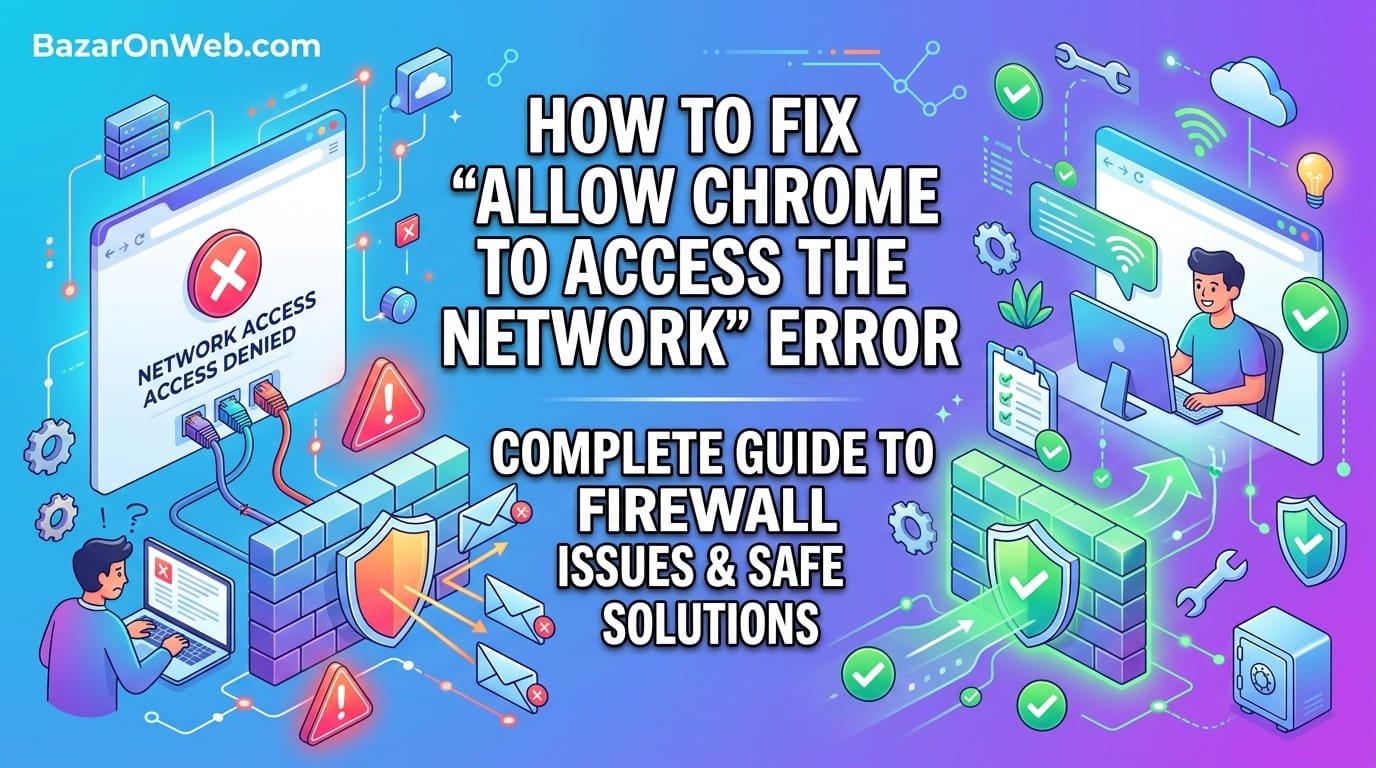
I was frustrated when Chrome suddenly stopped connecting to the internet and displayed the cryptic “Allow Chrome to access the network” error message. Coming from a Mac environment where I rarely encountered such restrictions, I initially thought my internet was broken. After investigating, I discovered that Windows Firewall had blocked Chrome’s network access—something that seemed to happen spontaneously without my doing anything specific. What surprised me most was discovering that many users encounter this error but don’t understand what’s happening or why. The error message itself isn’t particularly helpful, offering little guidance about what caused the firewall block or how to safely restore access. After researching and testing multiple solutions, I learned that this error has several underlying causes and requires careful diagnosis before simply bypassing firewall restrictions.
Understanding why your firewall blocked Chrome is crucial before attempting to restore access, because firewall blocks sometimes exist for legitimate security reasons. Indiscriminately bypassing firewall restrictions compromises security protections that exist to prevent malware and unauthorized network access. In this comprehensive guide, I’ll explain what this error means, why Windows Firewall blocks Chrome, how to safely diagnose the underlying cause, and multiple methods for restoring Chrome’s network access without unnecessarily weakening your security. I’ll help you understand when bypass solutions are appropriate and when the block indicates deeper problems requiring investigation rather than simple workarounds.
1. Understanding the “Allow Chrome to Access Network” Error: What It Means
The “Allow Chrome to access the network” error message appears when Windows Firewall (or other installed firewall software) prevents Chrome from establishing internet connections. Firewalls work by monitoring network traffic and blocking applications they don’t recognize or haven’t been explicitly allowed to access the network. When Chrome attempts network communication and the firewall hasn’t authorized it, the firewall blocks the connection and displays this error. The message is Windows’s way of informing you that a network access attempt was blocked due to security policies.
Understanding this error as a security feature rather than a bug helps explain why it occurs. Your firewall’s job is preventing unauthorized network access—blocking unknown applications is the correct behavior when security policies are uncertain about whether they should have network access. The error isn’t indicating your system is broken but rather that your firewall is actively protecting you by scrutinizing network access attempts. This protection is valuable because malware frequently attempts establishing network connections to send stolen data, receive commands, or download additional malicious code. By blocking unrecognized applications, your firewall prevents this malicious activity. However, legitimate applications like Chrome sometimes get caught by overly aggressive firewall rules. The challenge is distinguishing between legitimate applications needing network access and actual threats, then making appropriate decisions about firewall permissions.
2. Why Windows Firewall Blocks Chrome: Common Causes and Triggers
Windows Firewall blocks Chrome for several specific reasons, understanding which helps you identify the appropriate solution. The most common cause is Chrome being updated—when Chrome updates to a new version, the executable file changes, and the firewall doesn’t recognize the new file as the same application it previously allowed. This triggers a new security prompt requiring authorization for the new version. Another frequent cause is installing Chrome in an unusual location or updating Windows itself—Windows updates sometimes reset firewall rules, requiring reauthorization of previously allowed applications.
Additionally, third-party firewall software (Norton, McAfee, Kaspersky, etc.) might block Chrome more aggressively than Windows Defender Firewall. These commercial firewalls sometimes have overly restrictive default settings or conflicting rules. Furthermore, network configuration changes—like connecting to a different WiFi network or VPN—sometimes trigger firewall re-evaluation of application access. Malware or PUP (Potentially Unwanted Programs) sometimes masquerade as Chrome or interfere with legitimate Chrome processes, causing the firewall to block what it correctly identifies as suspicious. Additionally, corrupted Chrome installation files or conflicts between Chrome and other software sometimes trigger firewall blocks. Finally, if you’ve recently enabled stricter firewall security policies or created custom firewall rules, those rules might inadvertently block Chrome. Understanding these various causes helps you diagnose why the block occurred and whether it represents legitimate security concerns or mistaken restriction.
3. Diagnosing the Problem Before Bypassing Firewall Restrictions
Before simply re-allowing Chrome through your firewall, diagnose why the block occurred, as this determines whether the block is legitimate security protection or mistaken restriction. First, verify that the application claiming to be Chrome is actually legitimate Chrome and not malware impersonating it. Check whether Chrome was recently updated by opening Chrome Settings > About Chrome, which shows the current version and any pending updates. If Chrome just updated, the firewall block likely results from not recognizing the new version. Additionally, verify your Chrome installation location by checking Properties of the Chrome shortcut (right-click > Properties > Target), which shows the installation path. Chrome should be installed in “C:\Program Files\Google\Chrome” (64-bit) or “C:\Program Files (x86)\Google\Chrome” (32-bit). Unusual installation locations might indicate compromised Chrome installations.
Furthermore, check your recent firewall activity by opening Windows Defender Firewall > View allowed apps, which shows what Chrome is currently allowed to access. Additionally, run your antivirus software to scan for malware—sometimes malware disguises itself as Chrome or interferes with legitimate Chrome processes. Most legitimate antivirus applications can scan and clean infections attempting to exploit Chrome or firewall mechanisms. After completing these diagnostic steps, you’ll have identified whether the block is legitimate (recent update, changed installation, suspicious activity) or a false alarm. This information guides your next steps—if the block is legitimate security response, you can safely re-allow Chrome knowing you’ve verified its legitimacy; if diagnostic steps reveal suspicious activity, you should investigate further before restoring network access.
4. Method 1: Re-allowing Chrome Through Windows Defender Firewall Settings
The most straightforward method for restoring Chrome’s network access is explicitly allowing it through Windows Defender Firewall settings. Open Windows Defender Firewall by searching for “firewall” in the Start menu and clicking “Windows Defender Firewall.” In the left sidebar, click “Allow an app through firewall.” You’ll see a list of applications Windows has recognized, with checkboxes showing which networks they can access (Private and/or Public networks).
Look for Google Chrome in the list. If Chrome appears, ensure both “Private” and “Public” checkboxes are checked (or at least “Private” for your home network). If Chrome doesn’t appear in the list, click “Allow another app” and browse to find Chrome’s executable file, typically at C:\Program Files\Google\Chrome\Application\chrome.exe or similar location. After adding Chrome and checking appropriate network access boxes, click “OK” to save changes. Chrome should now access the network without firewall blocks. If you continue experiencing firewall blocks, the problem might be third-party firewall software rather than Windows Firewall—check if additional firewall applications are installed and running.
5. Method 2: Disabling Third-Party Firewall Blocking Chrome
If you have third-party firewall software installed (Norton, McAfee, Kaspersky, Bitdefender, etc.), that software might be blocking Chrome more aggressively than Windows Firewall. Third-party firewalls sometimes have stricter default settings or outdated application whitelists not yet including newer Chrome versions. Open your third-party firewall’s settings—this varies by software, but typically accessing via system tray right-click or through Windows Settings > Apps > App features > Optional features if installed through Microsoft Store.
Look for settings related to “Web browsing,” “Application access,” “Network rules,” or “Allowed applications.” Find Chrome in the list and ensure it’s permitted to access the network. Additionally, check whether your third-party firewall has an “auto-block” or “suspicious activity detection” feature that might be overly aggressive. Some firewalls include behavior analysis that blocks applications exhibiting behavior similar to malware—legitimate applications sometimes trigger these blocks. Adjust sensitivity settings if available, or create explicit rules allowing Chrome. If third-party firewall settings prove difficult to navigate, consult the firewall vendor’s documentation or support resources. Additionally, consider whether you need both Windows Defender Firewall and third-party firewall—having both sometimes creates conflicts or redundant blocking. You might disable Windows Firewall if third-party firewall is more comprehensive, or conversely, uninstall third-party firewall and rely on Windows Defender if it provides sufficient protection.
6. Method 3: Updating Chrome to Latest Version
Outdated Chrome versions sometimes have firewall rule incompatibilities or security vulnerabilities that firewalls block as protective measures. Updating Chrome to the latest version often resolves firewall blocks because updated versions include security improvements and compatibility fixes. Open Chrome and navigate to Settings > About Chrome. Chrome automatically checks for updates and displays “Update available” if a newer version exists. Click “Relaunch” or “Update” to install the latest version—Chrome restarts, completes the update, and restarts again.
After updating, test whether the firewall block persists. Updated Chrome versions often resolve firewall conflicts because the executable file path or behavior might have changed in ways affecting firewall detection. Additionally, ensure Chrome isn’t set to auto-update to prevent future update-related firewall blocks. Chrome’s default behavior is auto-updating, which is appropriate for security purposes. However, if you prefer controlling updates manually, navigate to Settings > About Chrome > Pause updates for 30 days to temporarily prevent automatic updates. Never permanently disable automatic updating—security updates address vulnerabilities that malware exploits, and staying current is essential for security. After updating, your firewall rules may need adjustment to recognize the new Chrome version, which the methods in previous sections address.
7. Method 4: Running Chrome as Administrator for Elevated Permissions
Sometimes firewall blocks result from Chrome lacking sufficient permissions to establish network connections. Running Chrome with administrator privileges grants it elevated access rights that can bypass certain firewall restrictions. Right-click the Chrome shortcut on your desktop or Start menu and select “Run as administrator.” When prompted to confirm allowing administrator access, click “Yes.” Chrome launches with administrator privileges.
Test whether network access now works—if so, you can configure Chrome to always run as administrator. Right-click the Chrome shortcut, select Properties, click the Advanced button, check “Run as administrator,” and click OK. After this configuration, Chrome always launches with administrator privileges, potentially avoiding firewall blocks. However, running applications as administrator constantly is generally not recommended because administrator privileges grant broad system access that could be exploited if the application is compromised. Only configure administrator mode for Chrome if other solutions fail and you’re confident Chrome is legitimate. This method is more of a temporary workaround than an ideal solution. If possible, resolve the underlying firewall block through other methods rather than relying on constant administrator escalation.
8. Method 5: Creating Firewall Exception Rules for Chrome
Advanced firewall configuration allows creating specific exception rules for Chrome, providing fine-grained control over how the firewall treats Chrome’s network access. This method is more complex than others but provides greater control for power users. Open Windows Defender Firewall > Advanced Security (accessed by typing “Windows Defender Firewall with Advanced Security” in the Start menu). In the left sidebar, click “Inbound Rules,” then in the right sidebar, click “New Rule.”
Select “Program” as the rule type and click Next. Select “This program path” and browse to Chrome’s executable location (typically C:\Program Files\Google\Chrome\Application\chrome.exe). Click Next, then select “Allow the connection.” Click Next and ensure “Private” network is checked. Click Next, name your rule (e.g., “Allow Chrome”), and click Finish. This creates an explicit inbound rule allowing Chrome to receive network connections. Additionally, you might need to create an outbound rule allowing Chrome to send network traffic. These advanced firewall rules provide protection against unwanted connections while explicitly permitting Chrome. However, incorrect rule configuration can affect system security or prevent legitimate network access. Only proceed with advanced firewall configuration if you understand firewall concepts and are comfortable with potential consequences.
9. Addressing Malware and PUP Threats if Firewall Blocks Appear Suspicious
If diagnostic steps revealed suspicious activity or if Chrome processes seem unusually large or behaving erratically, malware or PUP (Potentially Unwanted Programs) might be interfering with legitimate Chrome processes, causing firewall blocks. Running comprehensive malware scans before re-allowing Chrome through your firewall ensures you’re not accidentally allowing malicious software network access. Open Windows Defender by clicking the Windows Security icon in the system tray (shield icon), then selecting Virus & threat protection > Scan options. Select “Full scan” to comprehensively scan your entire system for malware—this process takes 30+ minutes depending on drive size.
After scanning completes, remove any detected threats by following Windows Defender’s recommendations. Additionally, run specialized malware removal tools like Malwarebytes (available free from malwarebytes.com) which catch threats sometimes missed by standard antivirus. After cleaning any detected malware, restart your computer and verify that Chrome’s firewall blocks are actually legitimate Chrome processes and not malware remnants. Only after confirming system cleanliness should you allow Chrome through firewall. This careful approach prevents accidentally allowing malicious software network access while protecting against malware posing as Chrome or interfering with legitimate Chrome processes.
10. Best Practices for Firewall Security and Preventing Future Chrome Blocking
After resolving Chrome’s firewall block, implementing best practices prevents future issues while maintaining strong security. Keep Chrome updated automatically—Chrome’s auto-update mechanism includes security patches addressing vulnerabilities that could be exploited. Ensure Windows updates are enabled for similar reasons, as Windows security updates address firewall and network security vulnerabilities. Additionally, maintain current antivirus software—keep Windows Defender or your chosen antivirus updated with the latest threat definitions.
Furthermore, avoid making unnecessary firewall configuration changes. The default firewall settings that block unrecognized applications exist for legitimate security reasons. When Chrome or other legitimate applications are blocked, the appropriate response is investigating why and safely re-allowing them, not disabling firewall protections. Additionally, avoid disabling firewall entirely—even if it occasionally blocks legitimate applications, its protection against malware is essential. If your firewall causes frequent problems, consider whether the firewall configuration is too aggressive or whether you need a different firewall solution. Finally, maintain awareness of when you update Chrome or make system changes—these events sometimes trigger firewall re-evaluation of application permissions. When such changes occur and firewall blocks appear, your existing knowledge of firewall management helps quickly identify and resolve the issue rather than panicking about network connectivity.
Disclaimer
This article provides guidance on understanding and resolving the “Allow Chrome to access the network” firewall error in Windows. The information is intended for educational purposes to help users diagnose firewall issues and safely restore application network access. Specific causes, solutions, and outcomes may vary depending on your firewall configuration, Chrome version, system setup, and individual circumstances.
Important Disclaimers:
- Firewall blocks sometimes exist for legitimate security reasons; always investigate before bypassing
- Re-allowing applications through firewall affects security; only allow applications you’re confident are legitimate
- Third-party firewall configurations vary significantly; consult firewall vendor documentation for specific instructions
- Running applications as administrator grants elevated privileges; use this approach cautiously
- Advanced firewall rule configuration can affect system security if configured incorrectly
- Malware sometimes masquerades as legitimate applications; scan for threats before re-allowing blocked applications
- Disabling firewall entirely is not recommended; firewall protection prevents malware and unauthorized access
Security Considerations:
- Firewall blocks are protective measures; understand why blocks occur before bypassing
- Verify Chrome installation is legitimate and from official Google sources
- Scan for malware before trusting that firewall blocks are false alarms
- Keep antivirus software current to detect malware attempting to bypass firewall
- Avoid creating overly permissive firewall rules that allow unnecessary applications
Firewall Configuration:
- Different firewalls (Windows Defender, Norton, McAfee, etc.) have different configuration interfaces
- Having multiple firewalls can create conflicts; ensure only one firewall is active
- Firewall rule changes require restart to take effect in some cases
- Incorrect firewall rules can prevent legitimate network access; document changes for troubleshooting
- Export firewall configurations before major changes for recovery if needed
Chrome-Specific Considerations:
- Chrome auto-updates by default; recent updates might trigger firewall re-evaluation
- Some Chrome extensions interfere with network access; disable extensions if firewall blocks persist
- Chrome profiles have individual data; network issues might affect only specific profiles
- Clearing Chrome cache and cookies can sometimes resolve network connectivity issues
- Chrome’s incognito mode might reveal whether network issues are Chrome-related or system-wide
Third-Party Firewall Issues:
- Commercial firewalls (Norton, McAfee, Kaspersky) have different behaviors than Windows Defender
- Some firewalls include behavior analysis blocking applications exhibiting suspicious patterns
- Firewall vendor support is available if configuration proves difficult
- Consider firewall reputation when choosing security software
- Uninstalling unused firewalls reduces conflicts and complexity
Malware and Safety:
- Firewall blocks occasionally indicate detected malware; take such blocks seriously
- Comprehensive antivirus scans should precede firewall bypass attempts
- PUP (Potentially Unwanted Programs) sometimes interfere with legitimate applications
- Multiple malware scanning tools provide better coverage than single scanner
- Professional malware removal services exist if comprehensive scanning fails
Advanced Configuration:
- Firewall exception rules provide granular control but require understanding firewall concepts
- Inbound and outbound rules serve different purposes; both may be needed
- Rule ordering matters in some firewalls; more specific rules should precede general rules
- Logging firewall blocks helps identify patterns suggesting configuration problems
- Advanced configuration should only be attempted by users comfortable with system administration
Diagnostic Tools and Resources:
- Event Viewer logs firewall activities; Windows Logs > Security shows blocked connections
- Command-line tools like netstat can diagnose network connectivity issues
- Network troubleshooting tools help identify whether problems are browser-specific or system-wide
- Chrome’s built-in diagnostic tools show connection status and error details
- Windows diagnostic tools identify network configuration issues
When Professional Help Is Needed:
- If firewall configuration is unclear, consult your firewall vendor’s support
- Persistent connectivity problems despite troubleshooting warrant professional assessment
- If system-wide network issues appear, ISP or network administrator assistance may be necessary
- Malware that persists despite antivirus scans may require professional removal services
- Enterprise network administrators should manage firewall policies for organizational devices
Liability:
We are not responsible for any security vulnerabilities, malware infections, network connectivity problems, or other consequences resulting from following guidance in this article. Users assume full responsibility for understanding firewall concepts before making configuration changes and for verifying Chrome legitimacy before re-allowing network access. Firewall blocks can indicate legitimate threats; bypassing them without investigation increases security risks. Most firewall blocks of legitimate Chrome are reversible through safe re-allowing, but deliberately weakening firewall protection creates ongoing vulnerability to malware and unauthorized access. If you’re uncomfortable with firewall configuration, consult professional security assistance rather than attempting changes you don’t fully understand.
About the Author
Jessica Miller is a marketing manager and security-conscious computer user who believes firewalls are essential security tools deserving proper understanding rather than frustration. With expertise in Windows security, firewall management, and practical security solutions, she helps busy professionals maintain security while resolving legitimate network access issues. When she’s not writing comprehensive tech guides or managing her marketing team, she’s staying informed about emerging security threats, testing security software, and helping friends balance security with usability.

- How to Remotely Control Another Computer Using Windows Quick Assist

- 5 Must-Have Electronics Gadgets for a More Comfortable Living Room

- How to Create a Windows 11 System Backup on an External Hard Drive

- 10 Smart Home Ideas That Make Everyday Life Easier

- Gemini Live Avatar: How to Talk to Gemini Face-to-Face

Products
-
![Apple Watch Ultra 3 [GPS + Cellular 49mm] Running & Multisport Smartwatch w/Rugged Titanium Case w/Black Titanium Milanese Loop - M. Satellite Communications, Advanced Health & Fitness Tracking](https://bazaronweb.com/retailstores/wp-content/uploads/2025/09/apple-watch-320x320.jpg) Apple Watch Ultra 3 [GPS + Cellular 49mm] Running & Multisport Smartwatch w/Rugged Titanium Case w/Black Titanium Milanese Loop - M. Satellite Communications, Advanced Health & Fitness Tracking
Apple Watch Ultra 3 [GPS + Cellular 49mm] Running & Multisport Smartwatch w/Rugged Titanium Case w/Black Titanium Milanese Loop - M. Satellite Communications, Advanced Health & Fitness Tracking
-
 Apple iPad mini (A17 Pro): Apple Intelligence, 8.3-inch Liquid Retina Display, 256GB, Wi-Fi 6E, 12MP Front/12MP Back Camera, Touch ID, All-Day Battery Life — Purple
-
 Apple AirPods Max Wireless Over-Ear Headphones, Active Noise Cancelling, Transparency Mode, Personalized Spatial Audio, Dolby Atmos, Bluetooth Headphones for iPhone – Space Gray
-
 Apple AirPods Pro 2 Wireless Earbuds, Active Noise Cancellation, Hearing Aid Feature, Bluetooth Headphones, Transparency, Personalized Spatial Audio, High-Fidelity Sound, H2 Chip, USB-C Charging
-
Home Garage 210 TC Cotton King Floral Fitted (Elastic) Bedsheet(Pack of 1, Grey)
Original price was: ₹999.00.₹299.00Current price is: ₹299.00.
Leave a Reply