Discounted Products
-
 Home Garage 210 TC Cotton King Floral Fitted (Elastic) Bedsheet(Pack of 1, Grey)
Original price was: ₹999.00.₹299.00Current price is: ₹299.00.
Home Garage 210 TC Cotton King Floral Fitted (Elastic) Bedsheet(Pack of 1, Grey)
Original price was: ₹999.00.₹299.00Current price is: ₹299.00.
-
 Goodrik 140 TC Cotton Double 3D Printed Flat Bedsheet(Pack of 1, Brown)
Original price was: ₹499.00.₹229.00Current price is: ₹229.00.
Goodrik 140 TC Cotton Double 3D Printed Flat Bedsheet(Pack of 1, Brown)
Original price was: ₹499.00.₹229.00Current price is: ₹229.00.
-
 GLOBALSHOP 350 TC Microfiber Double Floral Flat Bedsheet(Pack of 1, Multicolor)
Original price was: ₹1,250.00.₹263.00Current price is: ₹263.00.
GLOBALSHOP 350 TC Microfiber Double Floral Flat Bedsheet(Pack of 1, Multicolor)
Original price was: ₹1,250.00.₹263.00Current price is: ₹263.00.
-
 RisingStar 250 TC Microfiber King Printed Fitted (Elastic) Bedsheet(Pack of 1, FITTED-ROUND-CIRCLES-PREMIUM)
Original price was: ₹2,299.00.₹299.00Current price is: ₹299.00.
RisingStar 250 TC Microfiber King Printed Fitted (Elastic) Bedsheet(Pack of 1, FITTED-ROUND-CIRCLES-PREMIUM)
Original price was: ₹2,299.00.₹299.00Current price is: ₹299.00.
-
 Home Garage 210 TC Cotton King Floral Fitted (Elastic) Bedsheet(Pack of 1, Fitted Black Green)
Original price was: ₹1,299.00.₹299.00Current price is: ₹299.00.
Home Garage 210 TC Cotton King Floral Fitted (Elastic) Bedsheet(Pack of 1, Fitted Black Green)
Original price was: ₹1,299.00.₹299.00Current price is: ₹299.00.
-
 Home Garage 180 TC Cotton King 3D Printed Flat Bedsheet(Pack of 1, White)
Original price was: ₹999.00.₹229.00Current price is: ₹229.00.
Home Garage 180 TC Cotton King 3D Printed Flat Bedsheet(Pack of 1, White)
Original price was: ₹999.00.₹229.00Current price is: ₹229.00.
-
 Panipat Textile Hub 152.4 cm (5 ft) Polyester Window Curtain (Pack Of 2)(Solid, Aqua)
Original price was: ₹1,899.00.₹299.00Current price is: ₹299.00.
Panipat Textile Hub 152.4 cm (5 ft) Polyester Window Curtain (Pack Of 2)(Solid, Aqua)
Original price was: ₹1,899.00.₹299.00Current price is: ₹299.00.
-
 Home Sizzler 214 cm (7 ft) Polyester Semi Transparent Door Curtain (Pack Of 2)(Floral, Maroon)
Original price was: ₹1,199.00.₹399.00Current price is: ₹399.00.
Home Sizzler 214 cm (7 ft) Polyester Semi Transparent Door Curtain (Pack Of 2)(Floral, Maroon)
Original price was: ₹1,199.00.₹399.00Current price is: ₹399.00.
-
 Home Sizzler 153 cm (5 ft) Polyester Room Darkening Window Curtain (Pack Of 2)(Floral, Brown)
Original price was: ₹799.00.₹299.00Current price is: ₹299.00.
Home Sizzler 153 cm (5 ft) Polyester Room Darkening Window Curtain (Pack Of 2)(Floral, Brown)
Original price was: ₹799.00.₹299.00Current price is: ₹299.00.
-
 Stella Creations 214 cm (7 ft) Polyester Room Darkening Door Curtain (Pack Of 2)(Abstract, Brown)
Original price was: ₹1,299.00.₹449.00Current price is: ₹449.00.
Stella Creations 214 cm (7 ft) Polyester Room Darkening Door Curtain (Pack Of 2)(Abstract, Brown)
Original price was: ₹1,299.00.₹449.00Current price is: ₹449.00.
-
 Homefab India 152.5 cm (5 ft) Polyester Room Darkening Window Curtain (Pack Of 2)(Floral, Light Blue)
Original price was: ₹1,199.00.₹319.00Current price is: ₹319.00.
Homefab India 152.5 cm (5 ft) Polyester Room Darkening Window Curtain (Pack Of 2)(Floral, Light Blue)
Original price was: ₹1,199.00.₹319.00Current price is: ₹319.00.
-
 Urban Home 214 cm (7 ft) PVC Transparent Door Curtain Single Curtain(Solid, Off White)
Original price was: ₹699.00.₹203.00Current price is: ₹203.00.
Urban Home 214 cm (7 ft) PVC Transparent Door Curtain Single Curtain(Solid, Off White)
Original price was: ₹699.00.₹203.00Current price is: ₹203.00.
-
 Panipat Textile Hub 213 cm (7 ft) Polyester Door Curtain (Pack Of 2)(Solid, Brown)
Original price was: ₹1,199.00.₹349.00Current price is: ₹349.00.
Panipat Textile Hub 213 cm (7 ft) Polyester Door Curtain (Pack Of 2)(Solid, Brown)
Original price was: ₹1,199.00.₹349.00Current price is: ₹349.00.
-
 Home Sizzler 214 cm (7 ft) Polyester Semi Transparent Door Curtain (Pack Of 2)(Floral, Brown)
Original price was: ₹999.00.₹349.00Current price is: ₹349.00.
Home Sizzler 214 cm (7 ft) Polyester Semi Transparent Door Curtain (Pack Of 2)(Floral, Brown)
Original price was: ₹999.00.₹349.00Current price is: ₹349.00.
-
 Panipat Textile Hub 213 cm (7 ft) Polyester Semi Transparent Door Curtain (Pack Of 2)(Floral, Brown)
Original price was: ₹899.00.₹299.00Current price is: ₹299.00.
Panipat Textile Hub 213 cm (7 ft) Polyester Semi Transparent Door Curtain (Pack Of 2)(Floral, Brown)
Original price was: ₹899.00.₹299.00Current price is: ₹299.00.
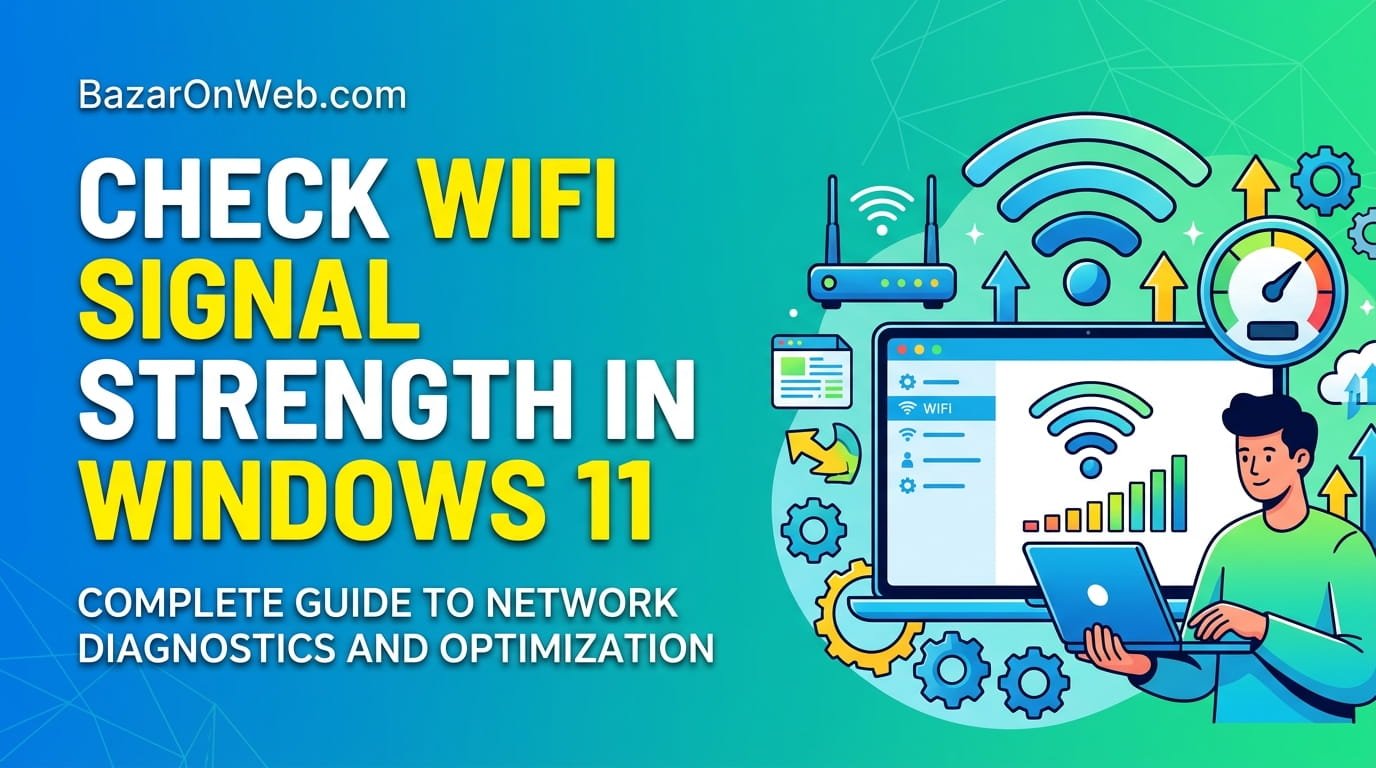
I never paid attention to my WiFi signal strength until my internet suddenly became unreliable, and I couldn’t figure out why. When I discovered Windows 11 includes multiple built-in tools for checking WiFi signal strength, I realized I’d been guessing about my network quality instead of actually measuring it. Understanding your WiFi signal strength is critical for diagnosing connectivity problems, optimizing router placement, and identifying when signal issues rather than internet speed are causing problems. As someone who works remotely, reliable internet is essential, and learning how to measure signal strength transformed my ability to troubleshoot network problems independently rather than calling my internet provider every time connectivity faltered.
What surprised me most was discovering that Windows 11 provides numerous ways to check WiFi signal strength, from simple visual indicators to detailed technical measurements. Each method provides different information and levels of technical detail, making them suitable for different situations. In this comprehensive guide, I’ll walk you through the best methods for checking WiFi signal strength on Windows 11, explain what the measurements mean, how to interpret signal strength indicators, and most importantly, what to do when signal strength is insufficient. Whether you’re experiencing connectivity problems or simply curious about your network quality, this guide provides everything you need to understand and optimize your WiFi signal.
1. Understanding WiFi Signal Strength: What the Measurements Mean
WiFi signal strength is measured in decibels relative to one milliwatt (dBm), a unit expressing power relative to a reference point. Signal strength measurements typically range from -30 dBm (extremely strong signal) to -90 dBm (extremely weak signal). Understanding this scale helps you interpret the numbers you see when checking signal strength. Signals stronger than -50 dBm are excellent and provide reliable connectivity. Signals between -50 and -60 dBm are very good and suitable for most activities. Signals between -60 and -70 dBm are adequate for most uses but may experience occasional connectivity issues.
Signals between -70 and -80 dBm are weak and may cause problems with video streaming, downloads, or gaming. Signals weaker than -80 dBm are very poor and often result in frequent disconnections and unusable internet. Additionally, signal strength interacts with interference—even strong signals can perform poorly if significant interference exists, while weaker signals sometimes work acceptably in low-interference environments. Understanding signal strength helps you diagnose whether connectivity problems result from weak signal requiring router repositioning or interference requiring investigation. Most users aim for signals stronger than -70 dBm in areas where they spend significant time, as this provides reliable connectivity without excessive interference. Signals weaker than -70 dBm warrant investigation and optimization through router placement changes or WiFi extenders.
2. Checking WiFi Signal Through Windows Settings: The Simplest Method
Windows 11’s Settings application provides the most straightforward way to check WiFi signal strength without technical tools. Open Settings by pressing Windows Key + I or clicking Settings in the Start menu. Navigate to Network & Internet > WiFi. You’ll see your connected WiFi network displayed with a signal strength indicator next to it. The indicator shows bars or a percentage representing signal strength—more bars indicate stronger signal. While this visual indicator provides quick information, it doesn’t display the specific dBm measurement technical users prefer.
For slightly more detailed information, click on your connected WiFi network name to see additional properties. Some Windows 11 versions display additional network details including signal strength percentage and bandwidth information. However, Settings provides limited technical detail compared to other methods. This approach is ideal for casual users wanting quick signal strength assessment without diving into technical measurements. If you see fewer than three bars or signal strength below 50%, investigate potential causes like distance from router, obstructions, or interference. This method requires no technical knowledge and works on all Windows 11 systems, making it the most accessible approach for most users.
3. Using Command Prompt for Detailed WiFi Information
Command Prompt provides more detailed WiFi signal information than Settings, including specific dBm measurements and technical networking data. Open Command Prompt as Administrator by right-clicking Start and selecting “Windows Terminal (Admin),” then selecting the Command Prompt tab. Type the command: “netsh wlan show interfaces” and press Enter. This command displays comprehensive information about your WiFi connection including signal strength in dBm, connection status, authentication type, and security information.
Look for the “Signal” value displayed as a percentage (0-100%), then calculate approximate dBm using the formula: dBm ≈ (percentage × 0.30) – 100. For example, 60% signal strength calculates to approximately -82 dBm. For more specific information, type: “netsh wlan show all” to display detailed configuration and status information including all connected networks and their signal strengths. Additionally, type: “netsh wlan show networks mode=Bssid” to display all available WiFi networks with their signal strengths, helping you identify alternative networks and understand your local wireless environment. Command Prompt methods provide exact information useful for technical troubleshooting and documenting signal strength over time. However, these commands require comfort with command-line interfaces and understanding the technical output.
4. Checking Signal Quality Through Network Troubleshooter Tools
Windows 11 includes built-in network troubleshooting tools that can identify WiFi problems including weak signal issues. Open Settings > Network & Internet > WiFi, then look for “Troubleshoot network problems” or similar option. Running the network troubleshooter initiates comprehensive network diagnostics including WiFi signal analysis. The troubleshooter examines signal strength, interference, driver issues, and configuration problems, then provides recommendations for improving connectivity.
Additionally, open Command Prompt as Administrator and type: “netsh wlan diagnose” to run WiFi diagnostic commands. This generates detailed diagnostic reports about your wireless adapter, network configuration, and signal quality. The report may identify specific problems like driver issues, conflicting settings, or signal quality concerns. After running diagnostics, review the generated report (typically saved to your system drive) for specific recommendations about improving connectivity. These troubleshooting tools are valuable because they not only measure signal strength but also identify related problems that might be contributing to poor connectivity. For example, weak signal combined with interference creates worse connectivity than weak signal alone, and troubleshooters can identify interference issues even if you can’t directly measure them.
5. Using WiFi Analyzer Tools and Third-Party Applications
Third-party WiFi analyzer applications provide sophisticated signal analysis and visualization that Windows built-in tools cannot match. Apps like WiFi Analyzer (available free in Microsoft Store), NetStumbler, or similar tools display real-time signal strength graphs, identify interference sources, and help optimize router placement. Open Microsoft Store, search for “WiFi Analyzer,” and install the free application. Launch it to see all WiFi networks in your area with their signal strengths, channels, and signal quality indicators.
WiFi Analyzer visualizes signal strength over time through graphs, helping you identify signal fluctuations indicating intermittent connectivity problems or movement-based signal variations. The tool displays which WiFi channels are most congested in your area, helping you choose less-congested channels for better performance. Additionally, heatmap features show signal strength in different physical locations, helping you identify dead zones requiring router repositioning or WiFi extenders. Third-party tools are particularly valuable for optimizing router placement—rather than guessing, you can see exactly how signal strength varies in different locations. These applications are free or inexpensive and provide insights impossible to obtain through Windows built-in tools. However, they require installation and some technical understanding to interpret results effectively.
6. Measuring Signal Strength from Different Locations for Optimal Router Placement
Understanding how signal strength varies throughout your space helps optimize router placement for maximum coverage. Using any signal strength measurement method, check signal strength at various locations throughout your home or office. Check near the router, at distances of 10, 20, and 30 feet, and in different rooms. Document measurements at consistent times to account for fluctuations. Signal strength typically decreases with distance and is affected by physical obstructions like walls, metal objects, and other electromagnetic sources.
Walls reduce signal strength significantly—each wall typically reduces signal by 10-20 dBm depending on material. Metal objects, microwaves, cordless phones, and neighboring WiFi networks cause interference reducing effective signal strength. Document this information to identify problem areas. If certain locations consistently show weak signal, reposition your router to improve coverage. Central, elevated locations typically provide best coverage. Avoid placing routers in corners, closets, or surrounded by metal objects. Additionally, separate routers from sources of interference. Some users create signal strength maps of their space by measuring multiple locations, helping visualize coverage patterns. This methodical approach ensures optimal router placement providing strong signals throughout your space rather than guessing about placement.
7. Understanding Signal Strength Fluctuations and Intermittent Issues
WiFi signal strength fluctuates naturally as conditions change, but understanding normal versus problematic fluctuations helps identify real problems. Minor fluctuations of 5-10 dBm are normal as environmental conditions change, people move through spaces, and other wireless activity varies. However, fluctuations greater than 20 dBm or signal dropping below -80 dBm periodically indicates problems. Intermittent connectivity issues where internet works sometimes but not others often result from signal strength fluctuating below usable thresholds.
Investigating fluctuation causes helps identify solutions. Interference from microwave ovens (particularly when operating) often causes predictable signal strength drops. Other WiFi networks operating on the same channel cause interference. Physical movement of people or objects affects signal. Environmental factors like weather changes (particularly thunderstorms) impact signal propagation. Documenting when signal strength drops and what activities occur simultaneously helps identify patterns. If signal consistently drops at specific times, those times’ activities likely cause interference. If signal drops predictably when someone uses a microwave, interference is the culprit. Identifying the cause enables targeted solutions—changing WiFi channels, repositioning routers away from interference sources, or scheduling interference-causing activities differently. Understanding that signal fluctuation is normal but excessive fluctuation indicates problems helps prevent unnecessary troubleshooting of non-issues while addressing actual connectivity problems.
8. Resolving Weak Signal Issues Through Router Optimization and Placement
After identifying weak signal strength, multiple strategies can improve connectivity without purchasing new equipment. Router placement significantly impacts coverage—central locations on elevated surfaces provide better distribution than corners or ground-level placement. Vertical antenna orientation often provides better penetration through floors and walls. Ensure routers have adequate ventilation to prevent overheating, which degrades performance. Keep routers away from microwave ovens, cordless phones, and other interference sources. Experiment with antenna positioning to find optimal orientation for your space.
Additionally, optimize router settings through the web interface (access by typing your router’s IP address in a browser). Select WiFi channels with less interference—WiFi Analyzer tools help identify least-congested channels. Reduce transmission power if excessive power is causing interference beyond your space (counterintuitively, lower power sometimes improves local coverage by reducing interference). Enable newer WiFi standards (WiFi 6 if supported) for better performance. Disable older standards (2.4 GHz if only 5 GHz devices are present) to reduce interference. Update router firmware to latest version for performance improvements and bug fixes. If optimization doesn’t provide adequate improvement, consider WiFi extenders or mesh WiFi systems that provide coverage in currently weak areas. These investments are worth considering if signal optimization through placement and settings alone proves insufficient.
9. Documenting Signal Strength Over Time for Trend Analysis
Tracking WiFi signal strength over extended periods helps identify trends suggesting hardware degradation, environmental changes, or problems developing gradually. Establish a regular measurement schedule—perhaps weekly or monthly—measuring signal strength at consistent times and locations. Document measurements in a spreadsheet including date, time, location, signal strength (dBm and percentage), and any relevant notes about interference or environmental conditions.
Analyzing trends helps identify whether your signal naturally varies or degrades over time. If signal strength consistently decreases over weeks or months, hardware degradation, interference sources moving closer, or environmental changes may be responsible. Seasonal variations sometimes affect signal as vegetation changes (particularly trees leafing in spring) or heating patterns change. If measurements show sudden dramatic drops, investigate specific causes like router placement changes, new interference sources, or hardware failures. This data-driven approach prevents guessing about causes and enables evidence-based decisions about troubleshooting priorities. Many users discover that they’ve been blaming their internet provider for problems actually caused by weak local signal—documentation enables them to confidently identify whether problems are network-wide or localized. Additionally, if you contact your ISP about connectivity problems, providing documentation of signal strength measurements helps technical support diagnose whether problems are provider-side or local configuration issues.
10. When to Upgrade Hardware and When Optimization Alone Suffices
After optimizing router placement, settings, and investigating interference sources, you’ll have data indicating whether further hardware upgrades are necessary. If signal strength measurements show consistent signals stronger than -70 dBm throughout your space and connectivity remains reliable, optimization has likely solved your problems without upgrades. However, if signals remain below -70 dBm despite optimization efforts, or if you need coverage in areas inherently far from your router, hardware upgrades deserve consideration.
WiFi extenders provide cost-effective coverage expansion for dead zones, though they slightly reduce bandwidth. Mesh WiFi systems (like Eero, Netgear Orbi) provide seamless coverage throughout larger spaces by using multiple interconnected access points. WiFi 6 routers provide improved performance and interference resistance compared to older standards. Upgrading is appropriate if optimization proves insufficient or if your space’s layout fundamentally prevents single-router coverage. Before upgrading, ensure optimization has been attempted—many users discover that optimal router placement, channel selection, and interference elimination solve their problems without equipment expense. However, if optimization data shows unavoidable weak coverage areas or your space is simply too large for single-router coverage, upgrading provides genuine solution rather than spending money on equipment you don’t need. Using signal strength measurements to make upgrade decisions ensures your investments actually address identified problems rather than hopeful purchases that might not help.
Disclaimer
This article provides guidance on checking WiFi signal strength in Windows 11 and using signal measurements for network optimization. The information is intended for educational purposes to help users diagnose and improve their wireless connectivity. Specific signal strength measurements, optimization results, and hardware recommendations may vary depending on your environment, equipment, and individual circumstances.
Important Disclaimers:
- WiFi signal strength measurements vary based on measurement tools, device capabilities, and environmental conditions
- Signal strength alone doesn’t guarantee good connectivity—interference and other factors significantly impact performance
- dBm measurements from different tools may vary slightly due to averaging methods and measurement techniques
- Optimizing signal strength doesn’t guarantee resolution of all connectivity problems
- Some connectivity issues result from internet service provider problems rather than local signal weakness
- Professional WiFi site surveys provide more accurate measurements but require specialized equipment
Measurement Accuracy:
- Consumer WiFi measurement tools provide approximate signal strength; professional equipment provides more precise measurements
- Signal strength fluctuates constantly; single measurements may not represent typical conditions
- Averaging multiple measurements over time provides more reliable data than single measurements
- Different devices at the same location may show slightly different signal strengths
- Environmental factors continuously change, affecting signal strength variability
Interference Sources:
- Microwave ovens, cordless phones, and Bluetooth devices operate on 2.4 GHz band causing interference
- Neighboring WiFi networks on same channel create interference difficult to measure directly
- Metal objects and water absorb and reflect WiFi signals
- Building materials, particularly metal and masonry, significantly reduce signal strength
- Weather conditions, particularly thunderstorms, can affect signal propagation
Router Configuration:
- Optimal router placement and settings vary by environment; experimentation often necessary
- Changing WiFi channels may improve or worsen connectivity depending on local interference
- Reducing router transmission power can actually improve local connectivity by reducing interference
- Router firmware updates sometimes improve performance; keeping firmware current is important
- Some older devices may not support newer WiFi standards; compatibility should be considered
Hardware Upgrades:
- WiFi extenders slightly reduce bandwidth; mesh systems provide better performance
- WiFi 6 routers offer improved performance and interference resistance but cost more
- Upgrading only helps if current equipment actually limits performance; optimization should precede upgrades
- Not all devices support newer WiFi standards; verify compatibility before upgrading
- Placement and optimization may be more cost-effective than hardware upgrades
Third-Party Tools:
- WiFi analyzer applications provide useful information but vary in accuracy
- Download tools only from official sources (Microsoft Store preferred for Windows 11)
- Some third-party tools may contain advertising or collect usage data; review privacy implications
- Free tools generally provide sufficient functionality; paid versions offer advanced features
Internet Service Provider Issues:
- Weak signal strength affects local WiFi performance but doesn’t directly affect internet speed
- Connectivity problems may result from ISP issues rather than local signal strength
- Speed tests may show different results when testing wired versus wireless connections
- ISP outages affect all connectivity regardless of local signal strength
- Contacting ISP is appropriate if problems persist despite signal optimization
When Professional Help Is Needed:
- Persistent connectivity problems despite optimization efforts warrant professional WiFi site survey
- Hardware installation or configuration assistance can be obtained from professionals
- If internet service quality issues are suspected, ISP support should investigate
- For enterprise networks, professional WiFi design and deployment is recommended
Device Limitations:
- Some older devices have limited WiFi capability affecting their ability to receive strong signals
- Device placement, antenna design, and chipset affect individual device signal strength
- Some devices show different signal strength than others in same location
- If certain devices have connectivity problems, device-specific issues may be responsible
Liability:
We are not responsible for any connectivity issues, failed optimization attempts, or problematic hardware upgrade decisions resulting from following guidance in this article. Users assume full responsibility for making WiFi optimization and upgrade decisions based on their specific circumstances. Signal strength measurements are estimates; professional site surveys provide more accurate data for critical installations. Most optimization is non-destructive and reversible, but some changes (particularly router configuration modifications) should be documented to allow reverting if problems result. If you’re uncomfortable with technical troubleshooting or configuration changes, consult professional WiFi installers rather than attempting optimization independently.
About the Author
Jessica Miller is a marketing manager and remote worker who understands how critical reliable WiFi is for productivity and communication. With expertise in network optimization, connectivity troubleshooting, and practical WiFi management, she helps busy professionals diagnose and resolve connectivity problems through understanding their wireless networks. When she’s not writing comprehensive tech guides or managing her marketing team, she’s exploring network optimization techniques, testing WiFi equipment, and helping friends achieve reliable home internet connectivity.

- How to Remotely Control Another Computer Using Windows Quick Assist
- 5 Must-Have Electronics Gadgets for a More Comfortable Living Room

- How to Create a Windows 11 System Backup on an External Hard Drive

- 10 Smart Home Ideas That Make Everyday Life Easier

- Gemini Live Avatar: How to Talk to Gemini Face-to-Face

Products
-
![Apple Watch Ultra 3 [GPS + Cellular 49mm] Running & Multisport Smartwatch w/Rugged Titanium Case w/Black Titanium Milanese Loop - M. Satellite Communications, Advanced Health & Fitness Tracking](https://bazaronweb.com/retailstores/wp-content/uploads/2025/09/apple-watch-320x320.jpg) Apple Watch Ultra 3 [GPS + Cellular 49mm] Running & Multisport Smartwatch w/Rugged Titanium Case w/Black Titanium Milanese Loop - M. Satellite Communications, Advanced Health & Fitness Tracking
Apple Watch Ultra 3 [GPS + Cellular 49mm] Running & Multisport Smartwatch w/Rugged Titanium Case w/Black Titanium Milanese Loop - M. Satellite Communications, Advanced Health & Fitness Tracking
-
 Apple iPad mini (A17 Pro): Apple Intelligence, 8.3-inch Liquid Retina Display, 256GB, Wi-Fi 6E, 12MP Front/12MP Back Camera, Touch ID, All-Day Battery Life — Purple
-
 Apple AirPods Max Wireless Over-Ear Headphones, Active Noise Cancelling, Transparency Mode, Personalized Spatial Audio, Dolby Atmos, Bluetooth Headphones for iPhone – Space Gray
-
 Apple AirPods Pro 2 Wireless Earbuds, Active Noise Cancellation, Hearing Aid Feature, Bluetooth Headphones, Transparency, Personalized Spatial Audio, High-Fidelity Sound, H2 Chip, USB-C Charging
-
Home Garage 210 TC Cotton King Floral Fitted (Elastic) Bedsheet(Pack of 1, Grey)
Original price was: ₹999.00.₹299.00Current price is: ₹299.00.
Leave a Reply