Discounted Products
-
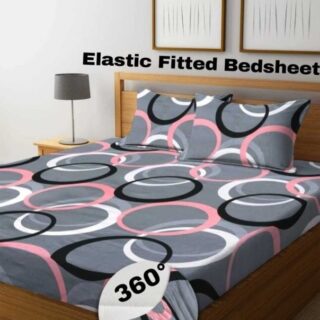 Home Garage 210 TC Cotton King Floral Fitted (Elastic) Bedsheet(Pack of 1, Grey)
Original price was: ₹999.00.₹299.00Current price is: ₹299.00.
Home Garage 210 TC Cotton King Floral Fitted (Elastic) Bedsheet(Pack of 1, Grey)
Original price was: ₹999.00.₹299.00Current price is: ₹299.00.
-
 Goodrik 140 TC Cotton Double 3D Printed Flat Bedsheet(Pack of 1, Brown)
Original price was: ₹499.00.₹229.00Current price is: ₹229.00.
Goodrik 140 TC Cotton Double 3D Printed Flat Bedsheet(Pack of 1, Brown)
Original price was: ₹499.00.₹229.00Current price is: ₹229.00.
-
 GLOBALSHOP 350 TC Microfiber Double Floral Flat Bedsheet(Pack of 1, Multicolor)
Original price was: ₹1,250.00.₹263.00Current price is: ₹263.00.
GLOBALSHOP 350 TC Microfiber Double Floral Flat Bedsheet(Pack of 1, Multicolor)
Original price was: ₹1,250.00.₹263.00Current price is: ₹263.00.
-
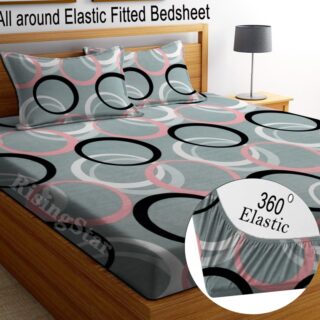 RisingStar 250 TC Microfiber King Printed Fitted (Elastic) Bedsheet(Pack of 1, FITTED-ROUND-CIRCLES-PREMIUM)
Original price was: ₹2,299.00.₹299.00Current price is: ₹299.00.
RisingStar 250 TC Microfiber King Printed Fitted (Elastic) Bedsheet(Pack of 1, FITTED-ROUND-CIRCLES-PREMIUM)
Original price was: ₹2,299.00.₹299.00Current price is: ₹299.00.
-
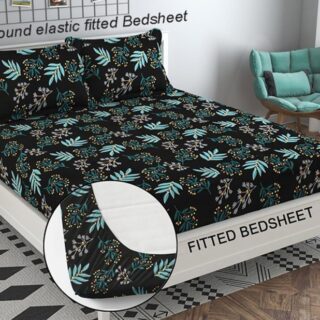 Home Garage 210 TC Cotton King Floral Fitted (Elastic) Bedsheet(Pack of 1, Fitted Black Green)
Original price was: ₹1,299.00.₹299.00Current price is: ₹299.00.
Home Garage 210 TC Cotton King Floral Fitted (Elastic) Bedsheet(Pack of 1, Fitted Black Green)
Original price was: ₹1,299.00.₹299.00Current price is: ₹299.00.
-
 Home Garage 180 TC Cotton King 3D Printed Flat Bedsheet(Pack of 1, White)
Original price was: ₹999.00.₹229.00Current price is: ₹229.00.
Home Garage 180 TC Cotton King 3D Printed Flat Bedsheet(Pack of 1, White)
Original price was: ₹999.00.₹229.00Current price is: ₹229.00.
-
 Panipat Textile Hub 152.4 cm (5 ft) Polyester Window Curtain (Pack Of 2)(Solid, Aqua)
Original price was: ₹1,899.00.₹299.00Current price is: ₹299.00.
Panipat Textile Hub 152.4 cm (5 ft) Polyester Window Curtain (Pack Of 2)(Solid, Aqua)
Original price was: ₹1,899.00.₹299.00Current price is: ₹299.00.
-
 Home Sizzler 214 cm (7 ft) Polyester Semi Transparent Door Curtain (Pack Of 2)(Floral, Maroon)
Original price was: ₹1,199.00.₹399.00Current price is: ₹399.00.
Home Sizzler 214 cm (7 ft) Polyester Semi Transparent Door Curtain (Pack Of 2)(Floral, Maroon)
Original price was: ₹1,199.00.₹399.00Current price is: ₹399.00.
-
 Home Sizzler 153 cm (5 ft) Polyester Room Darkening Window Curtain (Pack Of 2)(Floral, Brown)
Original price was: ₹799.00.₹299.00Current price is: ₹299.00.
Home Sizzler 153 cm (5 ft) Polyester Room Darkening Window Curtain (Pack Of 2)(Floral, Brown)
Original price was: ₹799.00.₹299.00Current price is: ₹299.00.
-
 Stella Creations 214 cm (7 ft) Polyester Room Darkening Door Curtain (Pack Of 2)(Abstract, Brown)
Original price was: ₹1,299.00.₹449.00Current price is: ₹449.00.
Stella Creations 214 cm (7 ft) Polyester Room Darkening Door Curtain (Pack Of 2)(Abstract, Brown)
Original price was: ₹1,299.00.₹449.00Current price is: ₹449.00.
-
 Homefab India 152.5 cm (5 ft) Polyester Room Darkening Window Curtain (Pack Of 2)(Floral, Light Blue)
Original price was: ₹1,199.00.₹319.00Current price is: ₹319.00.
Homefab India 152.5 cm (5 ft) Polyester Room Darkening Window Curtain (Pack Of 2)(Floral, Light Blue)
Original price was: ₹1,199.00.₹319.00Current price is: ₹319.00.
-
 Urban Home 214 cm (7 ft) PVC Transparent Door Curtain Single Curtain(Solid, Off White)
Original price was: ₹699.00.₹203.00Current price is: ₹203.00.
Urban Home 214 cm (7 ft) PVC Transparent Door Curtain Single Curtain(Solid, Off White)
Original price was: ₹699.00.₹203.00Current price is: ₹203.00.
-
 Panipat Textile Hub 213 cm (7 ft) Polyester Door Curtain (Pack Of 2)(Solid, Brown)
Original price was: ₹1,199.00.₹349.00Current price is: ₹349.00.
Panipat Textile Hub 213 cm (7 ft) Polyester Door Curtain (Pack Of 2)(Solid, Brown)
Original price was: ₹1,199.00.₹349.00Current price is: ₹349.00.
-
 Home Sizzler 214 cm (7 ft) Polyester Semi Transparent Door Curtain (Pack Of 2)(Floral, Brown)
Original price was: ₹999.00.₹349.00Current price is: ₹349.00.
Home Sizzler 214 cm (7 ft) Polyester Semi Transparent Door Curtain (Pack Of 2)(Floral, Brown)
Original price was: ₹999.00.₹349.00Current price is: ₹349.00.
-
 Panipat Textile Hub 213 cm (7 ft) Polyester Semi Transparent Door Curtain (Pack Of 2)(Floral, Brown)
Original price was: ₹899.00.₹299.00Current price is: ₹299.00.
Panipat Textile Hub 213 cm (7 ft) Polyester Semi Transparent Door Curtain (Pack Of 2)(Floral, Brown)
Original price was: ₹899.00.₹299.00Current price is: ₹299.00.
Artificial intelligence has become increasingly powerful, but much of that power has traditionally depended on cloud computing. When users ask an AI assistant to analyze documents, summarize files, write code, research a topic, or complete a task, the information involved may need to travel to remote servers. For many people, that is a reasonable trade-off. For businesses, developers, researchers, and privacy-conscious users, however, keeping sensitive information under local control can be extremely important.
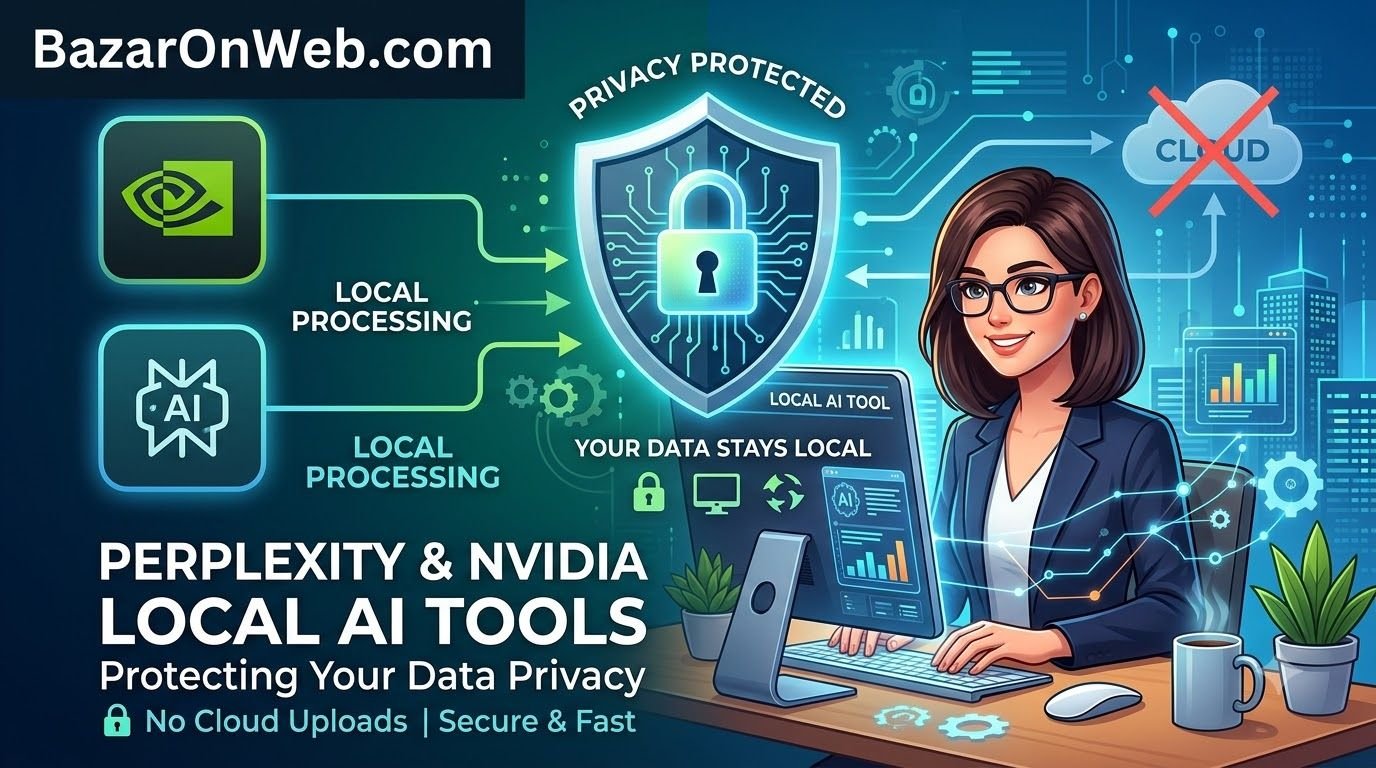
Perplexity and NVIDIA are now pushing the industry toward a different approach with Portable Computer, a local version of Perplexity Computer designed to run AI workloads directly on compatible NVIDIA hardware. Perplexity says the system can analyze files, search local information, synthesize content, and execute complex workflows on the user’s own machine. The initial release is optimized for the NVIDIA DGX Spark, with support for NVIDIA RTX and RTX PRO GPUs planned.
The idea is straightforward but significant: instead of sending every AI task to the cloud, users can perform many tasks locally. This gives users greater control over their information and can reduce dependence on remote AI infrastructure.
The launch also highlights a broader change in the AI industry. Local AI is moving beyond simple chatbots and image-generation experiments. Increasingly capable models are becoming practical enough to perform multi-step work directly on personal computers and dedicated AI systems.
For Jessica, the most interesting part of this development is not simply that AI can run locally. It is the combination of privacy, local processing, NVIDIA acceleration, agentic workflows, and optional cloud intelligence. Together, these technologies could make AI assistants more useful without requiring users to send every piece of sensitive information to an external server.
What Is Perplexity Portable Computer?
Portable Computer is Perplexity’s local-first version of its Computer platform. Rather than relying entirely on Perplexity’s cloud infrastructure, the system is designed to run its core AI components directly on compatible local hardware.
According to Perplexity, the system can analyze data, synthesize files, search documents and code, and perform complex workflows on the device. The local architecture includes not only the AI model but also components such as the orchestrator, planner, tool router, scheduler, task queue, and local search index.
This distinction matters because a local AI assistant is more than simply downloading a language model. A useful AI agent needs to understand a task, break it into smaller actions, access relevant information, use tools, remember the progress of a workflow, and eventually deliver an outcome.
Portable Computer is designed around this broader agentic model.
For example, a user could potentially ask the system to work with files stored on a computer, analyze information across documents, search a local codebase, or perform a multi-step productivity task. Instead of immediately uploading everything to a remote server, the system can attempt to complete the work locally.
That makes the technology particularly interesting for users who work with confidential documents, proprietary code, internal research, financial information, or other sensitive material.
Why NVIDIA Hardware Matters
Running capable AI models locally requires significant computing resources. This is where NVIDIA’s hardware and software ecosystem becomes important.
Portable Computer is initially optimized for the NVIDIA DGX Spark, a compact AI computing system designed to bring substantial AI processing capabilities to a desktop environment. NVIDIA says the local Perplexity agent has been optimized for DGX Spark and can provide fast large-language-model inference and continuous operation suitable for long-running autonomous agents.
The collaboration also demonstrates why GPU acceleration is becoming increasingly important for local AI.
Traditional computer processors can run AI models, but GPUs are particularly effective at the parallel mathematical operations required by modern neural networks. NVIDIA has spent years developing GPUs, drivers, libraries, and AI software designed around these workloads.
For local AI users, this means the hardware is not merely a place to store an AI application. It becomes the computing environment where the model can actually reason, process information, and execute tasks.
Perplexity says Portable Computer currently runs on DGX Spark with Qwen 3.8 27B or PPLX 27B, a post-trained version of the Qwen model. NVIDIA’s Nemotron 3.5 Lightning, a 30-billion-parameter open model, is also planned for the model selection.
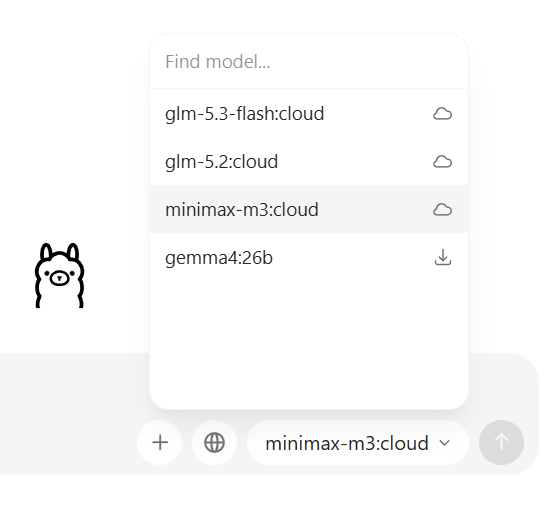
Support for NVIDIA GeForce RTX and RTX PRO GPUs is also expected, potentially making this technology accessible to a much larger group of enthusiasts, professionals, developers, and businesses.
The Privacy Advantage of Local AI
Privacy is one of the strongest arguments for running AI locally.
Consider a developer who wants an AI assistant to examine a proprietary codebase. With a conventional cloud-based workflow, relevant code may need to be transmitted to a remote service. Similarly, a consultant analyzing confidential client documents may be uncomfortable uploading those documents to an external AI platform.
Local AI changes that model.
When the processing happens on the user’s computer, sensitive files can remain on the device. Perplexity specifically says Portable Computer is designed so private data remains local while users can authorize escalation to cloud models when additional capabilities are required.
This does not mean that every AI workflow automatically becomes completely private. Users still need to understand what information an application sends externally, what integrations they authorize, and what cloud services are involved.
However, the local-first architecture creates a much clearer boundary.
Instead of assuming that everything should go to the cloud, the system starts from the opposite assumption: keep the work local whenever possible and use the cloud when necessary and authorized.
That approach could become increasingly important as AI assistants gain access to more personal and professional information.
Local Processing Can Reduce Cloud Dependence
Another major benefit is reduced dependence on cloud infrastructure.
Cloud AI requires users to connect to remote servers. That can introduce network latency, connectivity requirements, usage limits, and potentially recurring costs.
Local AI removes some of those limitations.
Perplexity says work handled by local models does not consume credits, which makes high-volume AI tasks more practical when users own the necessary computing hardware.
Imagine processing hundreds of documents, repeatedly searching a local knowledge base, or running an AI workflow throughout the day. If every operation requires a cloud API call, usage can accumulate quickly.
With local inference, the primary cost becomes the hardware and electricity required to run it.
This creates an interesting economic shift. Instead of paying continuously for every unit of AI usage, users can invest in computing capacity and then perform certain workloads locally.
Of course, expensive hardware can be a significant barrier. High-performance local AI systems are not necessarily affordable for every user. The technology therefore represents a trade-off between upfront hardware investment and ongoing cloud dependence.
Local AI Does Not Mean Giving Up Cloud AI
One of the most interesting aspects of Portable Computer is that Perplexity is not presenting local and cloud AI as mutually exclusive.
The system can use local models for tasks that can be completed on the device. If a task requires more advanced reasoning or cloud-based capabilities, users can authorize escalation to the cloud.
This creates a hybrid AI model.
For everyday work, the local model can handle tasks privately. For particularly demanding operations, a cloud model can provide additional capabilities.
That is potentially more practical than forcing users to choose between two extremes.
A completely local system may struggle with certain tasks because of hardware limitations or model capabilities. A completely cloud-based system may offer excellent performance but require users to send information externally.
A hybrid system attempts to combine the strengths of both.
The important word here is authorization. Perplexity says the local model can escalate to the cloud when a task requires it, while keeping sensitive information on the device. Users therefore have greater control over when cloud processing enters the workflow.
What About Speed?
Local AI can also improve responsiveness in certain situations.
When an AI request is processed entirely on a local machine, the application does not have to send every input across the internet, wait for a remote server to process it, and then receive the response.
That can reduce network-related delays.
The actual speed, however, depends heavily on the hardware, model size, workload, memory, and optimization. A powerful cloud data center can still outperform a consumer computer for many large-scale workloads.
This is why NVIDIA’s hardware acceleration is important.
The goal is not simply to make a cloud AI model run on a laptop without modification. Local AI systems need models and software optimized for the hardware available to them.
Perplexity’s work with NVIDIA illustrates this trend: the company is tailoring its local AI experience for NVIDIA’s computing platform rather than treating local inference as an afterthought.
A New Possibility for Developers
Developers could be among the biggest beneficiaries of local AI.
Software projects frequently contain information that companies do not want uploaded to third-party services. Proprietary source code, internal documentation, API credentials, architecture diagrams, customer information, and unreleased product plans can all create privacy concerns.
A local AI agent could potentially work directly with a developer’s local environment.
Instead of copying code into an online chatbot, developers could ask an AI system to inspect a local repository, search project documentation, analyze files, or help automate repetitive development tasks.
Perplexity says Portable Computer can read local files, search documents and code, and take actions on the device.
This points toward a future in which AI assistants become more deeply integrated into the computer itself.
The assistant would not simply answer questions. It could understand the user’s local environment and perform useful work while keeping much of the underlying information on the machine.
Businesses Could Benefit From the Same Model
The implications extend beyond individual developers.
Businesses are increasingly experimenting with AI for internal operations, but data privacy remains one of the biggest considerations. Companies may have confidential contracts, employee information, customer databases, financial reports, product plans, and intellectual property that they cannot casually expose to external systems.
A local or private AI environment could provide another option.
Organizations could deploy AI capabilities closer to the data rather than sending every request to a public cloud service.
Perplexity already provides separate privacy and administrative controls for its enterprise products. Its Comet enterprise offering, for example, provides organizations with controls over assistant access and domain-specific permissions. Perplexity says enterprise traffic is not logged or used to train AI models, while contractual safeguards apply to third-party AI providers.
Portable Computer takes the local-first concept even further by moving significant parts of the AI workflow directly onto the user’s hardware.
Privacy Still Requires User Awareness
It would be wrong to assume that local AI automatically means perfect privacy.
Even if the model runs locally, users can connect cloud services, authorize applications, access websites, or intentionally send information to external models.
Perplexity’s own documentation illustrates this distinction. Its privacy information explains that data can be sent when a request requires information from a page, selected text, another tab, or connected services.
The lesson is simple: local processing reduces exposure, but users still need to understand application permissions and data flows.
Users should check which files an AI agent can access, which applications it can control, when cloud escalation occurs, and which integrations have been authorized.
This becomes especially important when AI agents can perform actions rather than simply generate text.
The Hardware Barrier
There is also an obvious challenge: local AI needs hardware.
The initial Portable Computer release is aimed at NVIDIA DGX Spark and compatible high-performance systems. That means the technology is currently more accessible to enthusiasts, developers, professionals, and organizations willing to invest in capable AI hardware than to the average laptop user.
However, the situation could change as models become smaller and more efficient.
NVIDIA has indicated that support for GeForce RTX and RTX PRO GPUs is coming, which could broaden access considerably.
As local AI models improve, users may not need enormous systems to perform useful AI tasks. Quantization, model optimization, better inference engines, and more efficient architectures could all reduce hardware requirements.
That could eventually make local AI a standard feature of mainstream PCs.
The Bigger Shift Toward Private Computing
The Perplexity-NVIDIA development is part of a much larger movement.
For years, computing became increasingly centralized. Applications moved to cloud servers, data moved to remote storage, and AI followed the same path.
Now AI is beginning to move in the opposite direction.
Smartphones, laptops, workstations, and dedicated AI computers are becoming capable of performing increasingly sophisticated machine-learning workloads locally.
This does not mean the cloud is disappearing. Cloud computing will remain essential for enormous models, large-scale training, global applications, and tasks requiring massive computing resources.
Instead, the future may be distributed.
Some AI work will happen on a phone. Some will happen on a laptop. Some will happen on a desktop GPU. Some will happen inside enterprise infrastructure. And the most demanding tasks may still move to enormous cloud data centers.
The user may increasingly decide where the computation happens.
What This Means for Everyday AI Users
For ordinary users, the most important development may be greater choice.
Today, many people think of AI as something they access through a website or application connected to the internet.
Local AI introduces another possibility: an AI assistant that lives on the computer.
Such an assistant could potentially work with local documents, help organize files, analyze information, assist with coding, perform repetitive tasks, and provide AI-powered productivity features without requiring every interaction to leave the device.
The experience could become more like having a personal digital assistant rather than using a remote chatbot.
And because local processing does not necessarily depend on a constant connection to a cloud AI service, it could also make certain workflows more resilient to internet outages or service availability problems.
Why This Launch Matters
Perplexity and NVIDIA’s local AI initiative is important because it combines several trends that have been developing separately.
First, AI models are becoming efficient enough to run outside massive data centers.
Second, NVIDIA’s GPUs provide increasingly powerful local AI acceleration.
Third, AI assistants are evolving from question-answering tools into agents capable of completing multi-step tasks.
Finally, privacy concerns are encouraging users and businesses to rethink how much information they are willing to send to cloud platforms.
Portable Computer brings these trends together.
Perplexity says its local agent can perform substantial AI work directly on NVIDIA hardware, while users retain the option of escalating appropriate tasks to cloud models.
That could represent an important step toward a computing environment where users have greater control over both their data and their AI workloads.
Final Thoughts
The collaboration between Perplexity and NVIDIA shows that the future of AI may not belong exclusively to the cloud.
Cloud AI will continue to deliver tremendous computing power, but local AI is becoming increasingly capable. With the right hardware, models can now perform sophisticated tasks directly on personal or dedicated machines.
The biggest advantage is not simply speed or cost. It is control.
Users can decide which workloads remain local, which information can be accessed by an AI agent, and when a task is allowed to move to the cloud. That can create a more privacy-conscious approach to AI while still preserving access to powerful cloud-based reasoning when it is genuinely needed.
Portable Computer is an early example of this model. Its current hardware requirements mean it is not yet a mainstream solution for everyone, but support for additional NVIDIA GPUs could expand its reach.
If local models continue becoming smaller, faster, and more capable, the distinction between a personal computer and an AI computer may eventually disappear.
AI could simply become another capability built into the devices we already use—powerful enough to help us work, smart enough to act, and private enough to keep much of our most important information close to home.
Disclaimer
This article is provided for informational and educational purposes only. Product features, hardware compatibility, model availability, pricing, privacy policies, cloud-processing behavior, and supported platforms may change over time.
The information presented about Perplexity Portable Computer and NVIDIA hardware is based on publicly available information and official documentation available at the time of writing. Readers should verify the latest specifications, supported hardware, privacy settings, terms of service, and data-processing policies directly with the relevant providers before making purchasing, deployment, security, or business decisions.
Local AI does not automatically guarantee complete privacy. Data may still be transmitted to external services when users authorize cloud processing, connect third-party applications, access online services, or use features that require remote processing. Users should review permissions and privacy settings carefully, particularly when working with confidential or sensitive information.
The author and publisher are not responsible for any loss, damage, security incident, or privacy issue resulting from reliance on the information contained in this article or from the use of third-party products and services.

- How to Remotely Control Another Computer Using Windows Quick Assist
- 5 Must-Have Electronics Gadgets for a More Comfortable Living Room

- How to Create a Windows 11 System Backup on an External Hard Drive

- 10 Smart Home Ideas That Make Everyday Life Easier

- Gemini Live Avatar: How to Talk to Gemini Face-to-Face

Products
-
![Apple Watch Ultra 3 [GPS + Cellular 49mm] Running & Multisport Smartwatch w/Rugged Titanium Case w/Black Titanium Milanese Loop - M. Satellite Communications, Advanced Health & Fitness Tracking](https://bazaronweb.com/retailstores/wp-content/uploads/2025/09/apple-watch-320x320.jpg) Apple Watch Ultra 3 [GPS + Cellular 49mm] Running & Multisport Smartwatch w/Rugged Titanium Case w/Black Titanium Milanese Loop - M. Satellite Communications, Advanced Health & Fitness Tracking
Apple Watch Ultra 3 [GPS + Cellular 49mm] Running & Multisport Smartwatch w/Rugged Titanium Case w/Black Titanium Milanese Loop - M. Satellite Communications, Advanced Health & Fitness Tracking
-
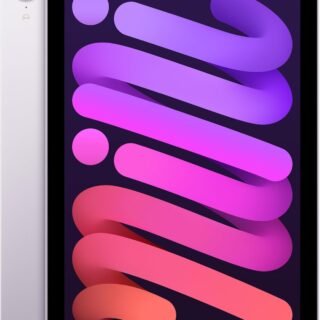 Apple iPad mini (A17 Pro): Apple Intelligence, 8.3-inch Liquid Retina Display, 256GB, Wi-Fi 6E, 12MP Front/12MP Back Camera, Touch ID, All-Day Battery Life — Purple
-
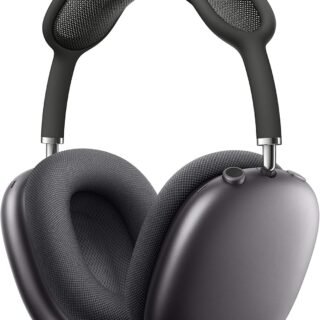 Apple AirPods Max Wireless Over-Ear Headphones, Active Noise Cancelling, Transparency Mode, Personalized Spatial Audio, Dolby Atmos, Bluetooth Headphones for iPhone – Space Gray
-
 Apple AirPods Pro 2 Wireless Earbuds, Active Noise Cancellation, Hearing Aid Feature, Bluetooth Headphones, Transparency, Personalized Spatial Audio, High-Fidelity Sound, H2 Chip, USB-C Charging
-
Home Garage 210 TC Cotton King Floral Fitted (Elastic) Bedsheet(Pack of 1, Grey)
Original price was: ₹999.00.₹299.00Current price is: ₹299.00.
Leave a Reply