Discounted Products
-
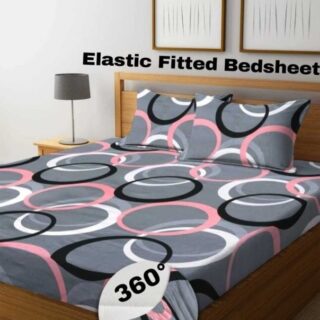 Home Garage 210 TC Cotton King Floral Fitted (Elastic) Bedsheet(Pack of 1, Grey)
Original price was: ₹999.00.₹299.00Current price is: ₹299.00.
Home Garage 210 TC Cotton King Floral Fitted (Elastic) Bedsheet(Pack of 1, Grey)
Original price was: ₹999.00.₹299.00Current price is: ₹299.00.
-
 Goodrik 140 TC Cotton Double 3D Printed Flat Bedsheet(Pack of 1, Brown)
Original price was: ₹499.00.₹229.00Current price is: ₹229.00.
Goodrik 140 TC Cotton Double 3D Printed Flat Bedsheet(Pack of 1, Brown)
Original price was: ₹499.00.₹229.00Current price is: ₹229.00.
-
 GLOBALSHOP 350 TC Microfiber Double Floral Flat Bedsheet(Pack of 1, Multicolor)
Original price was: ₹1,250.00.₹263.00Current price is: ₹263.00.
GLOBALSHOP 350 TC Microfiber Double Floral Flat Bedsheet(Pack of 1, Multicolor)
Original price was: ₹1,250.00.₹263.00Current price is: ₹263.00.
-
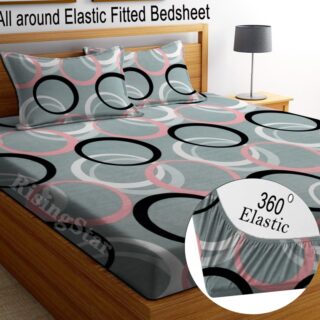 RisingStar 250 TC Microfiber King Printed Fitted (Elastic) Bedsheet(Pack of 1, FITTED-ROUND-CIRCLES-PREMIUM)
Original price was: ₹2,299.00.₹299.00Current price is: ₹299.00.
RisingStar 250 TC Microfiber King Printed Fitted (Elastic) Bedsheet(Pack of 1, FITTED-ROUND-CIRCLES-PREMIUM)
Original price was: ₹2,299.00.₹299.00Current price is: ₹299.00.
-
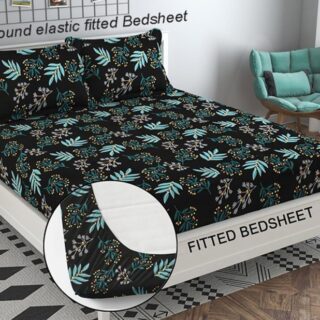 Home Garage 210 TC Cotton King Floral Fitted (Elastic) Bedsheet(Pack of 1, Fitted Black Green)
Original price was: ₹1,299.00.₹299.00Current price is: ₹299.00.
Home Garage 210 TC Cotton King Floral Fitted (Elastic) Bedsheet(Pack of 1, Fitted Black Green)
Original price was: ₹1,299.00.₹299.00Current price is: ₹299.00.
-
 Home Garage 180 TC Cotton King 3D Printed Flat Bedsheet(Pack of 1, White)
Original price was: ₹999.00.₹229.00Current price is: ₹229.00.
Home Garage 180 TC Cotton King 3D Printed Flat Bedsheet(Pack of 1, White)
Original price was: ₹999.00.₹229.00Current price is: ₹229.00.
-
 Panipat Textile Hub 152.4 cm (5 ft) Polyester Window Curtain (Pack Of 2)(Solid, Aqua)
Original price was: ₹1,899.00.₹299.00Current price is: ₹299.00.
Panipat Textile Hub 152.4 cm (5 ft) Polyester Window Curtain (Pack Of 2)(Solid, Aqua)
Original price was: ₹1,899.00.₹299.00Current price is: ₹299.00.
-
 Home Sizzler 214 cm (7 ft) Polyester Semi Transparent Door Curtain (Pack Of 2)(Floral, Maroon)
Original price was: ₹1,199.00.₹399.00Current price is: ₹399.00.
Home Sizzler 214 cm (7 ft) Polyester Semi Transparent Door Curtain (Pack Of 2)(Floral, Maroon)
Original price was: ₹1,199.00.₹399.00Current price is: ₹399.00.
-
 Home Sizzler 153 cm (5 ft) Polyester Room Darkening Window Curtain (Pack Of 2)(Floral, Brown)
Original price was: ₹799.00.₹299.00Current price is: ₹299.00.
Home Sizzler 153 cm (5 ft) Polyester Room Darkening Window Curtain (Pack Of 2)(Floral, Brown)
Original price was: ₹799.00.₹299.00Current price is: ₹299.00.
-
 Stella Creations 214 cm (7 ft) Polyester Room Darkening Door Curtain (Pack Of 2)(Abstract, Brown)
Original price was: ₹1,299.00.₹449.00Current price is: ₹449.00.
Stella Creations 214 cm (7 ft) Polyester Room Darkening Door Curtain (Pack Of 2)(Abstract, Brown)
Original price was: ₹1,299.00.₹449.00Current price is: ₹449.00.
-
 Homefab India 152.5 cm (5 ft) Polyester Room Darkening Window Curtain (Pack Of 2)(Floral, Light Blue)
Original price was: ₹1,199.00.₹319.00Current price is: ₹319.00.
Homefab India 152.5 cm (5 ft) Polyester Room Darkening Window Curtain (Pack Of 2)(Floral, Light Blue)
Original price was: ₹1,199.00.₹319.00Current price is: ₹319.00.
-
 Urban Home 214 cm (7 ft) PVC Transparent Door Curtain Single Curtain(Solid, Off White)
Original price was: ₹699.00.₹203.00Current price is: ₹203.00.
Urban Home 214 cm (7 ft) PVC Transparent Door Curtain Single Curtain(Solid, Off White)
Original price was: ₹699.00.₹203.00Current price is: ₹203.00.
-
 Panipat Textile Hub 213 cm (7 ft) Polyester Door Curtain (Pack Of 2)(Solid, Brown)
Original price was: ₹1,199.00.₹349.00Current price is: ₹349.00.
Panipat Textile Hub 213 cm (7 ft) Polyester Door Curtain (Pack Of 2)(Solid, Brown)
Original price was: ₹1,199.00.₹349.00Current price is: ₹349.00.
-
 Home Sizzler 214 cm (7 ft) Polyester Semi Transparent Door Curtain (Pack Of 2)(Floral, Brown)
Original price was: ₹999.00.₹349.00Current price is: ₹349.00.
Home Sizzler 214 cm (7 ft) Polyester Semi Transparent Door Curtain (Pack Of 2)(Floral, Brown)
Original price was: ₹999.00.₹349.00Current price is: ₹349.00.
-
 Panipat Textile Hub 213 cm (7 ft) Polyester Semi Transparent Door Curtain (Pack Of 2)(Floral, Brown)
Original price was: ₹899.00.₹299.00Current price is: ₹299.00.
Panipat Textile Hub 213 cm (7 ft) Polyester Semi Transparent Door Curtain (Pack Of 2)(Floral, Brown)
Original price was: ₹899.00.₹299.00Current price is: ₹299.00.
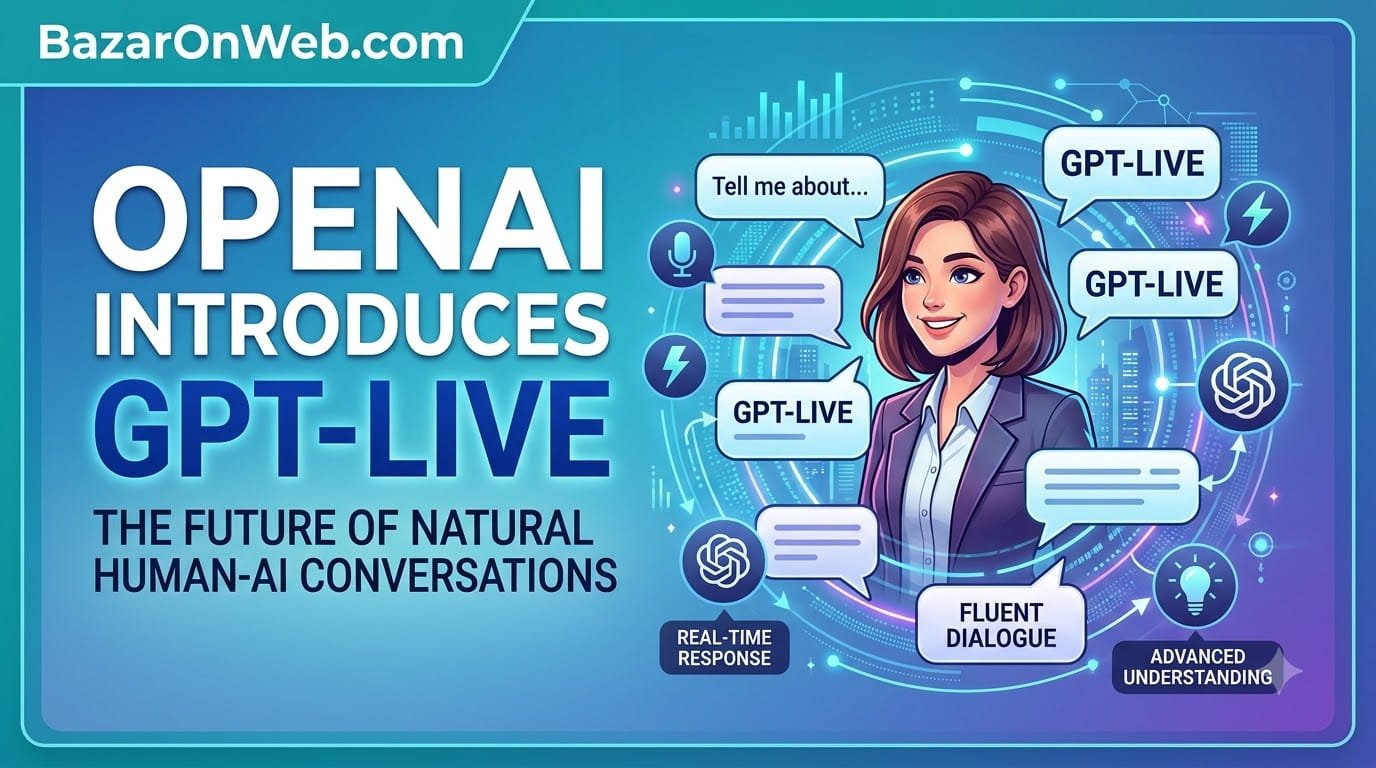
Artificial intelligence has come a long way from simple chatbots that answered scripted questions. Over the past few years, AI assistants have evolved into intelligent companions capable of understanding context, solving complex problems, generating creative content, and assisting with daily tasks. Yet one challenge remained largely unsolved—making conversations with AI feel genuinely human.
OpenAI is now taking a significant step toward solving that challenge with the introduction of GPT-Live, its next-generation voice model designed specifically for natural, real-time human-AI interaction. This technology now powers ChatGPT’s advanced voice experience and represents one of the most meaningful improvements in conversational AI since the launch of ChatGPT itself.
Rather than simply responding to spoken commands, GPT-Live aims to recreate the flow of a real conversation. It understands interruptions, adapts to changing topics, responds emotionally when appropriate, and delivers speech that feels remarkably fluid and engaging.
For users, this means interacting with ChatGPT becomes less like operating software and more like talking with a knowledgeable colleague, teacher, or friend.
As voice-first computing continues to gain momentum, GPT-Live could redefine how millions of people communicate with artificial intelligence.
Why Voice AI Needed an Upgrade
Traditional voice assistants have always followed a predictable pattern.
You speak.
The assistant processes your request.
It generates a response.
You wait.
Then the conversation starts again.
While this workflow works well for simple commands such as setting reminders, checking the weather, or asking factual questions, it feels unnatural during longer discussions. Real human conversations rarely involve waiting for one person to completely finish speaking before the other begins processing a response.
People interrupt each other.
They change topics unexpectedly.
They pause to think.
They ask follow-up questions halfway through explanations.
They adjust their tone depending on the situation.
Most voice assistants struggle with these natural behaviors because they process conversations in separate stages instead of treating them as continuous interactions.
GPT-Live changes this model by focusing on conversational flow instead of isolated requests.
Instead of simply converting speech into text and then generating an answer, GPT-Live continuously understands the conversation as it unfolds, allowing for much smoother interactions.
The result is an AI that feels attentive rather than robotic.
What Exactly Is GPT-Live?
GPT-Live is OpenAI’s latest voice interaction system built to enable highly natural spoken conversations.
Unlike earlier speech systems that stitched together multiple independent technologies for speech recognition, language understanding, and speech synthesis, GPT-Live creates a far more unified conversational experience.
The objective isn’t merely better voice quality.
The real innovation lies in conversation quality.
GPT-Live focuses on understanding:
- Natural pauses
- Speaking rhythm
- Interruptions
- Emotional context
- Conversational timing
- Topic transitions
- Human-like responses
Instead of waiting for complete sentences before responding, GPT-Live can recognize conversational cues much like another human would.
This creates significantly shorter response times and reduces the awkward silence commonly associated with voice assistants.
The experience feels much more fluid because the AI actively participates in the discussion instead of simply reacting to commands.
A Conversation That Feels Natural
One of GPT-Live’s most impressive capabilities is its ability to support conversations that unfold naturally rather than following rigid command-response patterns.
Imagine asking ChatGPT:
“Can you help me plan my vacation?”
Instead of immediately listing destinations, the AI might begin discussing your interests.
You interrupt.
“Actually, I’m thinking somewhere colder.”
Rather than restarting the conversation, GPT-Live immediately adjusts.
Later, you add:
“My budget changed.”
Again, the AI adapts without losing context.
This mirrors how humans naturally communicate.
There is no need to repeat information or restart the discussion every time a new detail emerges.
Instead, the conversation evolves continuously.
This seemingly simple improvement dramatically changes the overall experience.
Faster Responses Make a Huge Difference
One of the biggest frustrations with earlier voice assistants was latency.
Even delays of one or two seconds can make conversations feel awkward.
Humans are surprisingly sensitive to conversational timing.
Studies have shown that pauses lasting only a few hundred milliseconds can change how natural a discussion feels.
GPT-Live significantly reduces this delay.
Because it processes speech continuously, it can begin preparing responses while you’re still talking.
The result is a conversation with far fewer unnatural pauses.
This responsiveness creates a stronger sense that the AI is actively listening instead of waiting for commands.
For users, the interaction becomes smoother, faster, and far more enjoyable.
Understanding Interruptions
Real conversations are rarely linear.
People interrupt constantly.
Sometimes they remember an important detail.
Sometimes they change their minds.
Sometimes they realize they asked the wrong question.
Traditional voice assistants often become confused during interruptions.
GPT-Live is specifically designed to handle them gracefully.
For example:
“Explain quantum computing.”
Halfway through the explanation:
“Wait—actually explain it like I’m twelve.”
Rather than restarting everything, GPT-Live immediately shifts its explanation to match the new request.
This creates a much more human conversational experience.
Users no longer need to carefully structure every question before speaking.
Instead, conversations become flexible and forgiving.
Better Emotional Awareness
Another major advancement is GPT-Live’s improved understanding of conversational tone.
Human communication depends heavily on more than just words.
Tone of voice often reveals:
- Excitement
- Frustration
- Curiosity
- Uncertainty
- Confidence
- Humor
GPT-Live is designed to recognize many of these conversational signals and respond appropriately.
For example, if someone sounds confused, the AI may naturally slow down its explanation.
If someone sounds excited about a new project, GPT-Live may match that enthusiasm while remaining helpful and informative.
This doesn’t mean the AI experiences emotions like humans do.
Instead, it adapts its communication style to make conversations feel more comfortable and intuitive.
That distinction is important.
The goal isn’t artificial emotion.
The goal is better communication.
Beyond Simple Questions and Answers
Earlier voice assistants excelled at short tasks.
“What time is it?”
“What’s the weather?”
“Set an alarm.”
GPT-Live expands well beyond those limitations.
Because conversations remain coherent over longer periods, users can tackle much more sophisticated activities, including:
- Brainstorming business ideas
- Learning new subjects
- Practicing foreign languages
- Planning travel itineraries
- Preparing presentations
- Conducting interview practice
- Coding assistance
- Creative writing
- Research discussions
- Problem-solving sessions
These conversations can evolve naturally without constantly restarting context.
Instead of treating every spoken sentence as a separate request, GPT-Live treats the discussion as one continuous interaction.
That simple shift opens entirely new possibilities for voice-first AI.
A More Human Way to Learn
Education could become one of GPT-Live’s strongest applications.
Imagine a student studying biology.
Instead of reading static material, they can engage in a flowing conversation.
The student asks:
“What is photosynthesis?”
The AI explains.
The student interrupts.
“I don’t understand chlorophyll.”
The explanation changes instantly.
Another question follows.
“Can you compare it to a solar panel?”
GPT-Live adjusts again.
This conversational style mirrors how students naturally learn from teachers in classrooms.
Rather than following a fixed lesson, explanations evolve based on curiosity, misunderstandings, and follow-up questions.
That creates a far more engaging educational experience than traditional voice assistants ever could.

- How to Remotely Control Another Computer Using Windows Quick Assist

- 5 Must-Have Electronics Gadgets for a More Comfortable Living Room

- How to Create a Windows 11 System Backup on an External Hard Drive

- 10 Smart Home Ideas That Make Everyday Life Easier

- Gemini Live Avatar: How to Talk to Gemini Face-to-Face

Products
-
![Apple Watch Ultra 3 [GPS + Cellular 49mm] Running & Multisport Smartwatch w/Rugged Titanium Case w/Black Titanium Milanese Loop - M. Satellite Communications, Advanced Health & Fitness Tracking](https://bazaronweb.com/retailstores/wp-content/uploads/2025/09/apple-watch-320x320.jpg) Apple Watch Ultra 3 [GPS + Cellular 49mm] Running & Multisport Smartwatch w/Rugged Titanium Case w/Black Titanium Milanese Loop - M. Satellite Communications, Advanced Health & Fitness Tracking
Apple Watch Ultra 3 [GPS + Cellular 49mm] Running & Multisport Smartwatch w/Rugged Titanium Case w/Black Titanium Milanese Loop - M. Satellite Communications, Advanced Health & Fitness Tracking
-
 Apple iPad mini (A17 Pro): Apple Intelligence, 8.3-inch Liquid Retina Display, 256GB, Wi-Fi 6E, 12MP Front/12MP Back Camera, Touch ID, All-Day Battery Life — Purple
-
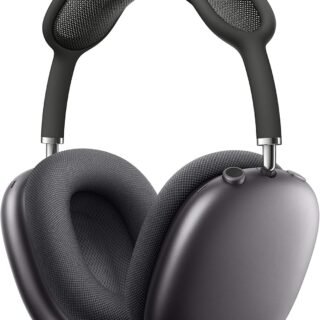 Apple AirPods Max Wireless Over-Ear Headphones, Active Noise Cancelling, Transparency Mode, Personalized Spatial Audio, Dolby Atmos, Bluetooth Headphones for iPhone – Space Gray
-
 Apple AirPods Pro 2 Wireless Earbuds, Active Noise Cancellation, Hearing Aid Feature, Bluetooth Headphones, Transparency, Personalized Spatial Audio, High-Fidelity Sound, H2 Chip, USB-C Charging
-
Home Garage 210 TC Cotton King Floral Fitted (Elastic) Bedsheet(Pack of 1, Grey)
Original price was: ₹999.00.₹299.00Current price is: ₹299.00.
Leave a Reply