Discounted Products
-
 Home Garage 210 TC Cotton King Floral Fitted (Elastic) Bedsheet(Pack of 1, Grey)
Original price was: ₹999.00.₹299.00Current price is: ₹299.00.
Home Garage 210 TC Cotton King Floral Fitted (Elastic) Bedsheet(Pack of 1, Grey)
Original price was: ₹999.00.₹299.00Current price is: ₹299.00.
-
 Goodrik 140 TC Cotton Double 3D Printed Flat Bedsheet(Pack of 1, Brown)
Original price was: ₹499.00.₹229.00Current price is: ₹229.00.
Goodrik 140 TC Cotton Double 3D Printed Flat Bedsheet(Pack of 1, Brown)
Original price was: ₹499.00.₹229.00Current price is: ₹229.00.
-
 GLOBALSHOP 350 TC Microfiber Double Floral Flat Bedsheet(Pack of 1, Multicolor)
Original price was: ₹1,250.00.₹263.00Current price is: ₹263.00.
GLOBALSHOP 350 TC Microfiber Double Floral Flat Bedsheet(Pack of 1, Multicolor)
Original price was: ₹1,250.00.₹263.00Current price is: ₹263.00.
-
 RisingStar 250 TC Microfiber King Printed Fitted (Elastic) Bedsheet(Pack of 1, FITTED-ROUND-CIRCLES-PREMIUM)
Original price was: ₹2,299.00.₹299.00Current price is: ₹299.00.
RisingStar 250 TC Microfiber King Printed Fitted (Elastic) Bedsheet(Pack of 1, FITTED-ROUND-CIRCLES-PREMIUM)
Original price was: ₹2,299.00.₹299.00Current price is: ₹299.00.
-
 Home Garage 210 TC Cotton King Floral Fitted (Elastic) Bedsheet(Pack of 1, Fitted Black Green)
Original price was: ₹1,299.00.₹299.00Current price is: ₹299.00.
Home Garage 210 TC Cotton King Floral Fitted (Elastic) Bedsheet(Pack of 1, Fitted Black Green)
Original price was: ₹1,299.00.₹299.00Current price is: ₹299.00.
-
 Home Garage 180 TC Cotton King 3D Printed Flat Bedsheet(Pack of 1, White)
Original price was: ₹999.00.₹229.00Current price is: ₹229.00.
Home Garage 180 TC Cotton King 3D Printed Flat Bedsheet(Pack of 1, White)
Original price was: ₹999.00.₹229.00Current price is: ₹229.00.
-
 Panipat Textile Hub 152.4 cm (5 ft) Polyester Window Curtain (Pack Of 2)(Solid, Aqua)
Original price was: ₹1,899.00.₹299.00Current price is: ₹299.00.
Panipat Textile Hub 152.4 cm (5 ft) Polyester Window Curtain (Pack Of 2)(Solid, Aqua)
Original price was: ₹1,899.00.₹299.00Current price is: ₹299.00.
-
 Home Sizzler 214 cm (7 ft) Polyester Semi Transparent Door Curtain (Pack Of 2)(Floral, Maroon)
Original price was: ₹1,199.00.₹399.00Current price is: ₹399.00.
Home Sizzler 214 cm (7 ft) Polyester Semi Transparent Door Curtain (Pack Of 2)(Floral, Maroon)
Original price was: ₹1,199.00.₹399.00Current price is: ₹399.00.
-
 Home Sizzler 153 cm (5 ft) Polyester Room Darkening Window Curtain (Pack Of 2)(Floral, Brown)
Original price was: ₹799.00.₹299.00Current price is: ₹299.00.
Home Sizzler 153 cm (5 ft) Polyester Room Darkening Window Curtain (Pack Of 2)(Floral, Brown)
Original price was: ₹799.00.₹299.00Current price is: ₹299.00.
-
 Stella Creations 214 cm (7 ft) Polyester Room Darkening Door Curtain (Pack Of 2)(Abstract, Brown)
Original price was: ₹1,299.00.₹449.00Current price is: ₹449.00.
Stella Creations 214 cm (7 ft) Polyester Room Darkening Door Curtain (Pack Of 2)(Abstract, Brown)
Original price was: ₹1,299.00.₹449.00Current price is: ₹449.00.
-
 Homefab India 152.5 cm (5 ft) Polyester Room Darkening Window Curtain (Pack Of 2)(Floral, Light Blue)
Original price was: ₹1,199.00.₹319.00Current price is: ₹319.00.
Homefab India 152.5 cm (5 ft) Polyester Room Darkening Window Curtain (Pack Of 2)(Floral, Light Blue)
Original price was: ₹1,199.00.₹319.00Current price is: ₹319.00.
-
 Urban Home 214 cm (7 ft) PVC Transparent Door Curtain Single Curtain(Solid, Off White)
Original price was: ₹699.00.₹203.00Current price is: ₹203.00.
Urban Home 214 cm (7 ft) PVC Transparent Door Curtain Single Curtain(Solid, Off White)
Original price was: ₹699.00.₹203.00Current price is: ₹203.00.
-
 Panipat Textile Hub 213 cm (7 ft) Polyester Door Curtain (Pack Of 2)(Solid, Brown)
Original price was: ₹1,199.00.₹349.00Current price is: ₹349.00.
Panipat Textile Hub 213 cm (7 ft) Polyester Door Curtain (Pack Of 2)(Solid, Brown)
Original price was: ₹1,199.00.₹349.00Current price is: ₹349.00.
-
 Home Sizzler 214 cm (7 ft) Polyester Semi Transparent Door Curtain (Pack Of 2)(Floral, Brown)
Original price was: ₹999.00.₹349.00Current price is: ₹349.00.
Home Sizzler 214 cm (7 ft) Polyester Semi Transparent Door Curtain (Pack Of 2)(Floral, Brown)
Original price was: ₹999.00.₹349.00Current price is: ₹349.00.
-
 Panipat Textile Hub 213 cm (7 ft) Polyester Semi Transparent Door Curtain (Pack Of 2)(Floral, Brown)
Original price was: ₹899.00.₹299.00Current price is: ₹299.00.
Panipat Textile Hub 213 cm (7 ft) Polyester Semi Transparent Door Curtain (Pack Of 2)(Floral, Brown)
Original price was: ₹899.00.₹299.00Current price is: ₹299.00.
Introduction
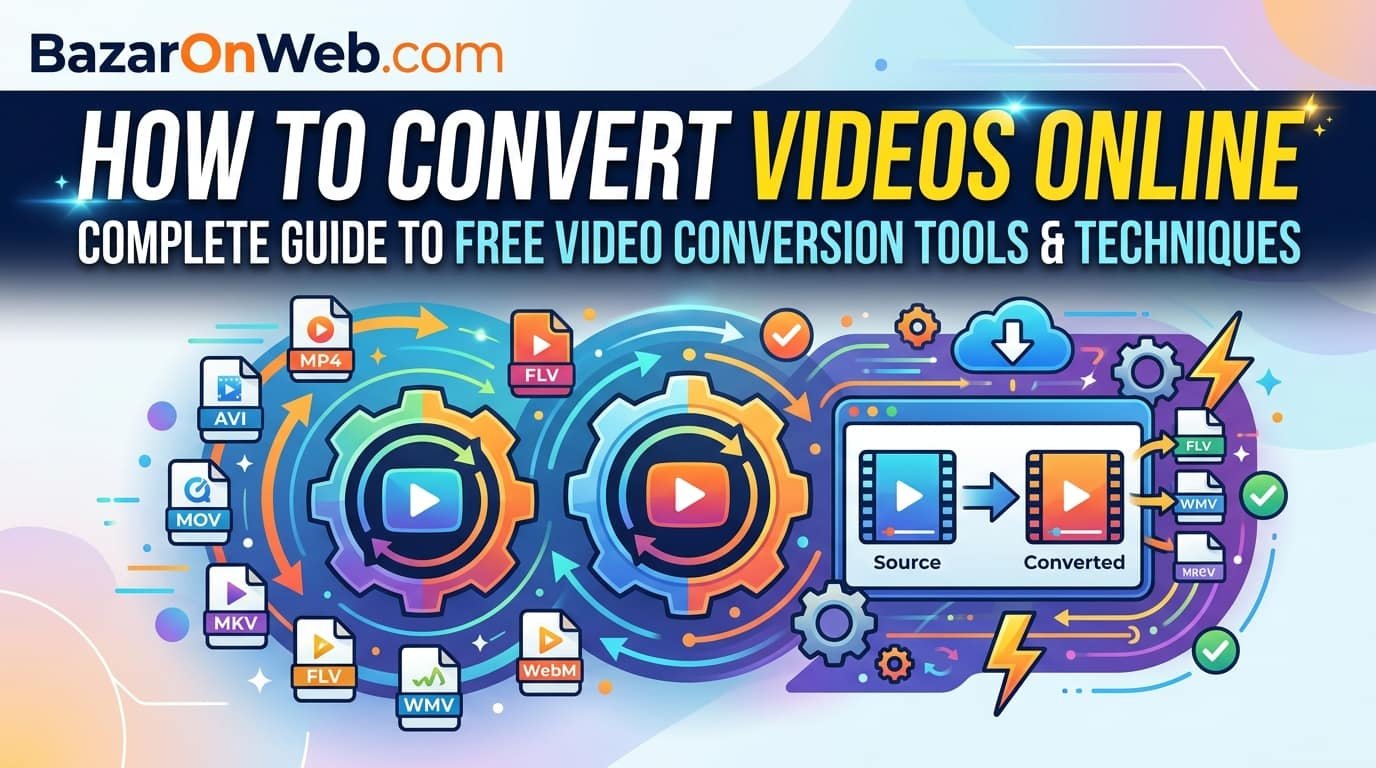
Video conversion is one of those technical tasks that sounds complicated but is actually incredibly straightforward once you understand the basics. I used to think I needed to download complicated software to convert videos, but I’ve discovered that online converters make the entire process so simple that anyone can do it—no technical expertise required. Whether you need to convert a video to a different format so it plays on your device, compress it to save space, extract audio to create a podcast, or modify resolution for uploading to social media, online video converters handle all of this without installing anything on your computer. As someone who works with video content regularly and helps friends with their digital projects, I’ve tested numerous converters and learned which tools are reliable, fast, and genuinely user-friendly.
In this comprehensive guide, I’ll demystify video conversion by explaining what it actually is and why you might need it, break down video formats and codecs in plain language, and walk you through using the best online converters available today. I’ll show you how to convert videos for specific devices, extract audio from videos, handle batch conversions efficiently, and address important security considerations when using online tools. Whether you’re converting a single video or building video conversion into a regular workflow, this guide provides everything you need to become confident in online video conversion. By the end, you’ll understand not just how to convert videos, but also why certain formats work better for different purposes, helping you make smart decisions about your video projects.
Meta Description: Learn how to convert videos online using free tools. Complete guide covering formats, top converters, step-by-step instructions, and security tips for all users.
Meta Social OG Description: 📹 Convert videos online for free! Discover the best tools, convert to any format, extract audio, and optimize for any device. No software needed!
1. What is Video Conversion and Why You Need It
Video conversion is the process of transforming a video file from one format to another while maintaining the video content. This might involve changing the file format (like MP4 to AVI), modifying the quality or resolution, extracting audio, changing the frame rate, or adjusting the bitrate. Understanding that conversion doesn’t mean recording or recreating the video—it means repackaging the same content in a different container or with different specifications—helps you understand what’s happening technically. Video conversion is necessary because different devices, platforms, and applications support different video formats. Your smartphone might play MP4 files smoothly but struggle with MKV files. Video editing software might require specific formats as input. Social media platforms have specific format requirements. A podcast platform needs audio files rather than video files.
Video conversion addresses these compatibility challenges by transforming videos into formats your specific device or application requires. Another common reason for conversion is file size reduction—you might have a large video file that consumes excessive storage space, so you convert it to a more compressed format that takes less space while remaining acceptable quality. Conversion also enables optimization for specific purposes—a video optimized for professional editing differs from one optimized for social media sharing. Professional editing benefits from higher quality, larger files; social media sharing benefits from compressed files that upload quickly. Additionally, video conversion enables format transcoding—say you record a video in a format your device creates natively, but you need it in a format compatible with your computer’s editing software. Conversion bridges this gap. Understanding these various use cases helps you appreciate why video conversion tools are valuable. Online converters make this technical process accessible to anyone without requiring installation of complex software or technical knowledge.
2. Understanding Video Formats: Codecs, Containers, and Resolution
Video files are actually quite complex, consisting of multiple components that work together. Understanding these components helps you make informed decisions about conversion. The video format includes three main elements: the codec, the container, and the resolution. The codec is the compression algorithm that encodes video data. Common video codecs include H.264 (also called AVC), H.265 (HEVC), VP9, and others. Each codec handles compression differently, affecting both file size and quality. H.265, for example, provides better compression than H.264, meaning smaller files with similar quality, but requires more processing power for playback. The container is the file wrapper that holds the video, audio, and metadata. Common containers include MP4, AVI, MKV, MOV, and WebM. The same codec can exist in different containers—you can have H.264 video in an MP4 container or an AVI container.
Resolution refers to the pixel dimensions of the video—1920×1080 (Full HD), 1280×720 (HD), 3840×2160 (4K), and others. Higher resolution means more detail but larger file sizes. Additionally, videos have frame rates (typically 24fps, 30fps, or 60fps) and bitrates (the amount of data per second), both affecting quality and file size. When converting videos, you’re essentially choosing new codec, container, resolution, frame rate, and bitrate specifications. Understanding these elements helps you make smart conversion choices. For example, if you’re converting for a mobile device with limited storage, choosing a lower resolution and higher compression (H.265 codec) creates smaller files. If you’re converting for professional editing, you might maintain high resolution and quality despite larger file sizes. Online converters often provide presets for common scenarios—”Convert for iPhone,” “Convert for YouTube,” “Convert to audio only”—which automatically select appropriate specifications without requiring you to understand technical details.
3. Choosing the Right Online Video Converter for Your Needs
With hundreds of online video converters available, choosing the right one depends on your specific needs and priorities. Some converters specialize in basic format conversion, while others offer extensive customization. Some are completely free, while others have premium features or limitations. Key factors to consider include conversion speed, supported formats, file size limits, output quality options, ease of use, and privacy policies. Conversion speed varies significantly—some converters complete conversions in minutes while others might take hours. This often depends on server capacity and your file size. Supported formats matter if you’re converting to less common formats; if you only need MP4, most converters handle it fine, but if you need unusual formats, you’ll need a converter supporting those specific formats.
File size limits vary widely—some free converters limit files to 100MB, while others accept 1GB or larger. If you regularly convert large files, you need a converter with generous limits or a premium subscription. Output quality options include preset quality levels or customizable bitrate selection—more options give you greater control over the quality-to-file-size tradeoff. Ease of use matters if you’re not technically inclined; some converters have intuitive interfaces while others are confusing. Privacy policies matter significantly since online converters require uploading files to servers—you want assurance that servers delete files after conversion and don’t retain or analyze your content. Reading reviews on multiple sources helps identify reliable converters with good reputations. Additionally, consider whether you need additional features like batch conversion, audio extraction, subtitle handling, or watermark addition. Evaluating these factors based on your priorities helps you select the converter that best fits your needs rather than trying to use an inappropriate tool.
4. Top Free Online Video Converters: Comparison and Features
Several excellent free online video converters are available, each with particular strengths. CloudConvert is highly regarded for format support—it handles hundreds of formats and converts between virtually any combination imaginable. It also supports batch conversion and is quite fast. The free tier allows 25 conversions daily with files up to 1GB. Zamzar is another popular option known for simplicity and reliability. It handles most common formats and has been operating since 2006, giving it longevity and stability. Zamzar’s free tier allows 2 conversions daily with files up to 150MB, though paid plans offer more conversions and larger file sizes.
Online-Convert.com offers excellent customization—you can adjust resolution, bitrate, frame rate, and other parameters precisely. It supports many formats and handles large files on the free tier. Convertio is user-friendly with a clean interface and good format support. The free tier allows limited daily conversions but provides a good experience. FFmpeg Online is for more technical users—it provides access to FFmpeg, a powerful command-line converter, through a web interface. It’s extremely flexible but requires understanding command syntax. For specific purposes, specialized converters exist—VidSofter focuses on YouTube conversion, OnlineVideoConverter specializes in quick conversions, and Kapwing offers video editing alongside conversion. Each converter has different policies regarding file sizes, daily limits, and supported formats. Evaluating which converter fits your specific needs—based on file size, format requirements, customization needs, and frequency of use—helps you choose appropriately. Most people find that one or two of these converters cover all their typical conversion needs.
5. Step-by-Step Guide: Converting Videos Using Popular Online Tools
Converting a video using CloudConvert illustrates the basic process most online converters follow. First, visit cloudconvert.com and click “Select File” or drag-and-drop a video file into the interface. The site uploads your video and displays details like file size, duration, and current format. Next, select your desired output format from the dropdown menu—if you want MP4, select MP4. CloudConvert shows estimated output file size and allows you to customize settings. For most users, the default settings work fine, but you can adjust quality, resolution, bitrate, and other parameters if needed. After configuring settings, click “Convert” to start the process. A progress bar shows conversion status. Depending on file size and server capacity, conversion takes from seconds to several minutes.
Once conversion completes, CloudConvert provides a download button. Click it to download your converted file to your computer. The converted file appears in your Downloads folder. The entire process typically takes less than five minutes from start to finish. For Zamzar, the process is similar—visit zamzar.com, upload your file, select the output format, enter your email address (Zamzar emails the download link), and click “Convert.” Zamzar emails you a download link after conversion completes, rather than providing immediate downloads. For Online-Convert.com, upload your file, select format, customize settings extensively if desired, and click “Convert and Download.” Most converters follow this same basic pattern—upload, select output format, customize if needed, convert, and download. The variations are minimal, and once you use one converter, you’ll quickly understand how to use others. Practice with a small test file first to become comfortable before converting important videos.
6. Converting Video Quality and Resolution for Different Devices
Different devices have different specifications for optimal video playback, and converting videos appropriately ensures compatibility and best results. For smartphones, videos should be relatively small in file size (to conserve storage and bandwidth) and in commonly supported formats like MP4 with H.264 codec. Resolution of 1280×720 or 1920×1080 is typical, depending on the device’s screen size. Converting to these specifications ensures videos play smoothly without excessive storage consumption. For tablets, similar specifications apply but might accommodate slightly larger file sizes. For computers, larger file sizes are acceptable, and resolution can be higher—1920×1080 or 2560×1440 is common. For older devices or streaming over limited bandwidth, lower resolution like 1280×720 or even 854×480 might be necessary.
For uploading to YouTube or other video platforms, understanding the platform’s specifications ensures optimal quality. YouTube recommends specific formats and resolutions for different content types. Using the platform’s recommended format ensures your video displays at best quality. For professional video editing, use formats that preserve maximum quality—higher bitrate and resolution, even if file sizes are large. For archival storage, consider preservation formats like ProRes or similar codecs that age well. Many online converters include presets for common devices and platforms, automatically applying appropriate specifications. Look for presets like “Convert for iPhone,” “Convert for YouTube,” “Convert for iPad,” or similar. These presets eliminate guesswork by automatically selecting resolution, codec, bitrate, and other parameters optimized for that specific use case. If you’re unfamiliar with technical specifications, using presets is the easiest approach. If you want fine-grained control, learn what each parameter means and adjust accordingly based on your specific needs.
7. Audio Extraction: Converting Videos to MP3 and Other Formats
Beyond video format conversion, online converters can extract audio from videos, creating audio-only files. This is particularly useful for converting music videos to audio files, extracting podcasts from videos, or creating audio files from instructional videos. The process is similar to video conversion but with audio output selected. Most converters include audio extraction functionality—when you upload a video, they allow selecting audio formats like MP3, WAV, FLAC, or AAC as output options. Select your desired audio format, and the converter extracts audio while discarding the video stream, creating a much smaller file containing only sound.
Audio extraction is particularly valuable for podcast creators who receive video submissions but need audio-only files for distribution. It’s also useful for music enthusiasts who want to extract audio from YouTube videos (ensuring you have permission and respecting copyright if applicable) or other sources. When extracting audio, consider the output format carefully. MP3 is most compatible—virtually all devices and applications support MP3. WAV and FLAC provide lossless compression (no quality loss) but create larger files. AAC and OGG are alternatives with various compatibility levels. For most purposes, MP3 extraction is ideal—the format is universally supported and creates reasonably small files. Bitrate selection when extracting audio affects quality and file size. 128 kbps is standard for voice content and podcasts; 192 kbps or 256 kbps is better for music. Higher bitrates create larger files with imperceptibly better quality for most listeners.
Many online converters specifically support YouTube audio extraction, which is particularly convenient. You paste a YouTube URL, select MP3 output, and the converter extracts audio without requiring you to first download the video. This is faster than downloading the full video then extracting audio separately. However, be aware of copyright considerations—extracting audio from copyrighted music videos without permission is copyright infringement. Extracting your own content or content you have permission to use is fine, but respect intellectual property rights.
8. Batch Converting Multiple Videos Efficiently Online
If you need to convert multiple videos—perhaps converting an entire video library to a consistent format—batch conversion saves significant time. Many online converters support batch conversion, allowing you to upload and convert multiple files simultaneously or in sequence. CloudConvert supports batch conversion through its API or web interface. You can upload multiple files and convert them all to your desired format in one operation. The interface handles all files at once, converting them sequentially or in parallel depending on server capacity. This is far faster than converting videos one at a time, especially for large libraries.
When doing batch conversion, consider your converter’s daily limits if using a free tier. If you have 100 videos to convert and the converter limits you to 25 daily conversions, you’ll need multiple days. Premium plans often allow unlimited daily conversions for this reason—if you frequently do batch conversions, a premium subscription might be worthwhile. When converting large batches, schedule conversions during off-peak hours when servers are less busy. Conversions are typically faster late at night than during daytime hours when server load is highest. Also, be patient—large batch conversions can take hours. Start the conversion and let it run while you work on other tasks. Plan ahead so you’re not rushing to complete conversions by a deadline. Before committing a massive library to conversion, test the converter with a small sample to ensure the output quality and format meet your expectations. Once you’re confident, proceed with batch conversion. After completion, verify a sample of converted files to ensure quality is acceptable across the entire batch before deleting original files.
9. Security and Privacy Considerations When Using Online Converters
Uploading files to online converters raises legitimate security and privacy concerns that deserve serious consideration. When you upload a video file to an online converter, that file temporarily exists on the converter’s servers. During this time, the file could potentially be accessed by service operators, hacked attackers, or other users. For this reason, understanding privacy policies and choosing reputable converters is essential. Read the converter’s privacy policy to understand what they do with uploaded files. Reputable converters explicitly state that files are automatically deleted after conversion completes, typically within minutes or hours. Some delete files immediately after conversion, others after 24 hours. Avoid converters with vague privacy policies or that don’t explicitly address file deletion.
Additionally, use HTTPS connections when uploading files—ensure the URL starts with “https://” rather than “http://”. HTTPS encrypts data in transit, protecting files from interception during upload and download. Most reputable converters use HTTPS by default. For sensitive videos (personal recordings, proprietary business content, or confidential material), consider whether uploading to online converters is appropriate. For such content, downloading and using desktop converter software might be safer since files never leave your computer. Alternatively, evaluate whether the information in the video truly needs to remain secret—if someone sees it during upload, what would be the impact? For most casual conversions of public or non-sensitive content, online converters are fine and pose minimal security risk. However, for sensitive content, additional precautions are warranted.
Additionally, be cautious about downloading converters or plugins from unknown sources. Some websites claiming to be video converters are actually malware distribution vectors. Stick to established, reputable converters with positive reviews. Avoid downloading “converter software” from suspicious websites. The online-based converters I’ve recommended are safe, but be selective about any new tools you try. Finally, use antivirus software on your computer to protect against malware generally. While online converters themselves are usually safe, maintaining good security practices protects your computer overall.
10. Troubleshooting Common Video Conversion Issues and Problems
Despite their simplicity, video conversion sometimes encounters problems. Understanding common issues and solutions helps you troubleshoot effectively. The most common issue is conversion failure or timeout, where the converter doesn’t complete conversion or loses connection midway. This usually indicates server issues, network problems, or file size exceeding the converter’s limits. Solutions include trying again later when servers are less busy, using a different converter, or splitting large files into smaller segments. Another issue is poor output quality—the converted video looks degraded, pixelated, or has artifacts. This typically results from excessive compression or codec incompatibility. Solutions include adjusting bitrate upward, trying a different codec, or using a different converter.
Audio synchronization problems where audio drifts out of sync with video sometimes occur, particularly with certain codecs or frame rates. Re-conversion with different settings usually resolves this. Format compatibility issues where the output file won’t play on your intended device usually indicate using an unsupported format or codec. Verify that the device supports the chosen format and codec before converting. If it doesn’t, select a different format. File corruption where the converted file won’t play at all might indicate conversion failure, network interruption during download, or codec incompatibility. Re-convert and try downloading again. Excessive conversion time where conversions take much longer than expected usually indicates server overload or network issues. Try again during off-peak hours or try a different converter.
If conversions consistently fail with a particular converter, try an alternative converter. Different converters handle different situations better, and what fails on one converter might succeed on another. For persistent issues, check the converter’s documentation or contact support. Most reputable converters have help sections addressing common problems. Before giving up on conversion, try multiple approaches—different formats, different converters, or smaller file sizes—since the problem might be specific to a particular combination rather than a fundamental limitation.
Disclaimer
This article provides guidance on video conversion using online tools and services. The information is intended for educational purposes to help users understand video formats and use online conversion tools effectively. Recommendations and instructions may change as online services update their interfaces and features.
Important Disclaimers:
- This guide covers online video converters available as of publication; specific tools, features, and interfaces may change without notice
- Screenshots and interface descriptions may not match current versions of these services due to regular updates and interface modifications
- File size limits, daily conversion limits, and features of free online converters may change at any time
- Conversion quality and speed depend on multiple factors including file size, current server load, your internet connection speed, and the complexity of the conversion
- We recommend testing converters with small, non-critical files before converting important videos
- Privacy and security practices of online services may change; always review current privacy policies before uploading sensitive content
Copyright and Legal Considerations:
- Users are responsible for ensuring they have legal rights to convert videos they upload
- Extracting audio or converting copyrighted content without permission may violate copyright laws
- Some video sources (YouTube, streaming services, etc.) have terms of service prohibiting downloading or converting their content
- We do not endorse copyright infringement and recommend respecting intellectual property rights
Data and Privacy:
- Uploading files to online services involves storing data on third-party servers; carefully consider privacy implications
- Review privacy policies before uploading sensitive content
- Even with deletion policies, files may temporarily exist on servers and theoretically could be accessed
- For highly sensitive content, consider offline conversion using desktop software instead
- Use HTTPS connections and reputable services to minimize security risks
Conversion Quality:
- Output quality depends on input file quality and conversion settings
- Lossy compression during conversion may result in quality degradation compared to original files
- Higher quality conversions create larger files; balance quality and file size based on your needs
- Not all format combinations produce optimal results; some conversions may result in quality loss
Device and Platform Compatibility:
- Specific format recommendations in this guide are general guidance; verify your particular device or platform supports chosen formats
- Audio and video codec support varies by device and software
- Test converted files on your target device before deleting original files
- Platform requirements (YouTube, etc.) may change; verify current requirements before converting
Technical Limitations:
- Very large files or unusual formats may not be supported by all converters
- Conversion time varies based on file size, server capacity, and network conditions
- Some converters may have regional restrictions or limitations based on location
- Browser-based converters require stable internet connections; interruptions may cause conversion failure
When to Seek Additional Help:
- If conversions consistently fail despite trying multiple approaches, consult converter documentation or support
- For specialized conversion needs, professional video editing software may be more appropriate than online converters
- If you encounter security concerns or suspicious behavior from a converter, discontinue use and report the issue
Liability:
We are not responsible for any issues resulting from use of online video converters, including data loss, corrupted files, failed conversions, privacy breaches, or quality problems. Users assume full responsibility for their use of online services and for ensuring they have appropriate rights to content being converted. Service providers’ terms of service and privacy policies govern use of their services; users are responsible for reviewing and accepting these terms.
About the Author
Jessica Miller is a marketing manager and digital content specialist who works with video regularly and understands the practical challenges content creators face. With expertise in video formats, digital media workflows, and practical technology solutions, she helps professionals and casual users navigate video-related tasks efficiently. When she’s not writing comprehensive tech guides or managing her marketing team, she’s exploring new content creation tools and helping friends optimize their digital workflows.

- How to Remotely Control Another Computer Using Windows Quick Assist

- 5 Must-Have Electronics Gadgets for a More Comfortable Living Room

- How to Create a Windows 11 System Backup on an External Hard Drive

- 10 Smart Home Ideas That Make Everyday Life Easier

- Gemini Live Avatar: How to Talk to Gemini Face-to-Face

Products
-
![Apple Watch Ultra 3 [GPS + Cellular 49mm] Running & Multisport Smartwatch w/Rugged Titanium Case w/Black Titanium Milanese Loop - M. Satellite Communications, Advanced Health & Fitness Tracking](https://bazaronweb.com/retailstores/wp-content/uploads/2025/09/apple-watch-320x320.jpg) Apple Watch Ultra 3 [GPS + Cellular 49mm] Running & Multisport Smartwatch w/Rugged Titanium Case w/Black Titanium Milanese Loop - M. Satellite Communications, Advanced Health & Fitness Tracking
Apple Watch Ultra 3 [GPS + Cellular 49mm] Running & Multisport Smartwatch w/Rugged Titanium Case w/Black Titanium Milanese Loop - M. Satellite Communications, Advanced Health & Fitness Tracking
-
 Apple iPad mini (A17 Pro): Apple Intelligence, 8.3-inch Liquid Retina Display, 256GB, Wi-Fi 6E, 12MP Front/12MP Back Camera, Touch ID, All-Day Battery Life — Purple
-
 Apple AirPods Max Wireless Over-Ear Headphones, Active Noise Cancelling, Transparency Mode, Personalized Spatial Audio, Dolby Atmos, Bluetooth Headphones for iPhone – Space Gray
-
 Apple AirPods Pro 2 Wireless Earbuds, Active Noise Cancellation, Hearing Aid Feature, Bluetooth Headphones, Transparency, Personalized Spatial Audio, High-Fidelity Sound, H2 Chip, USB-C Charging
-
Home Garage 210 TC Cotton King Floral Fitted (Elastic) Bedsheet(Pack of 1, Grey)
Original price was: ₹999.00.₹299.00Current price is: ₹299.00.
Leave a Reply